Wild Bats Living Miles Apart Reveal Surprising Link Between Diet and Toxic Metals
DNA metabarcoding and tissue analysis show contrasting feeding habits and heavy metal burdens in two coexisting bat species.
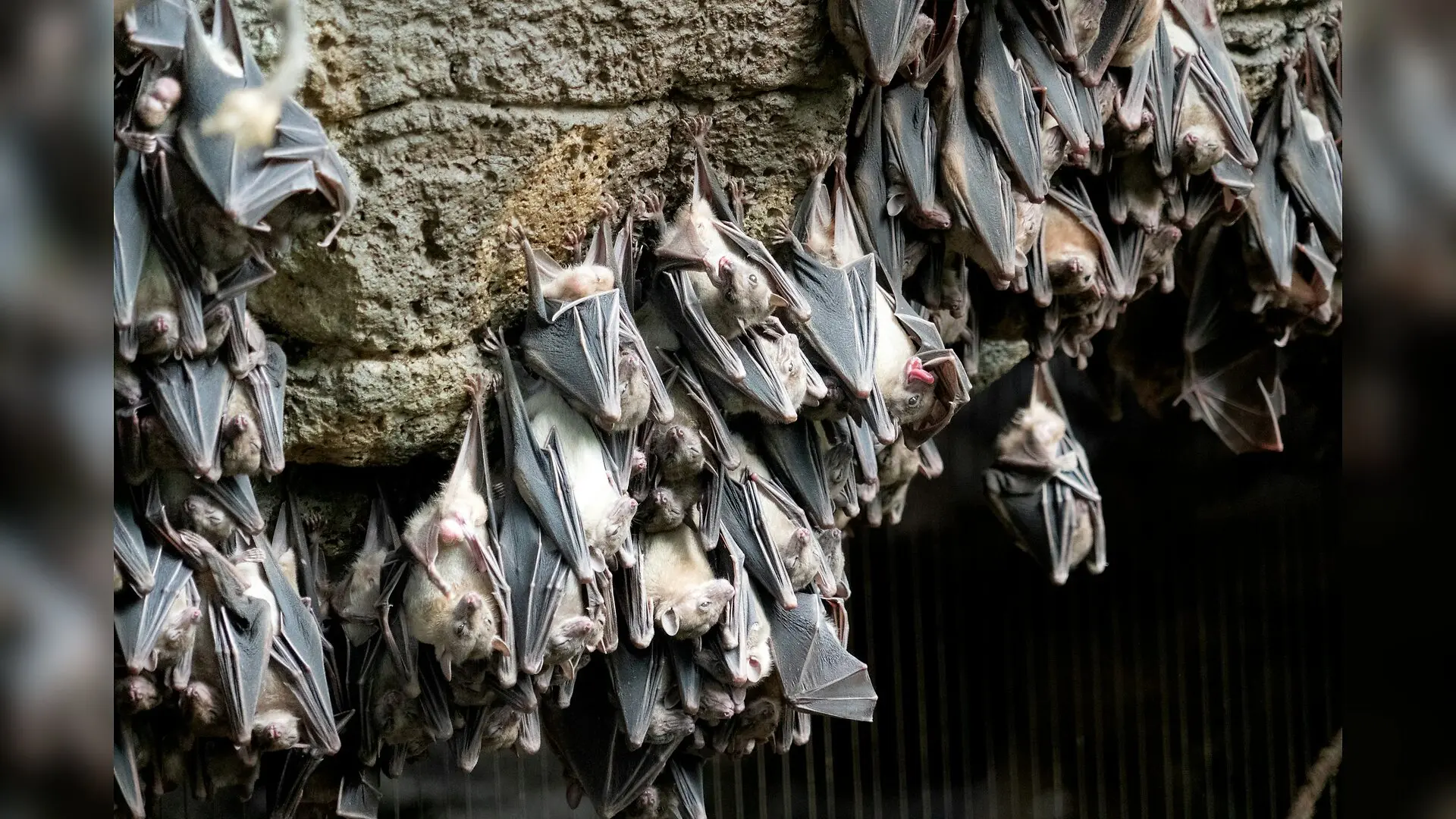
A recent study investigating wildlife in southeastern China discovered that two coexisting bat species living just miles apart carry remarkably different heavy metal burdens and dietary habits. Researchers combined DNA identification of insect remains with laboratory tissue analysis to uncover how dietary patterns relate to the accumulation of toxic elements in wild mammals.
Dietary Habits Differ Sharply Between Coexisting Bat Species
The investigation focused on two insectivorous mammal populations captured in May 2024 within the West Tianmu Mountain Nature Reserve in Zhejiang Province. The first species, Myotis chinensis, demonstrated a broad dietary strategy by consuming a diverse mix of insects spanning multiple orders, with midges and various moths dominating their prey reads. In contrast, Rhinolophus sinicus displayed a heavily concentrated diet, with a single ghost moth species, Endoclita davidi, accounting for 99 percent of its detected prey sequences. The research is available in the Computational and Structural Biotechnology Journal.
Scientists utilized cytochrome c oxidase subunit I gene metabarcoding to extract and sequence prey DNA from fresh fecal samples. The analysis revealed that while both populations share some broad insect orders, their fine-scale taxonomic overlap drops significantly at the genus level. Statistical evaluations showed that Myotis chinensis maintained a wider dietary niche breadth, whereas Rhinolophus sinicus fed on a much narrower taxonomic spectrum during the collection period.
Kidneys and Livers Accumulate Heavy Metals Differently
Tissue samples collected from the kidney, liver, lung, and muscle of nine individual bats were digested using nitric acid and analyzed via inductively coupled plasma mass spectrometry to measure concentrations of copper, mercury, and lead. Both species exhibited a consistent tissue distribution gradient, with essential trace elements and nonessential toxic contaminants accumulating at much higher levels in the kidneys and liver compared to the lungs and muscles.
Overall heavy metal concentrations were generally higher in Myotis chinensis than in Rhinolophus sinicus across multiple internal organs. For instance, copper, mercury, and lead levels in the kidney tissue differed significantly between the two bat populations. These patterns highlight distinct tissue partitioning characteristics and inter-individual variability between the two sympatric species.
Correlations Between Food Sources and Contaminant Burdens
Statistical models, including nonmetric multidimensional scaling and Mantel tests, were applied to examine potential links between dietary composition and individual metal concentrations. When averaging metal burdens across all four tissues, dietary dissimilarity showed a weak but statistically significant association with copper concentrations. Additional organ-specific evaluations revealed positive associations between dietary variation and all three metals within kidney tissues, while only lead showed a significant association in the liver.
However, the authors noted important limitations that call for cautious interpretation of these links. Because the two bat populations were sampled at slightly different locations within the reserve, species identity and local environmental exposure were confounded. Furthermore, heavy metal concentrations in the insect prey itself were not directly measured, meaning the data cannot confirm direct trophic transfer or pinpoint specific dietary pathways of contamination.
Broader Implications for Environmental Monitoring
Bats serve as sensitive bioindicators for monitoring environmental pollution because they occupy high trophic positions and have long lifespans. The findings point to complex interactions between foraging behavior and contaminant accumulation, though the authors emphasize that factors beyond diet alone likely drive the observed variations in tissue burdens.
The research team recommends that future investigations expand to multiple geographic regions and seasons, incorporate larger sample sizes, and directly quantify metal levels in environmental matrices and prey taxa. Such efforts will help clarify the precise ecological mechanisms connecting food-web structure and chemical exposure in terrestrial wildlife.
The research was published in Computational and structural biotechnology journal on November 17, 2026.
This article has been fact checked for accuracy, with information verified against reputable sources. Learn more about us and our editorial process.
Last reviewed on .
Article history
- Latest version
Reference(s)
- Zhang, Sheng., et al. “Dietary Composition Is Associated with Tissue Metal Concentrations in Two Sympatric Bats.” Computational and Structural Biotechnology Journal, vol. 35, no. 1, November 17, 2026 American Association for the Advancement of Science (AAAS), doi: 10.34133/csbj.0279. <https://doi.org/10.34133/csbj.0279>.
Cite this page:
- Posted by Linda Wilson