Bumblebees Reject High-Salt Nectar But Show Surprising Peak For Sodium
New research reveals how Bombus terrestris workers balance essential mineral intake and avoid toxic concentrations in artificial nectar.
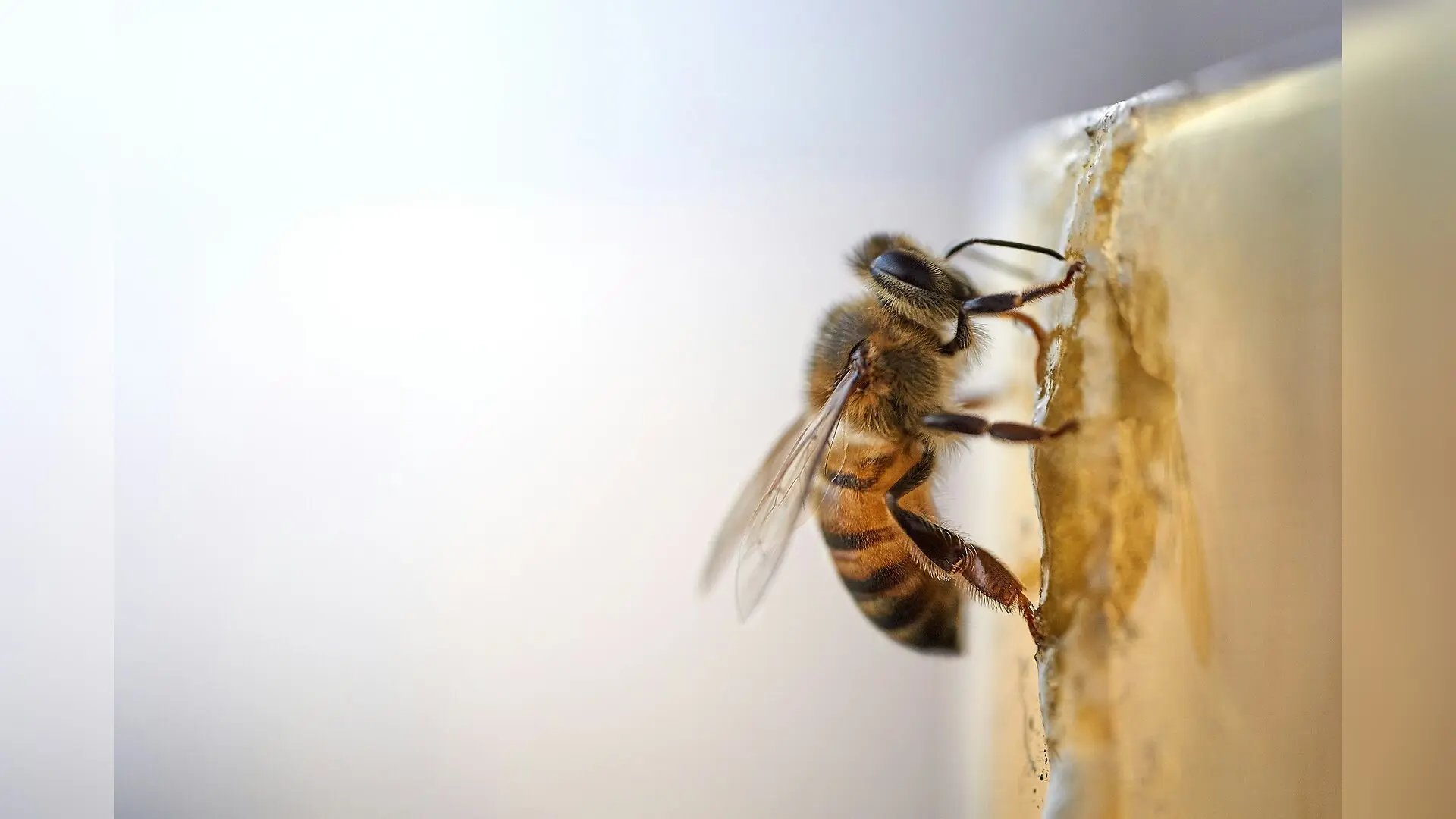
Buff-tailed bumblebees actively reject extremely salty or mineral-rich nectar when foraging, pointing to a strict upper limit for dietary minerals. Researchers testing how commercial colonies of Bombus terrestris audax handle essential salts found that while the insects drink moderate amounts of sodium, they strongly avoid high concentrations of potassium and magnesium.
How Bumblebees Respond to Different Mineral Salts in Artificial Nectar
To understand how pollinators balance their nutritional needs, scientists tracked the feeding choices of worker bees using controlled foraging arenas. The experiments tested artificial nectars spiked with varying levels of calcium, potassium, magnesium, and sodium chloride alongside a sugar-only control solution. The study, published in Royal Society Open Science, revealed that consumption patterns shifted dramatically depending on which mineral was added and at what dose.
For both potassium and magnesium, bees consumed significantly less of the solution when mineral concentrations reached their highest levels. Specifically, the sugar-only control was consumed far more than the 10,000 ppm potassium solution or the 3,000 ppm magnesium solution. This clear avoidance indicates that excessive levels of these common mineral ions act as deterrents for foraging insects.
The Surprising Peak in Sodium Consumption
Sodium proved to be the exception to simple dietary aversion, triggering a distinct dose-dependent response that followed a negative quadratic curve. Bumblebee consumption of sodium-laced nectar peaked at a medium-high concentration of 2,000 ppm before dropping off sharply at 4,000 ppm. This preferred concentration is notably higher than the typical sodium levels found in most natural floral nectars.
The authors note that this peak consumption at 2,000 ppm mirrors theoretical predictions about nutrient optimization in animals. However, because the study tested minerals in isolation rather than complex natural mixtures, it remains unclear whether the elevated intake reflects an active craving for sodium or simply a higher tolerance for it.
What Environmental Conditions and Limitations Mean for Pollinator Research
Beyond mineral content, the researchers discovered that ambient weather conditions influenced overall feeding rates. An interaction between temperature and humidity significantly altered how much liquid the cohorts drank. When humidity was low, consumption remained high regardless of temperature, whereas high humidity led to variable drinking rates depending on how warm it was.
While these findings establish a baseline for bumblebee mineral nutrition, the authors caution that laboratory choices may not fully capture wild behavior. Free-foraging bees encounter fluctuating floral rewards, mixed mineral ratios, and alternative water sources such as puddles or brackish water. Future work testing mineral combinations and varying colony nutritional states will help clarify how these microscopic dietary adjustments influence overall hive health and ecosystem pollination.
The research was published in Royal Society open science on November 18, 2026.
This article has been fact checked for accuracy, with information verified against reputable sources. Learn more about us and our editorial process.
Last reviewed on .
Article history
- Latest version
Reference(s)
- Gaetano, Tegan., et al. “Behavioural responses to a range of mineral salt concentrations in the buff-tailed bumblebee ( Bombus terrestris audax ).” Royal Society Open Science, vol. 13, no. 11, November 18, 2026 The Royal Society, doi: 10.1098/rsos.262285. <https://doi.org/10.1098/rsos.262285>.
Cite this page:
- Posted by Linda Wilson