Marine Microbe Discovery Reveals a Single Enzyme That Replaces Two Biological Steps
Researchers identified a unique dual-function protein in a South China Sea bacterium that streamlines amino sugar metabolism and holds promise for industrial chitin upcycling.
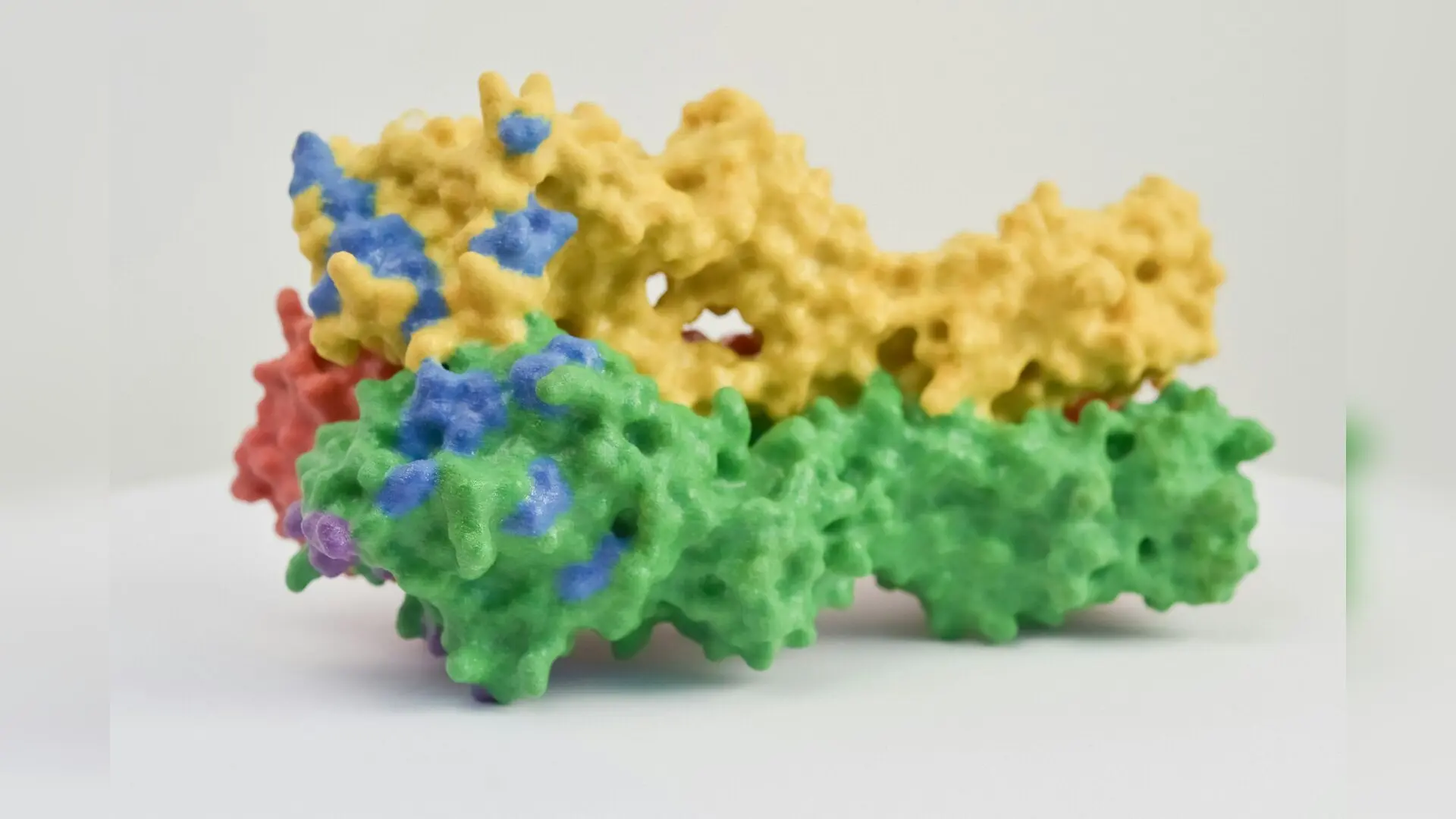
Scientists have discovered a unique dual-function bacterial enzyme from a newly isolated marine microbe that simplifies how cells process amino sugars, offering a powerful new tool for biotechnology applications that convert agricultural waste into valuable products.
Most bacteria in the phylum Planctomycetota can break down N-acetylglucosamine (GlcNAc), a major sugar derivative and the building block of chitin, which is the second most abundant biological polymer on Earth after cellulose. Yet, the exact biochemical mechanisms behind this process remained poorly understood because these marine bacteria are notoriously difficult to cultivate and genetically modify in laboratory settings.
To unravel this metabolic puzzle, researchers isolated a novel bacterial strain named Bremerella sp. T1 from surface waters of the South China Sea. The findings reveal that this organism relies on a single extraordinary protein, designated T1_NagF, to perform two distinct chemical reactions normally requiring separate enzymes in standard model bacteria such as Escherichia coli.
How One Enzyme Replaces Two Traditional Biological Steps
In standard bacterial pathways, the breakdown of GlcNAc requires two sequential enzymes: a deacetylase to remove an acetyl group and a deaminase to remove an amino group. Through a combination of genetic screening, transcriptomic analysis, and structural modeling using AlphaFold 3, the research team demonstrated that T1_NagF is a bifunctional fusion protein containing both a PIG-L deacetylase domain and a Glucosamine-6-phosphate deaminase domain.
Detailed biochemical assays published in mLife showed that this dual-domain architecture allows the marine bacterium to convert N-acetylglucosamine-6-phosphate directly into fructose-6-phosphate without accumulating metabolic intermediates. Kinetic measurements revealed that the full-length dual-domain protein operates with significantly higher catalytic efficiency than its individual isolated domains or traditional separate enzymes.
When the investigators deleted the gene encoding T1_NagF in Bremerella sp. T1, the mutant bacteria completely lost their ability to grow on GlcNAc as a carbon and nitrogen source. Restoring the wild-type gene successfully rescued normal growth, confirming that this unique enzyme is strictly essential for amino sugar utilization in these marine microbes.
Where Else Does This Unusual Enzyme Appear in Nature
Expanding their investigation beyond a single species, the authors analyzed thousands of genomic datasets across the bacterial domain to understand the broader ecological distribution of NagF. Homologues of the dual-function enzyme were identified in approximately half of the analyzed Planctomycetota genomes, as well as in other major bacterial phyla including Bacteroidota, Verrucomicrobiota, and Gemmatimonadota.
Metagenomic meta-analyses further exposed a striking abundance of NagF sequences within host-associated environments, particularly inside human digestive tracts and fecal samples. Because human gut microbes rely heavily on breaking down host mucin O-glycans and dietary chitin polymers that contain GlcNAc residues, NagF-mediated pathways appear to play a critical nutritional role in microbial communities inhabiting animal and human gastrointestinal systems.
In marine ecosystems, where chitinous debris from crustacean exoskeletons and plankton constantly accumulates, these widespread enzymes likely contribute substantially to global carbon and nitrogen biogeochemical cycles. Phylogenetic reconstructions suggest that the fused gene architecture originated via ancient evolutionary gene fusion events within common ancestors of specific bacterial lineages.
What This Discovery Means for Synthetic Biology and Waste Upcycling
The discovery of T1_NagF carries immediate implications for microbial biotechnology and synthetic biology. Chitin represents a massive underutilized renewable resource, but industrial fermentation processes typically require laborious chemical or enzymatic pretreatments to release free GlcNAc before engineered microbes can convert it into valuable bioproducts.
By integrating compact, highly efficient dual-function enzymes like NagF into engineered microbial cell factories, bioengineers could streamline metabolic pathways and enhance carbon flux from chitin-derived feedstocks. While these laboratory findings are still at an early stage and require further optimization before commercial scale deployment, they point toward greener methods for transforming abundant natural waste into sustainable chemical commodities.
The research was published in mLife on November 17, 2026.
This article has been fact checked for accuracy, with information verified against reputable sources. Learn more about us and our editorial process.
Last reviewed on .
Article history
- Latest version
Reference(s)
- Huang, Junkai., et al. “Identification and characterization of a novel dual‐function N‐acetylglucosamine‐catabolizing enzyme from a marine Planctomycetota species.” mLife, November 17, 2026 Wiley, doi: 10.1002/mlf2.70115. <https://doi.org/10.1002/mlf2.70115>.
Cite this page:
- Posted by Robert Brown