Fitness Trackers Reveal Five Hidden Behavior Patterns Associated With Chronic Joint And Back Pain
Machine learning analysis of ninety days of wearable data uncovers distinct patient phenotypes that standard medical diagnoses miss.

Fitness trackers can quietly spot five distinct behavior patterns in people with musculoskeletal disorders long before a formal diagnosis, suggesting that wearable technology could transform how chronic pain and joint issues are managed. Musculoskeletal disorders such as back pain, joint conditions, and soft tissue issues affect millions of individuals worldwide, yet patients experience these conditions in wildly different ways. While some people remain active despite physical discomfort, others experience severe limitations and mental health hurdles that traditional doctor visits fail to capture fully.
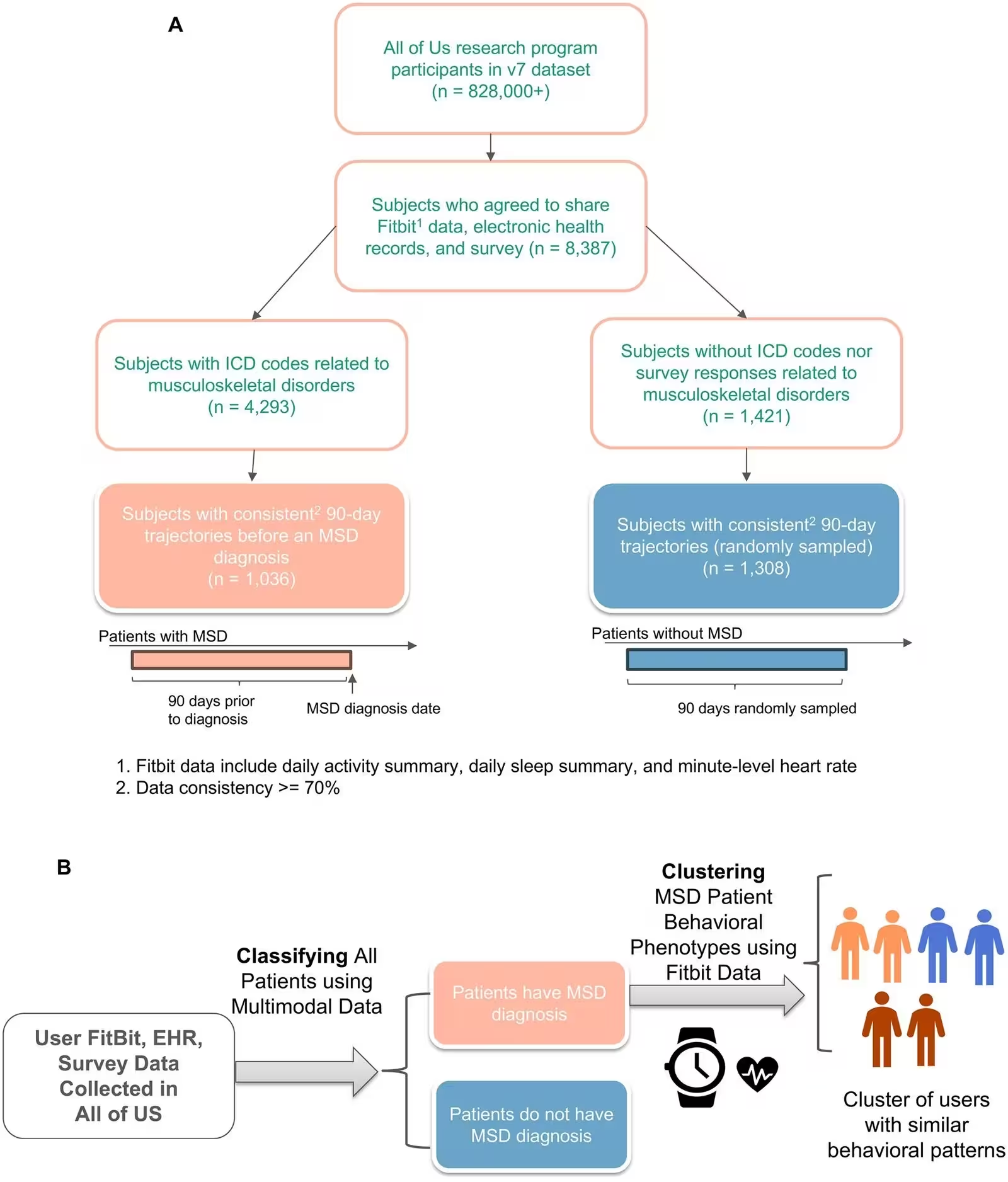
To understand how daily habits reflect disease severity, researchers analyzed health data from 2,344 participants in the United States published in JAMIA Open. The team included 1,036 individuals with musculoskeletal disorders and 1,308 healthy controls who shared electronic health records, survey responses, and continuous information from commercial fitness trackers. By combining machine learning tools with ninety days of pre-diagnostic tracking data, the investigators sought to uncover hidden behavioral phenotypes that standard medical categories miss.
How Machine Learning Spotlights Hidden Warning Signs
In the first stage of the investigation, the authors trained multiple supervised artificial intelligence algorithms to distinguish between participants with and without musculoskeletal disorders. Among the tested systems, an extreme gradient boosting model known as XGBoost achieved the highest performance, boasting an accuracy rate of 92.9 percent and an area under the receiver operating characteristic curve of 0.930. Model interpretation using SHapley Additive exPlanations values revealed that affected individuals tended to exhibit longer average sleep durations, reduced light sleep, and greater variability in rapid eye movement sleep and wake periods.
Furthermore, patients with these conditions recorded fewer very active minutes and lower daily step counts on average. The machine learning analysis also identified female sex and higher assisted income as key demographic features associated with the condition status. These findings demonstrated that physiological and activity data gathered remotely contain strong signals capable of flagging underlying physical health vulnerabilities.
Five Distinct Behavioral Phenotypes Emerge From Tracker Data
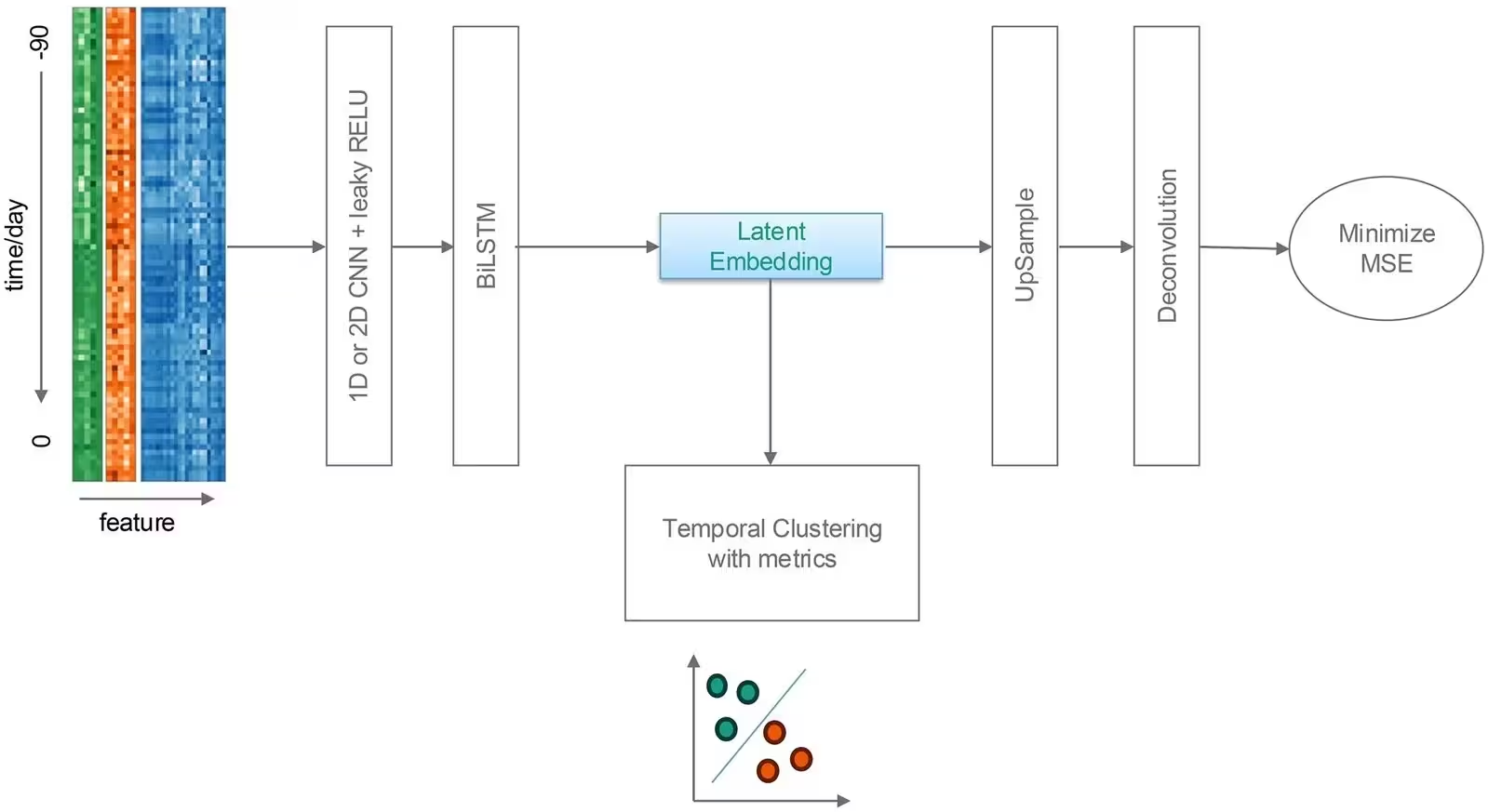
Moving beyond simple classification, the researchers applied deep temporal autoencoders and unsupervised clustering techniques to ninety-day wearable trajectories. This approach revealed five unique behavioral phenotypes among participants with musculoskeletal disorders, characterized by varying levels of physical activity, sleep architecture, and heart-rate metrics. Cluster 3 represented an active, low-body-mass-index group characterized by high step counts and low sedentary time, whereas Cluster 4 emerged as a highly sedentary, short-sleep group reporting elevated pain severity and high anxiety rates.
Cluster 5 stood out with long sleep durations and low sedentary time despite dealing with high pain burdens and a higher prevalence of depressive disorders. Notably, the researchers found that these phenotypes did not map neatly onto traditional diagnostic categories. Common diagnoses like joint disorders or back pain were spread evenly across all five clusters, indicating that wearable-derived patterns capture lifestyle and functional dynamics that transcend simple anatomical labels.
Evaluating Potential Limitations and Future Implications
While the results point to exciting possibilities for remote patient monitoring, the authors noted several important constraints in their methodology. The study relied on retrospective data from individuals who already owned fitness trackers and met strict data-sharing thresholds, which could limit how broadly these conclusions apply to the general population. Additionally, the reliance on daily aggregated metrics rather than continuous high-frequency physiological signals means certain short-term variations might have been smoothed out.
Despite these boundaries, the work provides a solid proof of concept for digital phenotyping in chronic disease management. Clinicians and healthcare systems could eventually use continuous tracking data to monitor patient trajectories, assess symptom burdens objectively, and tailor interventions to individual behavioral profiles. Empowering patients to track their own functional patterns over time may ultimately foster better self-management strategies for millions living with chronic physical discomfort.
The research was published in JAMIA open on November 17, 2026.
This article has been fact checked for accuracy, with information verified against reputable sources. Learn more about us and our editorial process.
Last reviewed on .
Article history
- Latest version
Reference(s)
- Yan, April Y., et al. “Identifying characteristics and behavioral phenotypes of musculoskeletal disorders using wearables in All of Us.” JAMIA Open, vol. 9, no. 6, November 17, 2026 Oxford University Press (OUP), doi: 10.1093/jamiaopen/ooag221. <https://doi.org/10.1093/jamiaopen/ooag221>.
Cite this page:
- Posted by Robert Brown