Novel Peptide Conjugate Doubles Collagen Production and Fights Inflammation
A custom lipid-peptide hybrid self-assembles into spherical micelles, boosting skin cell repair and reducing inflammation in laboratory tests.
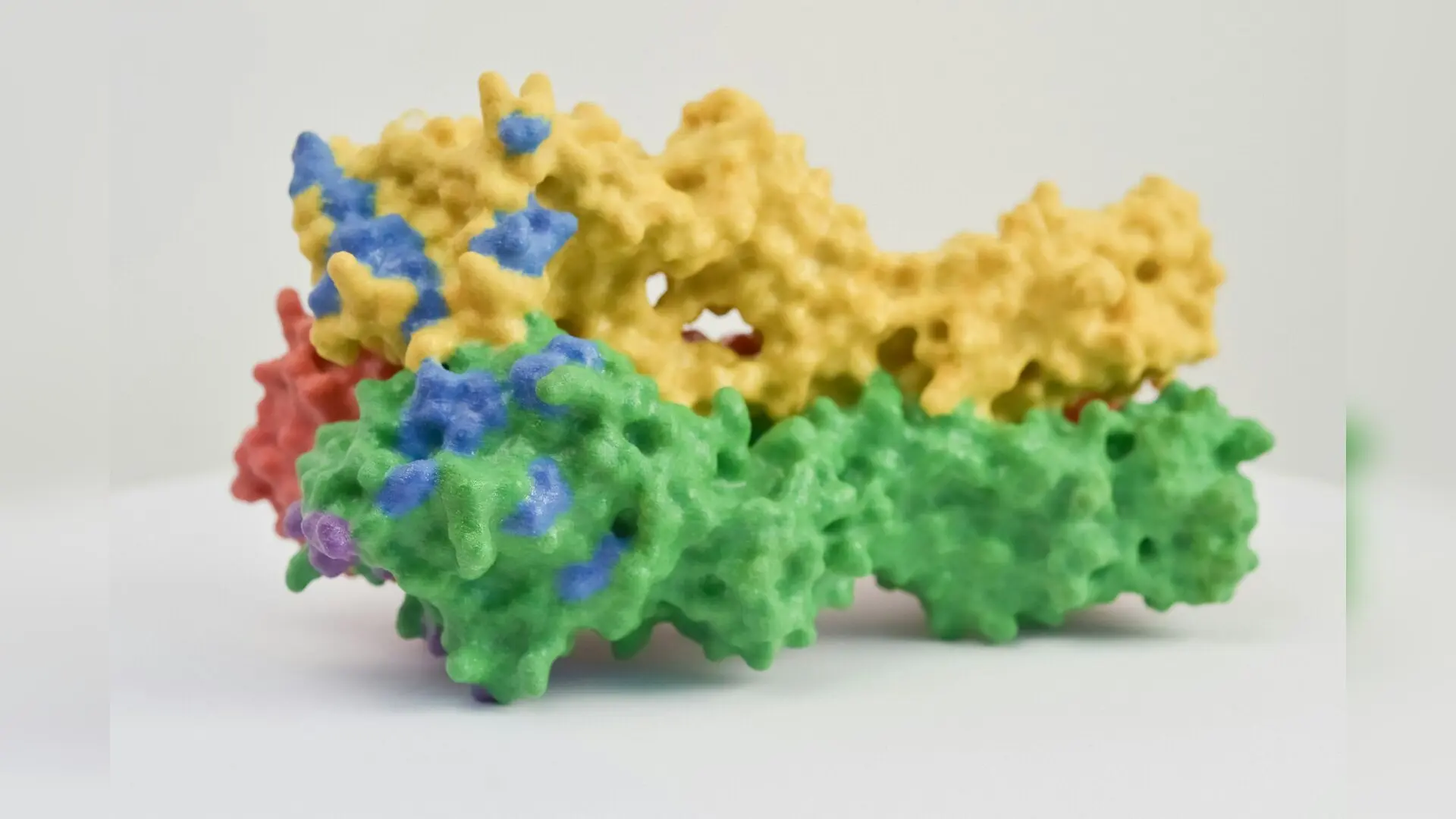
Engineered molecules designed to repair damaged skin and fight signs of aging can sometimes trigger unwanted inflammation or prove toxic to living cells at high doses. A new laboratory study describes a synthetic hybrid molecule that stimulates human skin cells to manufacture more than double their normal amount of collagen while simultaneously suppressing inflammation.
The research, published in Nanoscale, focuses on a custom-built peptide conjugate designated as FMdEG-KTTKS. By linking a short, biologically active protein fragment known as a matrikine to a branched plant-derived lipid chain and a water-attracting spacer, scientists created a compound that organizes into microscopic spheres rather than rigid ribbons.
How a Branched Lipid Tail Changes Molecular Behavior
Cell signaling peptides derived from extracellular matrix proteins have long attracted attention in regenerative medicine and cosmetics. One well-known example is the KTTKS pentapeptide found in type I collagen sequences, which encourages skin fibroblasts to build new structural proteins. Previous versions of these peptide amphiphiles, such as those built with straight sixteen-carbon palmitoyl chains, typically self-assemble into extended flat nanotapes or fibrils in water. In contrast, attaching a bulky, branched farnesyl lipid chain together with a short di-ethylene glycol linker forces the molecules to pack into spherical micelles.
The team used small-angle X-ray scattering and cryogenic transmission electron microscopy to confirm that FMdEG-KTTKS self-assembles into monodisperse spherical structures with an outer radius of approximately 2.4 nanometers. These micelles remain stable across a broad pH range from 2 to 10. Fluorescence probe measurements using 8-anilino-1-naphthalene sulfonic acid established a critical micelle concentration of around 0.04 weight percent. Below this threshold, the molecules exist primarily as individual monomers in aqueous solution.
Collagen Production and Cell Migration in Laboratory Tests
Laboratory assays using adult human dermal fibroblasts revealed that keeping the conjugate concentration below the micelle threshold avoided the cytotoxicity observed at higher doses. When exposed to concentrations of 0.025 and 0.0125 weight percent, the cells exhibited a statistically significant boost in collagen production per cell compared to untreated controls. Polarized optical microscopy and immunocytochemistry staining confirmed that the newly synthesized material accumulated heavily in the extracellular matrix as well-defined type I and type III collagen fibers.
To evaluate potential utility in skin repair, the researchers conducted scratch assays using murine fibroblast monolayers to simulate tissue injury. Monitoring the cultures over a 72-hour period showed that the lipopeptide actively promoted cell migration from the borders into the acellular zone, successfully closing the simulated wound. Furthermore, testing with mouse macrophage cells challenged by bacterial lipopolysaccharide demonstrated that the conjugate significantly reduced the release of inflammation-related nitric oxide down to baseline levels.
Limitations and Future Translational Steps
While the laboratory findings position this engineered conjugate as a versatile candidate for future cosmetic formulations and wound healing therapies, the work remains at an early preclinical stage. The transition from controlled in vitro cell cultures to topical human application requires overcoming the formidable barrier of the stratum corneum, the outermost layer of the epidermis. The investigators note that while micellar delivery systems hold promise for enhancing skin permeation and surface activity, further studies are underway to evaluate penetration efficiency and safety profiles in more complex physiological models.
The research was published in Nanoscale on November 19, 2026.
This article has been fact checked for accuracy, with information verified against reputable sources. Learn more about us and our editorial process.
Last reviewed on .
Article history
- Latest version
Reference(s)
- de Mello, Lucas., et al. “Collagen-stimulating activity of a pentapeptide conjugate and self-assembly into micelles.” Nanoscale, vol. 18, no. 44, January 1, 2026, pp. 24288-24301. Royal Society of Chemistry (RSC), doi: 10.1039/d6nr03203f. <https://doi.org/10.1039/d6nr03203f>.
Cite this page:
- Posted by Rohan Kumar