Tanzanian Psychiatric Nurses Face Violence, Blackouts, and Burnout
A qualitative study at a national hospital reveals the hidden daily hazards and coping strategies of frontline mental health workers in Tanzania.

Fifteen psychiatric nurses in Dar es Salaam face severe daily risks, from sudden physical assaults by patients to chronic equipment shortages and nighttime power outages without backups, according to a qualitative study examining the under-resourced reality of mental healthcare in Tanzania.
Mental disorders make up a significant share of the global disease burden, yet low- and middle-income countries face severe shortages of trained professionals. In Tanzania, an estimated 7 million people live with mental health conditions, and institutional admissions are heavily driven by acute cases such as schizophrenia. With roughly 1.3 mental health workers per 100,000 residents, the nation relies heavily on psychiatric nurses to provide continuous, round-the-clock care in underfunded facilities.
To capture the firsthand experiences of these caregivers, researchers conducted in-depth interviews with 15 nurses working at the Department of Psychiatry and Mental Health of Muhimbili National Hospital. The findings were published in PLOS Mental Health, shedding light on the immense environmental, institutional, and social hurdles that threaten both staff well-being and patient safety.
Assaults, Ropes, and Blackouts in the Ward
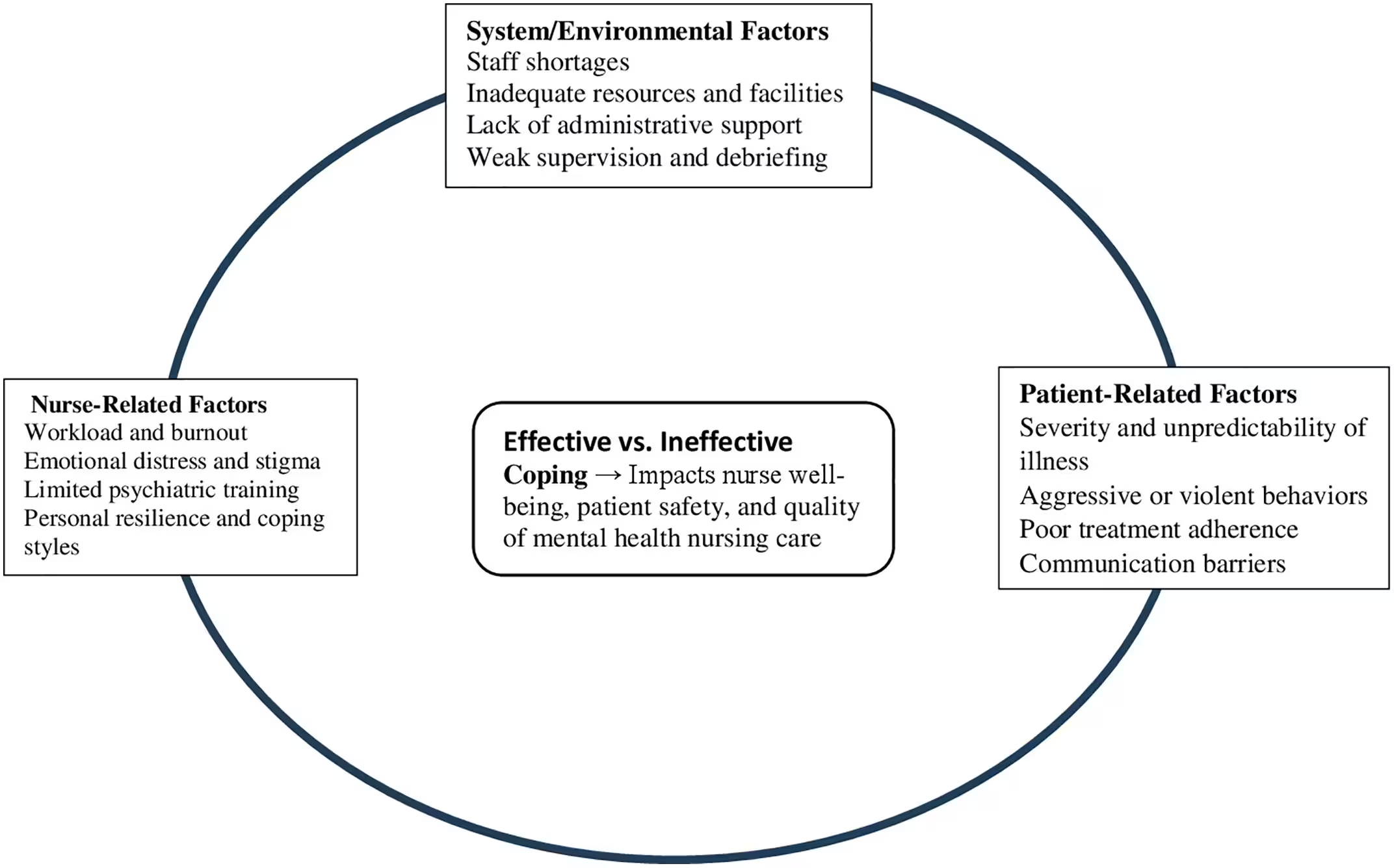
The study revealed a stark array of workplace safety and environmental challenges. Participants reported frequent physical assaults, including being punched, kicked, slapped, and bitten by aggressive patients during routine interactions. These violent encounters often resulted in visible injuries, bruises, and deep-seated anxiety among the nursing staff.
Compounding the danger is a severe lack of standardized medical equipment. Nurses explained that reliable patient-restraining devices are frequently unavailable, forcing staff to improvise with ropes that risk cutting off blood circulation and causing severe complications like gangrene. Furthermore, the psychiatric department suffers from frequent nighttime power outages without functional backup generators or solar power, requiring staff to navigate hazardous emergencies using handheld torches.
Infrastructure limitations also plague the facility. The hospital lacks private spaces, changing rooms, and adequate resting areas for staff, while persistent shortages of essential psychiatric medications disrupt long-term treatment plans and force clinicians to constantly switch patient prescriptions based on current stock availability.
The Heavy Toll of Workforce Stress and Social Stigma
Organizational hurdles further exacerbate the daily strain on healthcare providers. Chronic staffing shortages mean that nurse-to-patient ratios fall far below recommended standards, elevating the risk of errors and burnout. Participants voiced frustration over low recognition, the absence of risk allowances for work-related injuries, and slow, bureaucratic compensation processes.
Beyond hospital walls, nurses battle pervasive community stigma. Misconceptions surrounding mental illness often lead families to seek help from traditional healers first, delaying professional care and increasing the ultimate burden on hospital staff. Additionally, nurses reported experiencing associative stigma, where friends and colleagues inside the broader healthcare system viewed them as mentally unstable simply because of their workplace assignment.
Exercise, Peer Support, and Adaptive Coping
Grounded in Lazarus and Folkman’s Stress and Coping Theory, the analysis examined how nurses manage these compounding pressures. Participants reported turning to various personal and professional coping mechanisms to safeguard their mental health. Physical exercise, engaging in leisure activities like football, spending time with family, and running small-scale side businesses helped alleviate stress and supplement their incomes.
Within the workplace, daily team meetings, open communication, and peer encouragement served as vital buffers against emotional exhaustion. Supportive leadership and proactive guidance from supervisors played a critical role in validating nurses’ concerns and helping them navigate high-stress situations.
The authors note that the study has limitations, including its focus on a single hospital setting and the potential for social desirability bias during interviews. Nevertheless, the findings highlight an urgent need for targeted institutional interventions, improved safety protocols, regular mental health training, and fair compensation to support the vital workforce sustaining psychiatric care in resource-limited settings.
The research was published in PLOS Mental Health on November 18, 2026.
This article has been fact checked for accuracy, with information verified against reputable sources. Learn more about us and our editorial process.
Last reviewed on .
Article history
- Latest version
Reference(s)
- Machange, Agnes Sia., et al. “Challenges and coping strategies among nurses caring for patients with mental illness: A descriptive qualitative study in Dar es Salaam, Tanzania.” PLOS Mental Health, vol. 3, no. 11, November 18, 2026, pp. e0000673 Public Library of Science (PLoS), doi: 10.1371/journal.pmen.0000673. <https://doi.org/10.1371/journal.pmen.0000673>.
Cite this page:
- Posted by Rohan Kumar