Late-Pregnancy Food Shortages Linked to Lower Newborn Birth Weights
A study in post-conflict Ethiopia reveals that maternal food insecurity reduces infant birth weight by over 200 grams.

Babies born to mothers facing household food shortages in late pregnancy weigh an average of 204 grams less than newborns in food-secure households, according to new research. The study, which evaluated mother-infant pairs at a major referral hospital in a region recovering from armed conflict, highlights how inadequate food access severely restricts fetal growth.
The research was conducted at Ayder Comprehensive Specialized Hospital in Mekelle, the capital city of the Tigray region in Northern Ethiopia. Data were collected from December 2024 to March 2025 using face-to-face interviews and medical record reviews among 286 mothers and their newborns during the immediate postpartum period. To measure how severely families lacked consistent access to enough food, the researchers utilized the Household Food Insecurity Access Scale, a nine-item questionnaire assessing dietary access over the preceding 30 days. Because the data collection took place right after birth, the findings primarily reflect food insecurity experienced during the late third trimester of pregnancy.
How Food Shortages Lower Infant Birth Weights
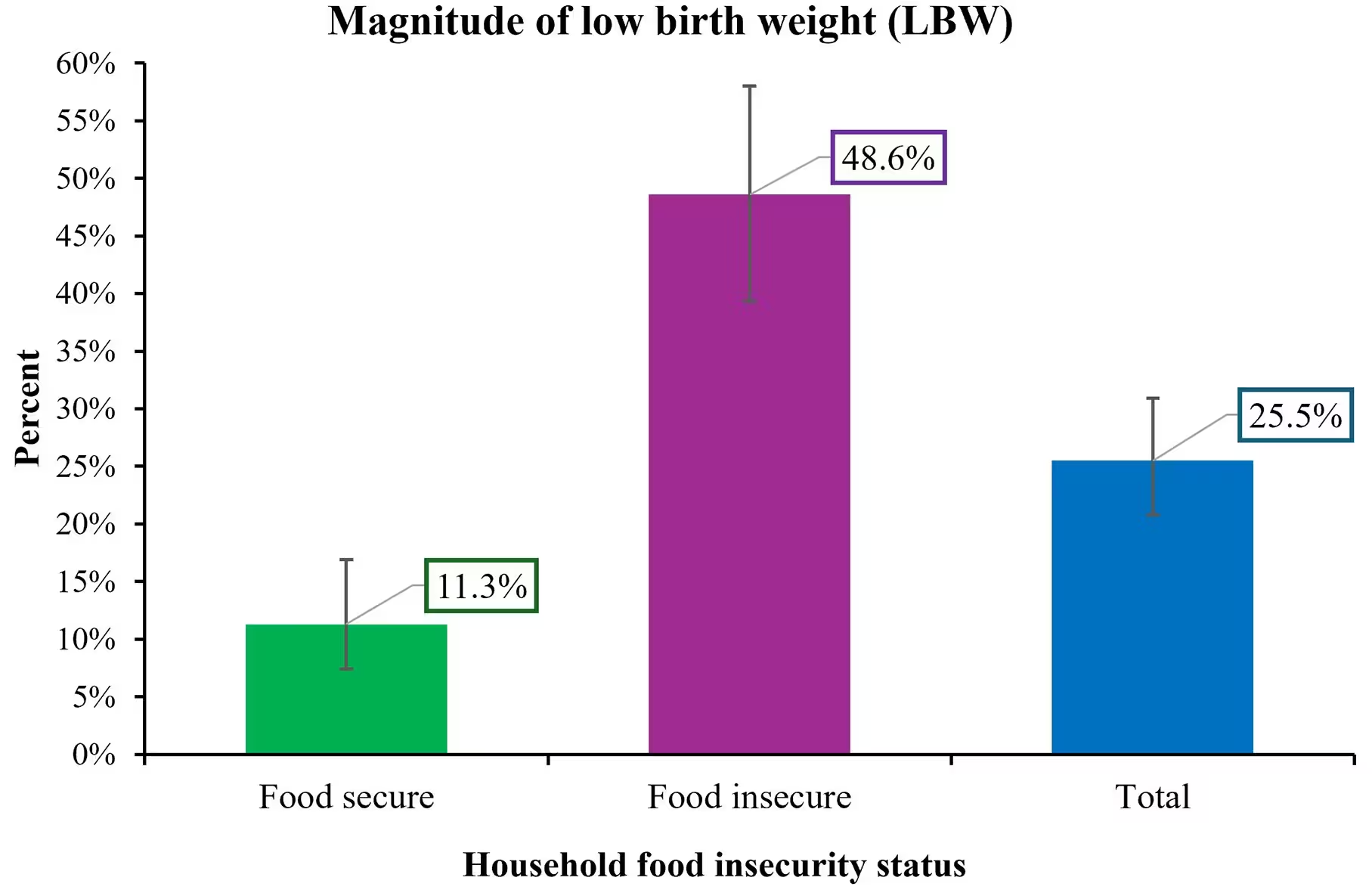
The findings, published in PLOS One by Mohamedawel Mohamedniguss Ebrahim and colleagues, revealed that nearly 38 percent of the participating mothers experienced household food insecurity during late pregnancy. Among those in food-insecure households, the overall prevalence of low birth weight, defined as weighing less than 2,500 grams, reached 48.6 percent. In stark contrast, only 11.3 percent of newborns born to food-secure mothers experienced low birth weight.
To establish a reliable comparison and account for confounding factors, the researchers applied propensity score matching. This statistical technique balances observed characteristics between food-secure and food-insecure groups to approximate a randomized controlled trial. Even after controlling for variables such as maternal age, monthly income, parity, and gestational medical conditions, the analysis demonstrated a significant negative impact. The average treatment effect showed that infants born to food-insecure mothers weighed 204 grams less than their counterparts in food-secure environments.
The Broader Impact of Conflict and Economic Strain
The Tigray region has experienced severe disruptions following intense armed conflict that began in November 2020. These disruptions have severely damaged agricultural production, local markets, and healthcare infrastructure, leaving a lasting mark on maternal and child health. The overall low birth weight rate observed in this study, standing at 25.5 percent, is notably higher than pre-war estimates and national pooled averages in Ethiopia.
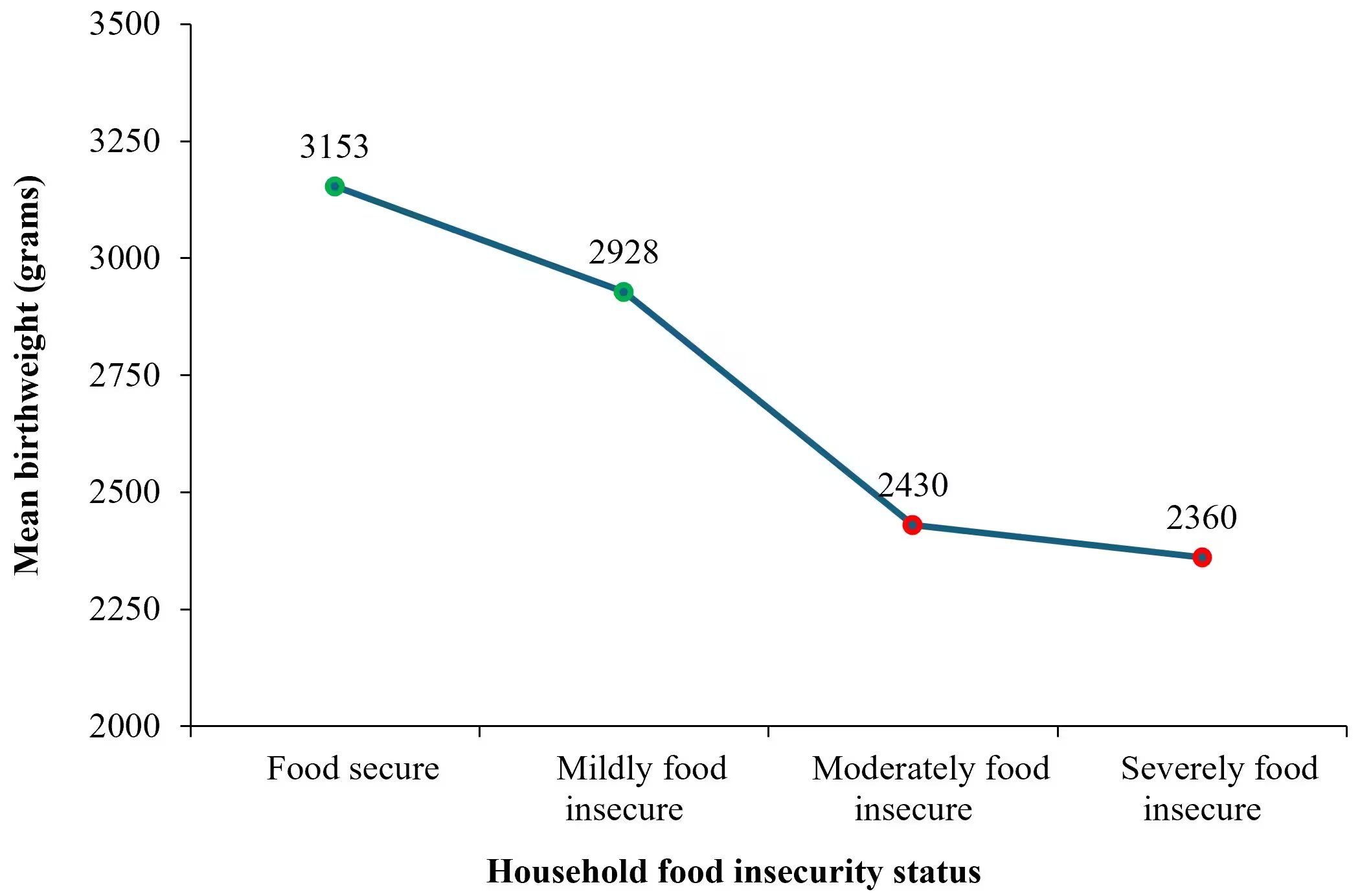
Further analysis using a robust multiple linear regression model uncovered a clear dose-response relationship between the severity of food shortages and infant weight. Newborns from moderately food-insecure households weighed an average of 137.7 grams less than those from secure homes, while infants from severely food-insecure households weighed 182.1 grams less. These weight deficits compound the risks of infant illness, developmental delays, and long-term health complications.
Study Limitations and Next Steps
The authors noted several limitations to their work. Because the study relied on cross-sectional data gathered during the postpartum period, establishing strict causality remains challenging. Furthermore, reliance on maternal recall for certain socioeconomic variables and household food scales introduces potential recall bias. The findings are also specific to a resource-limited, post-conflict urban hospital setting, meaning they may not fully translate to peaceful or wealthier populations.
Despite these constraints, the data emphasize an urgent need for routine nutritional screenings during antenatal care visits. Integrating food security assessments and targeted food support into maternal healthcare could substantially mitigate the risks of low birth weight in vulnerable regions.
The research was published in PLOS One on November 18, 2026.
This article has been fact checked for accuracy, with information verified against reputable sources. Learn more about us and our editorial process.
Last reviewed on .
Article history
- Latest version
Reference(s)
- Ebrahim, Mohamedawel Mohamedniguss., et al. “Association between late-pregnancy household food insecurity and birth weight: Evidence from Propensity Score Matching.” PLOS One, vol. 21, no. 11, November 18, 2026, pp. e0363151 Public Library of Science (PLoS), doi: 10.1371/journal.pone.0363151. <https://doi.org/10.1371/journal.pone.0363151>.
Cite this page:
- Posted by Hassan Raza