Scientists Map Complete Chloroplast Genome of Ancient Chinese Medicinal Flower
Genomic analysis of Chuju reveals structural variations and evolutionary hotspots that could help protect the prized medicinal crop against climate and disease threats.
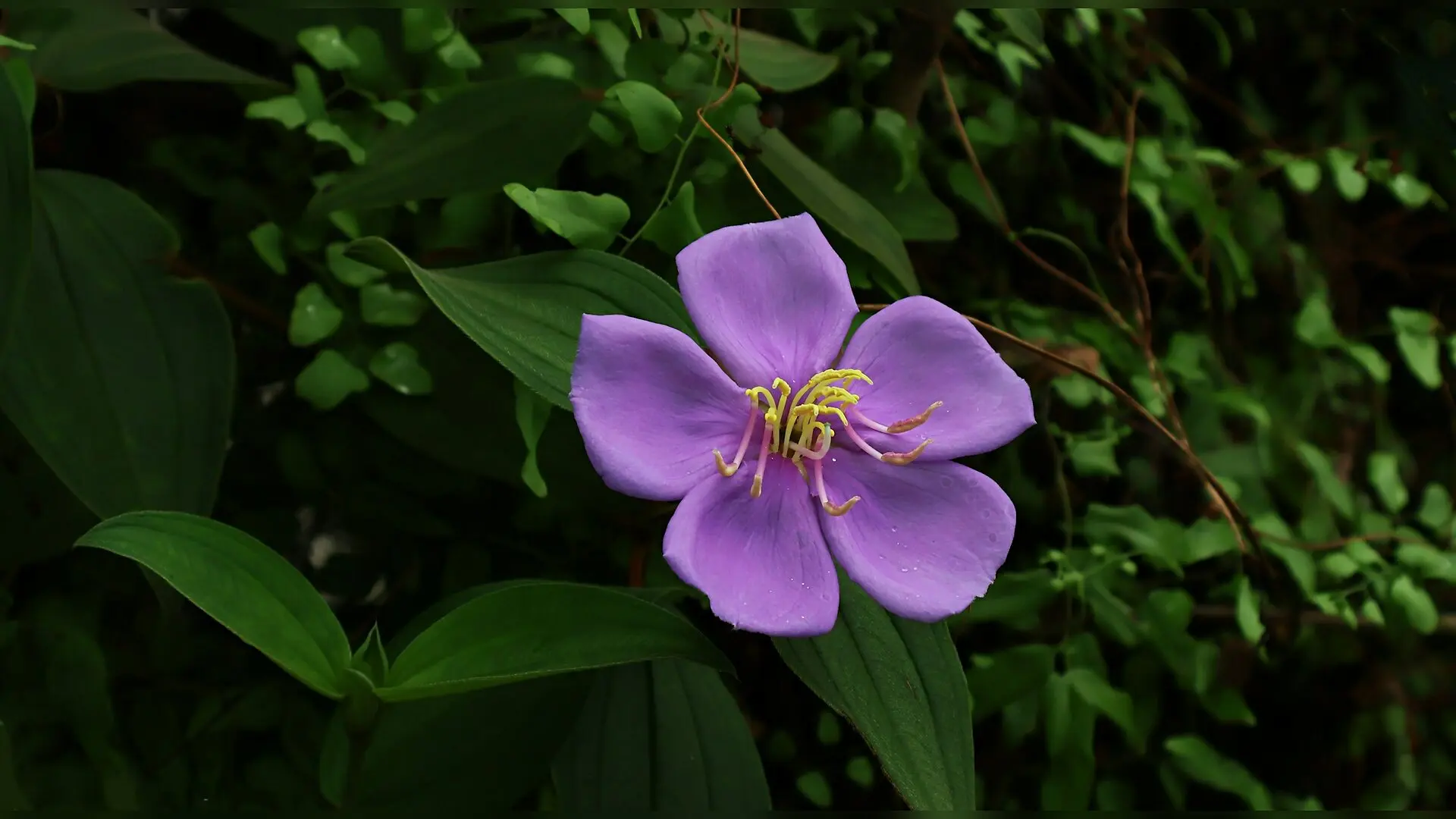
Plant scientists have mapped the complete genetic blueprint of a prized traditional Chinese medicinal crop, revealing structural secrets that could help protect endangered varieties from climate threats. The research focuses on Chrysanthemum morifolium cultivar Chuju, a herbaceous perennial belonging to the daisy family Asteraceae that is cultivated extensively in China for its health-boosting flower heads.
Decoding the Complete Organelle Blueprint of an Ancient Herbal Crop
To understand the genetic makeup of this geo-authentic medicinal plant, the research team extracted high-quality genomic DNA from fresh leaf tissue and used advanced high-throughput sequencing technology to sequence the material. The sequencing generated more than 48 million clean paired-end reads, which the authors assembled into a contiguous circle without any gaps. The complete chloroplast genome spans exactly 151,025 base pairs and exhibits a classic quadripartite structure consisting of a large single-copy region of 82,781 base pairs, a small single-copy region of 18,330 base pairs, and a pair of inverted repeat regions each measuring 24,957 base pairs. Overall, the genome maintains a GC content of 37.5 percent, with the inverted repeat regions showing the highest concentration at 43.1 percent due to the presence of ribosomal RNA genes.
As detailed in the study published in PLOS One, the chloroplast genome houses a total of 129 genes. These include 84 protein-coding genes, 35 transfer RNA genes, 8 ribosomal RNA genes, and 2 pseudogenes. Thirteen distinct genes contain a single intron, while two genes harbor two introns. Furthermore, the rps12 gene functions as a trans-spliced gene with its 5-prime end exon situated in the large single-copy region and its duplicated 3-prime end exons located in the inverted repeat regions.
Structural Dynamics and Evolutionary Pressures
Comparing the new genetic sequence with 19 other species within the subtribe Artemisiinae revealed high conservation in overall gene order alongside specific structural variations. The authors identified a total of 1,386 long repeats across the compared genomes, with tandem repeats representing the most abundant category. Simple sequence repeat analysis detected 1,419 microsatellites, which were predominantly mononucleotide repeats rich in adenine and thymine bases. These repeats were unevenly distributed, appearing mostly in intergenic spacer regions and introns rather than protein-coding sequences.
At the borders of the genomic regions, boundary contractions led to the premature truncation of the rps19 gene in Chuju, creating a pseudogene. This specific truncation pattern is relatively rare, appearing only in Chuju, Chrysanthemum lucidum, Crossostephium chinense, and Opisthopappus taihangensis. Sliding window nucleotide diversity analysis across the chloroplast genomes revealed an average diversity value of 0.00283, with the small single-copy region showing the highest variability. The authors identified several high-divergence hotspots, including the matK, petD, infA, trnN-GUU, rpl32, and ycf1 genes.
Adaptive Selection and Resolving Complex Relationships
Calculating the ratio of non-synonymous to synonymous substitution rates across 71 protein-coding genes showed that most genes experience strong purifying selection to maintain core functions. However, specific genes such as accD, matK, atpF, rps12, and ycf2 exhibited ratios exceeding one, pointing to positive selection during evolutionary adaptation. The authors suggest this rapid evolution under strong selection pressure may relate to the plant’s adaptation to local ecological conditions, influencing metabolic pathways that produce active medicinal compounds like flavonoids.
To clarify evolutionary positions, the researchers reconstructed maximum likelihood phylogenetic trees using both complete chloroplast sequences and concatenated protein-coding gene datasets. The whole-plastome tree successfully resolved shallow nodes where traditional protein-coding datasets collapsed or showed incongruence. The findings demonstrate that genera within the Chrysanthemum-Ajania complex do not form strictly isolated monophyletic groups, but instead intermingle in a complex reticulate pattern driven by rapid radiation and historical hybridization. The newly established genetic database provides a fundamental resource for future molecular breeding, germplasm conservation, and quality authentication of medicinal chrysanthemums.
The research was published in PLOS One on November 16, 2026.
This article has been fact checked for accuracy, with information verified against reputable sources. Learn more about us and our editorial process.
Last reviewed on .
Article history
- Latest version
Reference(s)
- Wen, Feng. “The complete chloroplast genome of Chrysanthemum morifolium cv. ‘Chuju’ and comparative chloroplast genomes of the members of the subtribe artemisiinae.” PLOS ONE, vol. 21, no. 11, pp. e0362406, doi: 10.1371/journal.pone.0362406. <https://doi.org/10.1371/journal.pone.0362406>.
Cite this page:
- Posted by Rohan Kumar