Scientists Have Used An AI-Designed Gene Editor To Create Disease-Resistant Rice
Scientists have developed an open-source, AI-powered CRISPR tool to create disease-resistant rice, potentially transforming the future of global agriculture.
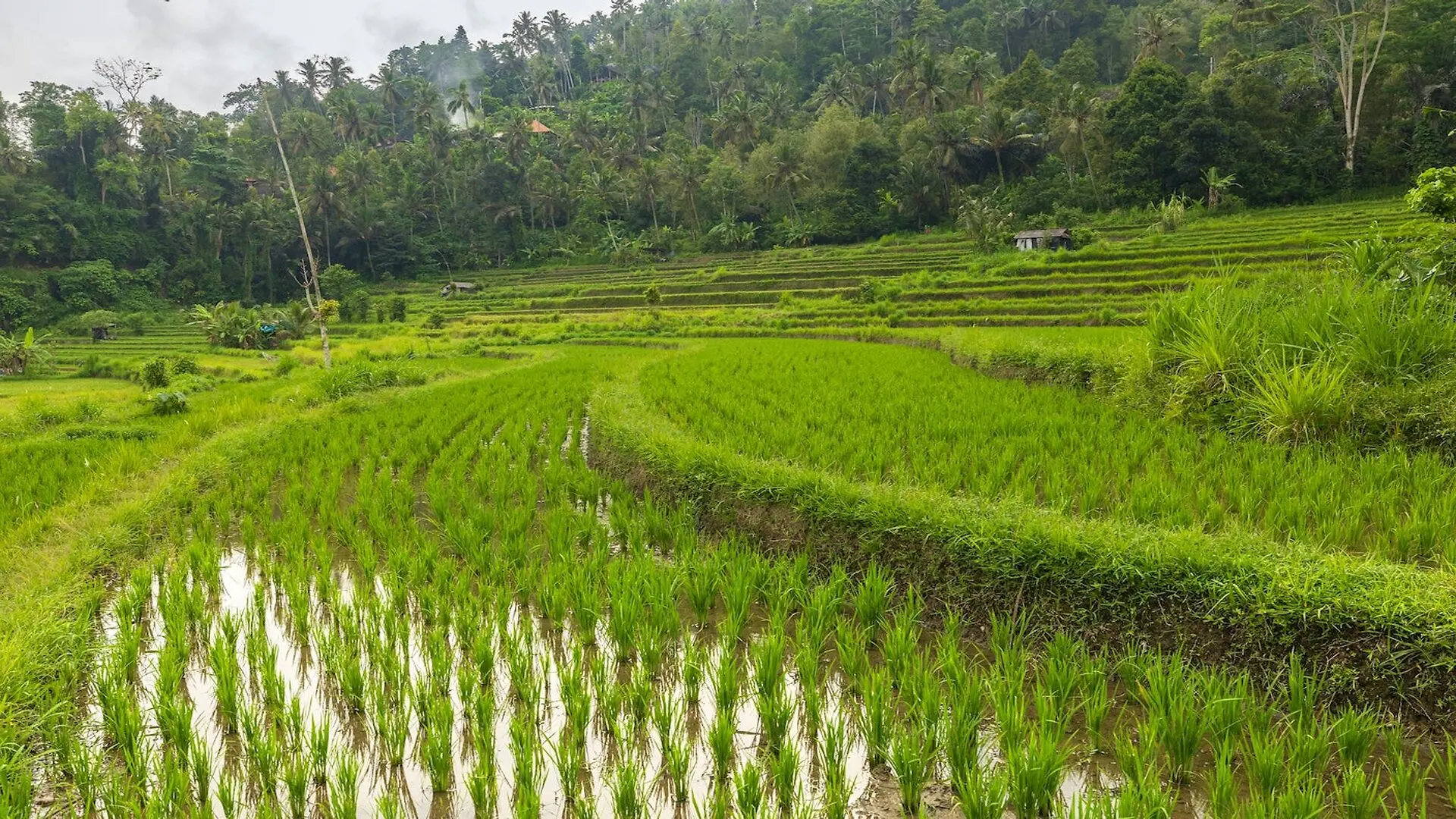
Rice remains a fundamental pillar of global food security, yet its production faces a relentless threat from bacterial blight. Caused by the microbe Xoo, this disease can devastate harvests, often resulting in yield losses of up to 50 percent. The pathogen exploits the plant’s own biological machinery, forcing it to release sugars that nourish the bacteria while starving the host. While gene-editing tools like CRISPR have long offered a way to disrupt these vulnerabilities, researchers have faced significant hurdles in deploying them due to restrictive intellectual property and licensing complexities.
A new study published in Plant Communications offers a potential solution: an AI-generated gene editor that is free for researchers to use. By adapting an open-source tool called OpenCRISPR-1, scientists have successfully engineered rice strains capable of resisting bacterial blight with high efficiency.
Engineering Resilience Through AI
The development of the new system relied on OpenCRISPR-1, an AI-designed editor originally created by the California-based startup Profluent. Unlike traditional CRISPR systems, which are derived from naturally occurring bacterial enzymes, this version was built by an AI trained on the vast language of protein structures. By learning the molecular patterns of millions of CRISPR-like systems, the AI created a protein editor that operates with remarkable precision and minimal off-target effects.
To make the system effective in agricultural settings, a team led by Bing Yang at the University of Missouri optimized the AI-generated protein, known as OpenCas9, for use in rice. They adjusted the genetic instructions to ensure the plant cells could produce the enzyme efficiently without altering its core structure. They also refined the “guide RNA”—the molecular bloodhound that leads the editor to its target—to focus specifically on the SWEET family of genes that Xoo bacteria typically hijack.
The results were highly promising. The modified system achieved success rates of up to 97 percent in laboratory-grown rice. When challenged with three distinct strains of bacterial blight, the edited plants successfully defended themselves. Furthermore, the genetic modifications were faithfully inherited by subsequent generations, a critical requirement for developing stable, disease-resistant crops.
Advancing Beyond Traditional GMOs
The history of crop improvement is shifting from the random selection used by ancient farmers to the precise molecular engineering of the modern era. Early attempts at transgenic crops—which involved inserting foreign DNA—often faced significant public pushback, exemplified by the controversy surrounding “Golden Rice.” However, the current CRISPR-based approach focuses on modifying the plant’s existing genome, effectively accelerating natural evolutionary processes rather than introducing alien genes.
The researchers also tested the versatility of their system by adapting it for prime editing, a technique that allows for highly specific DNA alterations without cutting both strands of the double helix. In trials, this method enabled precise single-letter swaps in the rice genome with higher accuracy than conventional methods.
While the current study focused on rice, the potential applications for this open-source tool are extensive. Early data suggests the technology could be applied to a variety of other crops, including soybeans, alfalfa, and tobacco. By bypassing the licensing bottlenecks associated with proprietary editors, the team hopes this “democratized” approach will lower the barrier to entry for agricultural researchers worldwide.
“Our work bridges AI-driven protein engineering with practical agricultural applications,” the authors noted in their paper. As the field evolves, the integration of AI-designed proteins into plant breeding could mark a new chapter in global food security, though the path forward will still require rigorous safety testing and the development of clear regulatory frameworks before these crops appear in commercial fields.
This article has been fact checked for accuracy, with information verified against reputable sources. Learn more about us and our editorial process.
Last reviewed on .
Article history
- Latest version
Reference(s)
- Nganga, E.., et al. “First Report of Bacterial Leaf Blight Disease of Rice Caused by Xanthomonas oryzae pv. oryzae in Kenya.” Plant Disease, vol. 109, no. 6, June 1, 2025, pp. 1373 Scientific Societies, doi: 10.1094/PDIS-10-24-2096-PDN. <https://apsjournals.apsnet.org/doi/full/10.1094/PDIS-10-24-2096-PDN>.
- Gupta, Ajay., et al. “AI-designed OpenCRISPR-1 enables efficient targeted mutagenesis and prime editing in rice.” aBIOTECH, vol. 7, no. 3, September 1, 2026, pp. 100054 Elsevier BV, doi: 10.1016/j.abiote.2026.100054. <https://www.sciencedirect.com/science/article/pii/S2662173826000688>.
- “Profluent.” <https://www.profluent.bio/>.
- Nguyen, Cuong. “Application of AI-Designed OpenCRISPR-1 for Highly Efficient Gene Editing in Soybean and Nicotiana benthamiana.” bioRxiv, August 28, 2026, pp. 2026.08.27.747635 bioRxiv, doi: 10.64898/2026.08.27.747635v1. <https://www.biorxiv.org/content/10.64898/2026.08.27.747635v1>.
- <https://www.sciencedirect.com/org/science/article/pii/S0008422026000436>.
Cite this page:
- Posted by Rohan Kumar