Age-Specific Algorithms Boost Sleep Disorder Detection Accuracy
Tailoring machine learning models to older adults significantly improves the detection of sleep disruptions by accounting for natural shifts in sleep architecture.
A new machine learning approach reveals that sleep disorder detection algorithms perform significantly better when tailored to specific age groups, improving diagnostic accuracy by up to twenty-one percent in older adults. Automated screening tools often struggle with the natural shifts in sleep architecture that occur over a lifetime, leading to missed patterns in different age brackets.
To address this diagnostic challenge, a team of researchers evaluated how chronological age alters sleep stage transition dynamics and impacts the performance of computer-driven disorder classification models. The study, published in PLOS Digital Health, investigated the effectiveness of different machine learning frameworks using overnight sleep records.
Understanding Sleep Stage Transitions
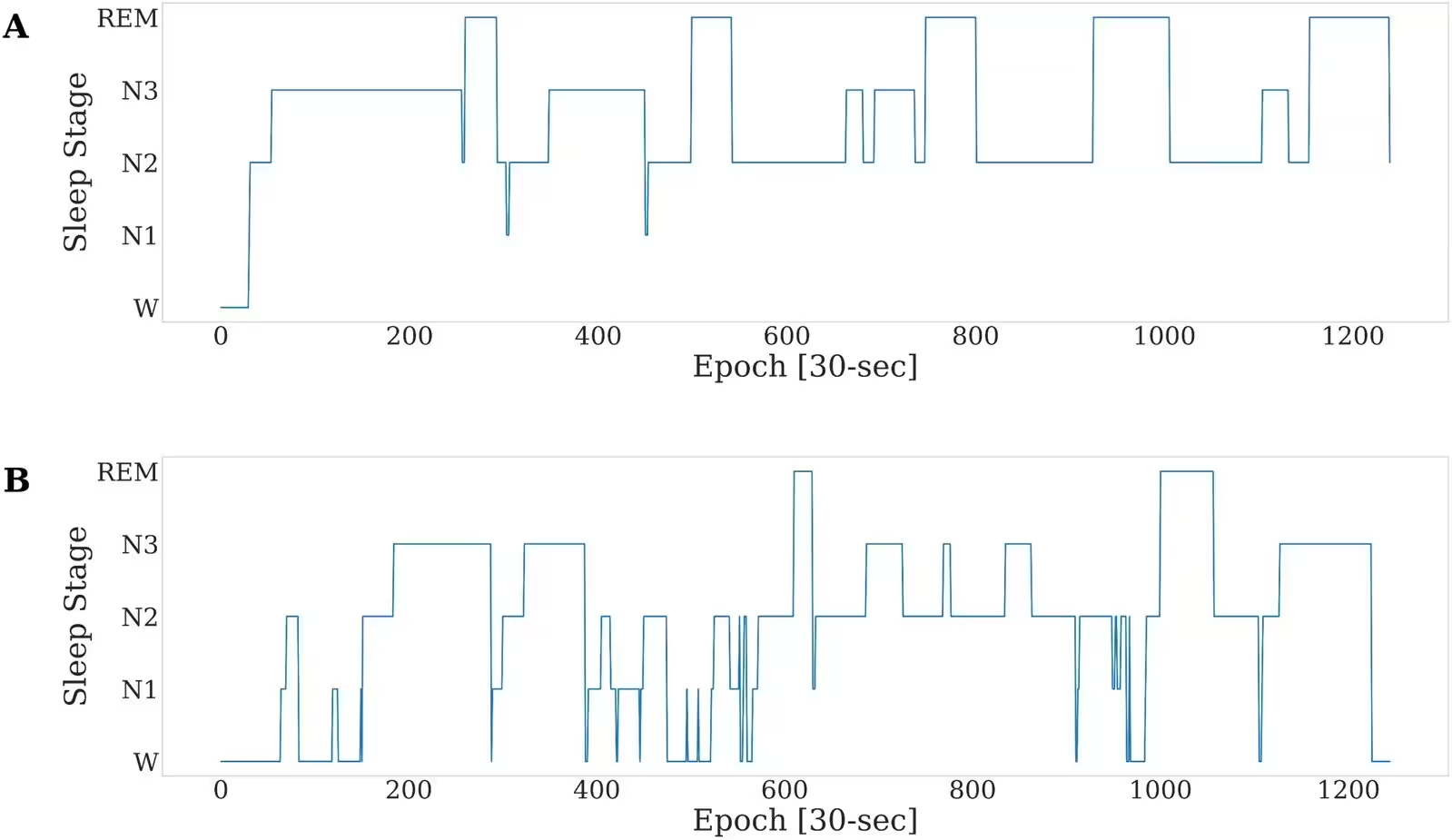
Human sleep is organized into cycles involving wakefulness, non-rapid eye movement (NREM), and rapid eye movement (REM) stages, with NREM further broken down into lighter and deeper phases. Healthy individuals typically display consistent patterns when moving between these different states throughout the night. However, sleep disorders create distinct distortions in these transition sequences, such as frequent shifts between wakefulness and light sleep in people with insomnia.
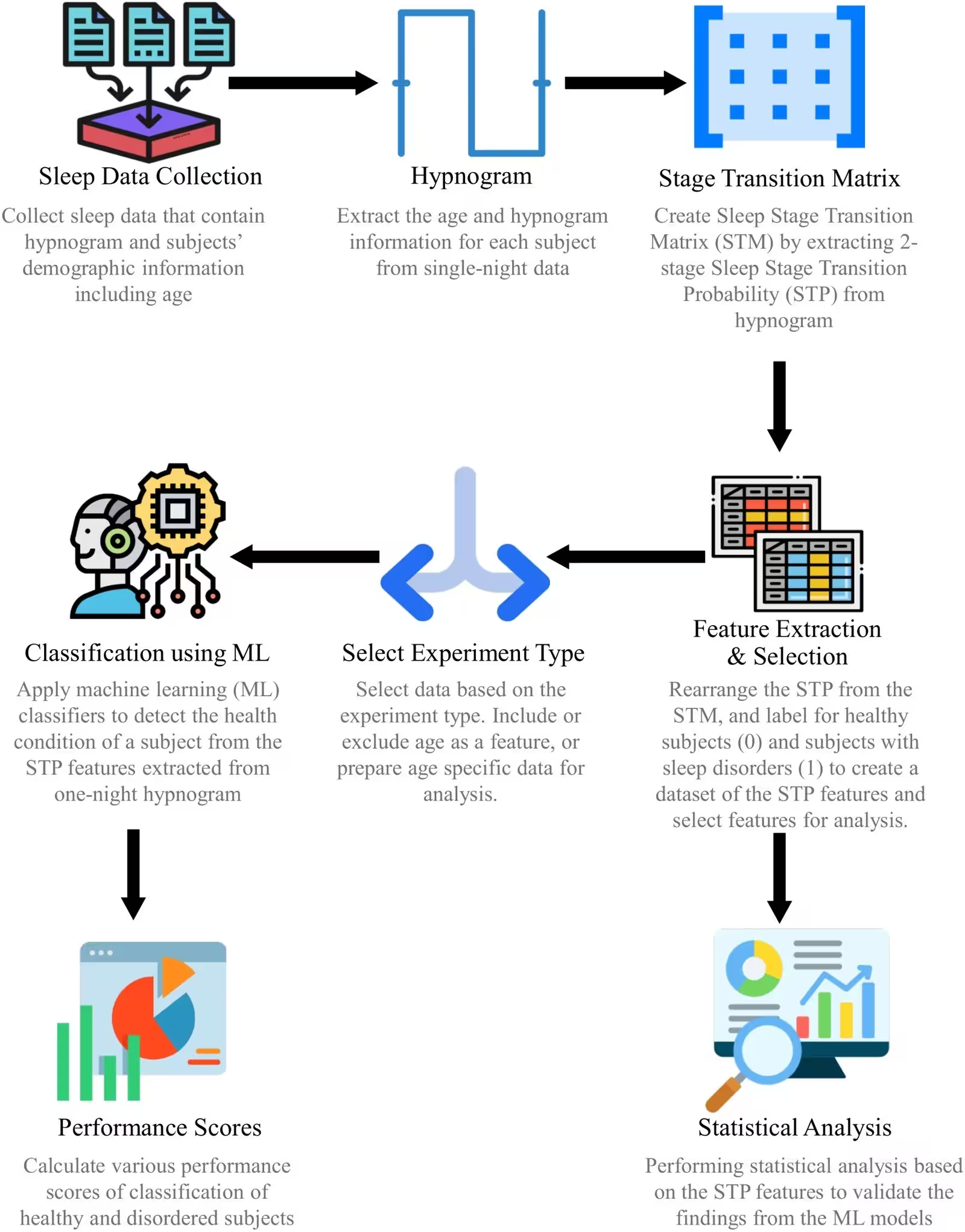
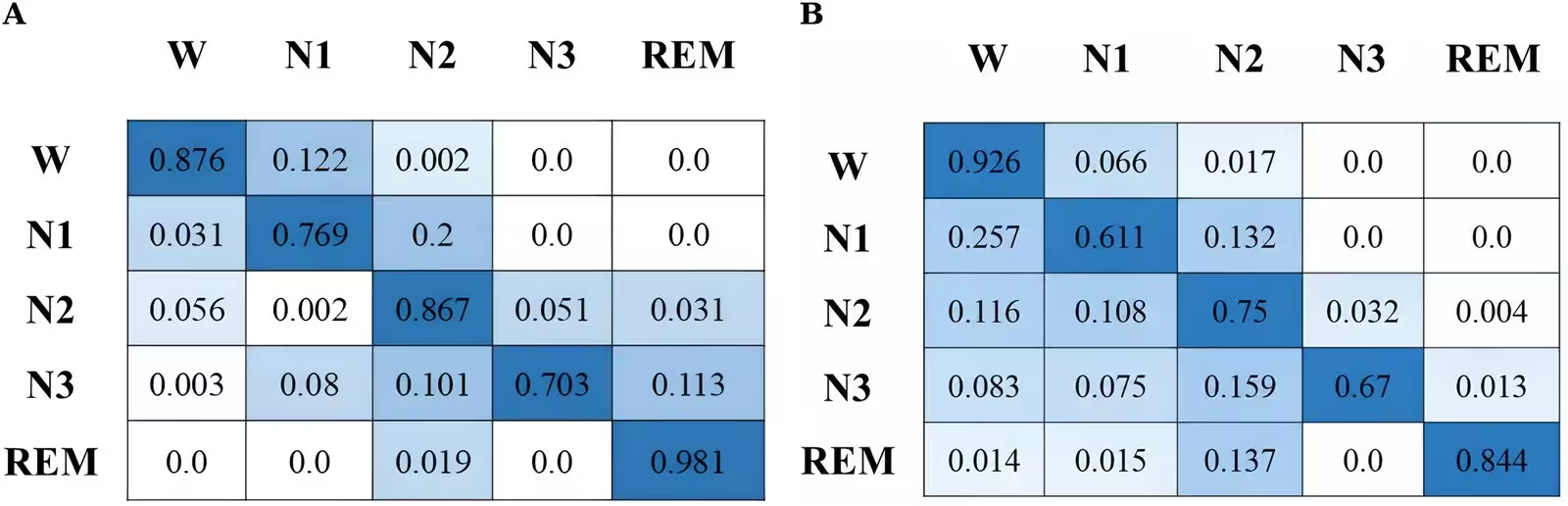
While traditional clinical diagnosis relies on polysomnography, which uses bulky sensor arrays, wearable devices offer a more accessible alternative through hypnogram-based analysis. A hypnogram records the progression of sleep stages over the course of the night. By extracting two-stage sleep stage transition probability features from these records, automated systems can evaluate the likelihood of a person moving from one specific sleep stage to another.
Comparing Age-Agnostic and Age-Specific Models
The research team analyzed 348 unique single-night hypnograms aggregated from four public sleep datasets, representing 137 healthy controls and 211 individuals across eleven different sleep disorder categories. They tested five experimental configurations, ranging from age-agnostic models that ignored age entirely to age-specific models trained exclusively on distinct age cohorts.
Generalised, age-agnostic models consistently achieved a baseline accuracy and F1 score of approximately eighty-five percent using ensemble algorithms like Random Forest and XGBoost. Incorporating age as a scaled feature or a group category yielded modest performance gains of one to four percent across the board.
In contrast, age-specific modelling demonstrated much larger benefits. Classifiers trained exclusively on older adults aged sixty and above achieved improvements of eight to twelve percent over baseline models, showing particular reliability in distinguishing healthy sleep from disordered sleep in this cohort. Younger cohorts, however, yielded lower and more variable performance, indicating that transition dynamics in younger individuals share more overlap regardless of health status.
Why Older Sleep Patterns Show Greater Distinctiveness
To uncover the physiological reasons behind the performance gap between age groups, the investigators performed a statistical validation using absolute difference matrices of transition probabilities. The analysis showed that older adults with sleep disorders exhibit drastic shifts in patterns that diverge sharply from healthy older controls. These variations were primarily concentrated in deep NREM sleep stages, particularly in transitions involving stage three sleep, known as N3.
Age-related physiological changes, such as reduced slow-wave sleep maintenance and increased sleep fragmentation, amplify the architectural signatures of sleep disturbances in older populations. Conversely, sleep architecture in younger adults remains less fragmented across health conditions, creating higher pattern overlap and making automated classification more difficult.
Pinpointing the Optimal Age Threshold
The researchers also conducted a sensitivity analysis across age intervals ranging from forty to seventy years to determine the ideal threshold for age-group stratification. Their findings indicated that while age-related sleep changes begin earlier in life, the most detectable shift in sleep architecture transitions occurs after age fifty. Performance differences between age cohorts peaked around the fifty to sixty-year range, confirming that fifty-five to sixty years serves as an optimal diagnostic threshold for age-aware screening systems.
The authors note important limitations to their study, including the heterogeneity introduced by combining multiple public datasets with different recording protocols and clinical backgrounds. Furthermore, because multiple disorders were grouped into a broad binary classification category, the findings reflect general health-versus-disorder discriminability rather than disorder-specific conclusions. Future prospective clinical trials with independently validated cohorts will be necessary before these age-aware algorithms can be implemented in routine healthcare settings.
The research was published in PLOS digital health on November 16, 2026.
This article has been fact checked for accuracy, with information verified against reputable sources. Learn more about us and our editorial process.
Last reviewed on .
Article history
- Latest version
Reference(s)
- Ali, Emran., et al. “Deciphering the impact of chronological age on sleep stage transition dynamics for disorder classification.” PLOS Digital Health, vol. 5, no. 11, November 16, 2026, pp. e0001800 Public Library of Science (PLoS), doi: 10.1371/journal.pdig.0001800. <https://doi.org/10.1371/journal.pdig.0001800>.
Cite this page:
- Posted by Robert Brown