Modular Open-Source Hardware System Lets Scientists Build Custom Lab Equipment
A new standardized electronics toolkit helps researchers construct custom lab devices, automate experiments, and learn coding without breaking the budget.
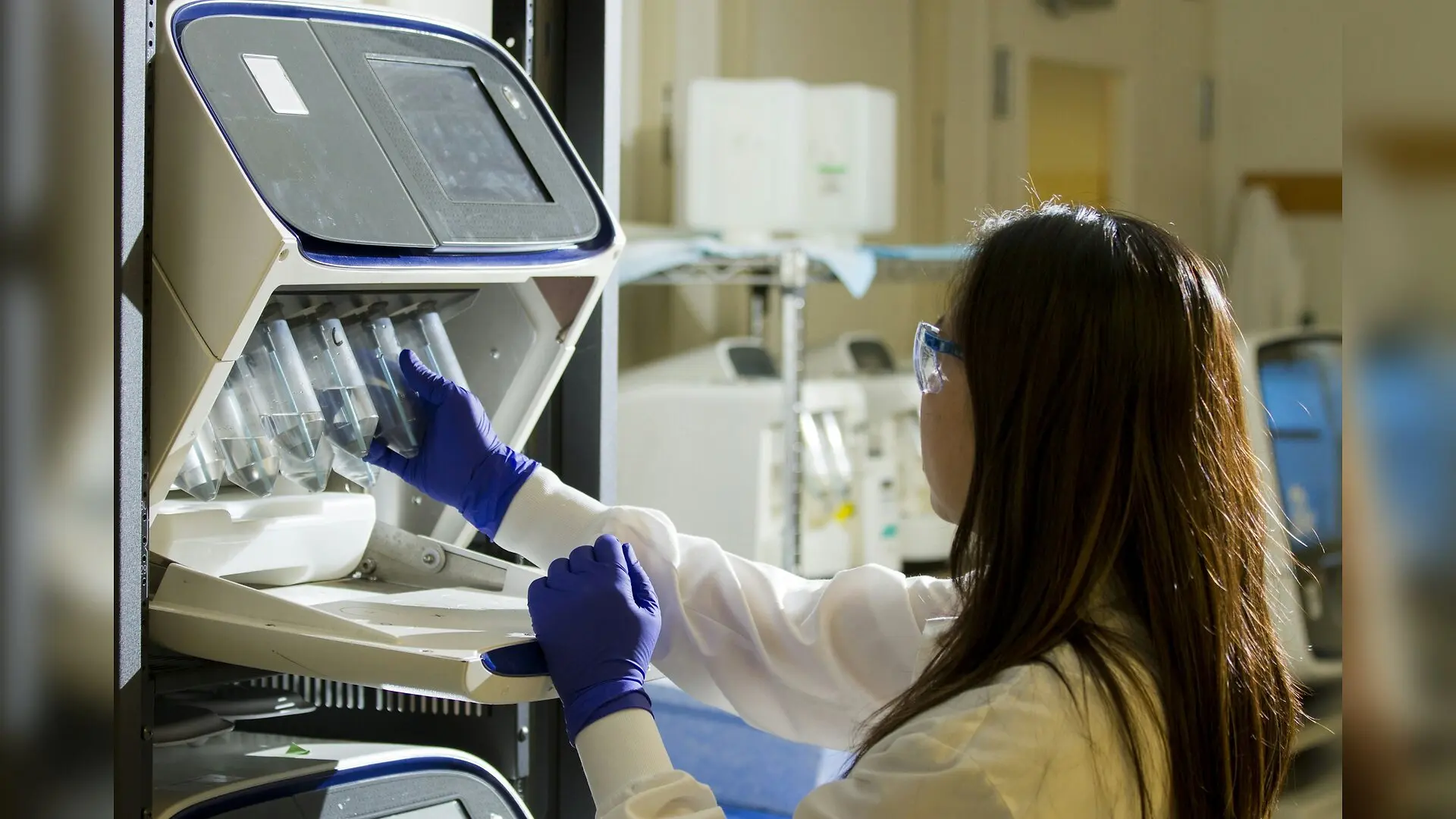
Scientific discoveries often stall because researchers lack the technical expertise or affordable tools to build and modify their own laboratory equipment, forcing them to rely on rigid commercial devices or alter their research questions to fit available technology. To bridge this gap, a collaborative team of researchers has developed BeeHive, a standardized and open-source modular electronics ecosystem designed to let scientists rapidly build custom instruments, control behavioural experiments, and teach themselves programming without needing an engineering degree.
How a Modular Hardware Toolkit Solves Laboratory Bottlenecks
The BeeHive system consists of a main microcontroller board coupled with function-specific daughter boards, each dedicated to a single task such as driving a motor, reading a temperature sensor, or opening a valve. Following design rules that prioritize simplicity, all printed circuit boards use through-hole components that can be easily soldered by hand within a couple of hours using affordable parts sourced from global online retailers. The hardware runs on a standard 12 volt direct current supply, making it portable and functional even in regions with unreliable power grid infrastructure.
The development team detailed the ecosystem and its neuroscience applications in a study published in the Royal Society Open Science. The main board carries an ESP32 microcontroller that can be programmed using MicroPython or C++, allowing researchers to use Python, one of the world’s most popular programming languages, for everything from experimental design to data analysis.
Testing Seven Custom Neuroscience Setups in the Laboratory
To demonstrate the versatility of the hardware, the authors implemented BeeHive across seven distinct experimental setups in their neuroscience laboratories. These applications include a reward delivery system for head-fixed mice running under a two-photon microscope, an automated mouse maze with closed-loop tracking, a motorized running wheel equipped with a clutch, and a two-channel odour stimulator for delivering precise chemical puffs to insects.
Additional applications featured a multiplexed gas analysis system for monitoring metabolic rates in small invertebrates, a five-choice serial reaction-time task box for mice, and a stand-alone manual controller for an open-source delta microscope stage. These builds proved that simple design rules can accommodate wildly different mechanical and sensory demands without requiring proprietary equipment.
A Dedicated Training Board to Lower the Barrier to Entry
One of the primary hurdles for life science researchers entering hardware development is learning how to code and wire electronic circuits simultaneously. To address this, the creators designed a dedicated training board containing push buttons, rotary encoders, relays, shift registers, and temperature sensors. This board allows students and early career researchers to practice programming logic and test experimental scripts safely before deploying them on expensive live animal setups.
During a 20-hour workshop held at the University of Sussex, undergraduate students, postgraduate candidates, and early career researchers successfully learned soldering, electronics theory, and programming by building mock experimental paradigms with the training board. Because the training hardware has a tiny physical footprint, researchers can easily pack it into a bag for out-of-the-lab demonstrations and field training.
Current Limitations and Future Directions for Global Open Science
While the initial implementations focus heavily on neuroscience because of the authors’ primary field of study, the underlying hardware architecture is entirely domain-agnostic. The authors note that the system can be readily adapted for plant sciences, environmental monitoring, or any discipline requiring precise hardware automation. Future development efforts will concentrate on expanding the library of available daughter boards and improving integration with existing open-source platforms to make custom instrumentation accessible to laboratories worldwide.
The research was published in Royal Society open science on November 18, 2026.
This article has been fact checked for accuracy, with information verified against reputable sources. Learn more about us and our editorial process.
Last reviewed on .
Article history
- Latest version
Reference(s)
- Sobianin, Ihor., et al. “BeeHive: a flexible open electronics platform for controlling research equipment and teaching electronics principles.” Royal Society Open Science, vol. 13, no. 11, November 18, 2026 The Royal Society, doi: 10.1098/rsos.261684. <https://doi.org/10.1098/rsos.261684>.
Cite this page:
- Posted by Robert Brown