Scientists Discover Two Massive Tears Forming Deep Beneath Iran
Geologists have discovered two massive tears in a tectonic plate beneath Iran that have been widening for millions of years, signaling potential shifts.
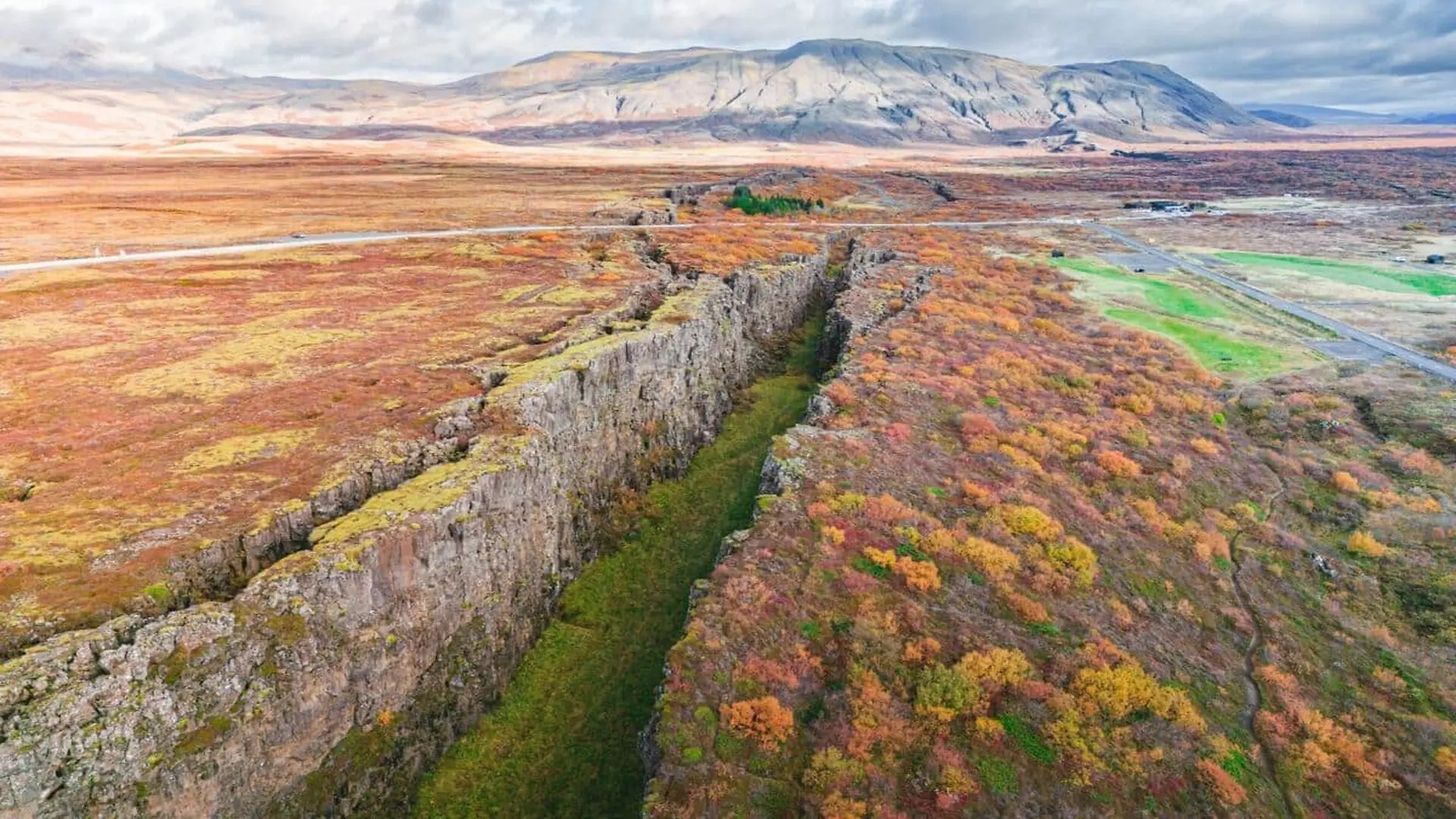
Geoscientists have uncovered a pair of massive ruptures within the Arabian Plate beneath southeastern Iran, offering a rare glimpse into the complex mechanisms that drive tectonic plate deformation. The study, recently published in Nature Geoscience, details how two distinct geological processes are carving tears into the Earth’s lithosphere as an ancient ocean basin vanishes and continental masses collide.
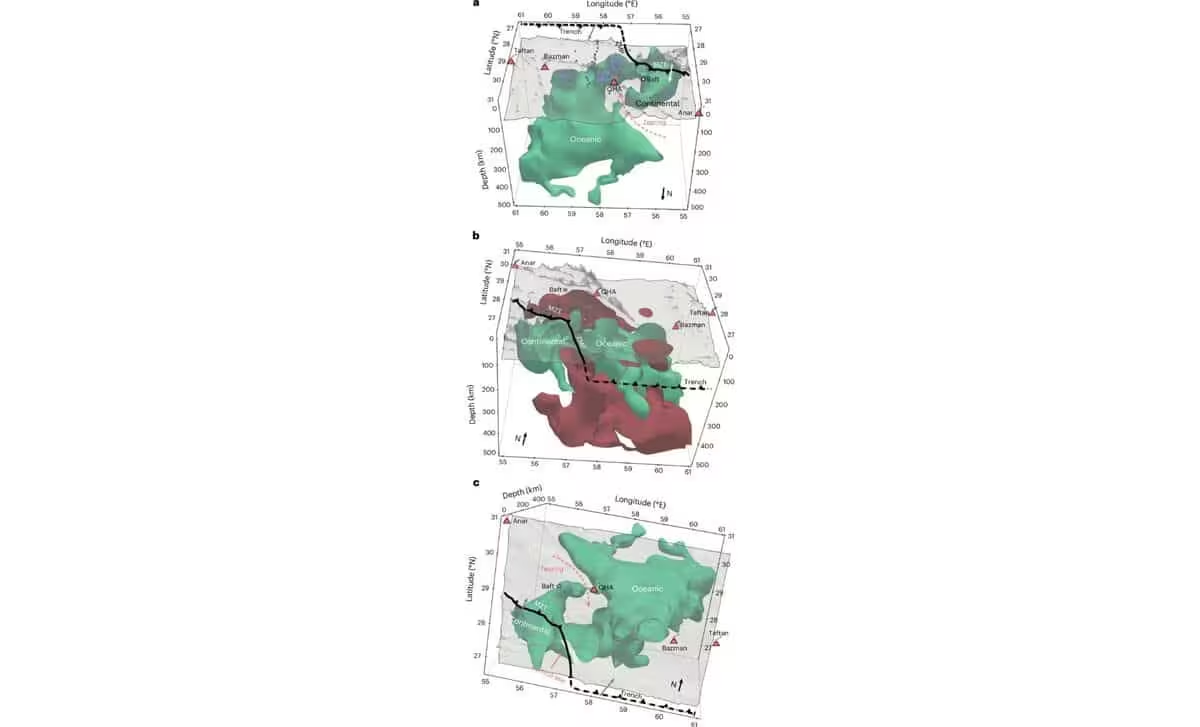
Led by an international team from the Chinese Academy of Sciences, the research utilized seismic data captured by 69 monitoring stations between 2017 and 2018. By tracking the velocity of seismic waves as they traversed the deep crust, the researchers were able to produce high-resolution tomographic images of the tectonic structures beneath the Zagros Mountains and the Makran subduction zone.
Deep Earth Imaging Reveals Structural Fractures
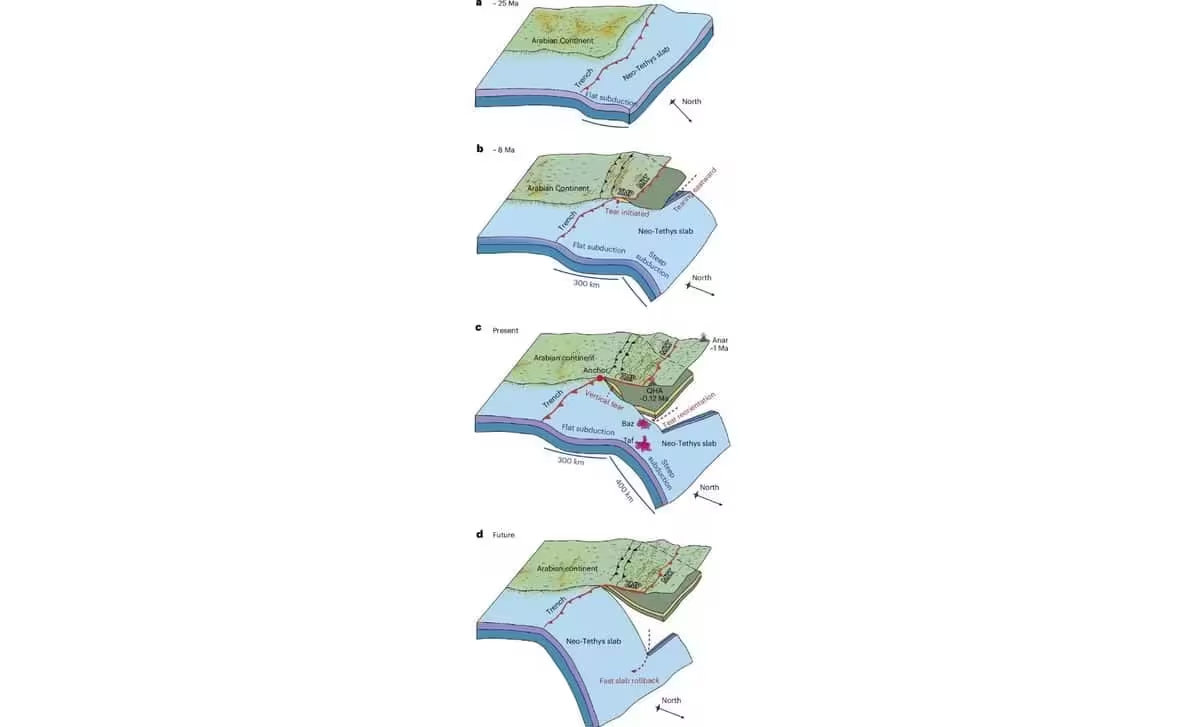
The subsurface imaging reveals two unique tears, each formed by different physical forces. The first is a sprawling horizontal rupture located at the boundary where the continental collision of the Zagros region meets the subduction occurring in the Makran zone. Researchers suggest this tear is a direct result of the inherent difference between the buoyant continental crust and the denser, thinner oceanic lithosphere, which is currently being forced down into the mantle to depths of 450 kilometers.
The second rupture, situated closer to the surface near the Makran Trench, is more vertical in nature. Unlike the first, which is driven by compositional differences, this fracture appears to be the consequence of intense lateral plate movement at a transform boundary. As the continental plate pushes northward, this secondary tear has begun to propagate southward, marking a distinct phase in the region’s ongoing geological transformation.
A Shifting Geological Landscape
The coexistence of these two tears provides a rare look at the transition from oceanic subduction to full-scale continental collision, a process central to the Wilson Cycle. While these fractures originated independently millions of years ago, current geological modeling suggests they are slowly consuming the lithospheric boundary between them. Scientists predict these two ruptures will eventually merge into a single, interconnected system, though this evolution will occur over an immense timescale.
These findings also shed light on the final stages of the Neo-Tethys Ocean, which previously divided the converging landmasses. As the oceanic floor continues to descend and break apart, it leaves behind a fragmented trail that informs researchers about the historical closure of ancient ocean basins.
Beyond the structural implications, the study raises new questions regarding regional magmatism. The discovery that molten magma may be infiltrating the space opened by these ruptures suggests that the tearing process could play a significant role in future volcanic activity. As researchers continue to monitor these deep-seated deformations, the site stands as a primary laboratory for understanding how the Earth’s crust breaks and shifts during the intense pressure of plate convergence.
This article has been fact checked for accuracy, with information verified against reputable sources. Learn more about us and our editorial process.
Last reviewed on .
Article history
- Latest version
Reference(s)
- Lan, Haiqiang. “Seismic evidence for double slab tears at the Neo-Tethyan subduction–collision transition - Nature Geoscience.”, November 4, 2026, pp. 1-8. Nature, doi: 10.1038/s41561-026-02129-4. <https://www.nature.com/articles/s41561-026-02129-4>.
Cite this page:
- Posted by Vikram Desai