Archaeologists Challenge Centuries of History Claiming This Iron Age Monarch Was Actually A Woman
New analysis of Iron Age coins suggests a powerful female ruler may have played a pivotal role in the events preceding Rome’s invasion of Britain.
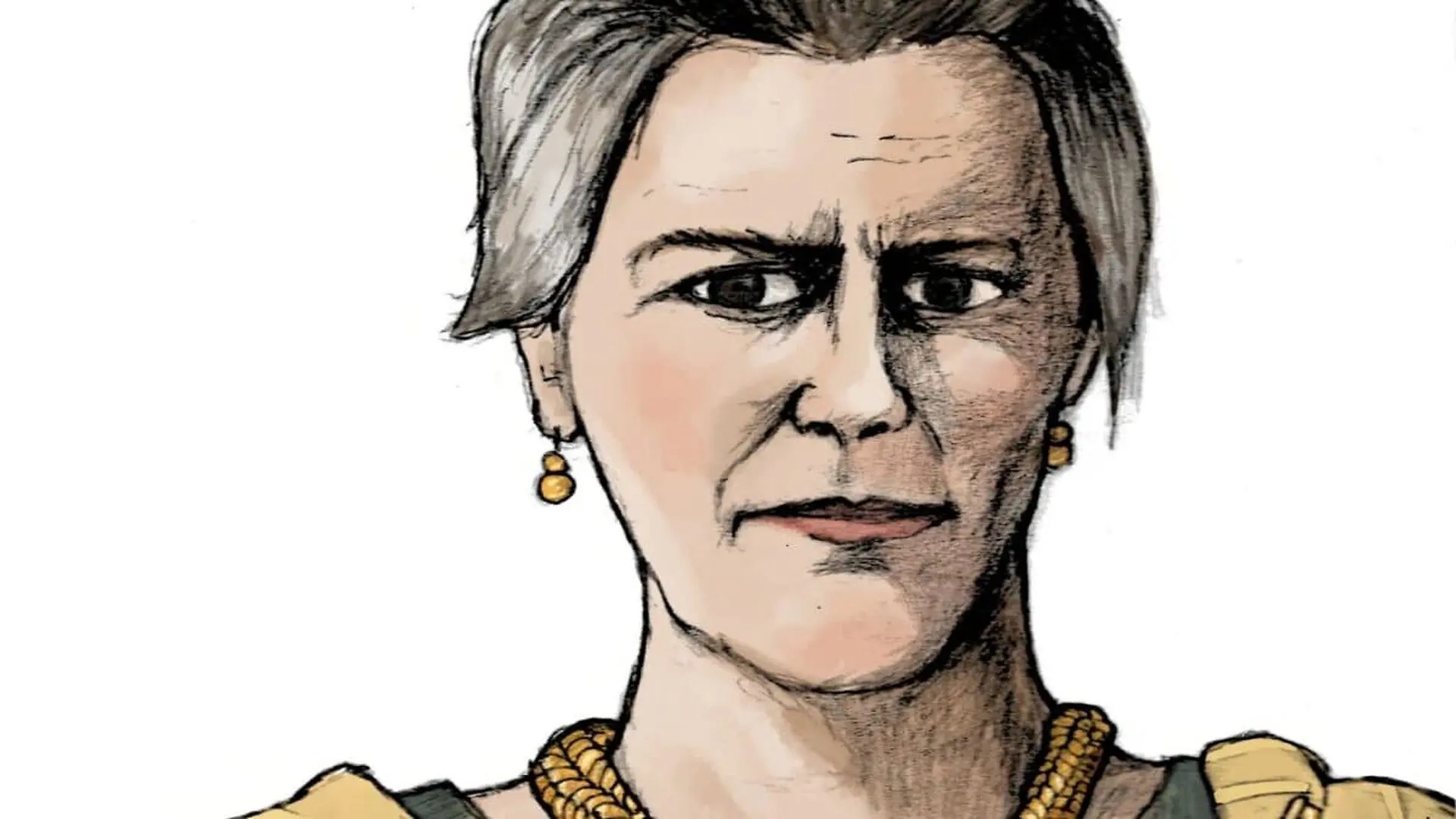
For centuries, the monarch known as Verica has been categorized by historians as a male ruler of the Atrebates tribe, an Iron Age leader whose flight from Britain triggered the Roman invasion of 43 CE. However, a provocative new analysis suggests that this figure, long considered a key pawn in Emperor Claudius’s geopolitical ambitions, may have been a woman.
This reassessment, detailed in the book Caratacus: Great King of Britain and discussed in Current Archaeology, argues that 19th-century scholars imposed a patriarchal lens on ambiguous historical fragments. By re-examining the linguistic and archaeological record, researchers are questioning whether Verica—a ruler who likely provided intelligence on landing sites and tribal tactics to Rome—was actually one of the most influential female leaders in British history.
Linguistic and Numismatic Clues
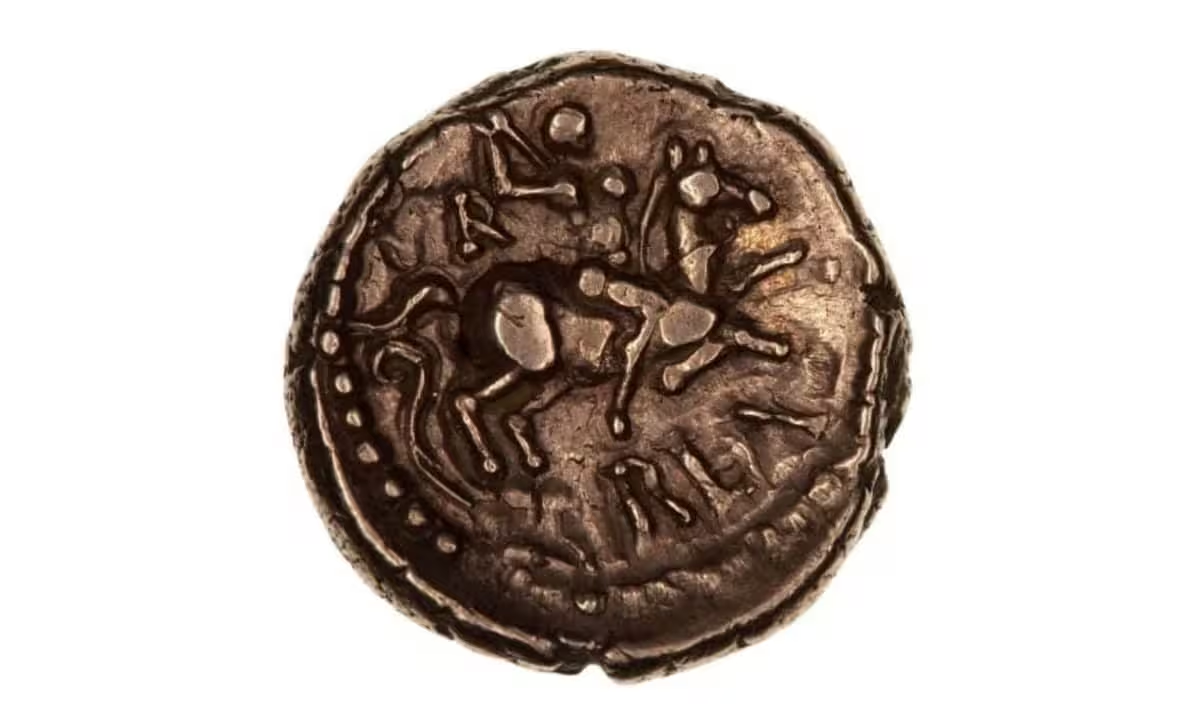
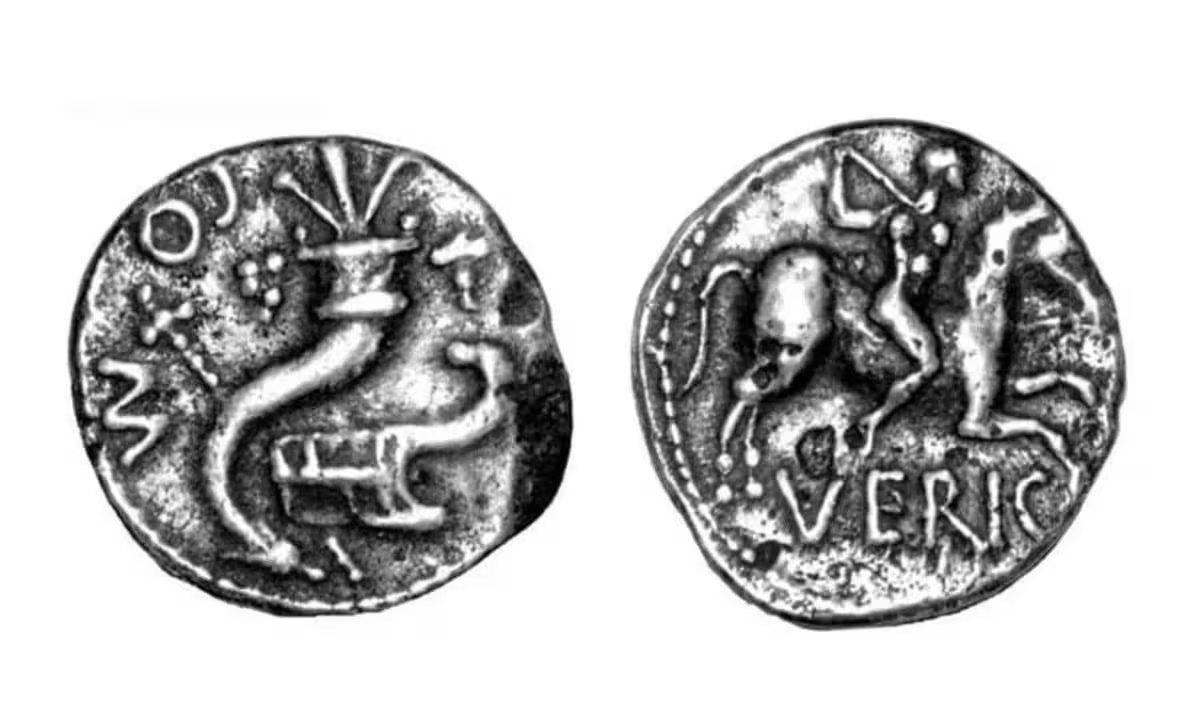
The argument for a female identity rests heavily on the naming conventions and imagery found on Verica’s coinage. While male Iron Age rulers typically used names ending in -us or -os, such as Caratacus, Verica follows a pattern of -a endings common to female figures. Furthermore, Latin inscriptions on the coins often include the abbreviation COM F. Traditionally interpreted as Commios filius (son of Commios), researchers now argue it could just as easily stand for Commios filia (daughter of Commios).
The imagery on these coins provides perhaps the most striking evidence. Unlike the muscular male warriors depicted on rival currencies, several of Verica’s coins feature a slender, bare-breasted rider carrying a spear. Proponents of the theory view this as a symbolic representation of a female sovereign. When Roman writers like Cassius Dio referred to the exiled leader as Berikos, critics suggest they may have simply masculinized a Celtic name that originally denoted a female leader.
Academic Skepticism
The proposal has met with significant pushback from specialists. Oxford archaeologist Roger Tomlin has noted that names ending in -a were not exclusively feminine in the ancient world, and others have pointed out that the iconography on Verica’s coins is inconsistent. Certain specimens show male horsemen or priestly figures, and some portrayals are distinctly masculine, suggesting the imagery might be symbolic or derived from Roman prototypes rather than literal portraits of the monarch.
Furthermore, experts caution against assuming that the title rex, which appears on the coinage, could not apply to a woman, or that the absence of definitive historical records allows for reinterpretation based on modern social assumptions. As noted by coin specialist Daphne Nash Briggs, interpreting these ancient artifacts requires navigating a minefield of symbolic representation where the image on a coin may have little to do with the physical appearance of the ruler.
Societal Context and DNA Evidence
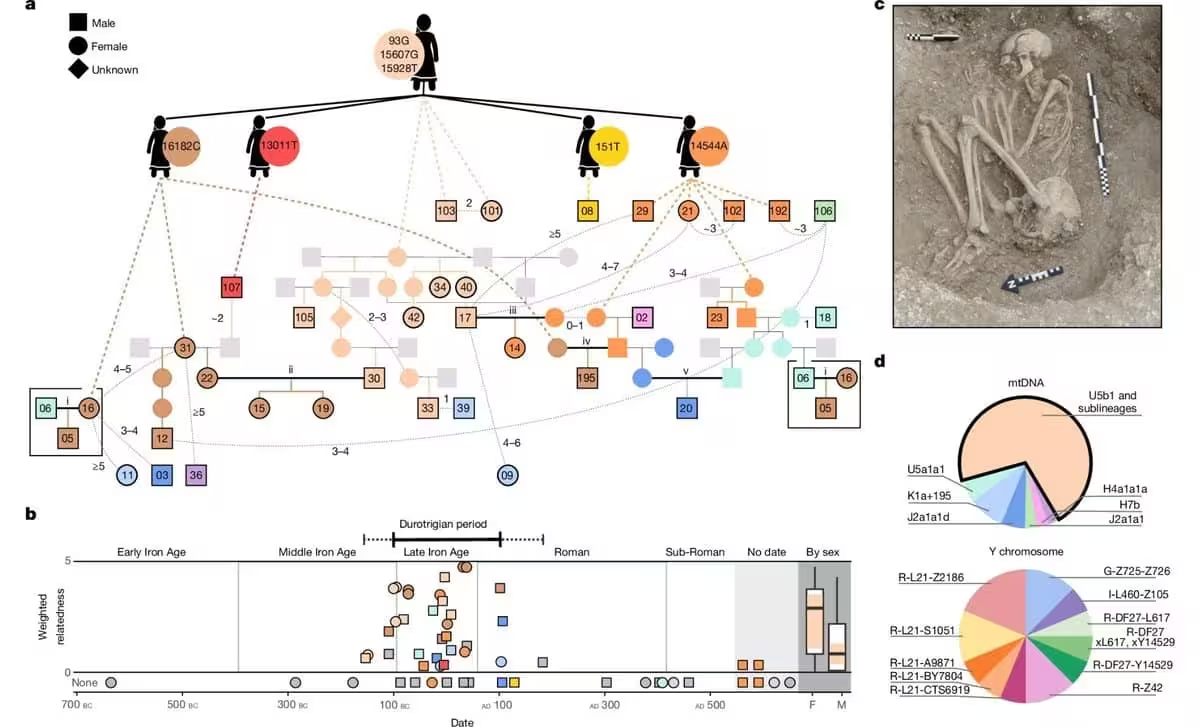
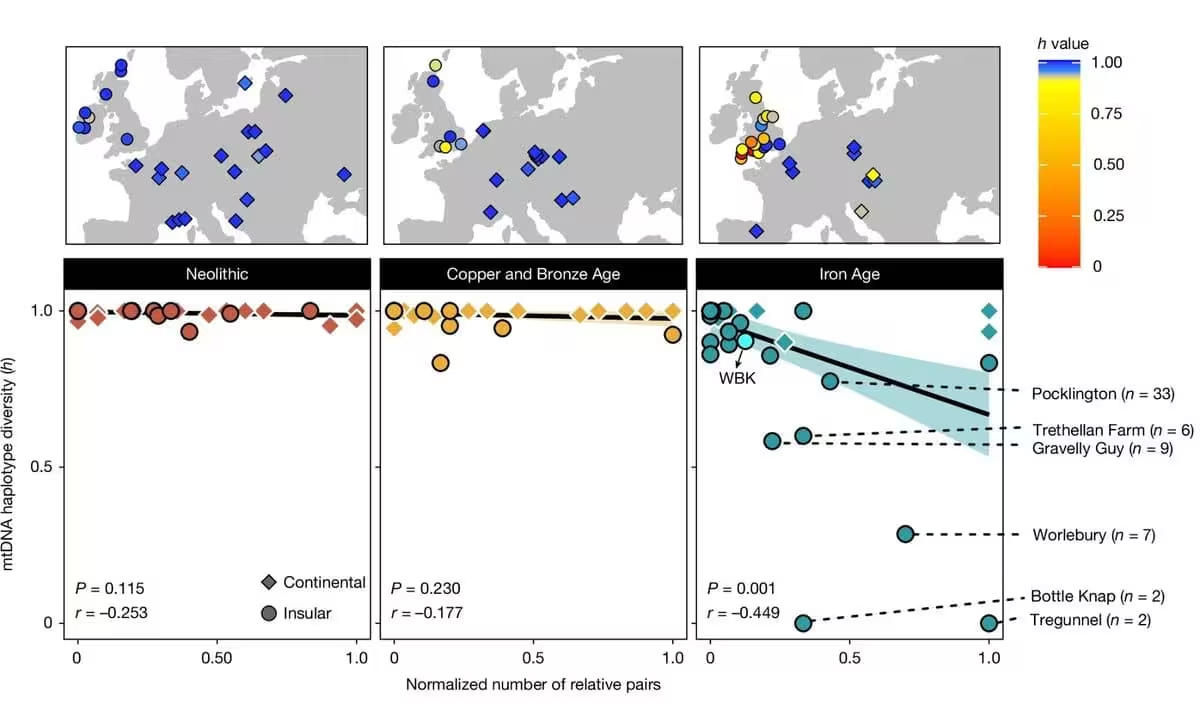
The debate is bolstered by recent advancements in genetic research. A study published in Nature regarding Iron Age burials at Winterborne Kingston reveals a pattern of matrilocality, where individuals shared rare mitochondrial lineages inherited through mothers, while paternal lineages showed high diversity. This suggests that women in these communities held significant status and may have been central to the inheritance of land and power.
This cultural backdrop makes the existence of a powerful female leader like Verica more plausible, even if it does not serve as smoking-gun proof. Furthermore, some historians suggest the Roman narrative of a “displaced monarch” seeking help from Claudius may have been colored by Roman biases against the emperor himself, who was often depicted by contemporary writers as being easily manipulated by women.
A Catalyst for Conquest
Whether male or female, Verica occupied a pivotal role in the collapse of the pre-Roman order. As the Atrebates faced increasing aggression from the expanding Catuvellauni tribe, led by figures like Caratacus, the alliance between Verica and Rome provided the perfect pretext for imperial intervention. The presence of Roman-style military infrastructure, such as granaries and imported weaponry near Chichester, suggests that the empire had invested in the Atrebates as a client state long before the actual landing of the legions.
When Verica was finally ousted around 40 CE, the loss of this ally forced the Roman hand. While the question of the ruler’s gender remains an open subject for debate, the historical reality is clear: the political crisis surrounding this individual served as the immediate spark for the conquest that permanently reshaped the trajectory of Britain.
This article has been fact checked for accuracy, with information verified against reputable sources. Learn more about us and our editorial process.
Last reviewed on .
Article history
- Latest version
Reference(s)
- Cassidy, Lara. “Continental influx and pervasive matrilocality in Iron Age Britain - Nature.”, vol. 637, no. 8048, pp. 1136-1142. Nature, doi: 10.1038/s41586-024-08409-6. <https://www.nature.com/articles/s41586-024-08409-6>.
Cite this page:
- Posted by Vikram Desai