Archaeologists Discover 10-Ton Neolithic Statue And Mysterious Burials Near Paris
Archaeologists have uncovered a 6,500-year-old burial complex near Paris featuring a massive stone monument, 11 graves, and rare ancient construction remains.
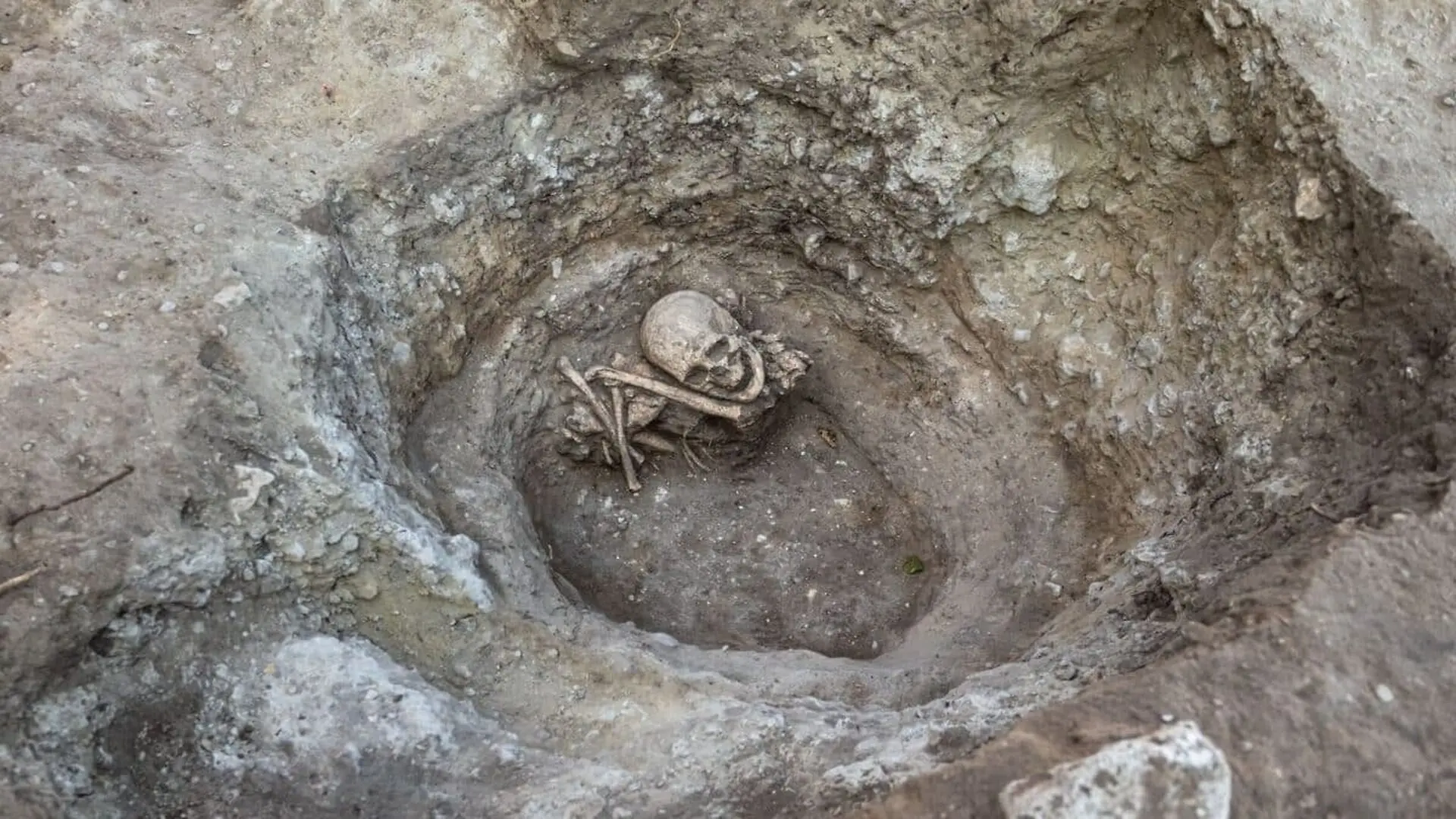
Archaeologists in the Île-de-France region have unearthed a rare Middle Neolithic funerary complex that challenges existing understandings of ancient burial practices near Paris. Dating back to between 4750 and 4300 BC, the site at Champigny-sur-Marne features a collection of megalithic monuments and human remains, offering a glimpse into a period where isolated graves were the local norm.
The excavation, conducted by France’s National Institute for Preventive Archaeological Research (Inrap), revealed 30 megalithic blocks. The centerpiece is a massive anthropomorphic menhir, measuring roughly 3 meters in length and weighing an estimated 9.7 metric tons. The stone was found resting within a pit, suggesting it was once standing before it was intentionally or accidentally abandoned.
Detailed analysis of the statue reveals intentional craftsmanship. The stone surface features an engraved belt and a series of circular depressions. Researchers also noted the presence of potential black and white pigments, raising the possibility that the monolith was once brightly decorated. Accompanying the large statue are two smaller sandstone monuments, including a miniature menhir that may have served as a territorial marker.
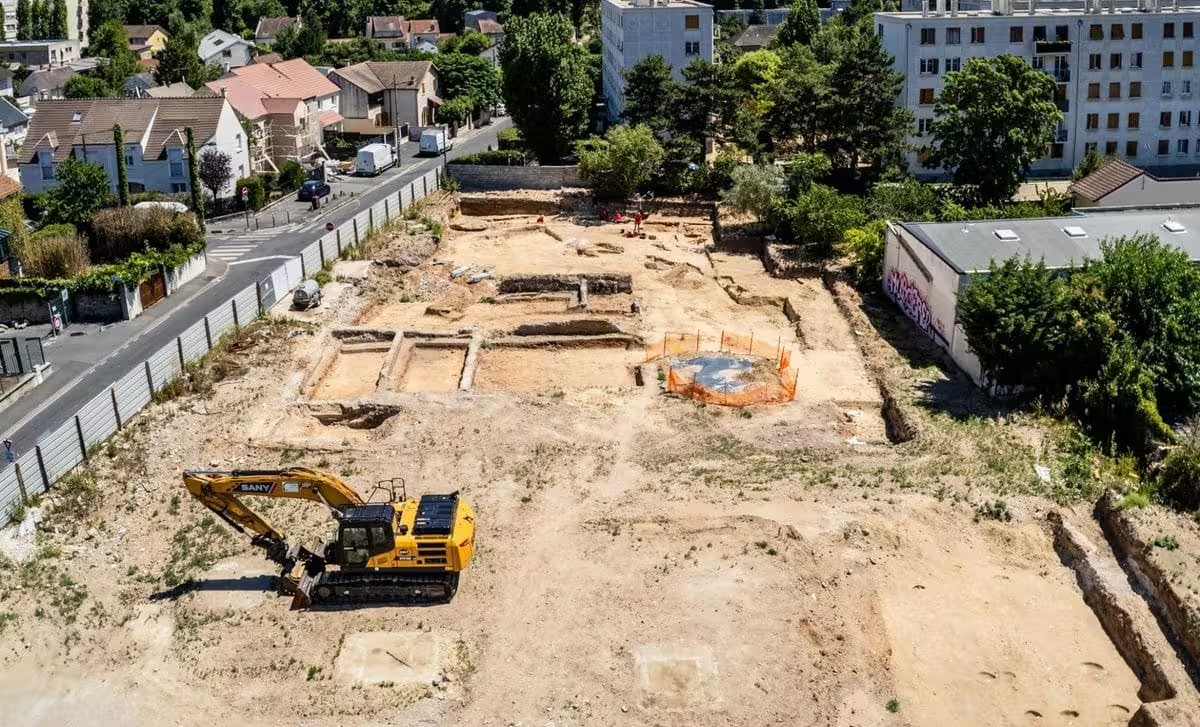
The site contains 11 distinct burials, most of which include individuals laid out in an extended position. Among the findings were flint tools, projectile points, and a local sandstone axe. One burial, however, stands out: an individual was placed in a seated position within a narrow, circular pit, their lower extremities encased in a thick layer of calcite—a ritualistic departure from the other interments that remains a mystery to the team.
Neolithic Engineering and Landscape Architecture
Perhaps most intriguing is the use of a sophisticated, early form of mortar. Neolithic builders on the site combined carbonate-rich sand, silt, gravel, and water to create a durable, hardening material. This “primitive cement” was used to reinforce grave boundaries and support the massive megalithic structures. While similar construction techniques have been observed in Mediterranean Neolithic settlements, seeing this technology applied to a funerary complex in the Paris basin is highly significant.
The team also identified a 30-square-meter earthen mound constructed from brown silt. While it visually mimics a barrow or burial monument, excavations revealed no human remains within. Instead, the mound contains structural elements like palisade trenches and postholes, suggesting it may have functioned as a symbolic or landscape-defining feature rather than a tomb.
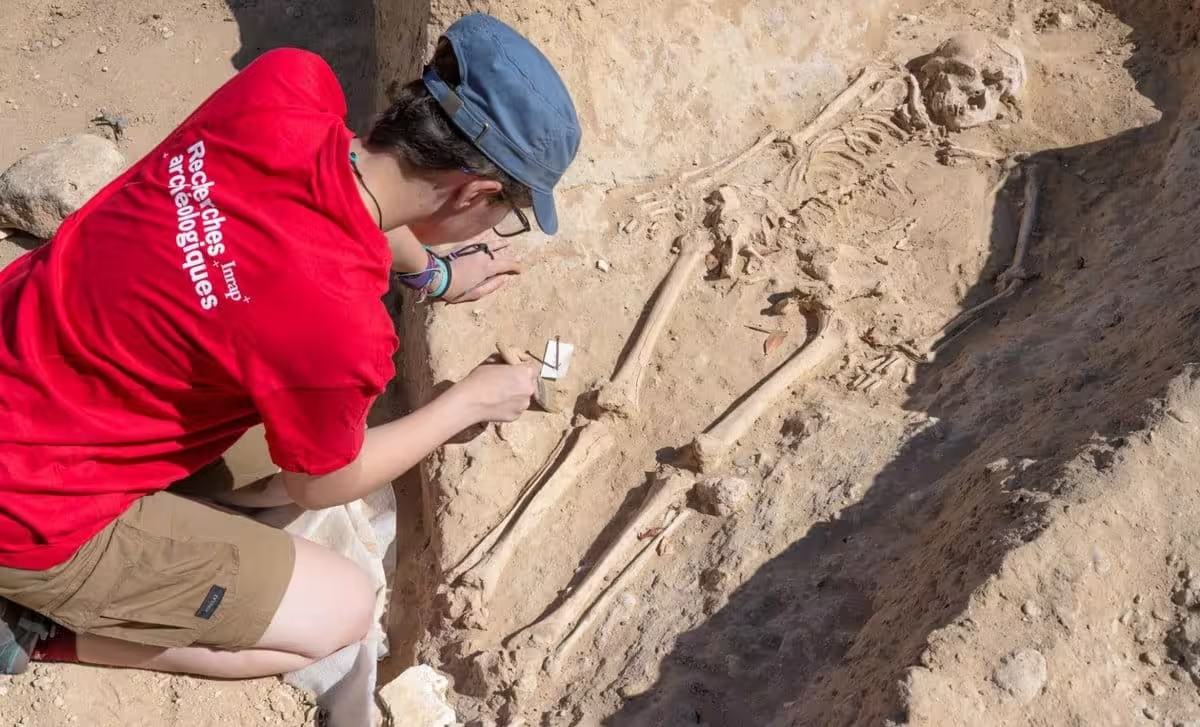
As noted by La Brújula Verde, the discovery aligns chronologically with the Cerny culture cemeteries found in the Seine and Yonne valleys, yet it does not fit neatly into known cultural classifications. To solve these questions, archaeologists are now moving into a phase of rigorous laboratory analysis. Ancient DNA testing and isotopic studies of the remains are expected to reveal new information regarding the diet, health, and ancestral origins of this Neolithic community, ultimately clarifying how this site functioned within the broader landscape of prehistoric France.
This article has been fact checked for accuracy, with information verified against reputable sources. Learn more about us and our editorial process.
Last reviewed on .
Article history
- Latest version
Reference(s)
- “Actualité | Des sépultures et des menhirs du Néolithique découverts à Champigny-sur-Marne (Val-de-Marne).”, November 2, 2026 Inrap <https://www.inrap.fr/des-sepultures-et-des-menhirs-du-neolithique-decouverts-champigny-sur-marne-val-21017>.
- <https://www.labrujulaverde.com/en/2026/11/archaeologists-find-a-neolithic-10-ton-human-shaped-menhir-statue-on-the-edge-of-paris/>.
Cite this page:
- Posted by Vikram Desai