Supercritical Carbon Dioxide Waves Clean Tiny Wafers
Simulations reveal how pressure oscillations in supercritical carbon dioxide can dislodge stubborn metal nanoparticles from silicon microstructures.

Tiny copper particles clinging to delicate silicon wafers can spell disaster for modern microchips, but a green cleaning approach using pressurized carbon dioxide might offer a safer way to clear them away. Researchers have used advanced computer simulations to model how oscillating flows of supercritical carbon dioxide, which is carbon dioxide held at a temperature and pressure where it acts partly like a liquid and partly like a gas, can dislodge microscopic debris without damaging fragile microstructures.
The semiconductor industry relies heavily on pure silicon to build integrated circuits, but manufacturing processes routinely leave behind unwanted metallic contaminants. Particles measuring more than twenty-five percent of a device feature size can cause complete circuit failures. Traditional wet cleaning methods often involve harsh chemical solutions, mechanical brushes that scratch surfaces, and massive amounts of pure water, creating significant environmental and financial hurdles. In contrast, supercritical carbon dioxide provides near-zero surface tension, high diffusivity, and easy recyclability, making it an attractive alternative for green manufacturing.
How Oscillating Pressure Waves Shift Fluid Dynamics
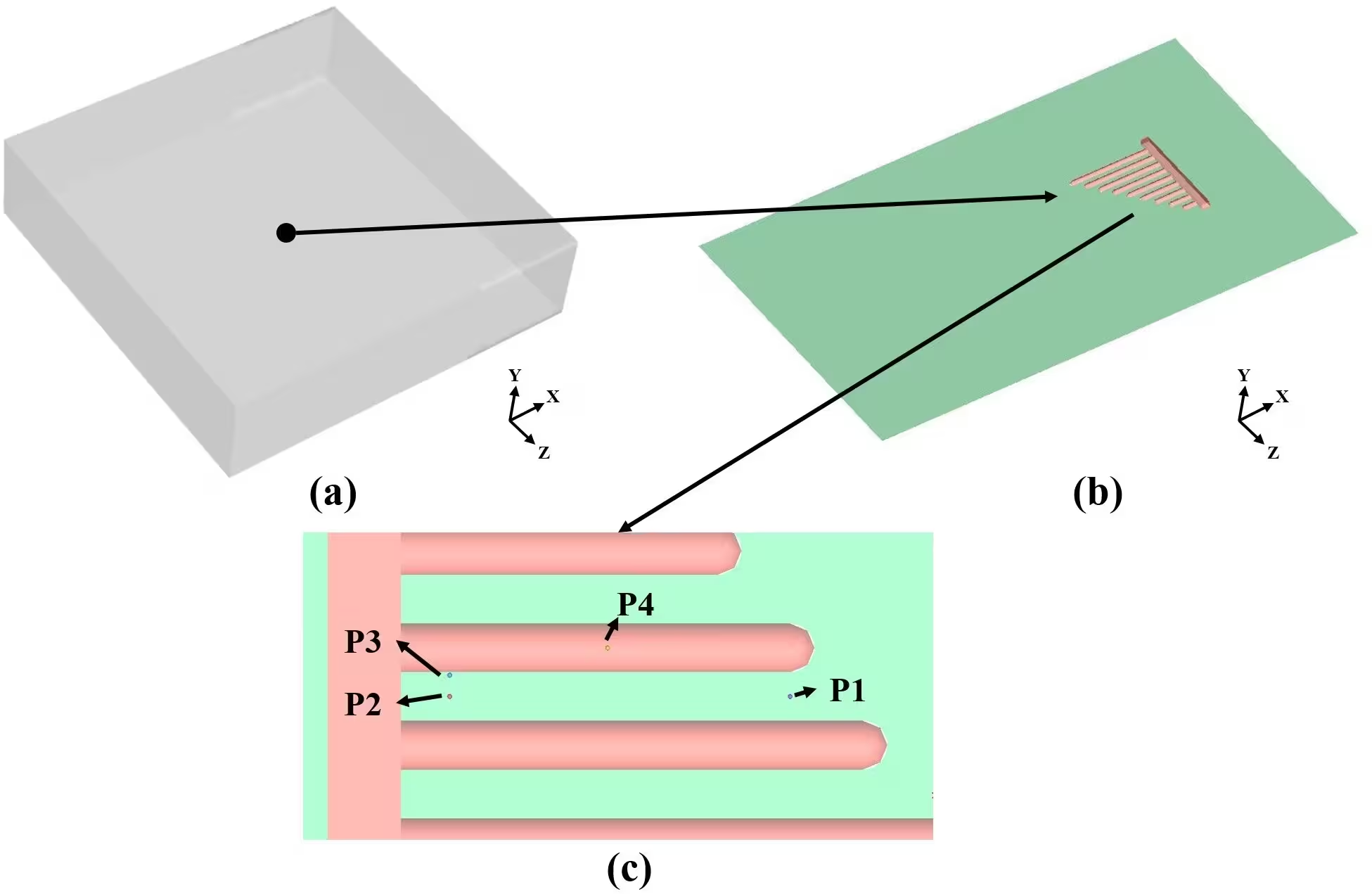
To understand how this fluid cleans microstructures, the team set up a transient computational fluid dynamics framework to simulate a silicon wafer featuring a cantilever beam structure. Within this virtual domain, copper particles ranging from fifty to one thousand nanometers in diameter were placed inside narrow gullies and atop exposed ledges. The simulation treated the fluid as a variable-density real gas, updating properties like viscosity and thermal conductivity through thermodynamic data from NIST REFPROP as pressure changed periodically over time.
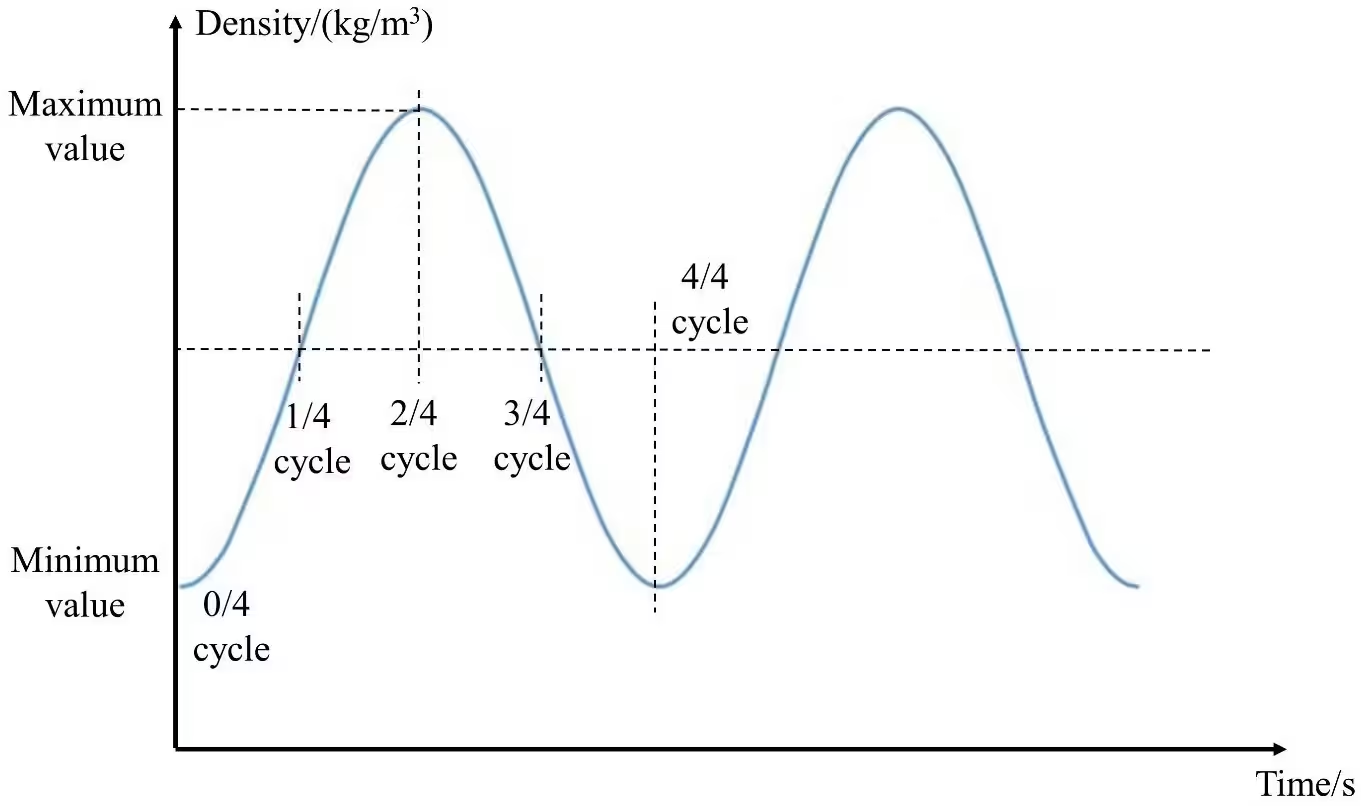
The analysis, published in PLOS One, demonstrated that periodically altering the chamber pressure causes rhythmic shifts in fluid density and viscosity. These property variations generate local velocity fluctuations that impart both horizontal drag forces and vertical lift forces on the trapped particles. The vertical force acts in the opposite direction of the van der Waals and electrostatic attraction holding the particle to the wafer, effectively lightening the adhesive load and making it easier for horizontal forces to sweep the contaminant away.
Which Microscopic Locations Prove Hardest to Clean?
Not all areas of a silicon microstructure experience the same cleaning power. The investigation revealed that particles positioned at the edge of narrow gullies face much higher fluid velocities because the restricted passage forces the carbon dioxide to accelerate, resulting in horizontal forces exceeding one hundred times the values seen elsewhere. Particles sitting atop the open cantilever top, however, experience weaker local momentum exchange and lower pressure gradients, rendering them much more stubborn to remove.
When the team adjusted the operating conditions, they discovered that increasing the oscillation frequency and widening the pressure range significantly boosted the forces acting on the particles. Raising the fluid temperature to 315 Kelvin created an optimal balance where thermophysical property variations reached high levels, driving peak vertical forces to thousands of piconewtons.
Why Larger Nanoparticles Demand Tailored Parameters
Evaluating sliding and rolling removal margins showed that particles predominantly detach via rolling because the required moment is lower than that for sliding. However, cleaning efficiency drops as particle size increases. Under baseline conditions with a low oscillation frequency of fifteen per minute and a narrow pressure range, particles larger than two hundred nanometers could not be dislodged by either sliding or rolling.
By optimizing the operating parameters to an oscillation frequency of 120 per minute, a pressure range between eight and twelve megapascals, and a temperature of 315 Kelvin, the team expanded the cleaning window. Under these tuned conditions, the model predicted positive removal margins for larger particles up to one thousand nanometers in size. The authors note that while these simulations provide valuable mechanistic insights, real-world factors such as surface roughness, irregular particle shapes, and complex chamber geometries will require further study to refine industrial cleaning equipment.
The research was published in PLOS One on November 17, 2026.
This article has been fact checked for accuracy, with information verified against reputable sources. Learn more about us and our editorial process.
Last reviewed on .
Article history
- Latest version
Reference(s)
- Deng, Tao., et al. “Numerical study of particle removal from silicon wafers by supercritical CO2 in oscillatory cleaning mode.” PLOS One, vol. 21, no. 11, November 17, 2026, pp. e0349637 Public Library of Science (PLoS), doi: 10.1371/journal.pone.0349637. <https://doi.org/10.1371/journal.pone.0349637>.
Cite this page:
- Posted by Anjali Singh