Secret 1960s London Underground Tests Dropped Anthrax‑Like Spores That Traveled 10 Miles
Britain’s Cold War secret: bacteria released in the London Tube, now revealed how far the spores spread underground.
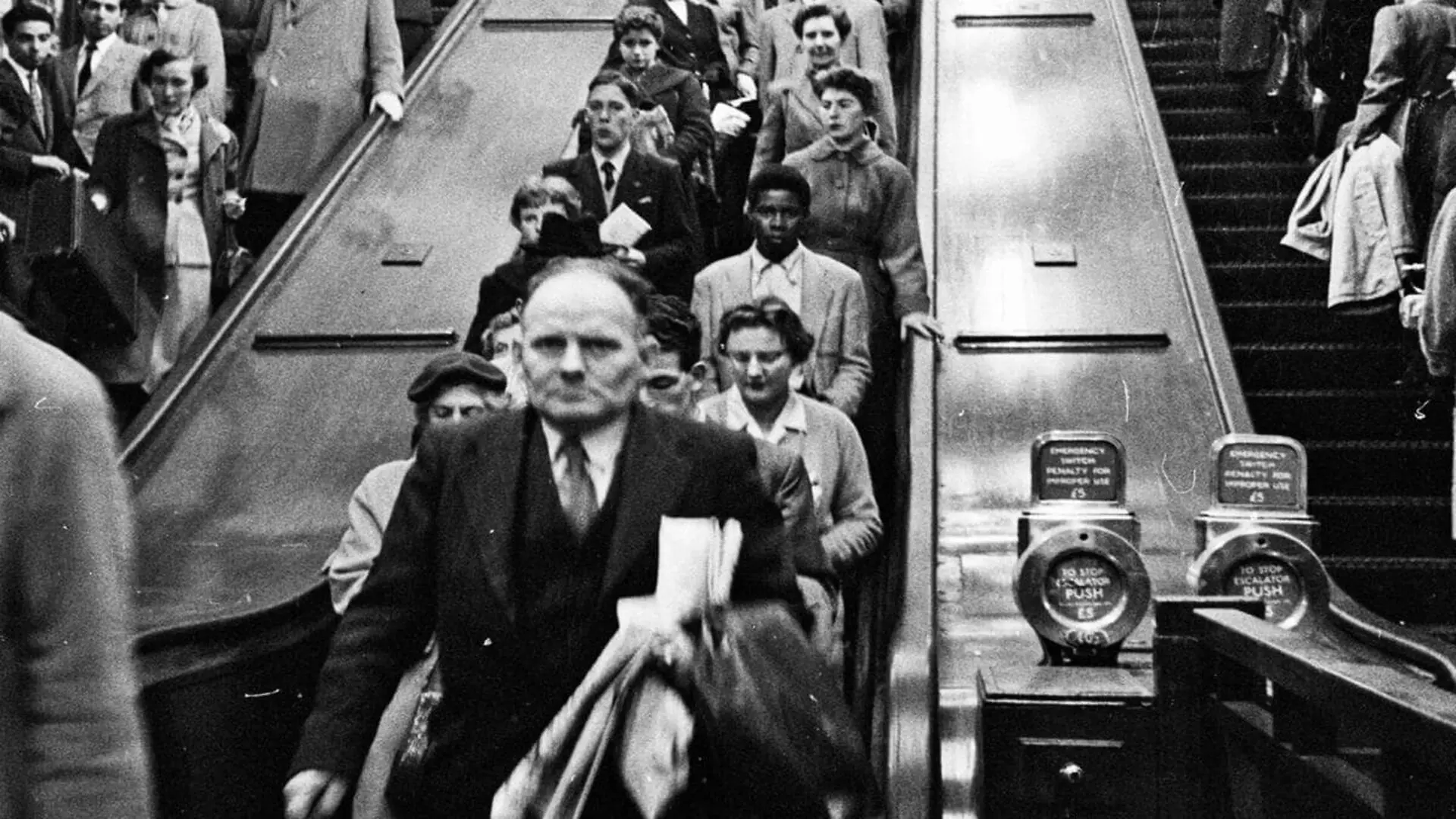
In the early 1960s, scientists from the UK’s former Microbiological Research Establishment at Porton Down secretly released simulated biological agents inside the London Underground. The trials, carried out in 1963 and 1964, involved dropping sealed containers from moving trains to track how far the material could travel and how long it remained viable, as revealed in a 2002 parliamentary answer. Ministers, the Underground authority, and the Biological Research Advisory Board were reportedly aware of the tests.
Underground Release Shows Spores Reaching Ten Miles
A later Guardian investigation described how two government scientists boarded a Northern line train at Colliers Wood, released a small container of anthrax‑simulating spores, and let the train continue toward Tooting Broadway. Follow‑up sampling three days and two weeks after the drop demonstrated that the spores had travelled through the tunnels as far as Camden Town, roughly ten miles from the release point. The material was not actual anthrax; officials described it as a harmless simulant used to model dispersion patterns.
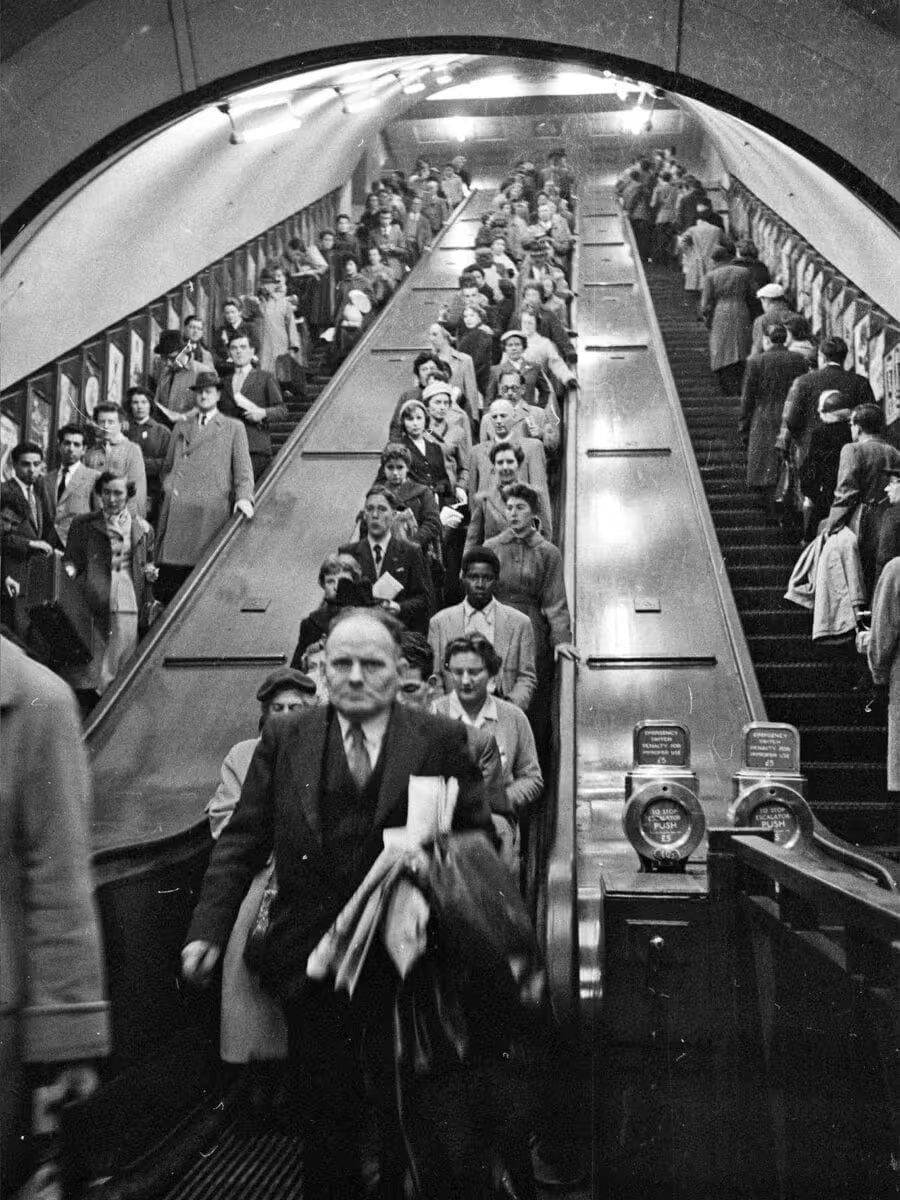
The operation was publicly labeled a “ventilation trial,” a euphemism chosen to avoid political embarrassment should details leak beyond authorized circles. Conflicting dates appear in the source material: the 2001 Guardian piece places the Northern line experiment in 1963, the parliamentary response notes two separate Underground trials in 1963 and 1964, and a 2002 Guardian report cites a similar release as early as 1956.
Porton Down’s Broader Defensive Testing Programme
The subway experiments were part of a larger effort to gauge Britain’s susceptibility to biological threats. Records indicate that in 1955 researchers released non‑lethal organisms in tunnels beneath central London, contaminating three government departments and, separately, tunnels beneath Whitehall. Earlier railway tests in 1953 and 1954 involved dispersing microorganisms inside tunnels and train carriages on a line between Exeter and Salisbury to observe passenger‑level exposure.
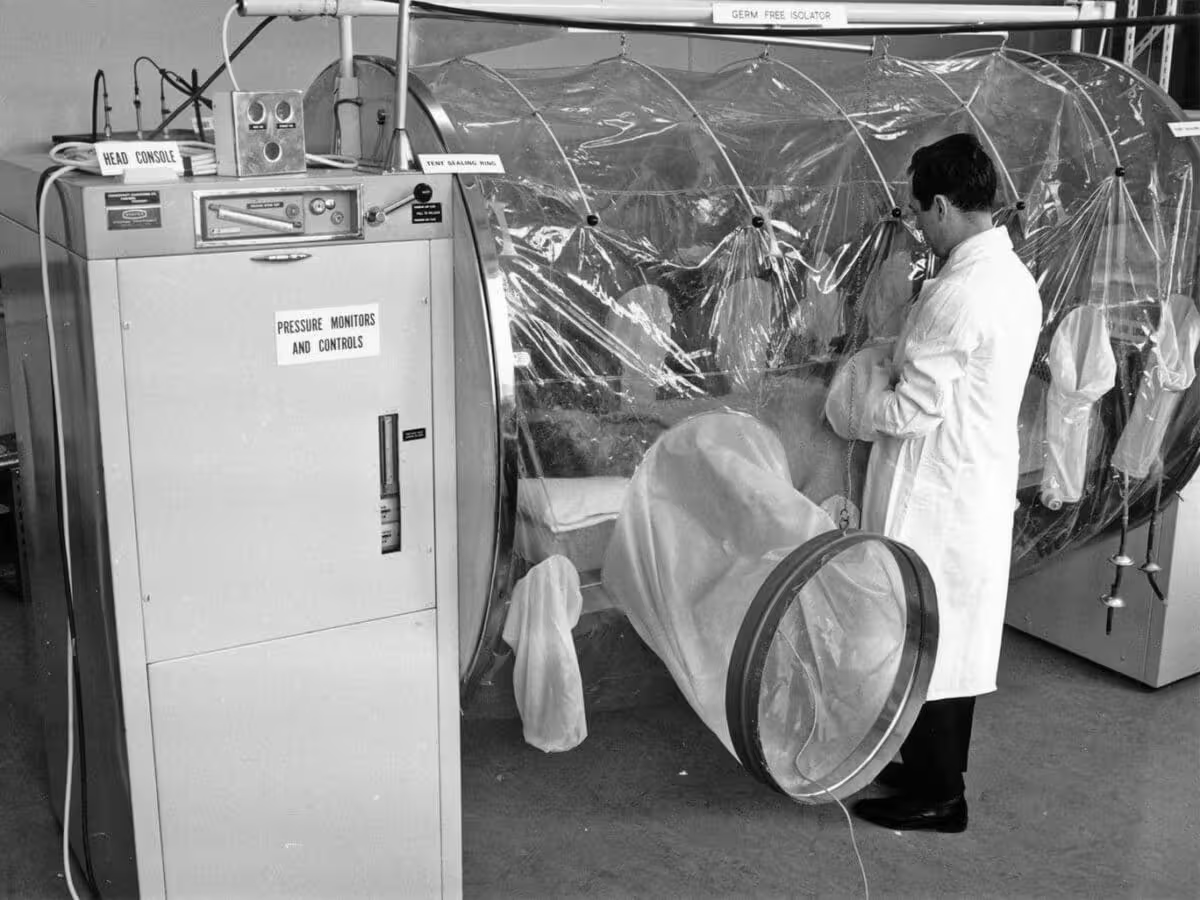
According to the parliamentary record, the Biology Department at Porton Down had been conducting “numerous experiments on the spread and transmission of bacterial spores” since its establishment in 1940, covering laboratory work, field trials on the Porton Range, maritime releases, and open‑area dispersals. The government noted that no single comprehensive list exists for all activities spanning those decades.
Coastal Trials Involved Over a Million Civilians
While the Underground tests targeted a relatively limited group of commuters, a separate series of coastal experiments exposed a far larger population. Between 1961 and 1968, more than one million people living along England’s south coast—from Torquay to the New Forest—were subjected to releases of E. coli and Bacillus globigii, a surrogate for anthrax. The microorganisms were sprayed from the naval vessel Icewhale off Dorset’s shoreline, as detailed in the Guardian’s 2002 account.
A 2002 Guardian investigation noted that two Porton Down scientists later reviewed the historic releases and concluded that they posed no significant public‑health danger. However, one reviewer warned that vulnerable groups—particularly the elderly or those with pre‑existing respiratory conditions—could have suffered adverse effects if exposed to sufficient concentrations of the agents. Families residing near test sites disputed the official assurances and called for a public inquiry.
The March 2002 parliamentary response confirmed that documentation on the 1963 and 1964 London Underground trials had been archived at the Public Record Office for several years, but it did not provide a passenger‑count estimate for those specific experiments.
This article has been fact checked for accuracy, with information verified against reputable sources. Learn more about us and our editorial process.
Last reviewed on .
Article history
- Latest version
Reference(s)
- <https://hansard.parliament.uk/commons/2002-03-13/debates/2252b624-4b7a-4a65-8400-f9e59551e6d5/PortonDown>.
- Evans, Rob. “Attack on London.”, October 12, 2001 The Guardian <https://www.theguardian.com/politics/2001/oct/12/freedomofinformation.afghanistan>.
- Barnett, Antony. “Millions were in germ war tests.”, April 21, 2002 The Guardian <https://www.theguardian.com/politics/2002/apr/21/uk.medicalscience>.
Cite this page:
- Posted by Hassan Raza