Hippocratic Oath: Origin, Evolution, and Ethical Significance in Medicine
From ancient Greece to modern hospitals, the Hippocratic Oath remains the enduring moral compass of medicine, a solemn promise that binds every physician to heal, to serve humanity, and above all, to do no harm.
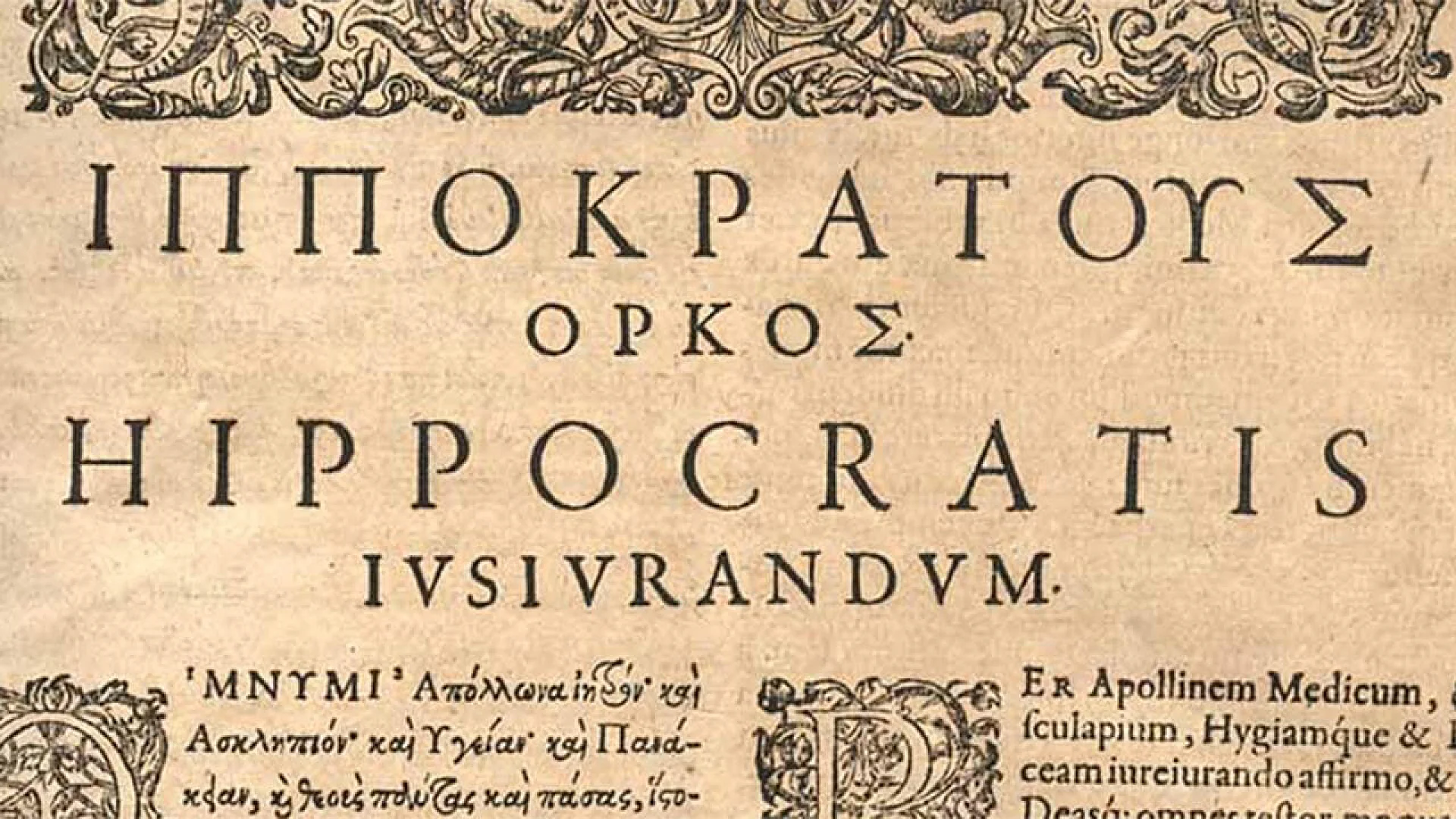
The Hippocratic Oath is one of the most enduring and influential documents in the history of medicine. It is not merely an ancient text but a declaration of professional integrity and moral responsibility that continues to guide physicians and healthcare practitioners worldwide. Although composed in antiquity, the Oath transcends time, reflecting the enduring values of compassion, honesty, respect for human life, and commitment to the welfare of patients. In modern practice, its relevance lies in defining the ethical framework that distinguishes medicine as both a science and a moral art.
Historical Origin of the Hippocratic Oath
The Hippocratic Oath is traditionally attributed to Hippocrates of Kos (460–370 BCE), the eminent Greek physician often referred to as the “Father of Medicine.” Hippocrates and his followers established the Hippocratic School, which emphasized rational observation, natural causes of disease, and ethical conduct, distancing medicine from superstition and divine intervention that dominated earlier healing traditions.
The Oath was part of the Hippocratic Corpus, a collection of more than seventy works on medicine, anatomy, diagnosis, prognosis, and ethics. While historians debate whether Hippocrates himself authored the Oath, its principles undoubtedly reflect the ideals of his school. Written in Ionic Greek, the Oath served as a moral contract binding new physicians to their teachers, colleagues, and patients.
The document is one of the earliest expressions of professional ethics in recorded history. It set medicine apart as a moral and disciplined profession, governed not by commercial motives or authority, but by service, compassion, and a deep sense of responsibility toward human life.
The Text and Meaning of the Original Oath
The classical version of the Hippocratic Oath begins with an invocation to the gods Apollo, Asclepius, Hygieia, and Panacea, who were revered as divine patrons of healing. It then proceeds to outline a series of pledges regarding professional behavior and moral obligations.
Some key elements include:
- Respect for teachers: The physician must honor and support those who have taught him the art of healing and transmit this knowledge to future generations without fee.
- Commitment to beneficence: The physician pledges to treat the sick to the best of their ability and judgment, always for the benefit of the patient.
- Non-maleficence: The Oath explicitly forbids administering poison, performing abortions, or causing harm intentionally.
- Confidentiality: Physicians must maintain secrecy about all information concerning their patients.
- Purity and holiness of life: The Oath emphasizes moral conduct, restraint, and integrity in personal and professional life.
These principles collectively represent the ethical foundation of medicine, rooted in the dual obligation of doing good and avoiding harm.
The Philosophical and Ethical Basis
The ethical philosophy of the Hippocratic Oath is grounded in the principle of virtue ethics, where the character and moral integrity of the physician determine the quality of care. It embodies three cardinal principles:
- Beneficence (to do good): Physicians must act in the best interest of the patient, guided by compassion and expertise.
- Non-Maleficence (to do no harm): The avoidance of harm is central to all medical decisions. This principle remains encapsulated in the Latin phrase primum non nocere.
- Confidentiality and Trust: Patient trust is the foundation of clinical relationships, and confidentiality preserves this sacred trust.
These ideas shaped the moral architecture of medicine and later influenced secular ethical systems, including bioethics, public health ethics, and medical law.
Evolution and Modern Adaptations
With the passage of centuries, the language and interpretation of the Oath evolved in response to changing moral, scientific, and cultural contexts. During the Middle Ages, Islamic scholars such as Avicenna (Ibn Sina) and Al-Ruhawi incorporated Hippocratic principles into Islamic medical ethics. The Oath also survived through Latin and Arabic translations during the Renaissance, shaping early European medical professionalism.
In the twentieth century, following the atrocities committed during World War II, there was renewed emphasis on ethical regulation in medicine. The World Medical Association (WMA) adopted the Declaration of Geneva (1948) as a modernized version of the Hippocratic Oath. This declaration removed references to religion, gender bias, and slavery while introducing human rights, patient autonomy, and professional accountability.
Today, medical schools around the world administer revised versions of the Oath during graduation ceremonies. Some examples include:
- The Lasagna Oath (1964), written by Dr. Louis Lasagna, which emphasizes compassion, scientific integrity, and humility.
- The Modernized WMA Oath, which stresses patient welfare, equality, and continuous learning.
- Institutional variations adapted to local ethics, laws, and religious values.
Thus, the Hippocratic Oath remains dynamic—continuously interpreted and redefined according to the evolving moral landscape of medicine.
The Role of the Hippocratic Oath in Modern Medical Ethics
Although few physicians today recite the original text, its spirit pervades modern bioethical principles. The four pillars of medical ethics—autonomy, beneficence, non-maleficence, and justice—all trace their roots to Hippocratic thought.
- Autonomy: Modern ethics recognize the patient’s right to make informed decisions regarding treatment.
- Beneficence and Non-Maleficence: Physicians are morally obligated to act in the best interest of the patient and avoid harm.
- Justice: Fair distribution of medical resources and equitable care reflect an ethical obligation to society.
In clinical practice, these principles guide physicians in complex ethical dilemmas such as end-of-life decisions, organ transplantation, genetic testing, and patient confidentiality in the digital age.
Global Variations and Symbolism
The Hippocratic Oath has become a universal symbol of professional commitment, though its application varies across cultures.
- In Western countries, the Oath is often a ceremonial pledge administered during medical school graduation.
- In Islamic nations, adaptations may invoke divine accountability consistent with religious ethics.
- In Asian traditions, similar pledges such as the Charaka Shapath in India or Sun Simiao’s Ten Commandments for Physicians in China parallel Hippocratic ideals.
These variations highlight the adaptability of the Oath while preserving its moral essence — the physician’s duty to preserve life, respect humanity, and serve with integrity.
Criticisms and Ethical Debates
Despite its enduring influence, the Hippocratic Oath has not escaped criticism.
- Cultural and Religious Context: Its invocation of Greek deities and exclusion of women and slaves reflect ancient societal norms.
- Obsolescence: Prohibitions against abortion, euthanasia, and surgery have been challenged as inconsistent with modern medicine.
- Lack of Legal Standing: The Oath is symbolic and holds no legal authority, though its principles influence medical legislation.
- Narrow Scope: It primarily addresses physician-patient relations, overlooking collective responsibilities such as public health and global bioethics.
These debates have led scholars to argue for pluralistic ethical frameworks that accommodate cultural diversity, technological progress, and evolving human rights standards.
Do All Doctors Take the Hippocratic Oath?
Contrary to popular belief, not all physicians formally take the Hippocratic Oath. While some universities include it as a ceremonial ritual, others replace it with institution-specific pledges. The American Medical Association (AMA) does not require it as a legal or professional obligation, though its Code of Medical Ethics reflects the same moral principles.
In countries like Pakistan, India, the United Kingdom, and Canada, the Oath or its equivalent is recited as part of graduation or licensure ceremonies. The symbolic act reinforces a physician’s lifelong commitment to ethical conduct and patient welfare.
The Oath in the Era of Modern Bioethics
The twenty-first century presents new ethical challenges: artificial intelligence in diagnosis, genetic modification, organ cloning, and the commercialization of healthcare. These issues extend beyond the scope of the original Oath but resonate with its spirit.
Contemporary bioethics interprets the Oath through the lens of human dignity, informed consent, scientific responsibility, and social justice. The ethical question is no longer limited to the individual doctor-patient relationship but extends to the responsibilities of institutions, researchers, and policymakers.
The enduring relevance of the Hippocratic Oath lies in its adaptability—it continues to provide moral direction even in the face of unprecedented scientific complexity.
Ethical Legacy and Continuing Relevance
The Hippocratic Oath’s moral vision has inspired many later ethical documents, including:
- The Nuremberg Code (1947) – establishing ethical guidelines for human experimentation.
- The Declaration of Helsinki (1964) – emphasizing patient rights and research ethics.
- The Belmont Report (1979) – defining ethical principles for biomedical research.
These frameworks extend the moral foundations of the Oath into modern law, research ethics, and clinical governance. The Oath remains a moral compass, reminding physicians that their ultimate responsibility lies not to profit or prestige, but to humanity.
Conclusion
The Hippocratic Oath is more than an ancient relic; it is the moral DNA of medicine. Its principles—honor, compassion, confidentiality, and the duty to heal—continue to define medical professionalism in every era. Though its language has been reinterpreted, the Oath’s ethical essence endures as a testament to the physician’s sacred trust: to serve life, to relieve suffering, and to do no harm.
In a rapidly advancing world where technology often overshadows empathy, the Hippocratic Oath remains the enduring reminder that medicine is not only about curing disease but also about honoring the sanctity of human life.
FAQs
What is the Hippocratic Oath in simple terms?
Who wrote the Hippocratic Oath?
Do doctors still take the Hippocratic Oath today?
What are the main principles of the Hippocratic Oath?
Why is the Hippocratic Oath still important?
The information on this page is peer reviewed by a qualified editorial review board member. Learn more about us and our editorial process.
Last reviewed on .
Article history
- Latest version
Reference(s)
- McCollough Scholars. “The Hippocratic Oath (Classical Version).” University of Alabama at Birmingham <https://mccolloughscholars.ua.edu/hippocratic-oath-classic/>.
- North, Michael. “Greek Medicine: Translation of the Hippocratic Oath.”, 2002 National Library of Medicine (USA) <https://www.nlm.nih.gov/hmd/topics/greek-medicine/index.html>.
- World Medical Association. “Declaration of Geneva – The Physician’s Pledge.” World Medical Association <https://www.wma.net/policies-post/wma-declaration-of-geneva/>.
- Parsa-Parsi, Ramin Walter. “The Revised Declaration of Geneva: A Modern-Day Physician’s Pledge.” Journal of the American Medical Association, vol. 318, no. 20, 2017 JAMA Network, doi: 10.1001/jama.2017.16230. <https://jamanetwork.com/journals/jama/fullarticle/2658261>.
- Hajar, Rachel. “The Physician’s Oath: Historical Perspectives.” Heart views : the official journal of the Gulf Heart Association, vol. 18, no. 4, 2017, pp. 154-159., doi: 10.4103/HEARTVIEWS.HEARTVIEWS_131_17. <https://journals.lww.com/hrtv/fulltext/2017/18040/the_physician_s_oath__historical_perspectives.11.aspx>.
Cite this page:
- Posted by Dayyal Dungrela