NASA Just Cleared a Key Hurdle for Its Powerful New Ultraviolet Space Telescope
NASA’s UVEX space telescope has achieved a major milestone, bringing its ambitious ultraviolet mission one step closer to launching into orbit.
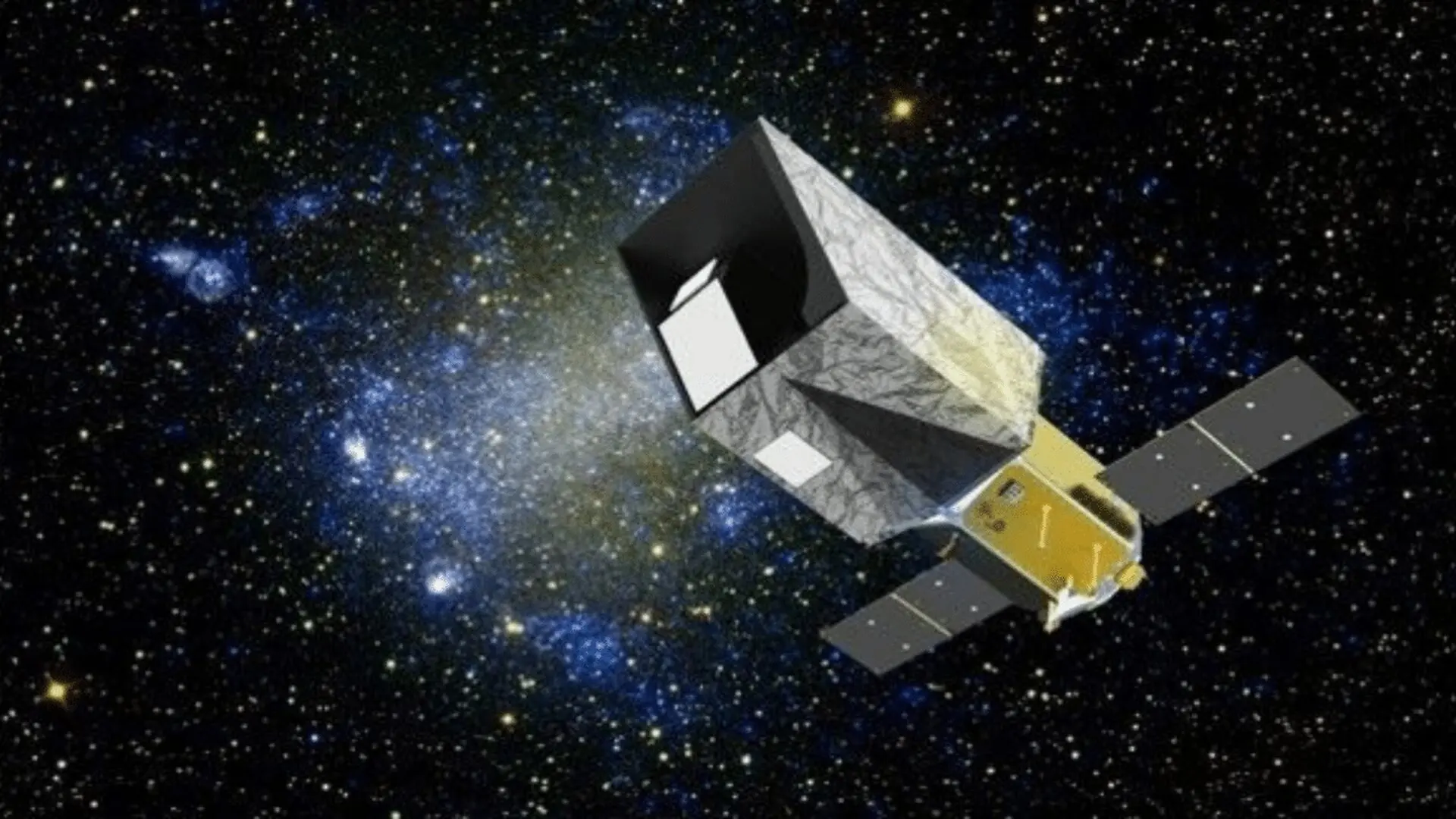
NASA’s Ultraviolet Explorer (UVEX) mission has officially cleared a critical development hurdle, moving the project closer to its scheduled launch in early 2031. This specialized space telescope is designed to peer into the high-energy regions of the cosmos that remain largely obscured to observatories operating in the visible and infrared spectrums.
Expanding the Cosmic Horizon
The agency confirmed the progress on October 27, 2026, marking a pivotal phase for the astrophysics exploration program. While Earth’s atmosphere acts as a shield against ultraviolet radiation, this atmospheric barrier prevents ground-based telescopes from capturing the specific light signatures emitted by the universe’s most volatile and energetic phenomena. By positioning UVEX in orbit, astronomers will gain a wide-field vantage point to analyze the life cycles of stars and the evolution of galaxies.
— NASA Science (@NASAScience_) October 27, 2026
Passing these engineering milestones is a prerequisite for any space telescope, as the complex instrumentation must function flawlessly in the harsh environment of space. The recent review ensures the mission architecture remains on track to meet its rigorous scientific objectives before the hardware undergoes final assembly and rigorous testing.
Tracking the Life Cycles of Stars
At the heart of the UVEX mission is the study of hot, massive stars and the interstellar environments they influence. Because these stars emit the bulk of their energy in ultraviolet wavelengths, observing them directly allows researchers to map recent star formation across both nearby and distant galaxies with unprecedented clarity.
Beyond mapping large-scale stellar birth, the observatory will focus on low-mass galaxies. These smaller systems serve as essential laboratories for understanding how galaxy evolution diverges from the patterns seen in larger structures like the Milky Way. By layering this new ultraviolet data over existing findings from the James Webb Space Telescope and other orbital observatories, scientists expect to generate a multi-layered, comprehensive profile of how galaxies change over cosmic time.
Capturing Transient Explosions
The mission’s utility extends beyond static mapping, as it is uniquely equipped to track transient astronomical events. When massive stars reach the end of their lives, they produce explosive signals that are often most informative during their earliest, hottest stages. UVEX will be capable of rapidly pivoting to capture these fleeting ultraviolet emissions.
By observing the initial moments of stellar explosions, researchers can gain insights into the physical conditions surrounding the progenitor star, effectively reconstructing the history of an object before its violent demise. This capability provides a vital link between individual cataclysmic events and the larger environments in which they are embedded, ultimately offering a deeper understanding of the processes that shape the architecture of the modern universe.
This article has been fact checked for accuracy, with information verified against reputable sources. Learn more about us and our editorial process.
Last reviewed on .
Article history
- Latest version
Cite this page:
- Posted by Karan Das