New Privately Funded Space Telescope Targets 27 Distant Worlds to Reveal Hidden Atmospheres
A new, privately funded telescope larger than Hubble could revolutionize how we study the atmospheres of 27 distant exoplanets.
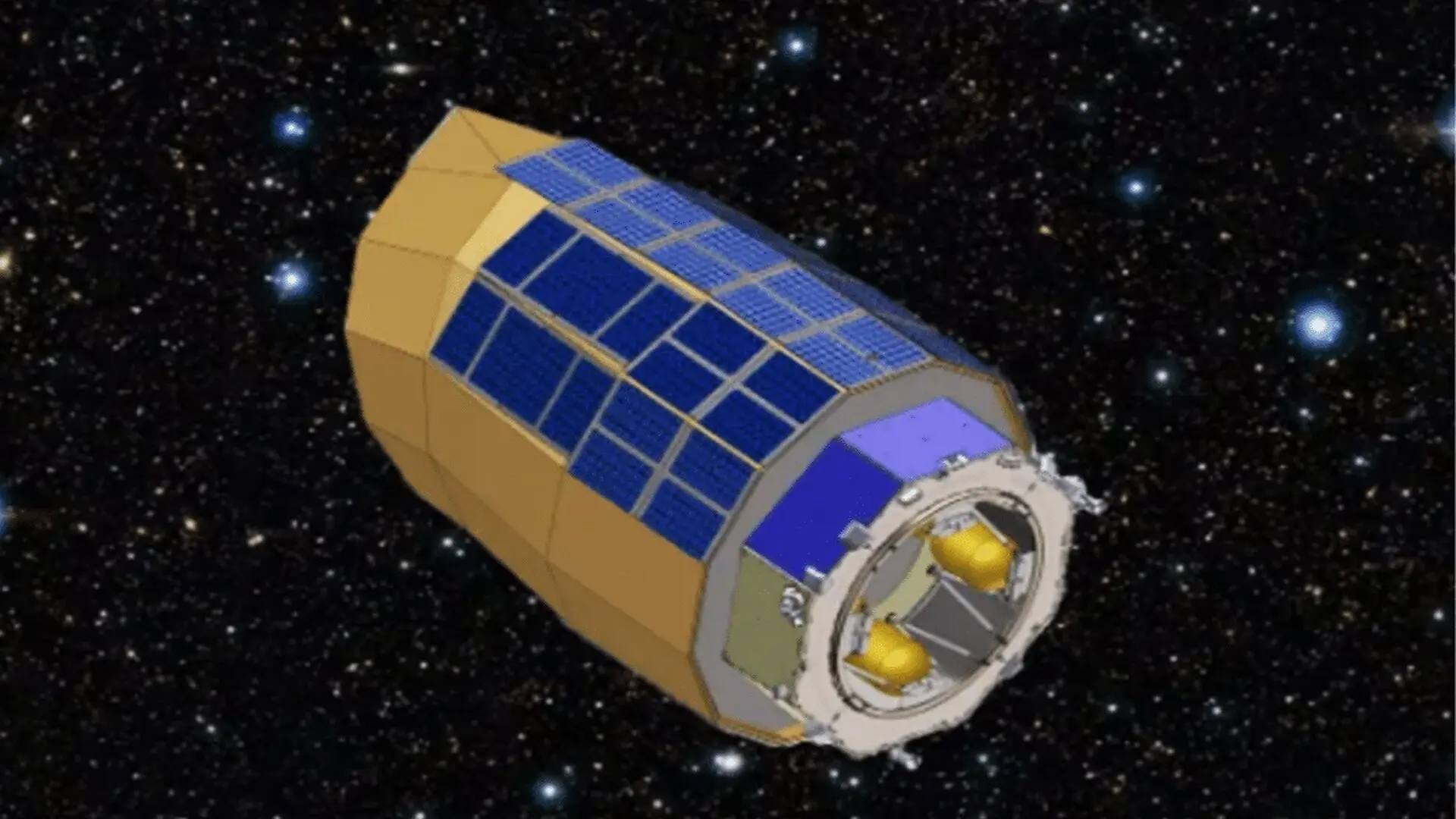
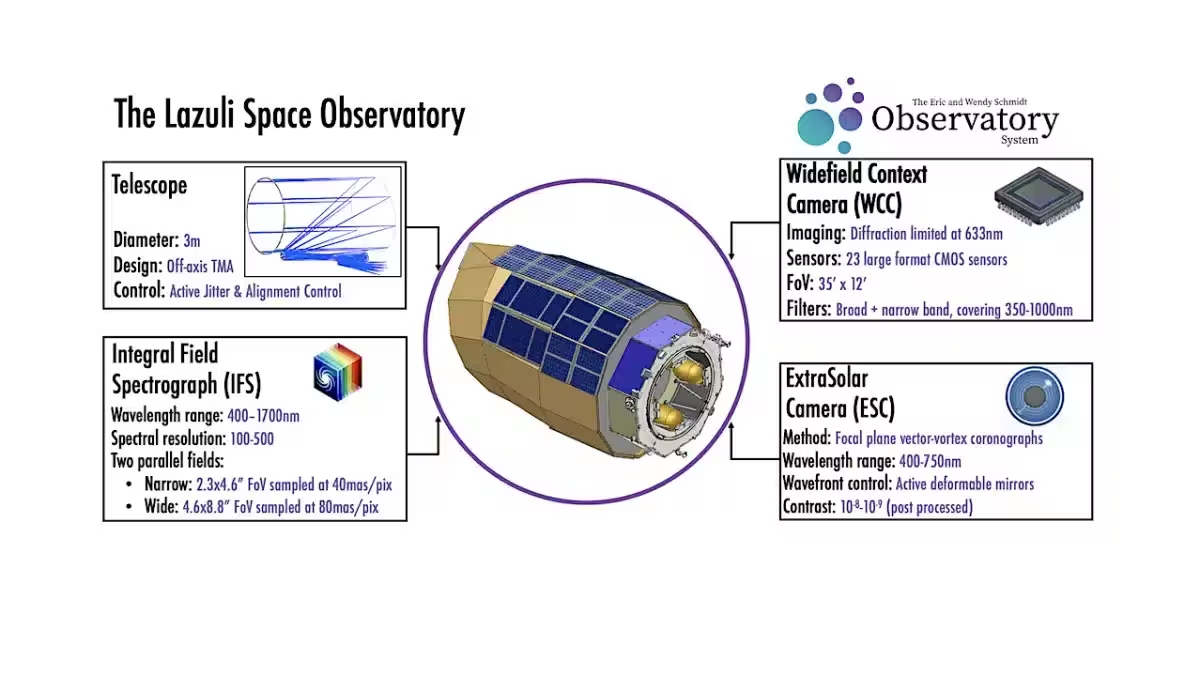
A cutting-edge, privately funded space observatory is currently in development with the goal of peering into the atmospheres of 27 distant giant planets. By utilizing a specialized coronagraph, the Lazuli Space Telescope seeks to capture light reflected by these worlds—a technique that promises to bypass the limitations of traditional thermal imaging and open a new chapter in exoplanetary science.
Backed by former Google CEO Eric Schmidt, the project is moving toward a target launch date of 2029. While government-led missions have historically dominated large-scale orbital astronomy, Lazuli represents a significant shift toward private investment in deep-space exploration. The telescope is designed with a 3-meter (9.8-foot) primary mirror, giving it a larger light-collecting surface than the 2.4-meter (7.9-foot) mirror aboard the Hubble Space Telescope.
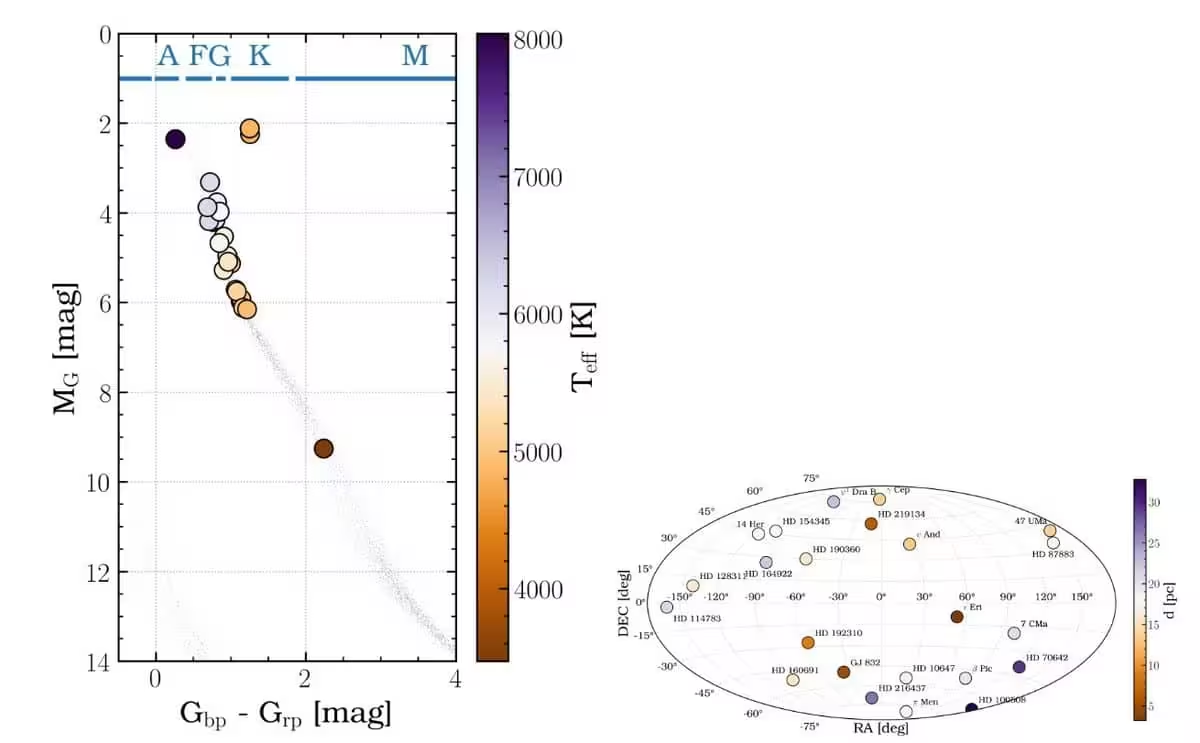
The mission’s scientific potential is detailed in a new study available on arXiv, which identifies the 27 most promising targets for the telescope’s ExtraSolar Coronagraph (ESC). The research, led by Logan Pearce of the University of Michigan and Ewan Douglas of the University of Arizona, argues that focusing on already known worlds will maximize the efficiency of the observatory’s limited operational time.
Moving Beyond Thermal Detection
Historically, direct imaging of exoplanets has relied on detecting the heat radiating from young, still-forming worlds. This method is inherently biased toward “hot” planets; as a world cools over billions of years, its thermal signature fades, effectively rendering older, more mature systems invisible to current instruments.
Lazuli’s approach—detecting starlight reflected off a planet’s atmosphere—removes the age-related constraint entirely. Because reflected light does not diminish as a planet ages, researchers can finally begin to study older, colder systems. Furthermore, by observing at shorter wavelengths (approximately 0.5–2 micrometers), the telescope can better distinguish planets that are physically closer to their host stars, a feat nearly impossible with traditional infrared thermal imaging.
The researchers note that while this method is not a panacea, it significantly widens the observational net, allowing astronomers to characterize planetary atmospheres that were previously beyond reach. Success will depend on a combination of planetary size, reflectivity, and orbital geometry, yet the potential to study mature solar systems provides a new depth of understanding regarding planetary evolution.
Targeting Established Worlds
The selection of 27 specific targets is a calculated strategic move. By focusing on planets with well-mapped orbits, the team can predict exactly when a world will be most visible, minimizing wasted observation cycles. The list includes a diverse array of worlds, each offering unique scientific insights:
- 55 Cancri d: A gas giant that shares several characteristics with Jupiter, providing a vital point of comparison for our own planetary neighborhood.
- HD 181433 d: An intriguing target located in a complex system featuring a highly eccentric orbit and an ultrashort-period super-Earth.
- Beta Pictoris b: One of the most famous directly imaged exoplanets, this world orbits a young star and is still shrouded in a debris disk, offering a window into a dynamic, formative environment.
The Technical Hurdle of Extreme Contrast
Despite the promise, the technical demands are immense. The light reflected by an exoplanet is billions of times fainter than its host star. Even with the advanced coronagraph suppressing the central glare, researchers expect planet-to-star contrast ratios between 10⁻⁷ and 10⁻⁹. Detecting such faint signals may require dozens or even hundreds of hours of exposure time per target.
The research team emphasizes that this data collection is not merely about taking pictures. By analyzing the reflected light, astronomers hope to identify specific chemical signatures within these atmospheres. While the current list focuses on giant, non-habitable worlds, the techniques perfected here will serve as a foundational step toward identifying potential biosignatures on smaller, Earth-like planets in the future.
As the mission progresses, Lazuli is expected to work in tandem with other upcoming facilities, such as NASA’s Nancy Grace Roman Space Telescope and the Extremely Large Telescope’s METIS instrument. By combining visible-light observations from Lazuli with thermal-infrared data from other observatories, the astronomical community will likely gain a far more holistic view of planetary atmospheres than has ever been possible before. For now, the focus remains on finalizing the telescope’s capabilities and ensuring that this privately funded venture can deliver on its ambitious scientific mandate.
This article has been fact checked for accuracy, with information verified against reputable sources. Learn more about us and our editorial process.
Last reviewed on .
Article history
- Latest version
Reference(s)
- Pearce, Logan. “The first selection of optimal targets for the Lazuli ExtraSolar Coronagraph's reflected starlight exoplanet campaign.” arXiv.org <https://arxiv.org/abs/2610.31286>.
Cite this page:
- Posted by Karan Das