Japan Has Launched a Bold Mission to Solve the Decades Old Mystery of the Martian Moons
Is Mars hiding a secret? A new mission is heading to the Red Planet’s mysterious moons to uncover origins that could challenge everything we know.
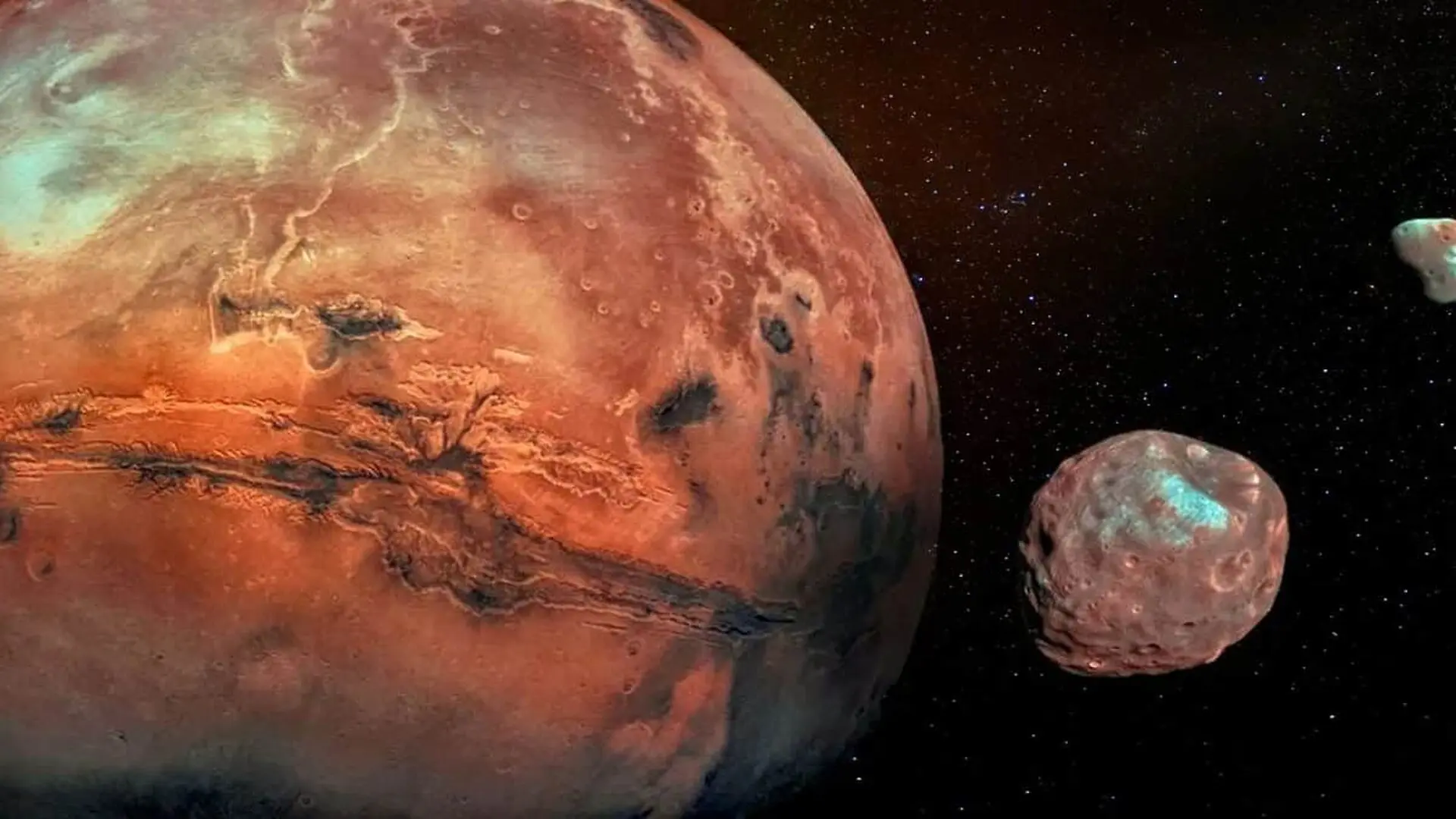
A Japanese-led mission is currently en route to the Red Planet, marking the beginning of an ambitious quest to retrieve samples from the surface of Phobos. The Martian Moons Exploration (MMX) spacecraft, which departed Earth on October 19, 2026, aims to resolve a long-standing celestial mystery: whether the small, irregular moons of Mars are captured asteroids or the result of a colossal impact event in the planet’s distant past.
The mission, spearheaded by the Japan Aerospace Exploration Agency (JAXA) with significant contributions from NASA and the European Space Agency, seeks to collect roughly 10 grams of regolith from Phobos. Following a successful launch from the Tanegashima Space Center aboard an H3 rocket, the spacecraft is currently navigating a 140-million-mile journey toward the Martian system, with an expected arrival in August 2027.
Navigating the Challenges of Low-Gravity Exploration
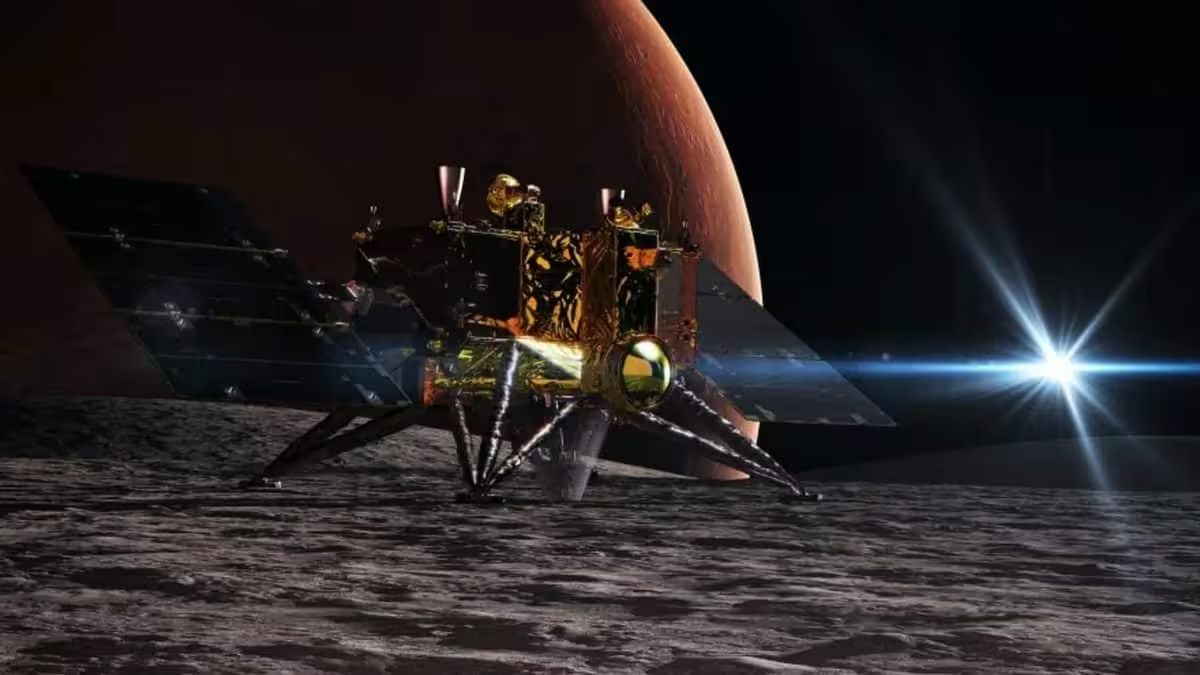
Upon reaching Mars, the MMX probe will enter a specialized orbit to conduct an extensive survey of both Phobos and Deimos. A major technical highlight of the mission involves the deployment of Idefix, a small, 55-pound rover developed through a collaboration between French and German space agencies. Because the gravity on Phobos is extremely weak, the rover will effectively weigh only half an ounce, presenting significant engineering hurdles for surface navigation.
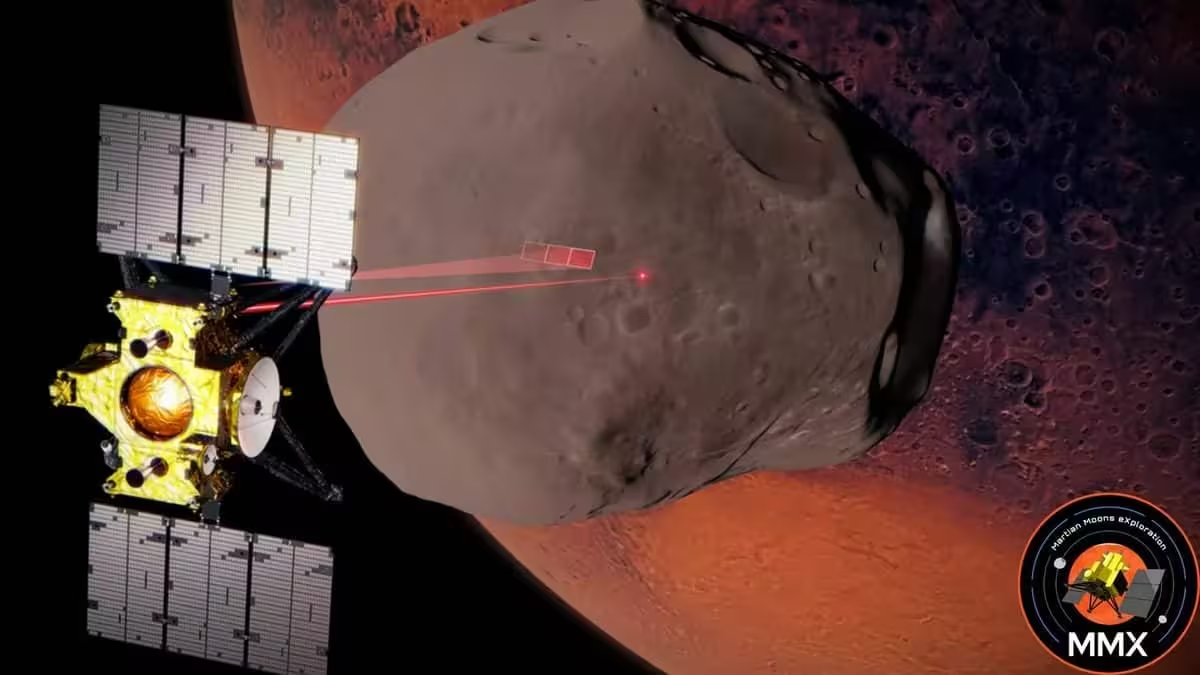
The primary sampling phase is scheduled for late 2028 or early 2029. Using a combination of a drill and a pneumatic sampler provided by Honeybee Robotics, the team intends to recover a larger payload than previous missions, such as the successful Hayabusa2 return from the asteroid Ryugu. This material will be supplemented by subsequent flyby observations of Deimos.
Solving the Origins of the Martian System
Since their discovery by Asaph Hall in 1877, Phobos (14 miles across) and Deimos (7.5 miles across) have remained enigmatic. As planetary scientist Christopher Edwards has noted, traditional orbital mechanics make it difficult to definitively classify these moons as captured asteroids. Conversely, the theory that they formed from an impact-driven debris disk struggles to explain their peculiar physical shapes. Astronomer Sonia Fornasier of the Paris Observatory believes the mission represents a transformative leap in our ability to probe the Martian environment.
Geological Clues to Martian History
The value of these samples extends beyond the moons themselves. If Phobos originated from material ejected by a major impact on Mars, the samples might contain pristine evidence of the planet’s ancient surface—material that has not been altered by the harsh journey through Earth’s atmosphere that characterizes typical Martian meteorites. Alternatively, if the moon is of asteroidal origin, researchers expect to find hydrated minerals and complex organic compounds.
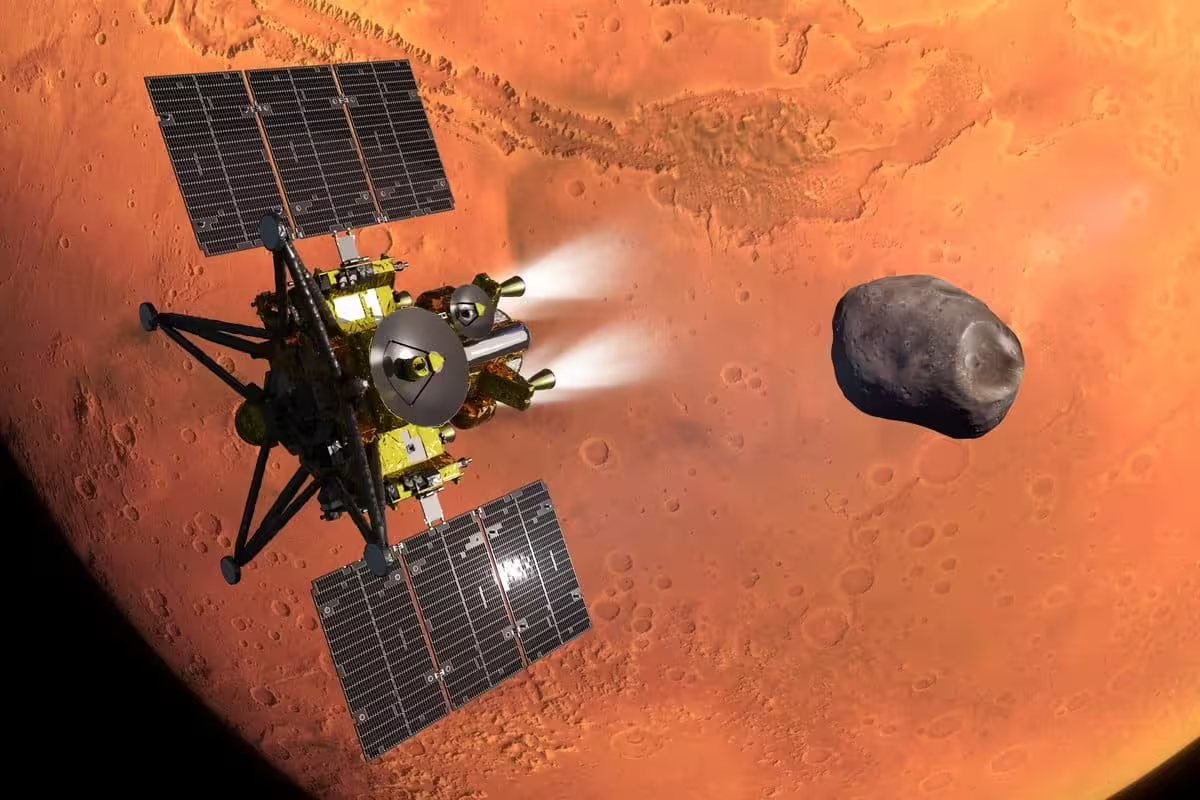
Beyond sample collection, the spacecraft will monitor Martian atmospheric dynamics, specifically focusing on the behavior of dust and water vapor. NASA scientist Tom Statler emphasizes that the moons serve as vital markers in the larger narrative of the Martian system, providing context that may refine our understanding of planetary evolution throughout the solar system. The MMX mission is expected to depart the Mars vicinity in 2030, with a scheduled return to Earth in 2031, at which point NASA will receive 15 percent of the collected material for collaborative study.
This article has been fact checked for accuracy, with information verified against reputable sources. Learn more about us and our editorial process.
Last reviewed on .
Article history
- Latest version
Reference(s)
- “NAU Directory.” <https://directory.nau.edu/person/cse7>.
- “Sonia Fornasier - European Space Sciences Committee.”, October 8, 2021 European Space Sciences Committee <https://www.essc.esf.org/panels-members/sonia-fornasier%E2%80%8B/>.
- Talbert, Patricia. “Thomas Statler.”, October 24, 2023 NASA Science <https://science.nasa.gov/people/thomas-statler/>.
Cite this page:
- Posted by Karan Das