Europe Suffers Setback As Space Rider Landing Test Ends In Failure
The ESA has launched an investigation into the Space Rider program following a failed landing test involving the spacecraft’s critical parafoil system.
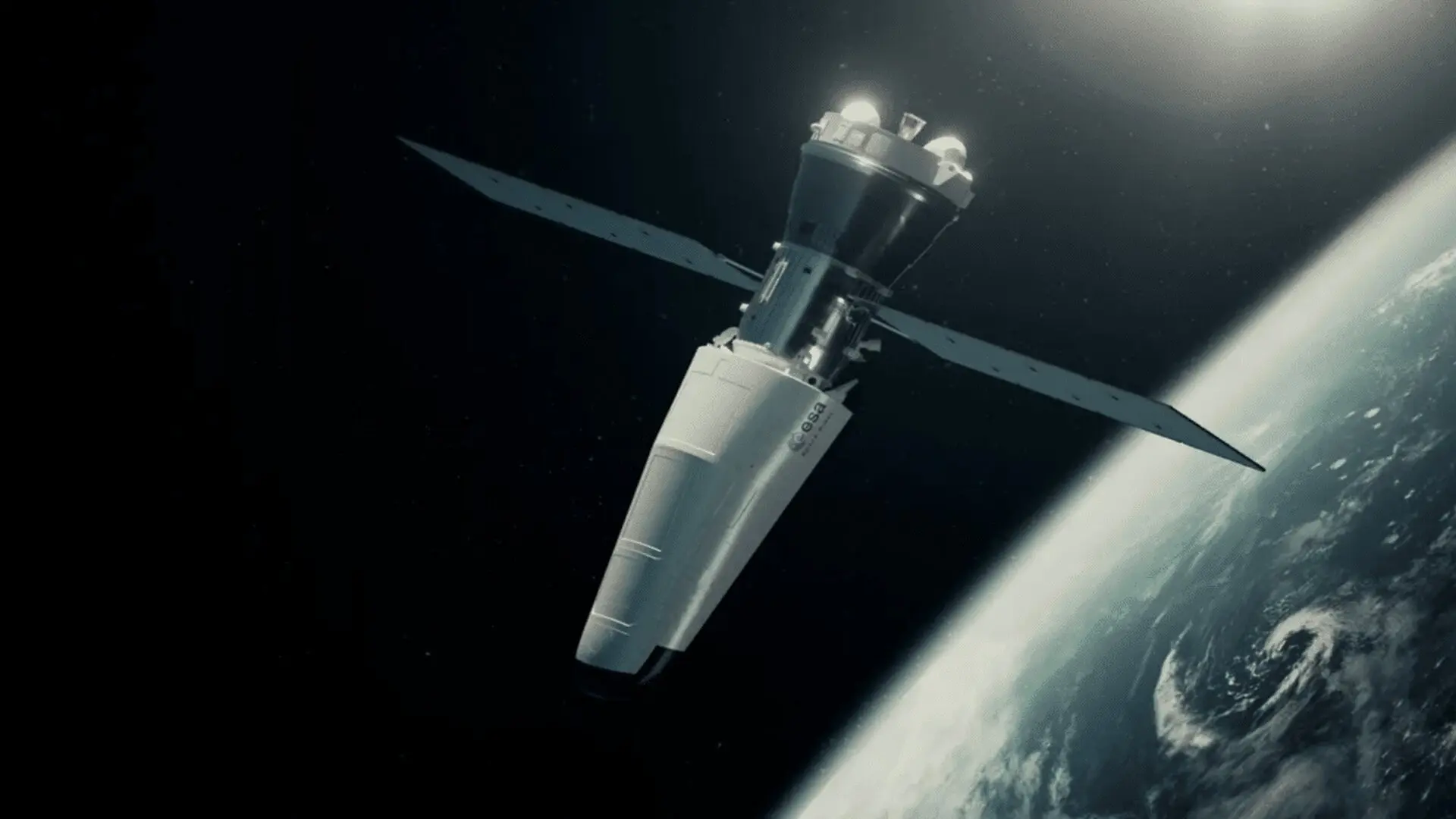
A recent high-stakes test of Europe’s reusable Space Rider spacecraft has encountered a significant technical hurdle. During an October drop test designed to validate the vehicle’s descent systems, an anomaly in the parafoil deployment sequence resulted in an unsuccessful outcome, forcing engineers back to the drawing board.
Setback for Europe’s Reusable Orbital Vision
The European Space Agency (ESA) is currently developing Space Rider as an uncrewed platform intended to ferry experiments into low Earth orbit before returning them intact for analysis. Central to this mission is the vehicle’s recovery system, which relies on a sophisticated parafoil to steer the craft toward a precise landing zone upon reentry.
Unlike standard parachutes, the steerable parafoil provides aerodynamic lift, a capability essential for the spacecraft to be reused. The October test was intended to be a milestone in the qualification campaign for this recovery sequence, but instead, it highlighted a critical point of failure that the team must now address.
“Following several successful tests using representative vehicle masses, the latest system-level drop test in October was not completed as planned due to an anomaly during the parafoil deployment sequence,” an ESA spokesperson confirmed in an email to Space.com. “An independent investigation is ongoing to determine its root cause and inform the next steps.”
Engineering Challenges of Controlled Recovery
Space Rider is designed to launch atop the Vega-C rocket, operating in microgravity for approximately two months before returning scientific payloads to Earth. This mission profile demands a high degree of precision; the vehicle must survive the intense thermal environment of reentry and then execute a stable transition to a controlled, steerable descent.
The failure of the parafoil to deploy as intended underscores the complexity of this recovery phase. For a reusable platform, the reliability of these systems is the primary factor that dictates both operational viability and long-term cost-effectiveness. While the team had previously achieved success with smaller-scale tests, the recent anomaly suggests that the specific mechanics of the deployment sequence under flight conditions require further refinement.
Moving Forward Without Delay
Despite the failed test, ESA officials remain optimistic that the incident will not trigger a major reshuffling of the program’s timeline. During an ESA Council media briefing on October 22, officials noted that while the failure requires a rigorous investigation, it does not necessarily strike at the heart of the overall project’s progress.
“We hope that this test will not damage, or let’s say lead us to modify, the remaining schedule and qualification activities,” said an ESA official during the briefing. “In any case, the remaining qualification activities are not on the critical path of the development of the Space Rider.”
By distinguishing between the program’s general development and the specific recovery qualification, the agency aims to maintain its momentum. The engineering team is now working to isolate whether the failure originated in the deployment hardware, the integration logic, or unexpected mechanical stresses.
The Future of European Autonomous Research
Space Rider represents a strategic leap for Europe, aiming to provide a domestic solution for recurring access to orbital research. By eliminating the reliance on foreign recovery services, the mission seeks to open new doors for pharmaceutical, material science, and technology experiments that require ground-based post-flight analysis.
However, the transition from expendable satellites to reusable spacecraft introduces significant engineering burdens. The recovery of the vehicle is the defining feature of the Space Rider project, and the ability to demonstrate a flawless return is essential to its success. As the investigation into the October anomaly continues, the aerospace community is watching closely to see how the agency adapts to this latest hurdle in its mission to master orbital re-entry.
This article has been fact checked for accuracy, with information verified against reputable sources. Learn more about us and our editorial process.
Last reviewed on .
Article history
- Latest version
Reference(s)
- Dinner, Josh. “Europe's Space Rider vehicle comes crashing down during drop test.”, October 22, 2026 Space <https://www.space.com/space-exploration/launches-spacecraft/europes-space-rider-vehicle-comes-crashing-down-during-drop-test>.
- <https://www.esa.int/Enabling_Support/Space_Transportation/Vega/Vega-C>.
Cite this page:
- Posted by Karan Das