Chinese Satellite Breaks Apart in Orbit Creating Dangerous Debris Field That Could Last Centuries
A Chinese satellite breakup has created a persistent debris field in a rare orbit, where hazardous fragments could linger for centuries to come.
Orbital Hazard: Chinese Satellite Disintegrates Into Debris Cloud
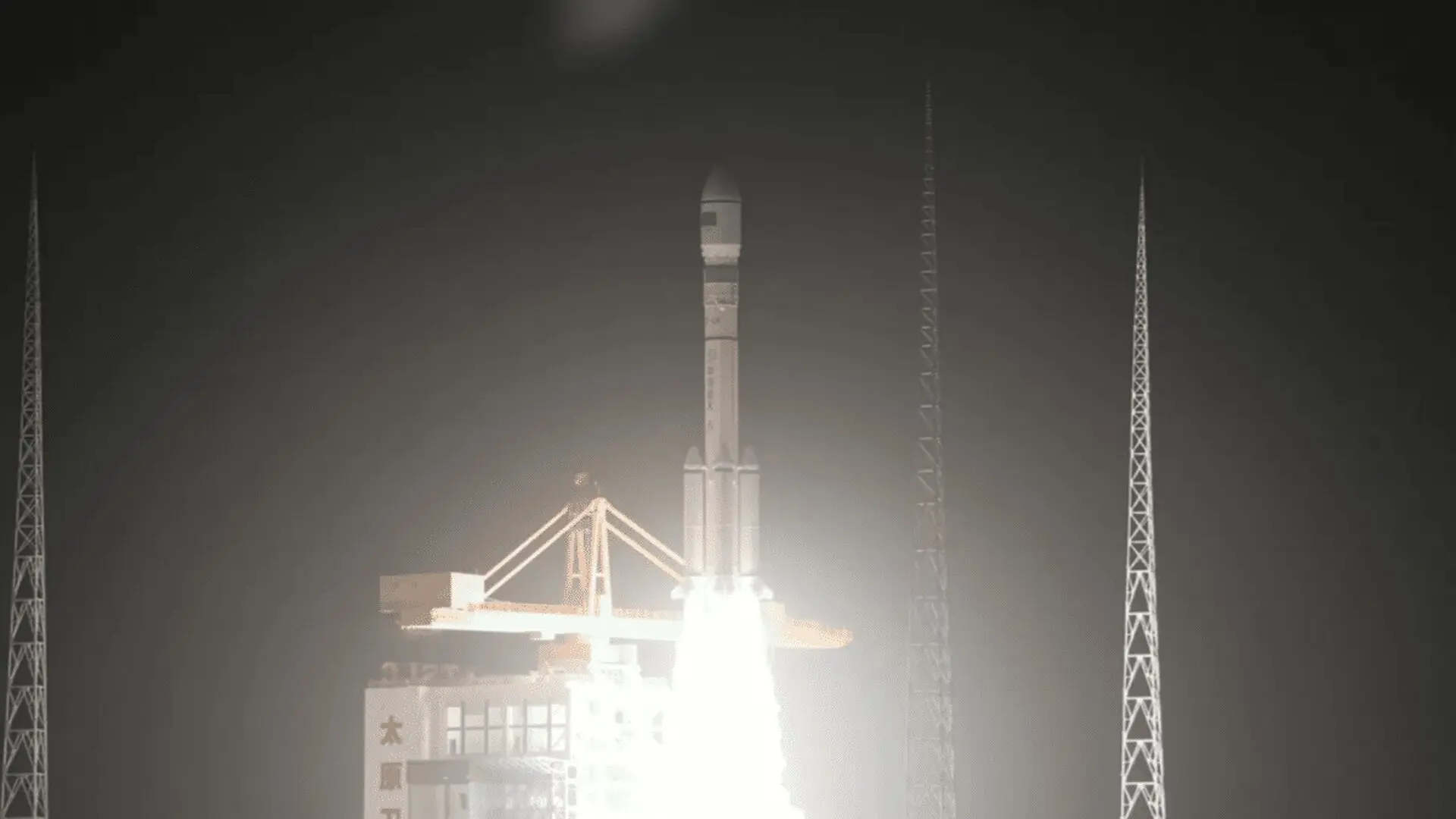
A Chinese reconnaissance satellite has catastrophically disintegrated in high-altitude orbit, leaving behind a field of fragments that could persist in space for hundreds of years. The breakup of the Yaogan-50 (02) spacecraft has complicated an already congested orbital environment, creating new risks for satellites operating in a particularly sensitive region of low Earth orbit.
The Yaogan-50 (02) satellite was launched on March 15, 2026, atop a Long March 6A rocket. Part of a remote-sensing fleet intended for disaster management, agricultural analysis, and topographical surveying, the satellite had settled into an operational altitude of approximately 952 kilometers (590 miles). By September 4, the U.S. Space Force had cataloged 43 distinct pieces of debris resulting from the incident, according to orbital analyst Jonathan McDowell.
43 debris objects cataloged by US Space Force from the breakup of a Chinese satellite in 141 deg retrograde orbit, Yaogan 50-02. The debris is in the 600 to 1100 km altitude range.
— Jonathan McDowell (@planet4589) September 4, 2026
The underlying cause of the failure remains under investigation. Experts are currently weighing several possibilities, including a critical malfunction in the satellite’s power systems, a failure of the onboard propulsion architecture, or a high-velocity impact with an existing piece of orbital junk.
The Risks of a Retrograde Orbit
What makes this specific debris field particularly hazardous is the satellite’s orientation. The spacecraft was operating in a highly retrograde orbit, meaning it moved against the direction of Earth’s rotation at an inclination of 142 degrees. This trajectory is uncommon and creates an elevated risk for other spacecraft; because the debris is traveling in the opposite direction of most satellites, potential collisions could occur at much higher relative velocities, significantly increasing the potential for catastrophic damage.
The persistence of this debris is a primary concern for space safety agencies. In lower altitudes, atmospheric drag naturally pulls defunct objects toward Earth, where they incinerate upon reentry. However, according to NASA, this drag is negligible at the altitudes where the Yaogan-50 fragments are currently drifting—a range extending from roughly 600 to 1,100 kilometers. At these heights, orbital decay is a sluggish process that can span centuries, effectively turning the debris into a long-term navigational hazard.
A Crowded Frontier
The incident serves as a stark reminder of the Kessler syndrome—a hypothetical scenario where the density of objects in low Earth orbit becomes so high that a single collision triggers a cascade of further impacts, rendering entire orbital bands unusable. While the European Space Agency has documented over 660 fragmentation events throughout the history of spaceflight, the rapid increase in active satellites makes each new debris field harder to manage.
With an estimated 1.5 million fragments currently orbiting the planet, tracking and avoiding these objects has become a daily operational requirement for satellite fleets. As the space industry continues to expand, the Yaogan-50 (02) breakup underscores the urgent need for enhanced debris monitoring and more robust international protocols for managing the increasingly crowded environment above our heads.
This article has been fact checked for accuracy, with information verified against reputable sources. Learn more about us and our editorial process.
Last reviewed on .
Article history
- Latest version
Reference(s)
- “ARES | Orbital Debris Program Office | Frequently Asked Questions.” <https://orbitaldebris.jsc.nasa.gov/faq/>.
Cite this page:
- Posted by Karan Das