Europe’s New Ice-Tracking Satellite Just Cleared a Critical Hurdle Before Heading to Space
ESA’s CRISTAL satellite has passed a critical testing milestone, bringing it one step closer to monitoring Earth’s changing polar ice from space.
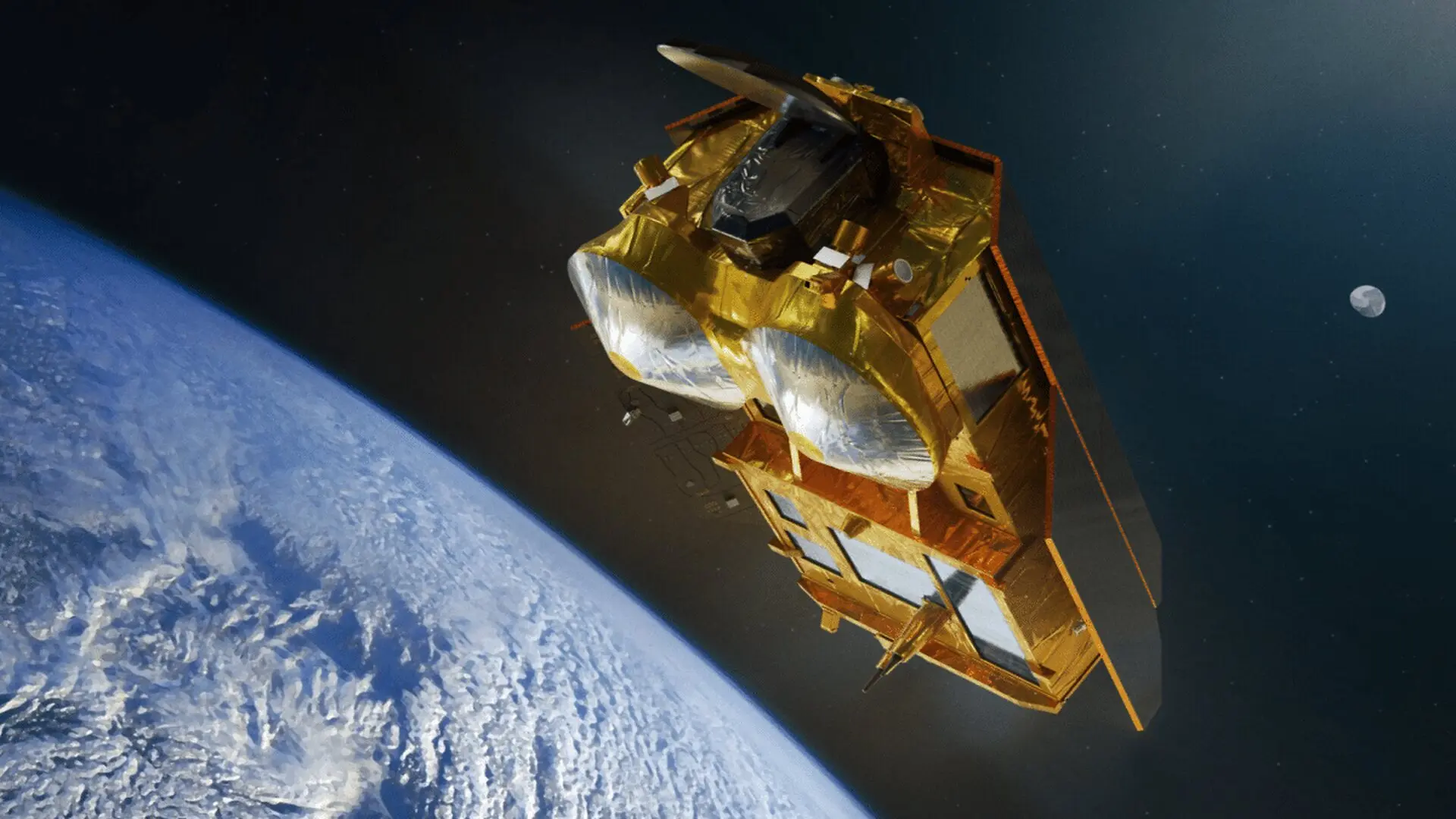
Europe’s upcoming polar monitoring mission has cleared a critical engineering hurdle, moving the CRISTAL satellite one step closer to its launch. The Copernicus Polar Ice and Snow Topography Altimeter (CRISTAL) recently underwent successful testing of its deployable systems, a milestone that the European Space Agency (ESA) confirms marks the transition toward a more rigorous phase of environmental qualification.
Verifying Hardware for the Extremes of Orbit
The mission aims to provide unprecedented detail on the state of Earth’s cryosphere, specifically tracking fluctuations in sea ice thickness and ice sheet elevation. These data points are essential for climate scientists attempting to quantify how frozen regions react to rising global temperatures. Before the satellite can reach orbit, however, it must prove its resilience.
The recent tests focused on the satellite’s ability to transition from its compact launch configuration to its operational state. Successfully “opening its wings”—a reference to the deployment of vital solar arrays—is a high-stakes maneuver. Because solar panels provide the power necessary for communications, thermal regulation, and scientific instrumentation, any mechanical failure during deployment could jeopardize the entire mission.
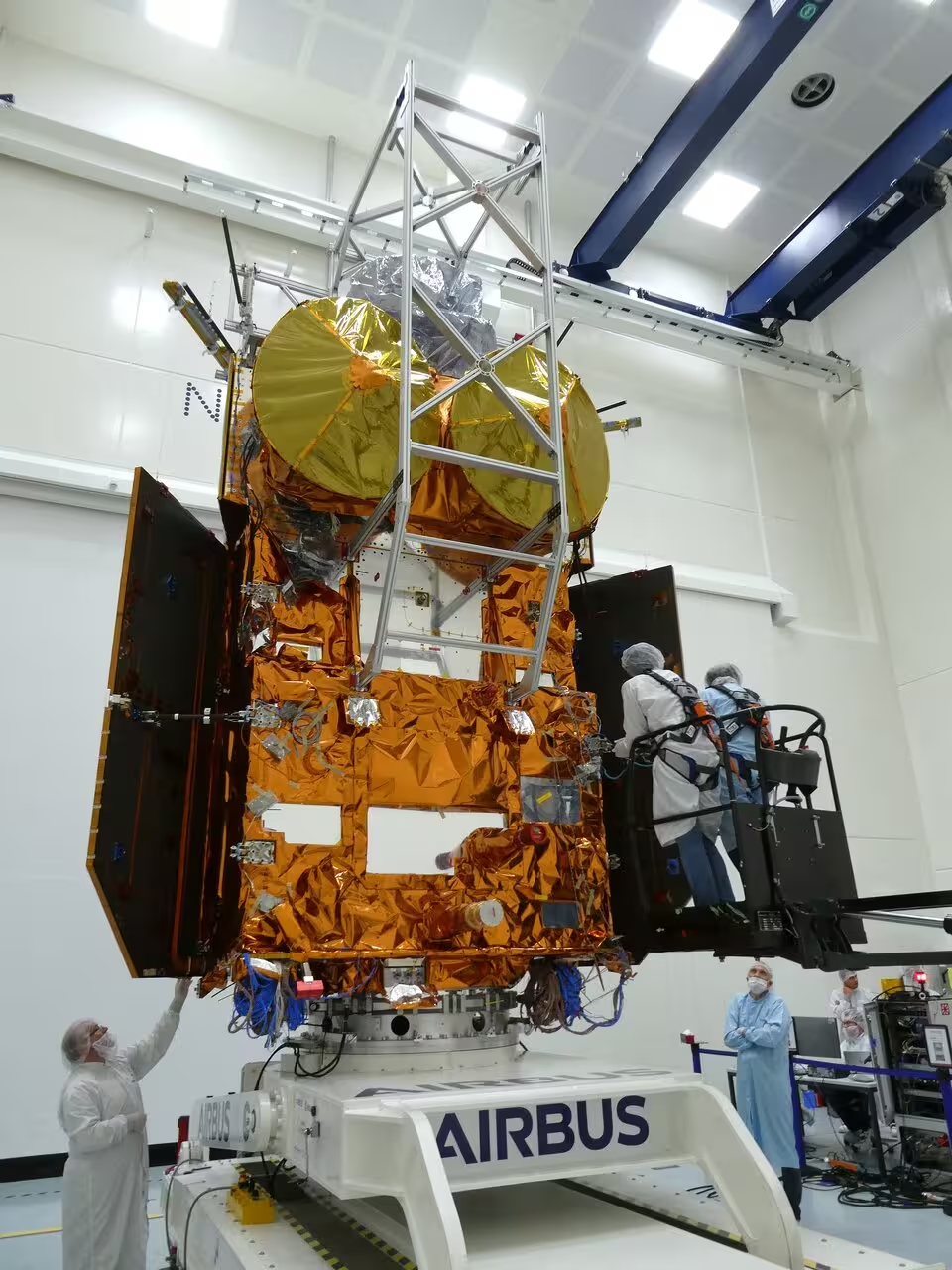
Kristof Gantois, the ESA project manager for CRISTAL, praised the engineering team for the flawless execution of these mechanical checks. “Everything is progressing very well and the satellite passed these tests with flying colours,” Gantois noted. This success serves as a prerequisite for the more intensive environmental campaign scheduled for the coming year.
Advanced Testing at ESTEC
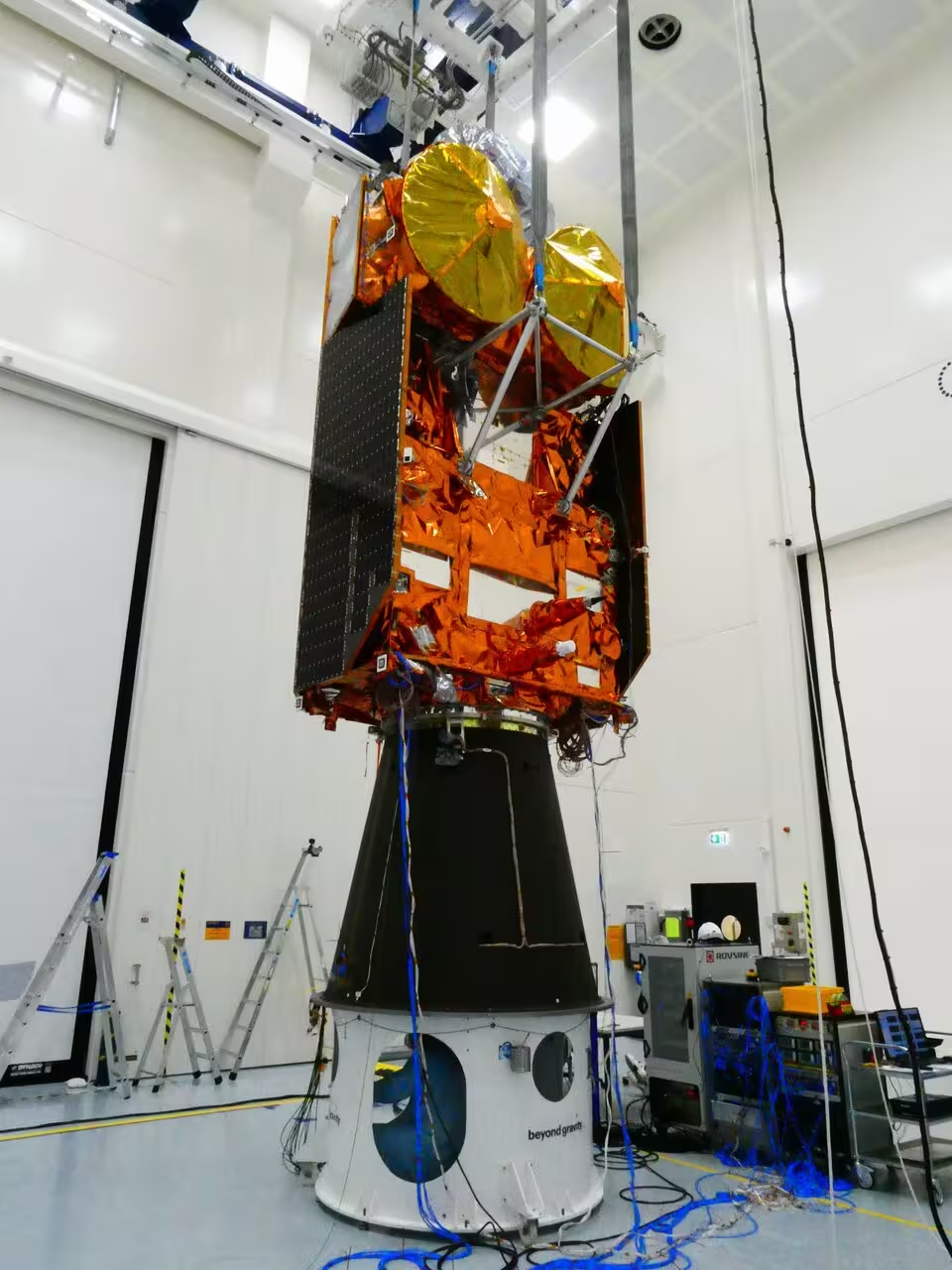
Having finished its initial industrial testing at the Airbus facility in Friedrichshafen, Germany, the satellite is slated to be transported to the Netherlands. It will undergo comprehensive evaluation at the European Space Research and Technology Centre (ESTEC). This facility is equipped to subject flight-ready hardware to the violent mechanical stresses of launch, as well as the unforgiving thermal and vacuum conditions of space.
Engineers at ESTEC will utilize specialized chambers to replicate the acoustic loads, extreme temperature shifts, and vibrations the spacecraft will encounter. By identifying potential structural or electrical vulnerabilities under these simulated conditions, the team aims to ensure that CRISTAL remains fully operational once it reaches its vantage point above the poles.
Decoding Polar Change with Radar Altimetry
The core of CRISTAL’s scientific utility lies in its advanced dual-frequency radar altimeter. Monitoring sea ice from space is notoriously difficult because standard imaging often fails to distinguish between the expanse of ice coverage and the actual volume of the ice.
By employing both Ku-band and Ka-band frequencies, CRISTAL can better penetrate snow cover and account for its impact on radar reflections. This multi-frequency approach allows researchers to strip away snow-related inaccuracies, leading to a much sharper calculation of ice thickness. Beyond the sea ice, the mission will monitor the geometry of the Greenland and Antarctic ice sheets, providing a high-resolution look at mass accumulation and loss over time.
While the satellite itself will not solve every mystery regarding polar ice, the data it collects will be integrated into complex climate models, offering a clearer picture of how the planet’s frozen reservoirs are shifting in a warming world. For now, the focus remains on the meticulous process of turning that sophisticated design into a robust, flight-proven reality.
This article has been fact checked for accuracy, with information verified against reputable sources. Learn more about us and our editorial process.
Last reviewed on .
Article history
- Latest version
Reference(s)
- “Ice mission CRISTAL opens its wings.” <https://www.esa.int/Applications/Observing_the_Earth/Copernicus/Ice_mission_CRISTAL_opens_its_wings>.
Cite this page:
- Posted by Karan Das