Spain Has a Stunning Natural Great Wall That Was Once Used by a Medieval Warlord
Archaeologists are investigating towering rock ridges once held by a medieval warlord to uncover the mysterious history of the site that predates the fortress.
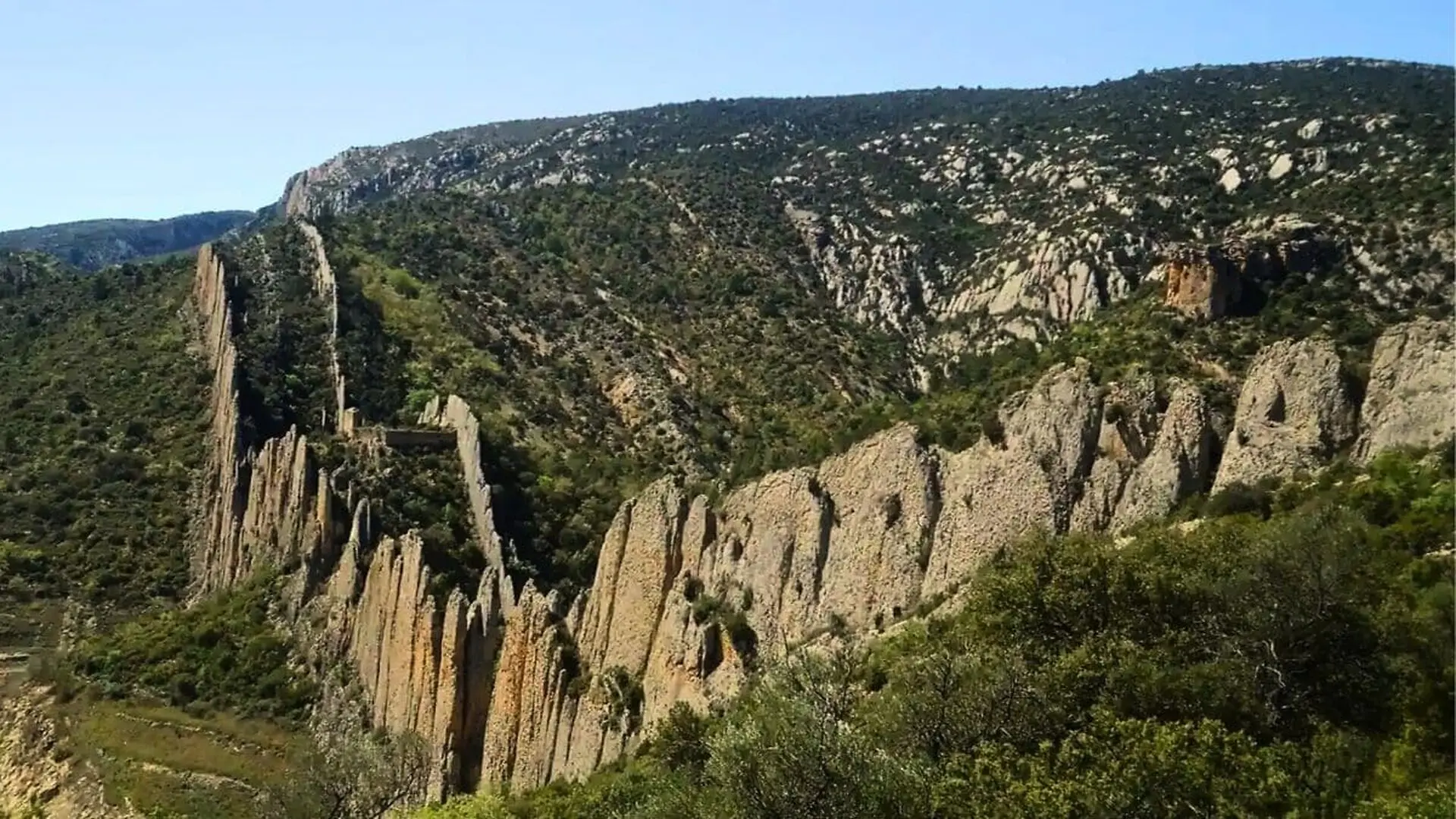
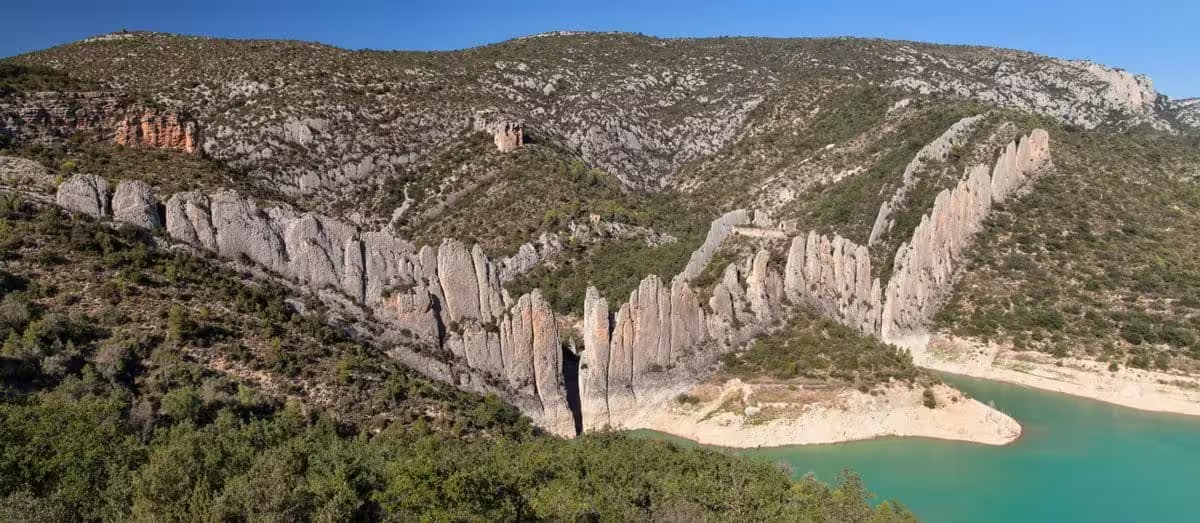
Rising dramatically above the turquoise waters of the Canelles reservoir, straddling the border between Aragon and Catalonia, stand two jagged limestone ridges that resemble the hand-laid battlements of a colossal fortress. Known to locals as the Roques de la Vila and to travelers as the “Chinese Wall of Finestras,” these formations appear engineered, yet they are entirely natural—the product of ancient tectonic forces that tilted the floor of a prehistoric sea toward the sky.
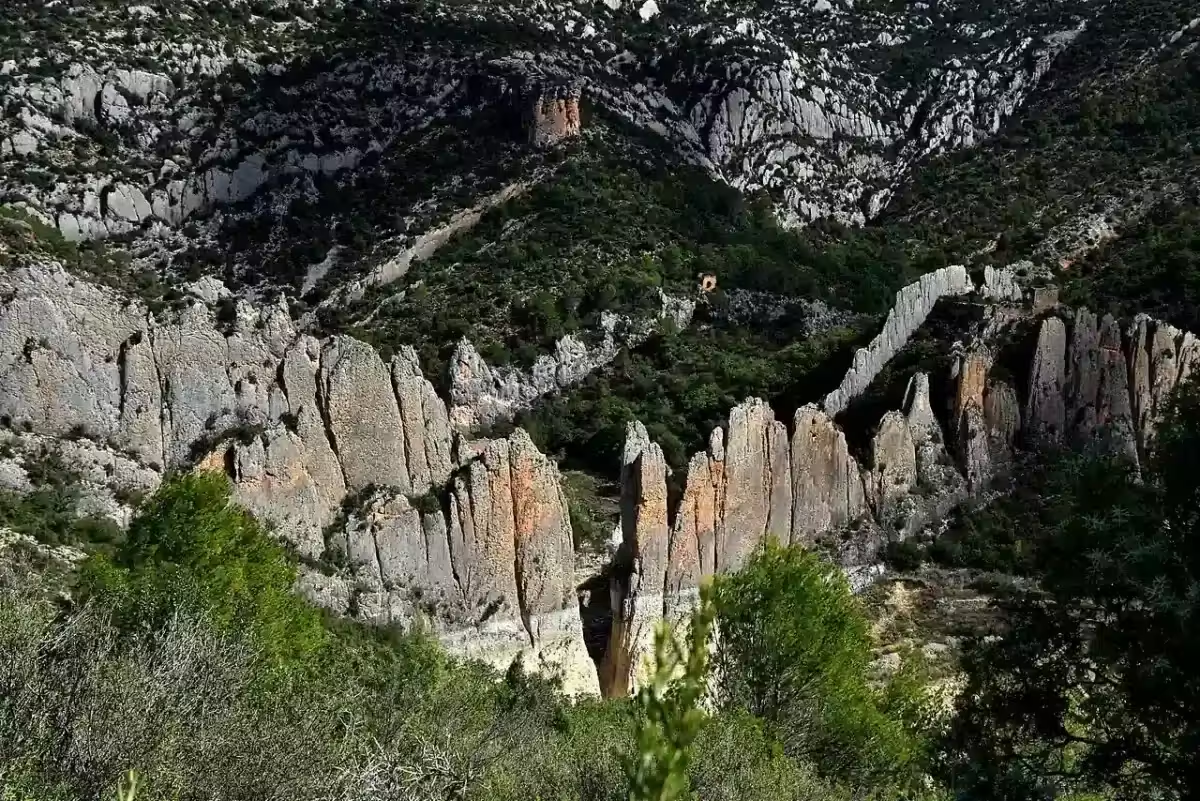
Millions of years ago, this region was submerged under shallow marine waters. Over eons, layers of silt, shells, and mineral deposits accumulated on the seabed, hardening into limestone and softer marl. When the Iberian and European tectonic plates collided to forge the Pyrenees, these flat sedimentary strata were thrust upward and folded into a near-vertical position. Subsequent erosion stripped away the softer marl, leaving only the resilient limestone ribs standing as a striking, jagged profile against the landscape.
A Medieval Stronghold at the Frontier
The site’s strategic elevation made it an ideal defensive position during the 11th century, a period marked by the fracturing of the Caliphate of Córdoba and the resulting territorial expansion of northern Christian lords. Among the most prominent figures was Arnau Mir de Tost, a nobleman from the County of Urgell who earned a reputation as the “Cid of the Lleida lands.”
Following his conquest of the fortress of Àger in 1034, Mir de Tost extended his influence over more than 30 castles, with Finestras serving as a key stronghold in the Ribagorza district. Historical records from 1068 document the formal donation of the Finestras castle to the church of Sant Pere d’Àger by Mir de Tost and his wife, Arsenda. The text notes that the site had been captured from Saracen forces and held under aprisio, a feudal legal mechanism that granted ownership of deserted land to those who occupied and cultivated it.
The Mystery of the Crests
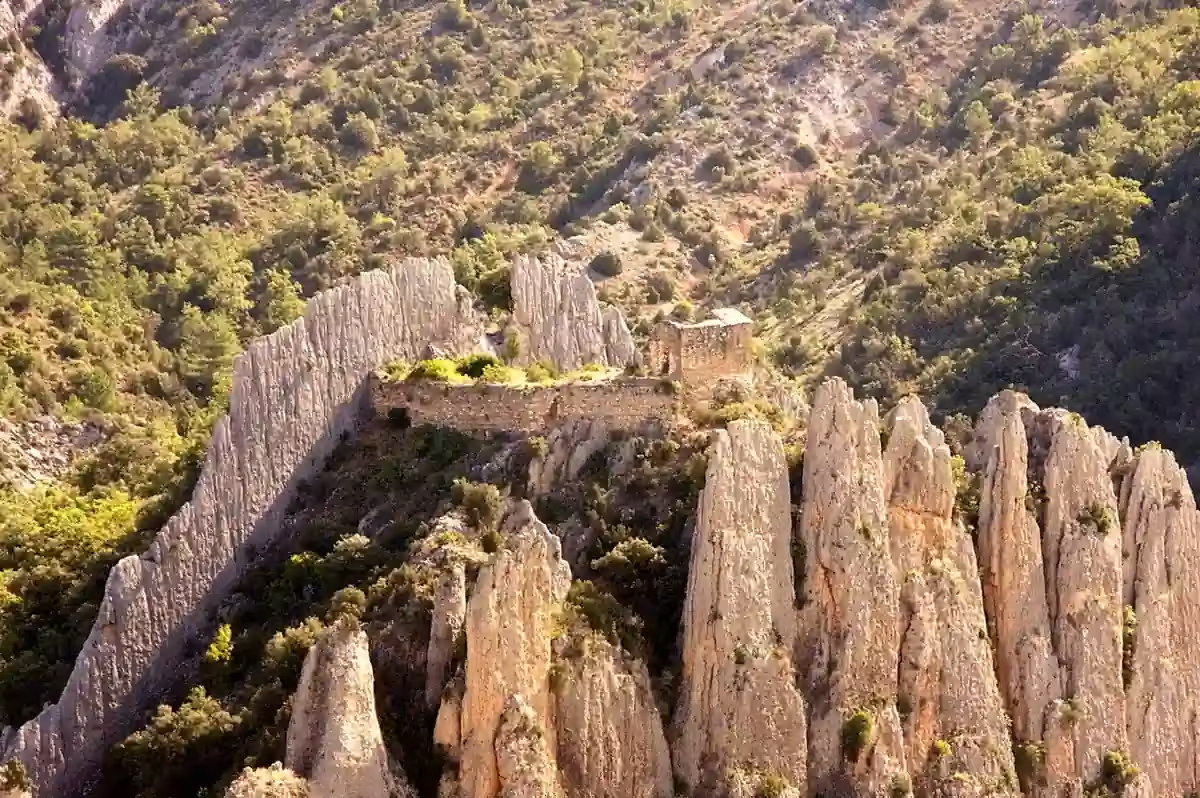
Today, two sets of ruins persist at the site, though their exact origins remain a subject of archaeological debate. At the base lies a fortified house with thick walls and a surviving vaulted ground floor. Higher up on the ridge, the Vilot—a site containing a six-meter watchtower and the chapel of Sant Vicenç—stands guard. While often associated with Mir de Tost’s 11th-century campaigns, the architectural features of the current stonework suggest a 12th-century origin, leaving the question of whether an earlier Islamic-era structure occupied the crests prior to the Christian advance currently unanswered.
Engineering Challenges and a Culinary Fix
The village of Finestras, which once sustained a modest population, saw its fate sealed in the 1950s with the construction of the Canelles dam. As the reservoir filled, the valley’s fertile land was submerged, forcing the abandonment of the village. The construction process itself was hampered by the region’s complex geology; the surrounding terrain is highly karstic, meaning the limestone bedrock is riddled with cracks and subterranean cavities that allow water to escape.
To combat persistent leakage, engineers employed an unorthodox solution. According to Benjamín Vallmanya, head of the dam’s interpretation center, crews injected a specialized mixture—including fine clay, coal, and chickpea paste—into the fissures. The organic paste, known for its ability to swell significantly when exposed to moisture, effectively expanded to seal the gaps, allowing the reservoir to eventually reach its full capacity decades after the dam’s completion.
This article has been fact checked for accuracy, with information verified against reputable sources. Learn more about us and our editorial process.
Last reviewed on .
Article history
- Latest version
Reference(s)
- Romaní, Daniel. “La pasta de garbanzos evita filtraciones.”, August 22, 2025 Ara en Castellano <https://es.ara.cat/misc/pasta-garbanzos-evita-filtraciones_1_5476776.html>.
Cite this page:
- Posted by Zara Tariq