New Study Debunks Ancient Egyptian Saqqara Bird as Failed Glider, Suggests Toy or Symbol
2023 simulations show the Saqqara Bird lacks aerodynamic features to glide, putting an end to the long‑running debate over its purpose.

In 1898 workers uncovered a small wooden model inside the tomb of Pa‑di‑Imen at Saqqara, Egypt. The object, later housed in Cairo’s Museum of Egyptian Antiquities, measures just over seven inches across, weighs 1.38 ounces and is carved from sycamore wood. Its silhouette features a falcon‑like head and sleek, feather‑free wings that taper to narrow tips, prompting scholars to wonder whether it might reflect early concepts of aerodynamics.
Mystery Wooden Object Fuels Speculation on Early Flight
The artifact lay largely unnoticed until Egyptologist Kahlil Messiha spotted it among other avian pieces in a museum storeroom in 1970. An avid model‑aircraft hobbyist, Messiha argued that the piece demonstrated sophisticated knowledge of lift and urged the Egyptian Ministry of Culture to investigate further. In a 1980 article for the Journal of African Civilizations, he wrote that the body and wings share the same wood and that the “aerofoil shape is beautifully carved and smooth.”
Enthusiasts responded by constructing replicas from lightweight balsa wood. Some of these reproductions managed short glides, and experimenters suggested that attaching a tailplane could improve stability, bolstering the notion that the original might have been a prototype glider.
Modern Analyses Question Glider Hypothesis
A 2002 recreation lacking a tailplane failed to achieve controlled flight, leading glider designer Martin Gregoire to describe the object as “likely a child’s toy or a weathervane” and to dismiss claims of ancient high‑tech engineering.
A more recent computational study published in 2023 examined the model’s aerodynamic performance in detail. The simulation identified unstable pitch, asymmetric lift and a propensity to roll, concluding that the center of gravity sits behind the neutral point—a configuration that would prevent steady flight. The authors stated that “within the scope of this work, the connection between the Bird of Saqqara and an alleged knowledge of aerodynamics in ancient Egypt could not be confirmed.”
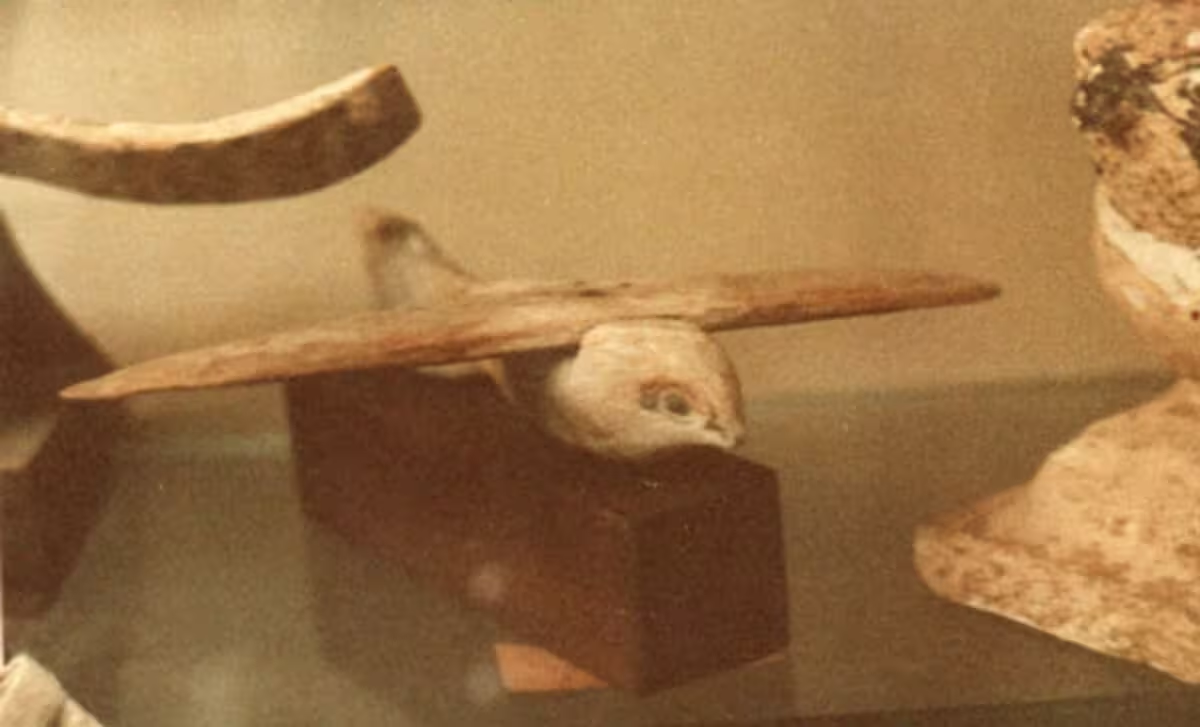
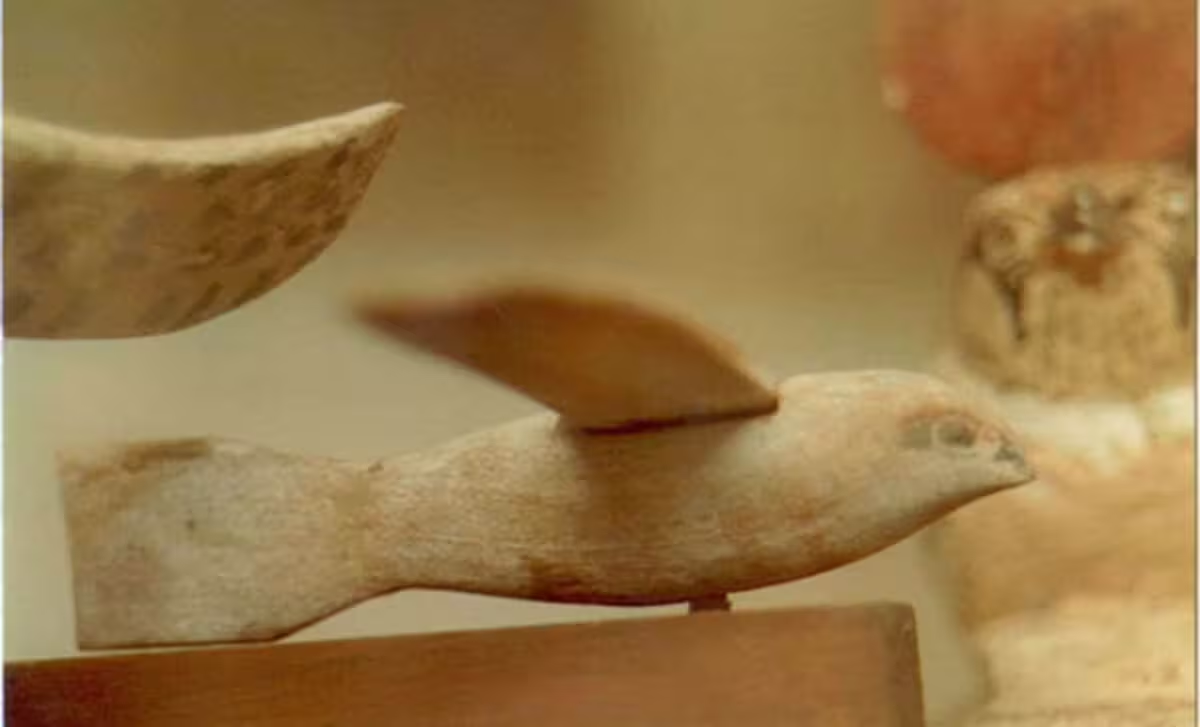
Origins and Function of the Saqqara Bird Remain Unclear
Archaeologists continue to debate the object’s purpose. Some scholars link it to the Khonsu Temple, proposing that similar pieces might have served as weathervanes on boats, although the model’s diminutive size makes that scenario difficult to verify.
Other interpretations suggest the piece could be a stylized boomerang or simply a toy crafted over two thousand years ago. Regardless of its original intent, the Saqqara Bird illustrates how a meticulously carved artifact can spark enduring questions about the interplay of design, symbolism and technological knowledge in ancient societies.
This article has been fact checked for accuracy, with information verified against reputable sources. Learn more about us and our editorial process.
Last reviewed on .
Article history
- Latest version
Cite this page:
- Posted by Zara Tariq