Divers Reveal 1,700-Year-Old Roman Bridge Foundations Beneath Swiss River
A hidden Roman bridge found under a Swiss river is rewriting the story of a key ancient route, revealing evidence long overlooked.
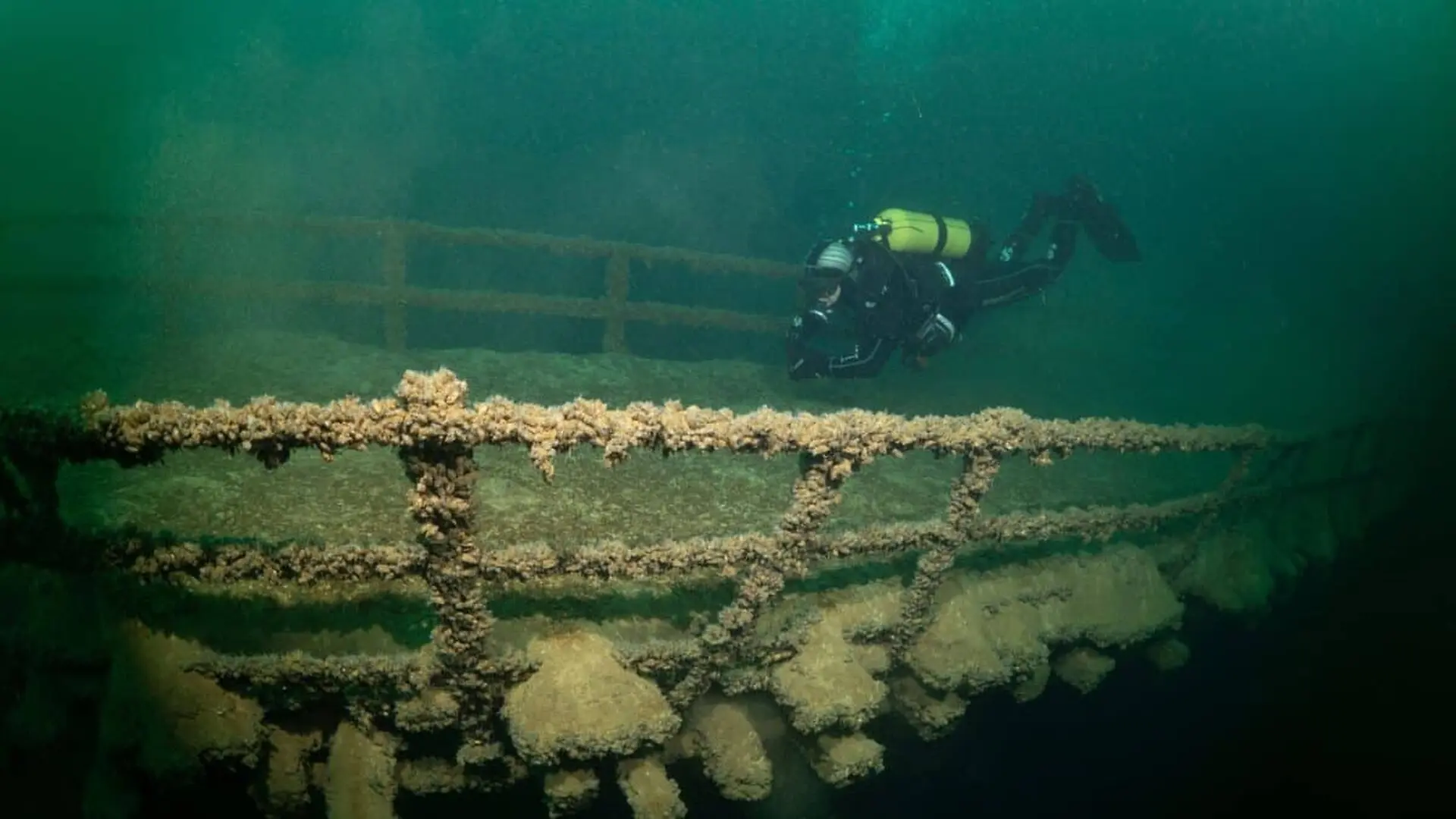
Archaeologists have uncovered a series of wooden piles lying beneath the Aare River, providing the first tangible proof of a Roman bridge that scholars have been trying to locate for decades. The timbers date to the fourth century C.E., confirming a river crossing that once linked a major Roman thoroughfare through present‑day Solothurn, Switzerland.
For years, researchers assumed that a Roman road linking northern Italy with the Rhine frontier spanned the Aare at ancient Salodurum, now Solothurn. While the road has been mapped on both banks, the actual bridge remained elusive.
The mystery was solved during underwater investigations carried out alongside renovation work on the nearby Wengi Bridge. The Swiss Office for Monument Conservation and Archaeology reports that divers recovered wooden piles buried in the riverbed, finally pinpointing the Roman crossing.
Submerged Pilings Identify Long‑Lost Roman Span
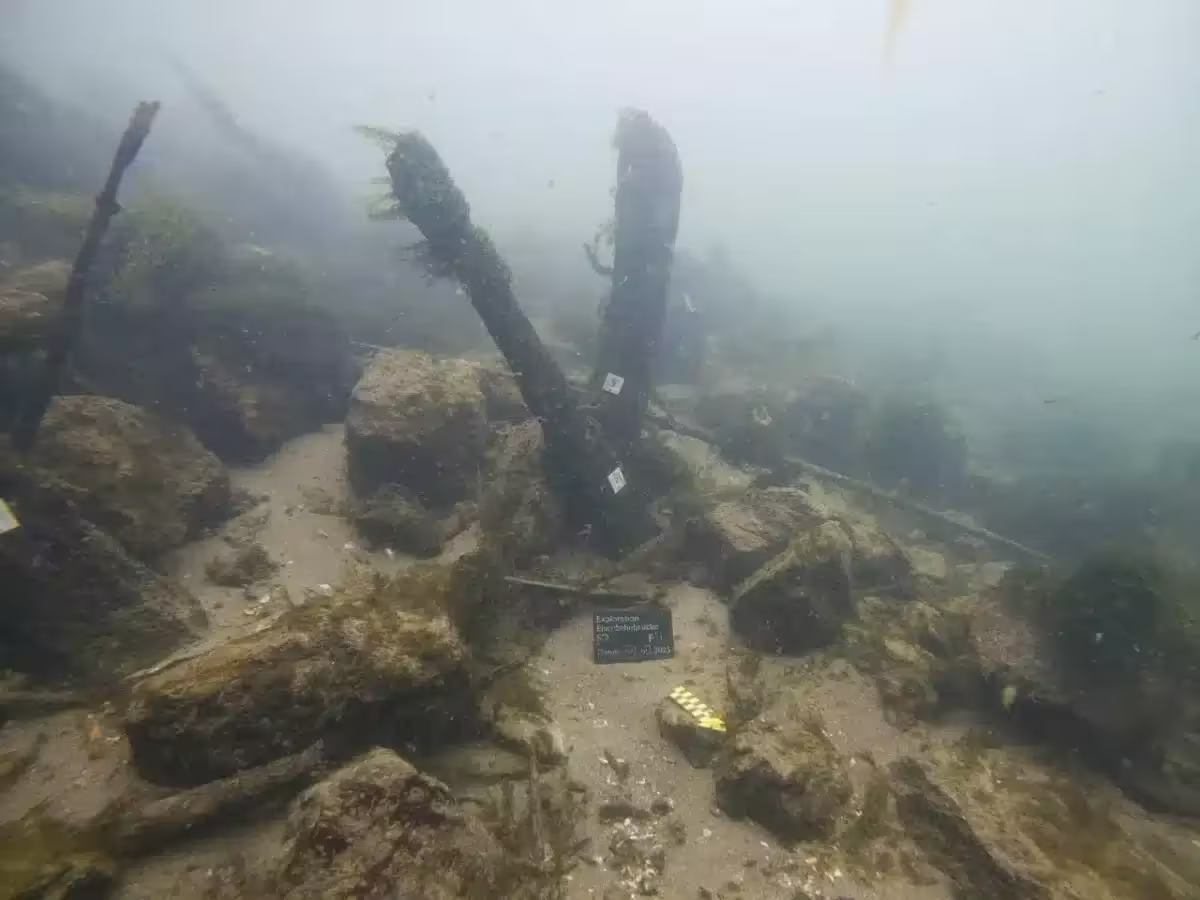
The find lies just upstream of the contemporary Wengi Bridge, roughly 32 feet from the southern riverbank. While probing the sediment, researchers encountered a line of wooden stakes preserved beneath the river’s layers.
Each pile measures about six feet in length and runs parallel to the flow, suggesting they once formed the foundation of a bridge that carried traffic across the Aare nearly 1,700 years ago.
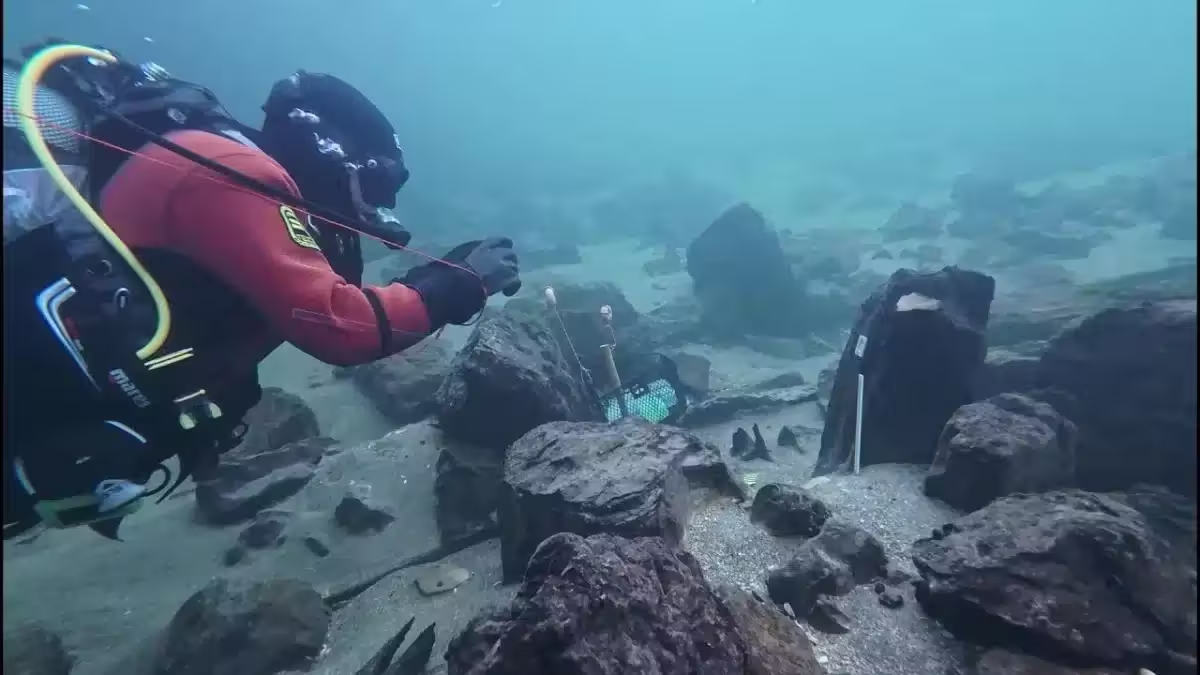
Wood samples taken from the piles were radiocarbon‑dated to the fourth century C.E., placing the structure in the Late Roman era, according to the Swiss Office for Monument Conservation and Archaeology. The agency says the discovery finally confirms the long‑speculated Roman river crossing at ancient Salodurum.
Earlier Evidence Hinting at a Crossing
Although the bridge itself had never been uncovered, the presence of Roman roads on both sides of the Aare made a crossing inevitable. The river narrows at this point, creating a natural bottleneck ideal for bridge construction.
The settlement’s name also offered a clue. “Salodurum” derives from a Celtic term meaning “river narrows,” highlighting the strategic importance of the location during the Roman period.
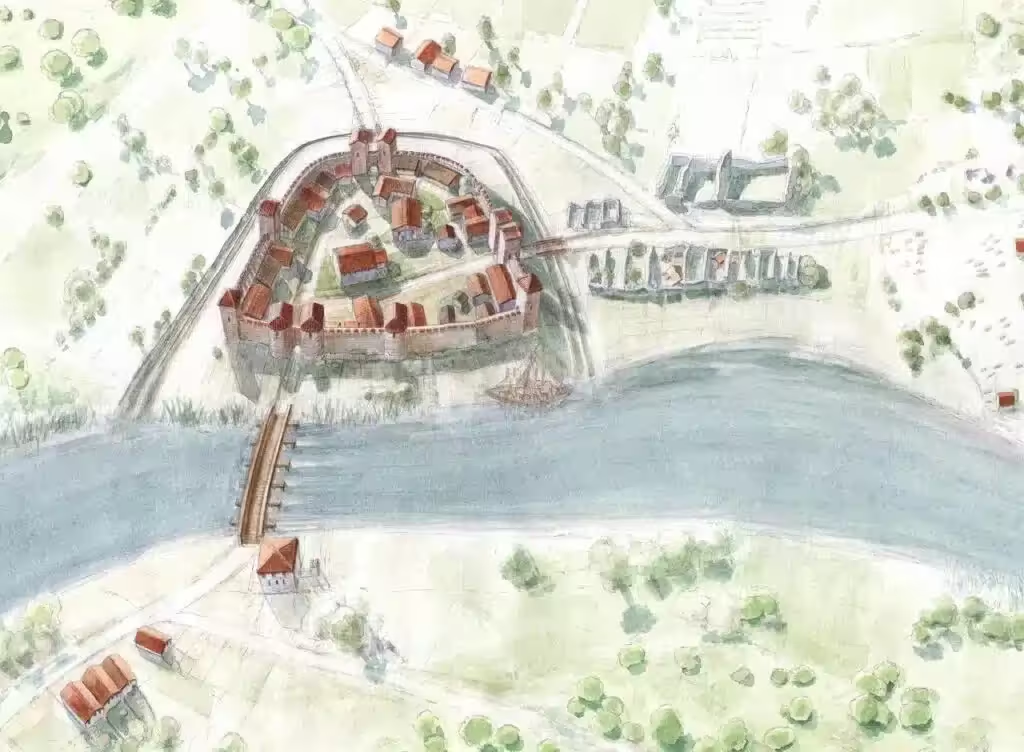
During the era in question, local communities were transitioning from open towns to fortified sites known as castra. These forts were linked by a network of Roman highways that connected northern Italy with the Rhine frontier, traversing routes such as the Great St. Bernard Pass, the Swiss Plateau and the Jura.
Survival Through 20th‑Century River Works
The timbers endured despite extensive engineering efforts in 1969 that deepened the Aare’s channel near Solothurn, a project that could have jeopardized buried heritage. The Roman piles survived, sheltered by their proximity to the modern Wengi Bridge, where construction impact was minimal.
The wooden supports will remain submerged for the time being. Additional dives are planned, as archaeologists suspect the discovered line represents only a fraction of the original structure. Further rows uncovered in the river could illuminate how the bridge integrated with Salodurum’s Roman road system.
This article has been fact checked for accuracy, with information verified against reputable sources. Learn more about us and our editorial process.
Last reviewed on .
Article history
- Latest version
Reference(s)
- “Spätantike Römerbrücke bei Solothurn entdeckt - Kanton Solothurn.”, June 8, 2026 <https://so.ch/startseite/aktuell/aktuell/news/spaetantike-roemerbruecke-bei-solothurn-entdeckt-1/>.
Cite this page:
- Posted by Zara Tariq