Astronomers Discover Ancient Star Cluster Near Milky Way Center Almost As Old As The Universe
Astronomers have uncovered a hidden group of stars near the Milky Way’s center, revealing new details that challenge previous observations of the region.
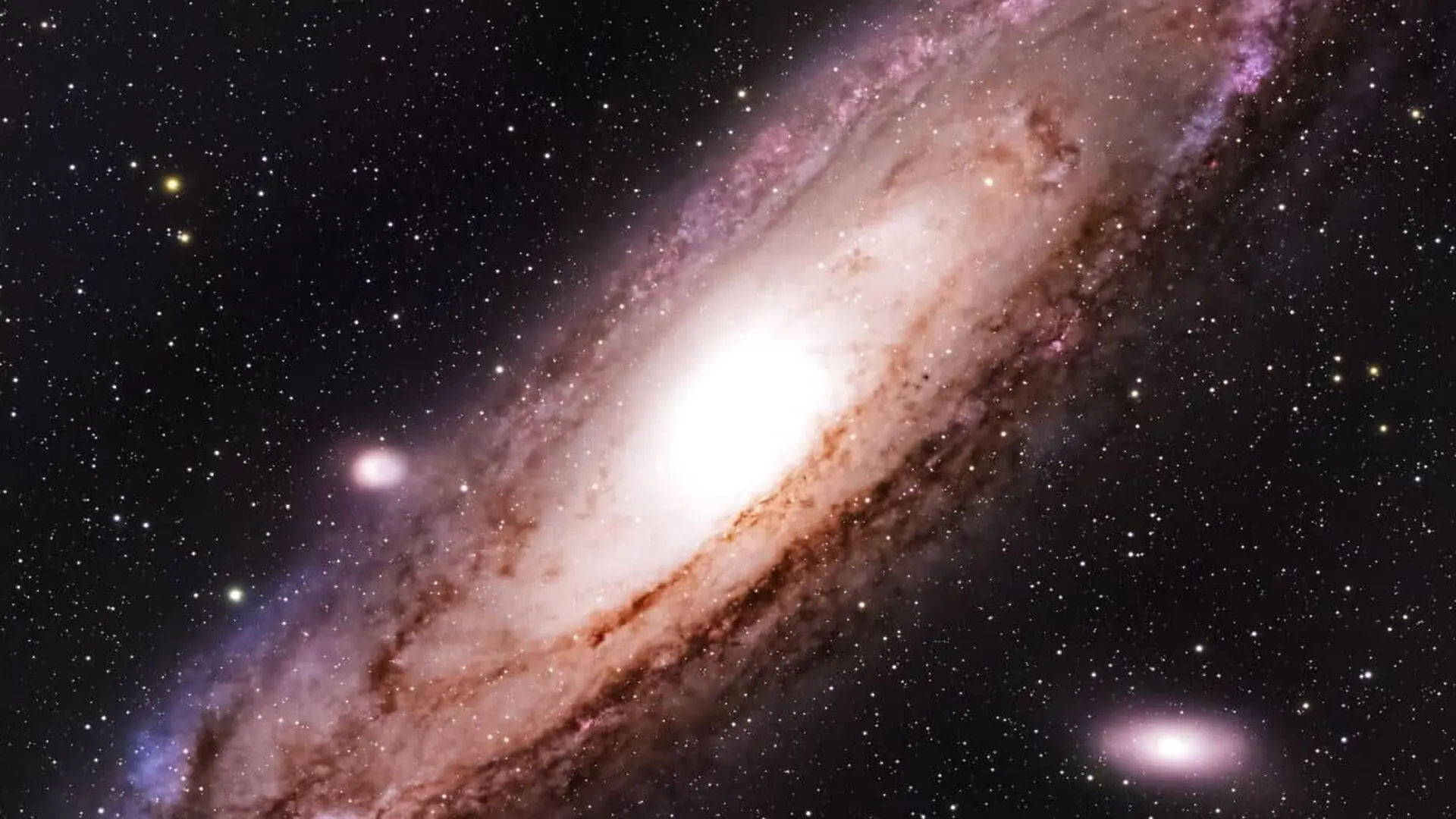
Astronomers have identified a stellar relic tucked away in the dense, dust-choked heart of the Milky Way that may challenge our understanding of galactic history. New data suggests that the globular cluster known as VVV CL001 is approximately 13.4 billion years old, potentially ranking it among the oldest structures ever discovered within our galaxy.
Globular clusters—tightly bound groups of ancient stars—typically serve as cosmic fossils, with most dating back 10 to 13 billion years. Because these clusters are composed of metal-poor stars, they provide a vital window into the conditions present during the infancy of the Milky Way. VVV CL001, first identified in 2010 through the VISTA Variables in the Vía Láctea survey and confirmed nearly a decade later, has long been a difficult target to study due to its extreme distance, obscured location, and peculiar orbital trajectory.
Advanced Imaging Clears the Cosmic Fog
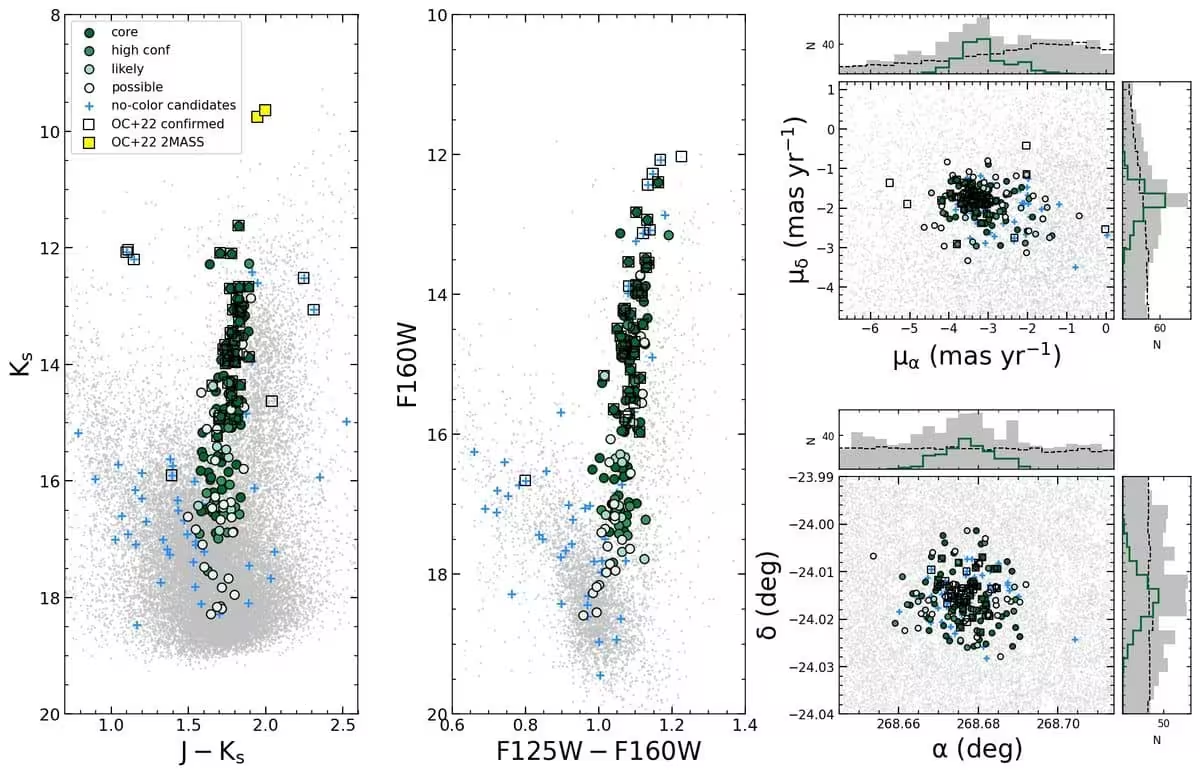
A research team led by J. Olivares Carvajal of the INAF Capodimonte Astronomical Observatory bypassed these observational hurdles by synthesizing data from the Magellan Baade Telescope’s FourStar Infrared Camera and the Hubble Space Telescope. By applying machine-learning algorithms to stellar motion data, the team successfully filtered out foreground interference to isolate 155 individual stars belonging to the cluster.
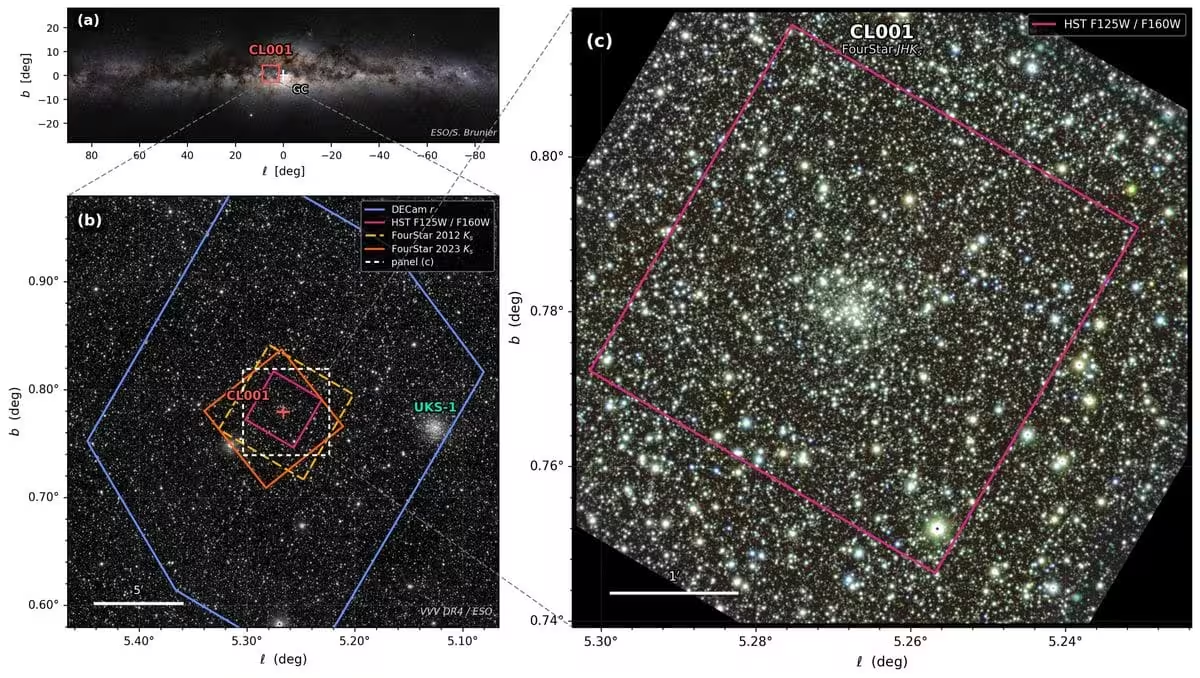
This identification included crucial horizontal-branch stars, which were previously undetectable in such a faint population. The findings, recently accepted for publication in Astronomy & Astrophysics, provide the most precise measurements of the cluster to date.
Pinpointing a Relic’s Age and Origin
By leveraging these newly identified members and refined evolutionary models, the researchers determined that VVV CL001 lies approximately 24,000 light-years from Earth, placing it firmly within the galactic bulge. The age assessment of 13.4 ± 0.4 billion years was derived through multiple analytical methods, including the study of main-sequence turnoff stars, resulting in a convergence that underscores the cluster’s extreme antiquity.
“Both methods estimate the cluster age at 13.4±0.4 Gyr, suggesting that VVV CL001 could be the oldest GC in the bulge and perhaps the galaxy,” the team explained.
The cluster’s existence poses an intriguing question regarding its formation: did it originate in the heart of the galaxy, or is it an immigrant object that was captured by the Milky Way’s gravity early in its history? Its unusual motion relative to neighboring stars continues to complicate the reconstruction of its precise path through space.
While the uncertainty in these measurements allows for compatibility with the broader 13.8-billion-year age of the universe, VVV CL001 remains a primary candidate for one of the earliest objects to take shape within our galactic borders. Future spectroscopic campaigns are expected to further clarify the chemical signatures of these stars, offering a clearer picture of the environment that birthed this ancient survivor.
This article has been fact checked for accuracy, with information verified against reputable sources. Learn more about us and our editorial process.
Last reviewed on .
Article history
- Latest version
Reference(s)
- Carvajal, J.. “VVV CL001: A strong candidate for the most ancient star cluster in the Galaxy.” arXiv.org <https://arxiv.org/abs/2610.27969>.
- <https://uc-cl.academia.edu/JulioOlivaresCarvajal>.
Cite this page:
- Posted by Farah Siddiqui