Orbital Data Centers Look Tempting, But Heat, Radiation and Repairs Make Them Hard
Orbital data centers promise high‑tech computing, yet launching satellites and running large‑scale hardware in space face daunting technical hurdles.
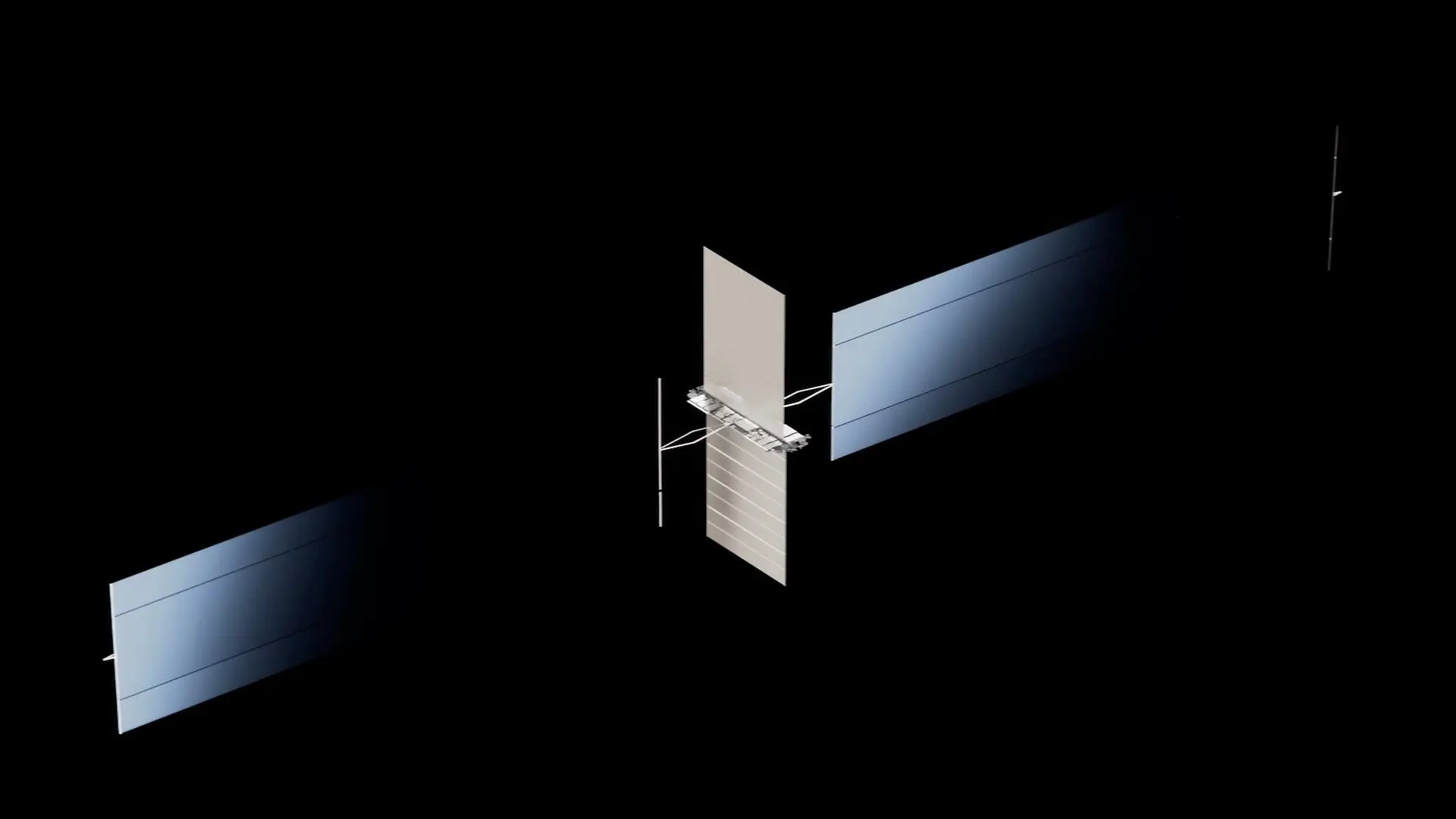
There’s a vast difference between launching satellites and operating an industrial-scale computing infrastructure in orbit.
Imagine a single firm becoming the railroad, power grid, and cloud‑computing backbone for the fast‑growing space economy. That vision helped spark buzz around the much‑awaited SpaceX IPO. Investors are no longer buying rockets alone; they are betting on an entire orbital service platform.
One of the boldest concepts riding this wave is the notion of data centers that orbit the planet. While SpaceX is a high‑profile contender, it is far from the only player exploring the idea.
The appeal is clear: an orbital platform could draw endless solar power, sidestep land‑use limits, and eliminate dependence on terrestrial water and electricity grids. As AI pushes compute demand skyward, firms are touting space‑based farms as a way to dodge the environmental and grid‑strain pressures of Earth‑bound facilities. Public opposition to ground‑based sites—over land, water, noise, and community impact—adds further incentive.
Yet launching a few satellites is not the same as operating a full‑scale, industrial computing complex in orbit. The space environment is hostile: radiation degrades electronics, heat dissipation is a major engineering hurdle, repairs are exorbitantly costly, and every kilogram launched carries a hefty price tag.
We are professors of data‑center architecture and space systems engineering. Designing a space‑borne compute hub forces us to merge two very different sets of requirements.
Core Elements of Terrestrial Data Facilities
Modern data hubs power everything from cloud services and video streaming to online banking, scientific simulations, and increasingly, artificial intelligence. Their operation hinges on three pillars.
Second, cooling. Almost all consumed electricity ends up as heat that must be removed quickly to avoid performance loss, failures, or shutdowns as seen in recent incidents. Cooling infrastructure—air handlers, chillers, towers, pumps, and increasingly liquid‑cool loops—often becomes the largest energy draw after the IT equipment itself.
Third, the physical footprint: land, buildings, structural supports, backup power, water supplies, fiber connections, and maintenance access. Proximity to users and network backbones is essential for low‑latency service.
In short, Earth‑based data centers are massive electrical‑thermal ecosystems built around racks of servers.
Translating Those Needs to Orbit
Moving these requirements off‑planet introduces both opportunities and new constraints.
Power would still be king, but in space it would come from solar arrays. Sunlight is constant beyond the atmosphere, though certain orbits impose periodic Earth eclipses. Even the most efficient photovoltaic cells today convert only about half the incident sunlight into electricity according to current standards.
Cooling could, in theory, exploit the near‑absolute‑zero vacuum of space (approximately –270 °C). Waste heat could be radiated away via large thermal panels, potentially reducing the need for bulky, water‑intensive chillers used on the ground. However, radiators require extensive surface area—sometimes comparable to two football fields for a 10 MW heat load—and must operate alongside solar panels.
Without an atmosphere, convection is impossible; heat must be emitted as infrared radiation, a relatively slow process. Consequently, designing a reliable thermal path becomes a major engineering challenge.
On the upside, an orbital data hub would sidestep many community concerns that plague terrestrial sites—land acquisition disputes, water consumption, noise, and local zoning battles that often spark opposition.
Nevertheless, the increasingly crowded orbital environment raises safety questions. Hundreds of large satellites could add to the existing debris problem, and a collision with micrometeoroids or stray fragments could both damage a data hub and generate more space junk.
Launch frequency is another social factor. Communities around launch sites, such as Boca Chica, Texas, have already voiced concerns over environmental impacts and beach access through protests.
Data must travel between Earth and the orbital facility, as well as between multiple orbital nodes, using radio or laser links. Existing constellations like Starlink and Amazon’s LEO network demonstrate feasibility, but the sheer volume of traffic required for a full‑scale compute farm would be unprecedented.
Engineering Hurdles Beyond Power and Heat
Unlike terrestrial racks that arrive ready‑to‑run, space‑based modules would need to be launched in pieces and assembled on‑orbit. This calls for novel in‑space servicing and manufacturing capabilities.
Hardware refresh cycles pose another obstacle. Earth data centers typically replace servers every three to five years to keep pace with advancing chips and evolving workloads as a matter of routine. In orbit, upgrades would be far more complex and expensive, potentially leaving a fleet of computers obsolete long before its structural components wear out.
Repair logistics are similarly daunting. On the ground, technicians can swap out faulty modules within hours. In space, “refresh and repair” becomes a high‑cost, high‑risk operation that may be infeasible for routine maintenance.
Finally, the environment itself—continuous radiation, extreme temperature swings between sunlit and shadowed phases, and vacuum conditions—creates a relentless wear pattern that any orbital hardware must survive.
Do the Benefits Outweigh the Obstacles?
Despite these barriers, companies are pressing ahead. SpaceX recently unveiled its AI1 Compute Satellite, envisioned as an orbital data‑center platform. Yet its projected capability is 100 to 1,000 times smaller than today’s largest terrestrial facilities according to federal assessments.
Not every workload is suited to the latency introduced by a space link. Financial trades, interactive AI services, and most cloud applications demand sub‑millisecond response times, making an orbiting node impractical for those tasks.
More promising early use cases involve processing that is already space‑centric: Earth‑observation imagery, satellite telemetry, defense and intelligence analytics, scientific simulations for missions, or on‑board processing for other spacecraft. In such niches, the distance to end‑users is less critical, and the unique advantages of orbital power and cooling could be leveraged.
In essence, the first viable orbital data centers may serve space‑based customers before they ever try to compete with Earth‑bound cloud giants.

This piece is reproduced from The Conversation under a Creative Commons license. See the original article for full details.
This article has been fact checked for accuracy, with information verified against reputable sources. Learn more about us and our editorial process.
Last reviewed on .
Article history
- Latest version
Reference(s)
- <https://www.sec.gov/Archives/edgar/data/1181412/000162828026036936/spaceexplorationtechnologi.htm>.
- Crosley, Blake. “The Orbital Data Center Race: Every Major Player, Timeline, and Economic Reality in 2026.”, February 21, 2026 Introl <https://introl.com/blog/orbital-data-centers-space-computing-race-2026>.
- Aliaga, Stephanie. “What’s behind AI’s exploding need for compute?.”, October 1, 2025 J.P. Morgan Asset Management <https://am.jpmorgan.com/us/en/asset-management/liq/insights/market-insights/market-updates/on-the-minds-of-investors/whats-behind-ais-exploding-need-for-compute/>.
- Kirmani, Ahmad. “Space radiation can damage satellites − my team discovered that a next-generation material could self-heal when exposed to cosmic rays.”, June 21, 2024 The Conversation, doi: 10.64628/AAI.69vnjf3nv. <https://theconversation.com/space-radiation-can-damage-satellites-my-team-discovered-that-a-next-generation-material-could-self-heal-when-exposed-to-cosmic-rays-226104>.
- Werner, Debra. “Rising demand and falling costs clear path for satellite servicing.”, October 29, 2025 SpaceNews <https://spacenews.com/rising-demand-and-falling-costs-clear-path-for-satellite-servicing/>.
- Garimella, Srinivas. “Machines can’t always take the heat − two engineers explain the physics behind how heat waves threaten everything from cars to computers.”, August 29, 2023 The Conversation, doi: 10.64628/AAI.369k5xafu. <https://theconversation.com/machines-cant-always-take-the-heat-two-engineers-explain-the-physics-behind-how-heat-waves-threaten-everything-from-cars-to-computers-210591>.
- <https://www.reuters.com/business/cme-trading-halted-due-cooling-issue-data-centers-2025-11-28/>.
- <https://www.congress.gov/crs-product/R48646>.
- “Best Research-Cell Efficiency Chart | Photovoltaic Research | NLR.” <https://www.nlr.gov/pv/cell-efficiency>.
- Roundy, Jacob. “The increasing concern of data center land acquisition.”, August 21, 2025 TechTarget <https://www.techtarget.com/searchdatacenter/feature/The-increasing-concern-of-data-center-land-acquisition>.
- “Space Trash Threatens the Global Economy.”, July 1, 2024 Scientific American <https://www.scientificamerican.com/article/there-is-too-much-trash-in-space/>.
- Garcia, Berenice. “Legal fight over SpaceX beach closures hits Texas Supreme Court.”, March 6, 2026 The Texas Tribune <https://www.texastribune.org/2026/03/05/texas-supreme-court-boca-chica-cameron-county-spacex-beach-access/>.
- Pultarova, Tereza. “Starlink satellites: Facts, tracking and impact on astronomy.”, April 14, 2022 Space <https://www.space.com/spacex-starlink-satellites.html>.
- <https://www.geekwire.com/2026/amazon-leo-double-pace-roll-out-satellite-broadband/>.
- “In-Space Servicing, Assembly, and Manufacturing (ISAM) | Goddard Engineering and Technology Directorate.”, September 19, 2025 Goddard Engineering and Technology Directorate <https://etd.gsfc.nasa.gov/capabilities/in-space-servicing-assembly-and-manufacturing/>.
- Editorial, Horizon. “Navigating Hardware Refresh Cycles in the Data Center - Horizon.”, September 9, 2025 Horizon <https://horizontechnology.com/news/data-center-hardware-refresh-cycles/>.
- Ho, Koki. “Space missions are getting more complex − lessons from Amazon and FedEx can inform satellite and spacecraft management in orbit.”, August 21, 2024 The Conversation, doi: 10.64628/AAI.tdmrwm37a. <https://theconversation.com/space-missions-are-getting-more-complex-lessons-from-amazon-and-fedex-can-inform-satellite-and-spacecraft-management-in-orbit-235377>.
- James, Luke. “Elon Musk's first-gen orbital data center craft spans wider than a Boeing 747 and runs an interchangeable chip payload — AI1 satellite compute payload is 120 kW, peaks at 150 kW.”, June 9, 2026 Tom's Hardware <https://www.tomshardware.com/tech-industry/spacex-details-its-ai1-compute-satellite>.
- “The Conversation : des analyses de l’actualité par des universitaires et chercheurs.” The Conversation <https://theconversation.com/>.
- Bilén, Sven. “Building data centers in space is an intriguing idea on paper, but major engineering challenges must be solved.”, June 16, 2026 The Conversation, doi: 10.64628/AAI.nxatsm37f. <https://theconversation.com/building-data-centers-in-space-is-an-intriguing-idea-on-paper-but-major-engineering-challenges-must-be-solved-284053>.
Cite this page:
- Posted by Farah Siddiqui