Massive Solar Storm Breaches Earth’s Supposedly Impenetrable Radiation Barrier
A powerful solar storm has defied long-held scientific beliefs, revealing that dangerous electrons can penetrate an invisible barrier high above Earth.
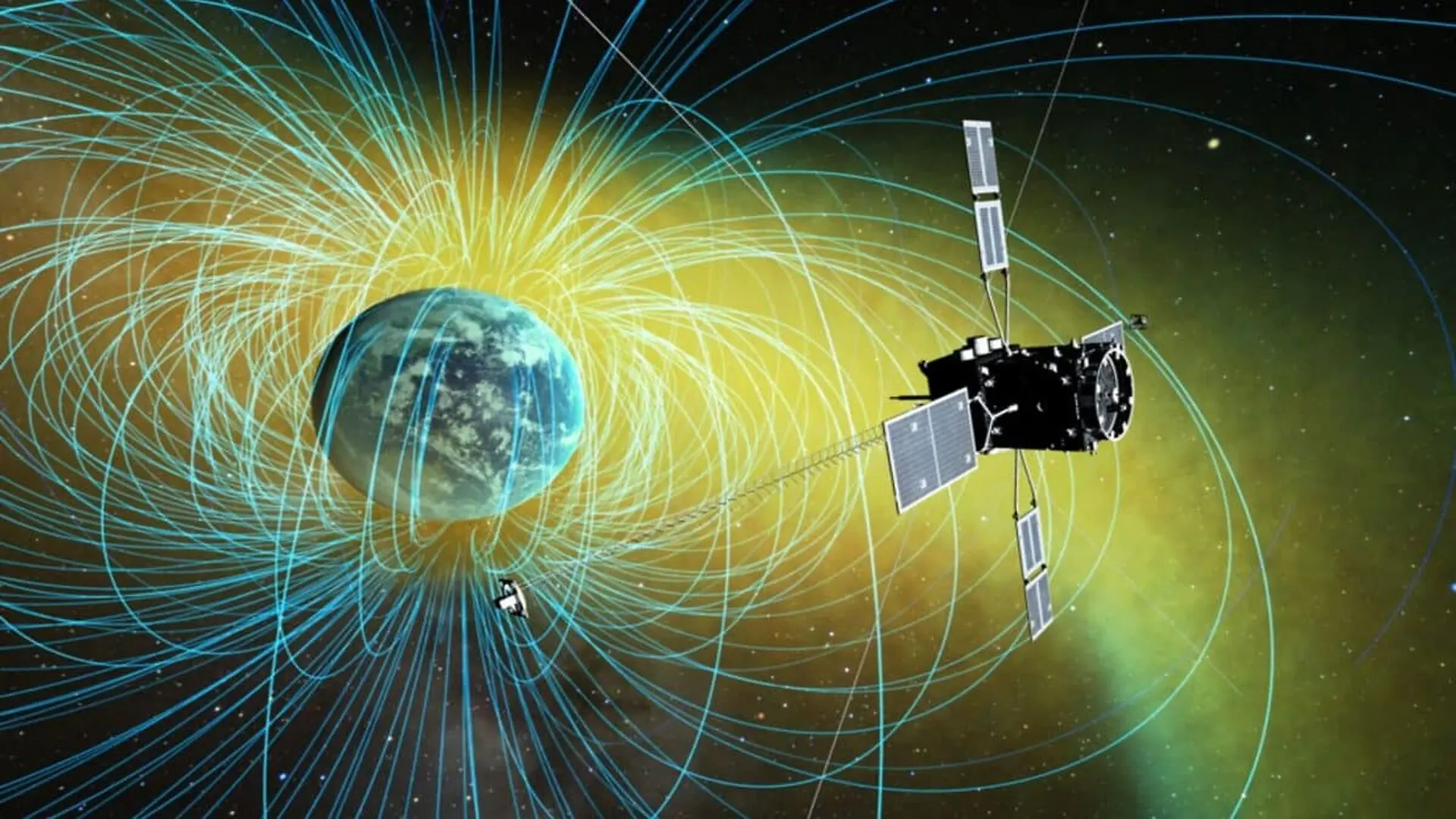
A historic solar storm in May 2024 has fundamentally altered our understanding of Earth’s defenses against space radiation. Data captured by the Japanese Arase satellite has revealed that a long-theorized, “impenetrable” barrier protecting the inner reaches of Earth’s environment can, in fact, be breached by extreme space weather.
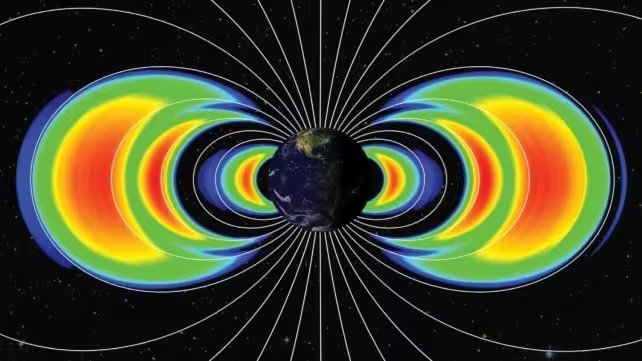
Earth is encircled by the Van Allen radiation belts, two massive, doughnut-shaped regions dominated by high-energy particles trapped within the planet’s magnetic field. While the outer belt is primarily influenced by fluctuating solar activity, the inner belt is heavily populated by protons born from cosmic rays interacting with our atmosphere. Among these particles are “killer electrons,” which can travel at velocities approaching the speed of light, posing significant risks to both satellite electronics and human spaceflight.
Challenging the Infallible Shield
For nearly a decade, the scientific community operated under the assumption that a robust barrier existed approximately three Earth radii from the center of the planet. First identified by NASA’s Van Allen Probes in 2014, this boundary was believed to block the most energetic electrons from migrating toward the inner magnetosphere. Researchers hypothesized that the plasmasphere—a dense region of cold, ionized gas—generated electromagnetic waves that effectively knocked these particles out of their paths, forcing them toward the atmosphere before they could penetrate deeper.
However, evidence suggesting the barrier was more porous than once thought began to emerge in 2018. Subsequent studies of historical data spanning 1996 to 2006 further suggested that lightning-induced waves could facilitate the movement of electrons into the inner zone, hinting that the “impenetrable” shield was not absolute.
Extreme Solar Weather Triggers Surge
The definitive test came during the G5-class geomagnetic storm in May 2024, which followed a series of intense solar flares and coronal mass ejections. As the storm slammed into Earth’s magnetic envelope, it caused a precipitous decline in the plasmasphere’s cold plasma density. This depletion created a vacuum that allowed “chorus waves”—electromagnetic emissions that sound remarkably like birdsong when sonified—to amplify.
Yoshizumi Miyoshi, a space physicist at Nagoya University, notes that these chorus waves acted as a localized engine, accelerating electrons within the supposedly protected zone. The resulting data from the Arase satellite was startling: electron flux at energy levels around 3 megaelectronvolts (MeV) spiked more than 5,000 times above pre-storm levels.
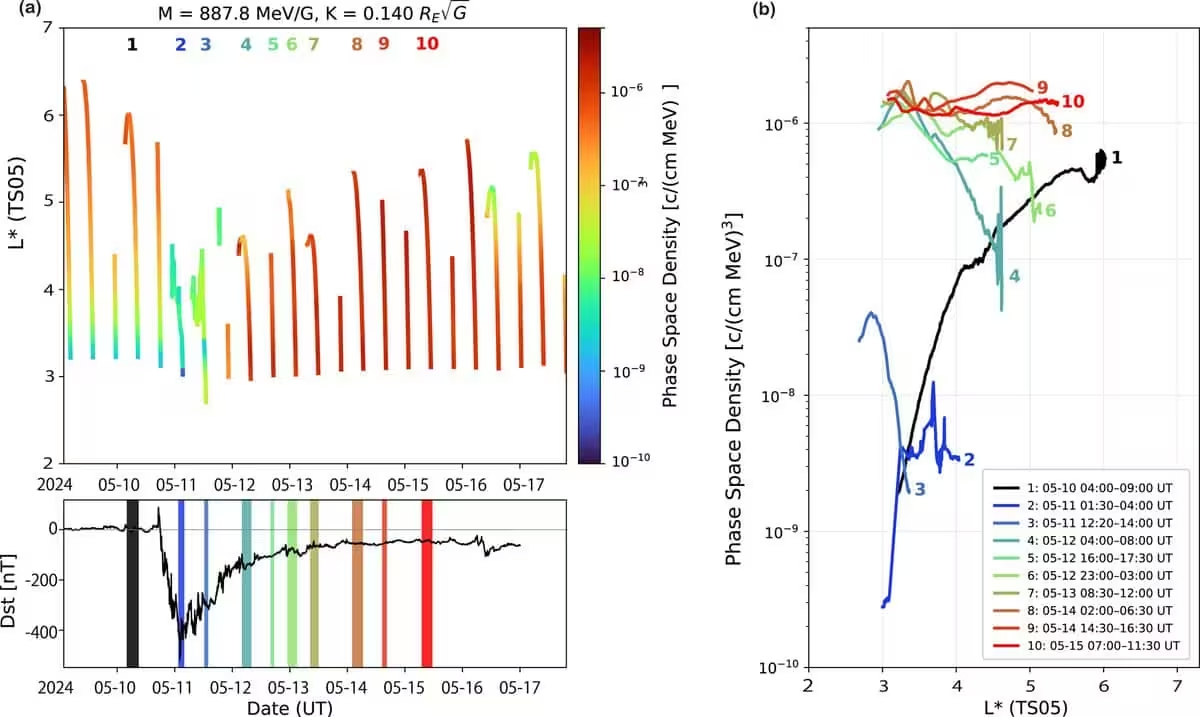
The timing of this surge provides critical insight into the mechanism of the breach. Observations published in Geophysical Research Letters show that lower-energy electrons rose first, followed by higher-energy particles in a cascading 12-to-24-hour sequence. This sequence indicates that the particles were not merely pushed inward from the outer belts, but were energized locally within the heart of the inner region.
Long-Term Impacts on Space Assets
The aftermath of the May 2024 event lingered far longer than anticipated. Instruments on Arase detected that the elevated population of ultra-relativistic electrons persisted for months, only beginning to subside toward pre-storm levels in October 2024. This longevity poses a clear challenge for satellite operators, as constant exposure to such high-energy radiation can degrade sensitive circuitry and reduce the operational lifespan of orbital infrastructure.
For Miyoshi and his colleagues, the findings serve as a stark reminder of the volatile nature of the near-Earth environment. As space becomes increasingly crowded with private and government satellites, the ability to predict how these radiation zones respond to extreme solar outbursts is no longer just a theoretical concern—it is a necessity for the safety of our orbital economy.
This article has been fact checked for accuracy, with information verified against reputable sources. Learn more about us and our editorial process.
Last reviewed on .
Article history
- Latest version
Reference(s)
- Lense, Rachel. “Van Allen Probes - NASA Science.”, June 15, 2023 NASA <https://science.nasa.gov/mission/van-allen-probes/>.
- Miyoshi, Y.., et al. “Local Acceleration of Multi‐MeV Electrons Inside Earth's Impenetrable Barrier During the May 2024 Superstorm.” Geophysical Research Letters, vol. 53, no. 20, October 26, 2026 American Geophysical Union (AGU), doi: 10.1029/2026GL125879. <https://agupubs.onlinelibrary.wiley.com/doi/10.1029/2026GL125879>.
Cite this page:
- Posted by Farah Siddiqui