New Simulation Reveals Resistance Testing for Gonorrhea Could Save Millions
A health economics model shows that screening for drug susceptibility before prescribing treatment can offset upfront diagnostic costs by preventing downstream complications.

Rising antibiotic resistance in the bacteria behind gonorrhea threatens the last recommended standard treatment, but a new simulation study suggests that testing for drug susceptibility before prescribing could save money and preserve vital medications.
Gonorrhea remains a major public health challenge globally, with approximately 82 million new cases reported each year. In the United States, ceftriaxone is currently the only recommended empiric therapy, meaning doctors prescribe it blindly before test results confirm which drug will work best. As resistant strains spread, researchers are racing to find ways to protect existing drugs and evaluate new therapies entering the market, such as zoliflodacin and gepotidacin.
To investigate whether testing patients for specific genetic markers of resistance could make economic sense, investigators developed a detailed computer simulation model of gonorrhea diagnosis and treatment in the United States. The research team, led by health scientists including Brooke E. Nichols and colleagues, published in PLOS Medicine on November 17, 2026. The open-access study examined whether the upfront costs of resistance-guided therapy could be offset by downstream savings.
How Resistance Testing Shapes Patient Costs and Health Outcomes
The individual-level simulation model tracked simulated patients presenting for care, incorporating diagnostic performance, treatment pathways, partner treatment, and downstream complications. In women, untreated or inadequately treated infections can lead to pelvic inflammatory disease, chronic pelvic pain, ectopic pregnancy, and tubal infertility. In men, complications can include epididymitis and disseminated gonococcal infection.
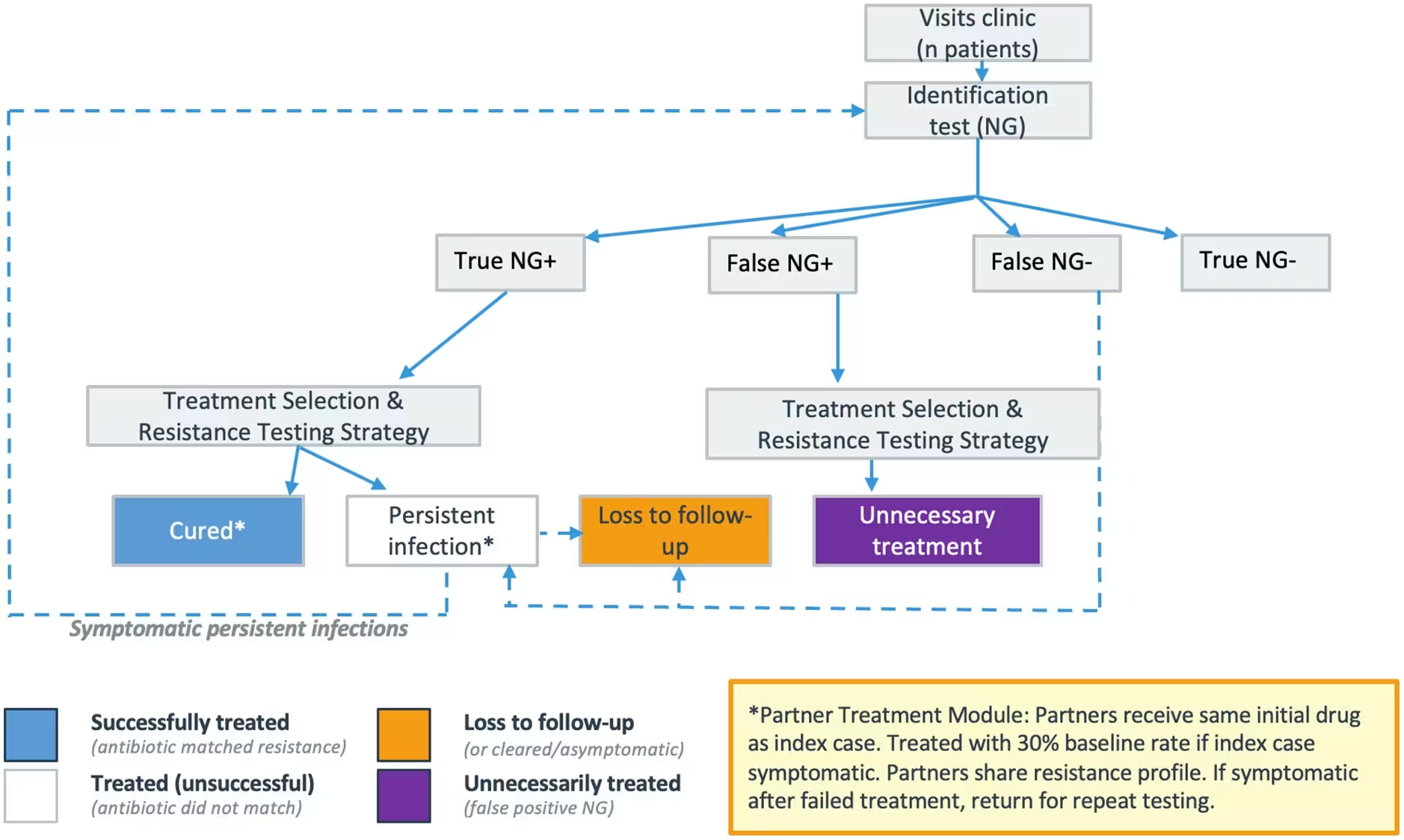
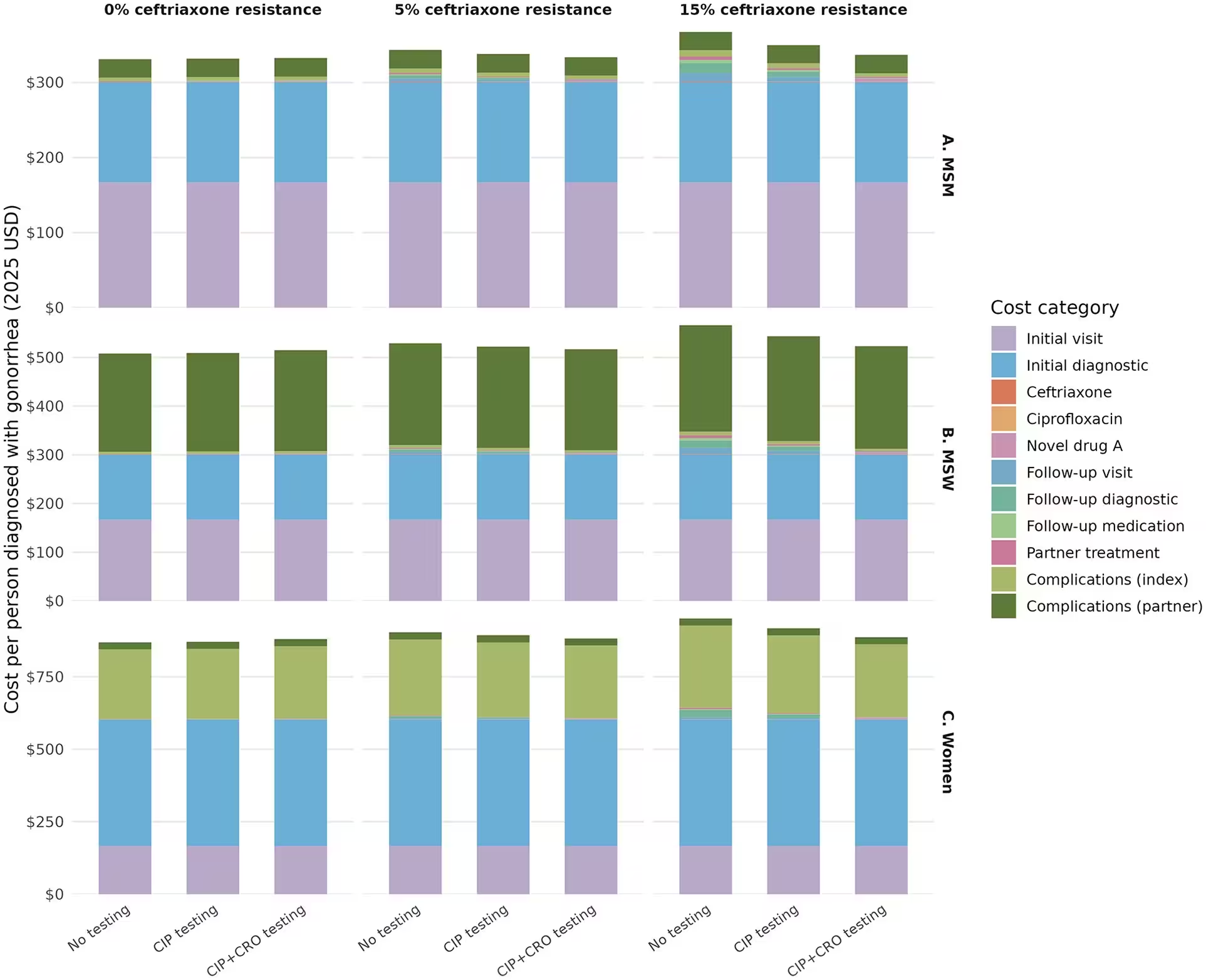
The investigators compared standard syndromic management against three hypothetical resistance-testing panels performed during the same clinic visit. These included testing exclusively for ciprofloxacin resistance, as well as combination panels that also tested for ceftriaxone and a hypothetical novel drug. Ciprofloxacin was dropped from first-line guidelines in 2007 due to widespread resistance, but it remains highly effective against susceptible infections that can be identified via molecular assays targeting the gyrA gene.
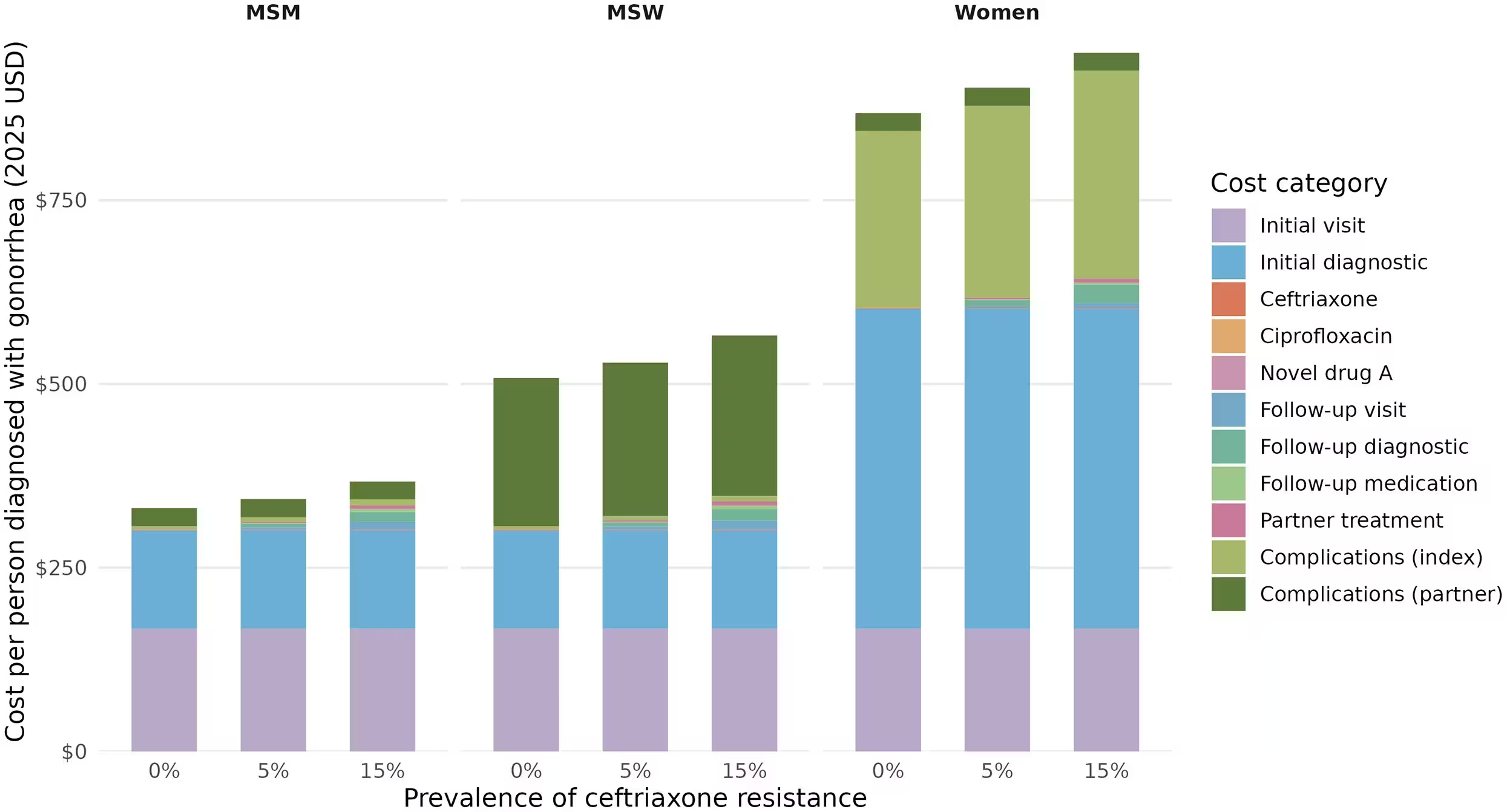
Without resistance testing, the average per-person direct medical cost of care at 50% ciprofloxacin resistance and zero ceftriaxone resistance was estimated at $331 for men who have sex with men, $508 for men who have sex with women, and $869 for women. When ceftriaxone resistance rose to 5%, average per-person costs increased across all groups due to higher rates of incorrect empiric treatment, repeat clinic visits, and costly medical complications.
What is the Cost-Neutral Price Threshold for Resistance Assays?
The study evaluated economic value across three distinct dimensions. The first dimension looked at near-term budget impacts within a single clinical episode, where resistance-guided therapy saved money by avoiding repeat visits, enabling cheaper oral ciprofloxacin when appropriate, and preventing severe complications for both patients and their sexual partners.
The second dimension calculated the system-level savings of delaying the spread of ceftriaxone resistance over a 25-year horizon among men who have sex with men. The third dimension estimated the economic value of avoiding or delaying the need to develop entirely new antibiotics, assuming a development cost of roughly $1.2 billion per drug.
When considering only the immediate care episode, the population-weighted cost-neutral price per test reached $7 for a ciprofloxacin-only test and $13 for a triple-target test when ciprofloxacin resistance was at 50% and ceftriaxone resistance was at 5%. However, when factoring in the long-term system savings of delayed resistance emergence and avoided drug development, the total cost-neutral per-test value rose significantly, ranging from $31 to $114 depending on future prescribing practices.
What Are the Limitations of the Simulation Model?
The authors noted several important limitations in their analysis. The model assumed that resistance test results successfully guided treatment decisions in real time. If clinicians initiate empiric treatment before test results are available, the economic benefits of resistance testing drop by more than 80%, highlighting the critical need for rapid, point-of-care diagnostics that return results during the initial visit.
Additionally, the analysis evaluated antibiotics independently and did not account for complex co-resistance patterns between different drugs. Long-term economic projections were also restricted to men who have sex with men due to data availability in existing transmission models, meaning these figures may represent an upper bound for other populations. Finally, the study focused strictly on direct medical costs, omitting broader societal impacts such as productivity losses.
Despite these caveats, the findings indicate that resistance assays could be priced substantially higher than current standard diagnostics and still remain cost-saving or cost-neutral for healthcare systems. As novel molecular tests become more widely available, breaking the cycle of empiric treatment failure could help preserve vital antimicrobial weapons against drug-resistant gonorrhea.
The research was published in PLOS Medicine on November 17, 2026.
This article has been fact checked for accuracy, with information verified against reputable sources. Learn more about us and our editorial process.
Last reviewed on .
Article history
- Latest version
Reference(s)
- Nichols, Brooke E.., et al. “Economic value of gonorrhea resistance testing in the United States: A multi-perspective modeling study.” PLOS Medicine, vol. 23, no. 11, November 17, 2026, pp. e1005073 Public Library of Science (PLoS), doi: 10.1371/journal.pmed.1005073. <https://doi.org/10.1371/journal.pmed.1005073>.
Cite this page:
- Posted by Sana Malik