Blood Test Detects Early Lung Cancer Using Tiny RNA Fragments
A novel diagnostic panel measuring circulating microRNAs and transfer RNA fragments demonstrates high accuracy in spotting early-stage lung adenocarcinoma.
Detecting lung cancer at its earliest stage remains one of modern medicine’s most critical challenges, yet a routine blood test could soon change how physicians spot localized tumors. Researchers have identified specific genetic fragments circulating in human blood that reliably signal the presence of early-stage lung adenocarcinoma, offering a potential path toward non-invasive screening.
Lung cancer stands as the leading cause of cancer-related deaths globally, accounting for approximately 25 percent of all cancer fatalities. Non-small cell lung cancer represents about 85 percent of diagnoses, with adenocarcinoma acting as the most common histological subtype. Because symptoms rarely appear until the disease reaches advanced stages, patients typically face dismal five-year survival rates. Traditional blood tests primarily target advanced cases, leaving a dangerous gap in early detection when surgical removal offers the highest likelihood of a cure.
How Small RNA Sequencing Uncovered Unique Blood Signatures
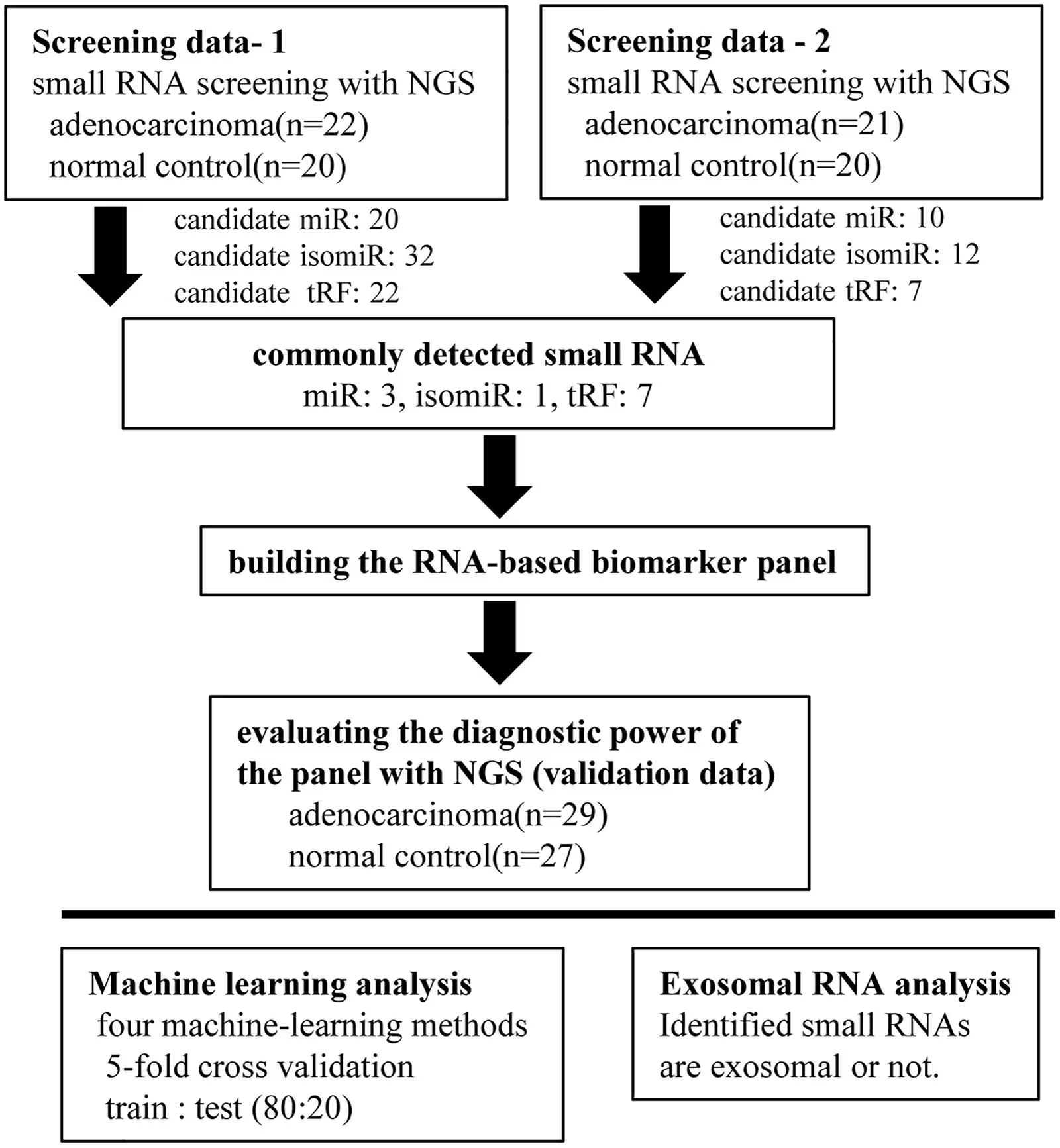
To find reliable warning signs in the bloodstream, a team led by investigators at Hiroshima University analyzed serum samples using next-generation sequencing, a high-throughput technology that maps genetic material. The investigation, published in PLoS ONE, examined 40 healthy controls and 43 patients pathologically diagnosed with stage I or II lung adenocarcinoma during screening phases, followed by a validation cohort of 27 healthy individuals and 29 cancer patients.
The scientists focused on circulating small non-coding RNAs, which regulate gene activity and reflect underlying pathological conditions. Specifically, they analyzed microRNAs, which are tiny RNA molecules controlling gene expression, alongside transfer RNA fragments, which are smaller pieces cleaved from larger RNA molecules involved in protein synthesis. Their screening protocols compared expression profiles between healthy participants and cancer patients to pinpoint consistent molecular shifts.
Which Specific RNA Molecules Flagged Early-Stage Cancer
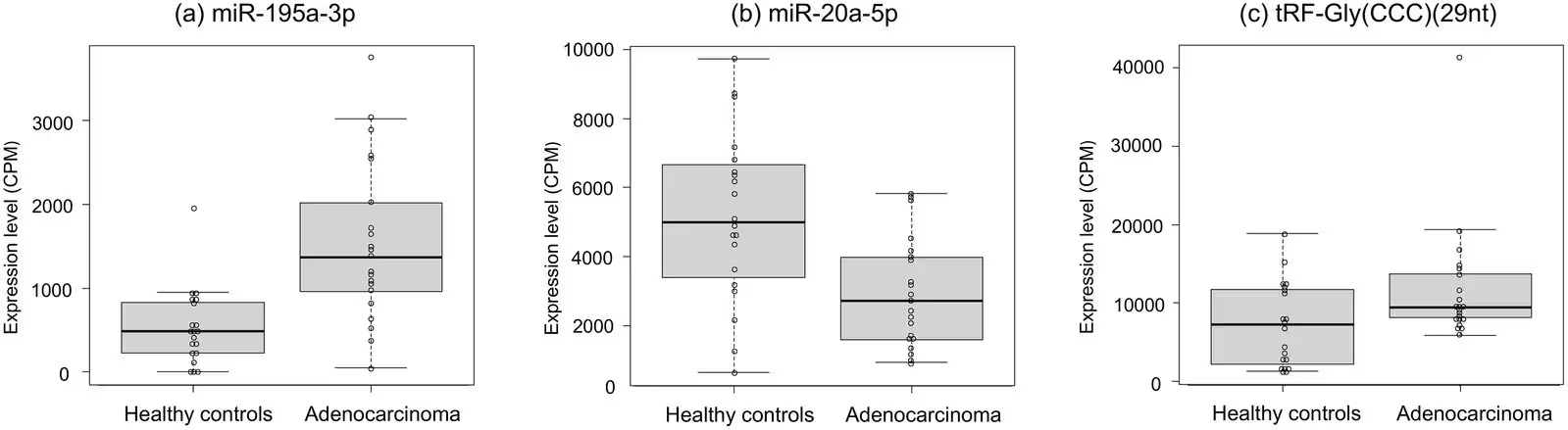
The sequencing analyses revealed distinct molecular patterns distinguishing early-stage lung adenocarcinoma patients from healthy controls. Specifically, the expression levels of two mature microRNAs (miR-193a-5p and miR-423-5p), one microRNA isoform (miR-423-5p(21nt)), and two transfer RNA fragments (tRF-Gly(CCC)(29nt) and tRF-Gly(CCC)(30nt)) were significantly elevated in cancer patients. Conversely, levels of one microRNA (miR-20a-5p) and five transfer RNA fragments (including tRF-iMet(CAT)(31nt), tRF-Lys(CTT), tRF-iMet(CAT)(30nt), tRF-iMet(CAT)(29nt), and tRF-Val(AAC)) were significantly decreased.
Building upon these individual markers, the authors constructed a composite diagnostic panel designated as model D, combining six selected small RNAs through multiple regression analysis. When tested on the screening data, this optimized panel demonstrated a sensitivity of 0.954 and a specificity of 0.925, yielding an impressive area under the curve value of 0.974. When evaluated on the independent validation dataset, the panel achieved a sensitivity of 0.690 and a specificity of 0.926, with an area under the curve of 0.924.
How Machine Learning Enhanced Diagnostic Accuracy
To eliminate patient selection bias and stress-test their findings, the researchers applied four advanced machine learning algorithms, including Random Forest, XGBoost, CatBoost, and LightGBM. Cross-validation demonstrated that algorithmic models, particularly XGBoost, yielded superior recall and F-measure scores compared to standard multiple regression panels. Furthermore, the team isolated extracellular vesicles known as exosomes from participant blood samples to check whether these diagnostic RNA markers were packaged inside circulating vesicles.
Interestingly, while several markers appeared in serum, exosomal RNA analysis did not demonstrate superior diagnostic utility over cell-free serum RNA extraction. The authors noted several limitations in their work, including a relatively small sample size, the lack of longitudinal monitoring over time, and the absence of external validation across independent clinical sites. Furthermore, comparisons against established protein tumor markers like carcinoembryonic antigen were not performed because baseline data for healthy controls were unavailable.
What These Findings Mean for Future Cancer Screening
The successful identification of a circulating small RNA panel highlights the vast potential of liquid biopsies in oncology. By capturing both microRNAs and transfer RNA fragments in a single blood draw, clinicians may eventually bypass the limitations of invasive tissue biopsies for high-risk populations. While further large-scale clinical trials and mechanistic pathway analyses are necessary before this panel reaches hospitals, the work marks a promising step toward intercepting lung cancer before it spreads.
The research was published in PloS one on November 16, 2026.
This article has been fact checked for accuracy, with information verified against reputable sources. Learn more about us and our editorial process.
Last reviewed on .
Article history
- Latest version
Reference(s)
- Ueda, Daisuke., et al. “Development of a diagnostic biomarker panel for early-stage lung adenocarcinoma using serum-derived small RNAs.” PLOS One, vol. 21, no. 11, November 16, 2026, pp. e0362879 Public Library of Science (PLoS), doi: 10.1371/journal.pone.0362879. <https://doi.org/10.1371/journal.pone.0362879>.
Cite this page:
- Posted by David Anderson