Toddlers Face 66 Percent Greater Odds of Trampoline Head Injuries Than Teens
Analysis of national emergency room data reveals how age and anatomy heighten facial and head trauma risks for young children on trampolines.

Toddlers under the age of six face significantly higher odds of suffering mouth, face, and head injuries on trampolines compared to teenagers, according to a recent analysis of emergency department visits. Researchers tracked national injury estimates to understand how a child’s developmental stage influences their vulnerability when bouncing, highlighting why the youngest jumpers require the strictest safety oversight.
The study, published in PLOS One, analyzed data from the 2024 National Electronic Injury Surveillance System to evaluate 3,548 patient records representing an estimated 101,474 emergency department visits nationwide for trampoline-related injuries among children and adolescents up to age 18. Investigators categorized the injuries by body part and age group, specifically examining infants and toddlers aged zero to under six years, children aged six to under twelve, and adolescents aged twelve to eighteen.
Why Toddlers Face Greater Head Injury Risks
The findings revealed that children aged zero to under six years had 66 percent greater odds of sustaining oral, facial, or head trauma compared to adolescents aged twelve to eighteen, after adjusting for sex and injury location. The authors attribute this vulnerability to distinct anatomical and behavioral factors unique to early childhood. Young children possess a higher head-to-body mass ratio and a higher center of gravity, alongside thinner cranial bones and less developed neck muscle support, making them physically more susceptible to severe impacts.
“Children ages 0 to <6 years are physiologically and behaviorally predisposed to oral-facial-head trauma,” the authors noted, explaining that these developmental realities mean falls or sudden bounces can quickly overwhelm a toddler’s physical stability. In contrast, older children and teenagers generally exhibit greater motor coordination and agility, which may help them avoid awkward landings or mitigate the force of a fall.
The Role of Sex and Injury Locations
Beyond age disparities, the analysis uncovered notable differences based on patient sex and where the incidents occurred. Male children and adolescents accounted for 54 percent of all trampoline-related emergency department visits and showed significantly higher odds of experiencing head and facial injuries compared to females. The authors suggest that behavioral differences, such as higher intensity play or greater risk-taking tendencies among boys, likely contribute to this persistent trend.
When examining injury locations, home environments and commercial recreation facilities emerged as the primary settings for emergency visits. However, statistical models showed that injuries occurring at recreational facilities had lower odds of involving the head and face compared to home settings, potentially due to different supervision structures or equipment designs, though specific safety net configurations were not tracked in the database.
Broader Implications for Public Health and Safety Guidelines
The economic and medical burden of these accidents remains substantial, with thousands of young patients requiring hospitalization, surgery, or specialized dental and facial care each year. Pediatric medical societies and injury prevention groups have long advocated for stringent safety measures, including banning trampoline use for children under six and eliminating home and commercial trampoline park recreational use entirely.
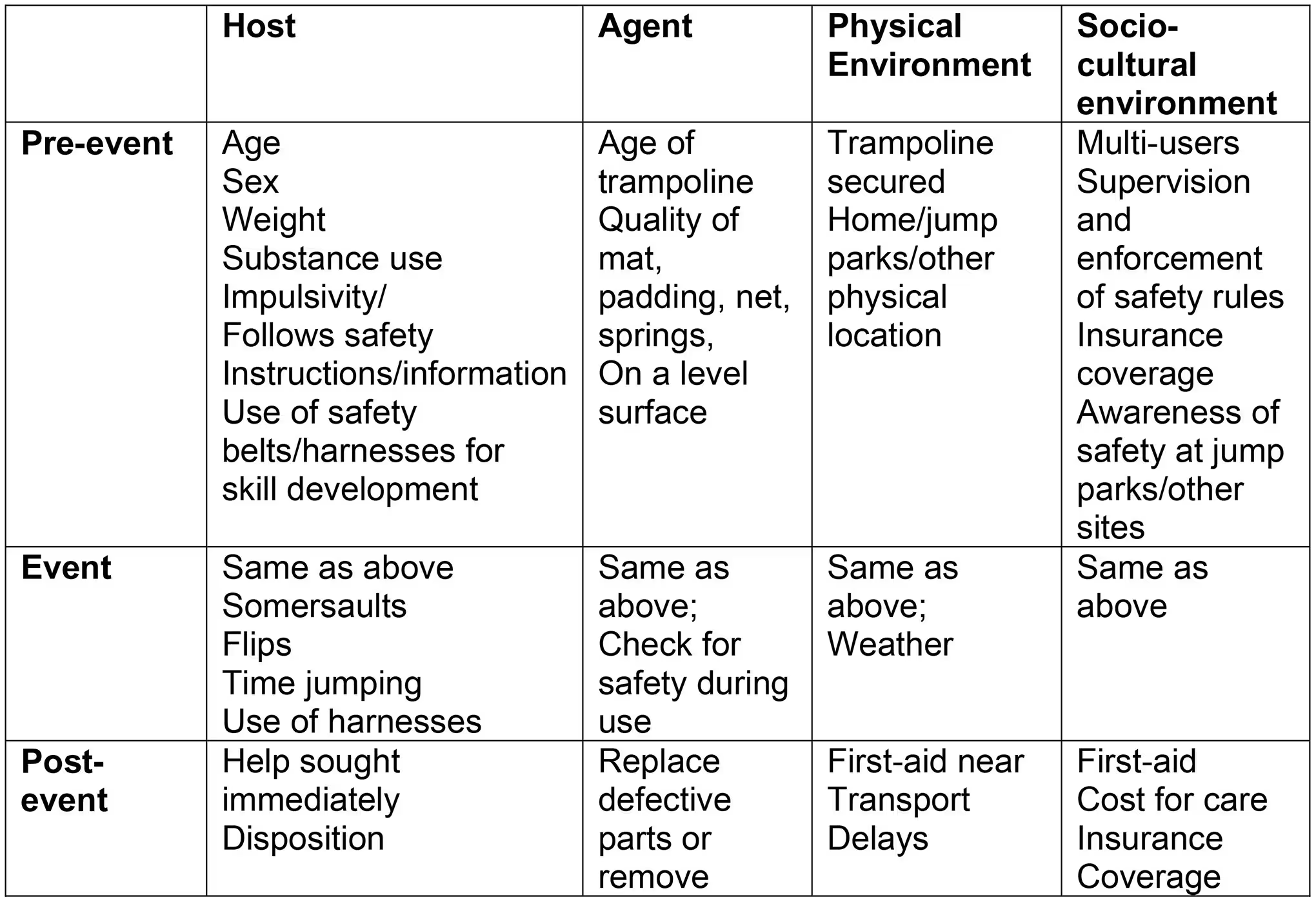
The researchers utilized the Haddon Matrix framework to evaluate potential interventions across pre-event, event, and post-event phases. Pre-event strategies involve enforcing age-based access restrictions and educating parents about the dangers of mixed-age jumping, where older children inadvertently launch younger ones into high-speed collisions. Event-phase protections, such as high-quality padding and mandatory safety enclosures, help absorb kinetic energy during a fall.
Study limitations include the cross-sectional design, which captures associations rather than direct causation, and the absence of data regarding exact hours of use, parental supervision status, or specific trampoline types. Furthermore, nearly 20 percent of race records were unrecorded, limiting health equity assessments. Nevertheless, the authors emphasize that pediatric primary care providers can utilize these insights to offer anticipatory guidance during well-child visits, helping parents understand the biomechanical reasons behind strict age recommendations.
The research was published in PLOS One on November 17, 2026.
This article has been fact checked for accuracy, with information verified against reputable sources. Learn more about us and our editorial process.
Last reviewed on .
Article history
- Latest version
Reference(s)
- Wiener, R. Constance., et al. “Age as a determinant of trampoline-related oral-facial-head injuries in pediatric emergency department visits: A NEISS analysis.” PLOS One, vol. 21, no. 11, November 17, 2026, pp. e0362482 Public Library of Science (PLoS), doi: 10.1371/journal.pone.0362482. <https://doi.org/10.1371/journal.pone.0362482>.
- Posted by David Anderson