Scientists Have Finally Cracked The Mystery Of Siberia’s Massive Fiery Eagle’s Nest Crater
Geologists have finally solved the mystery of a massive Siberian limestone cone, revealing how unique geological forces shaped the enigmatic structure.
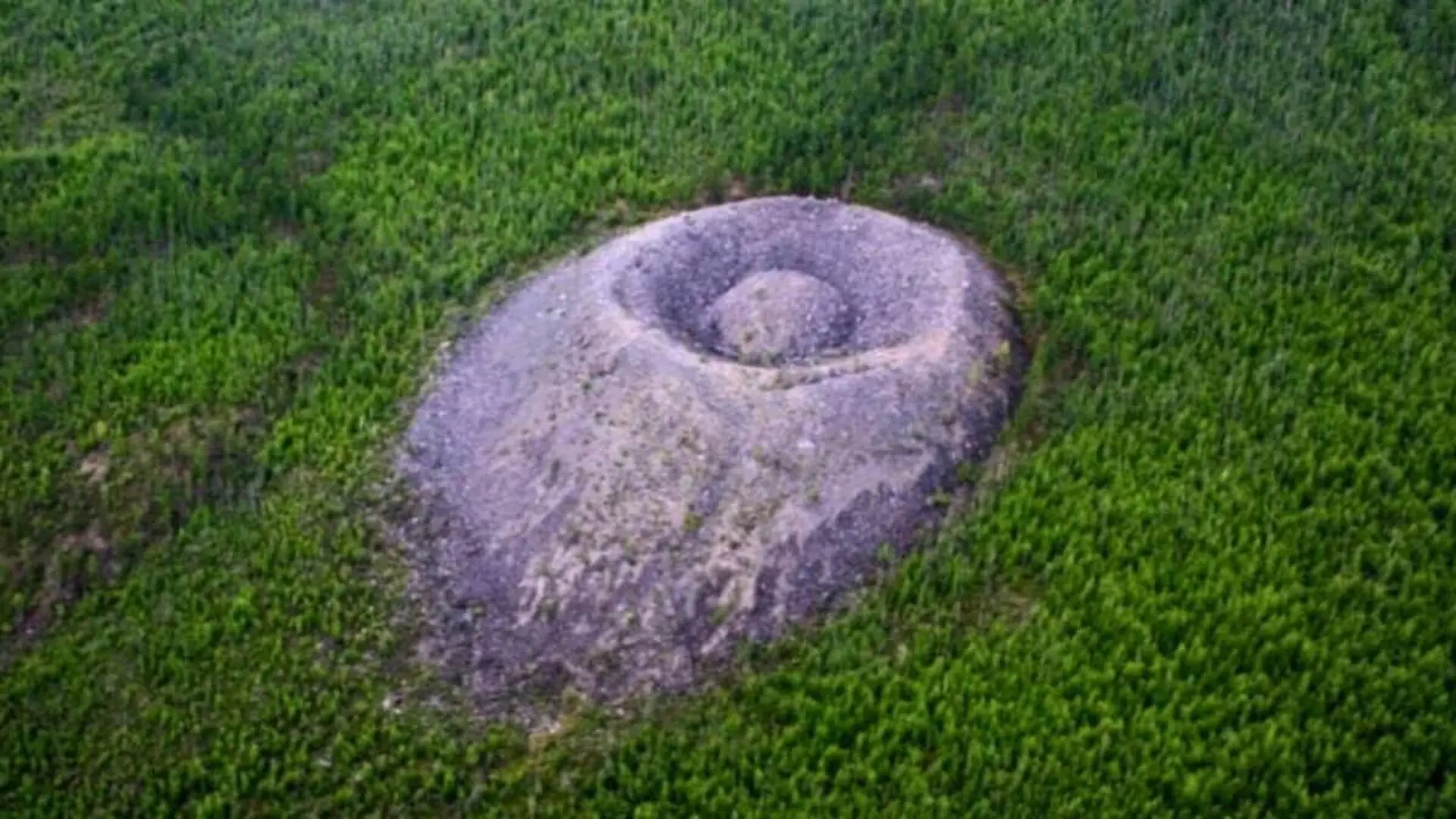
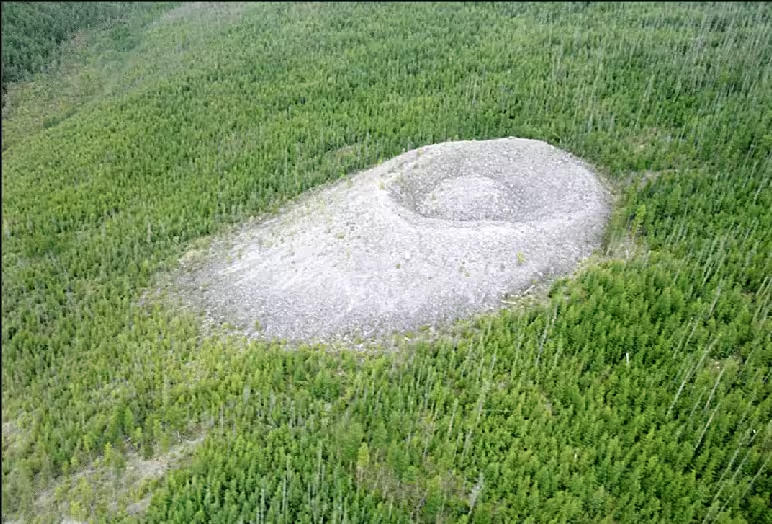
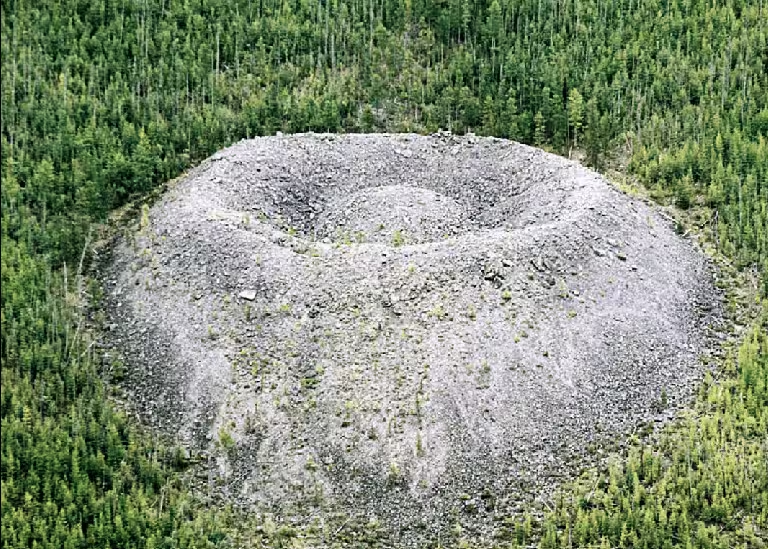
Deep within the dense forests of the Patom Highlands in eastern Siberia, a massive, pale mound of fragmented limestone rises abruptly from the landscape. Towering roughly 40 meters above the surrounding larch trees, this geological anomaly spans 160 meters at its base and weighs an estimated one million tons. Topped with a distinct crater and a central hill, the formation—locally dubbed the “Fiery Eagle’s Nest”—has perplexed researchers since its formal discovery in 1949.
While early theories favored a meteor impact, modern investigations have increasingly pivoted toward internal geological processes. A new study, published in Doklady Earth Sciences by geophysicist Dmitry Demezhko of the Bulashevich Institute of Geophysics, moves away from the impact hypothesis entirely, instead proposing that the structure was birthed by deep-seated gas emissions and the complex dynamics of Siberian permafrost.
Challenging the Meteorite Narrative
When geologist Vadim Kolpakov first mapped the site in the Bodaibo district, he assumed it was a crater left by a falling meteorite. However, that explanation faced immediate skepticism. By 1951, researcher S. V. Obruchev suggested the mound was formed by a powerful jet of gas and steam escaping through fractured subterranean rock. Subsequent theories attempted to link the site to the 1908 Tunguska event, but a 1963 expedition by the Siberian Committee on Meteorites deemed the site’s history too complex to be the result of a single impact.
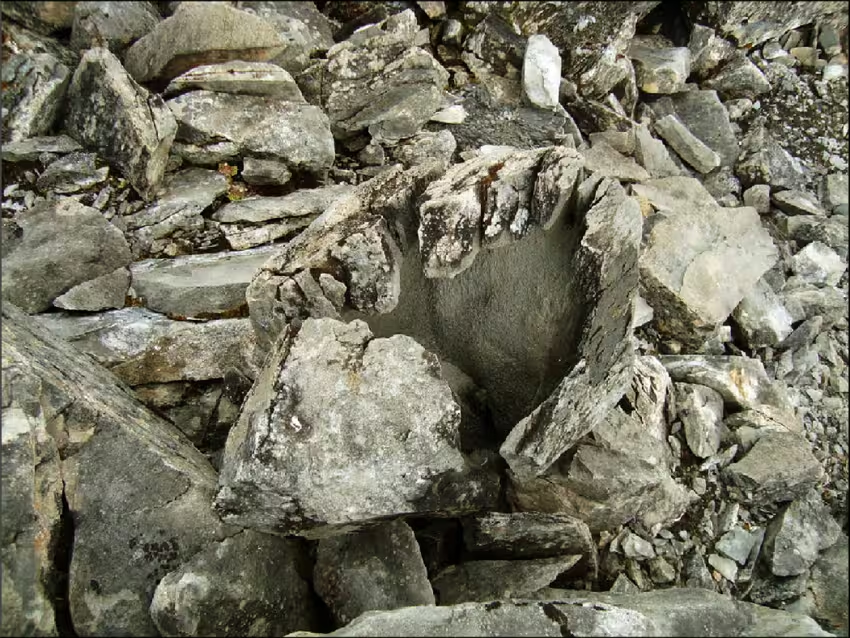
The physical composition of the site offers little evidence of extraterrestrial origin. Detailed geochemical analysis by Viktor Antipin and Alexander Fedorov in 2008 confirmed that the limestones forming the crater are identical to the surrounding Neoproterozoic bedrock, which dates back more than 540 million years. Crucially, the rocks lack the high concentrations of nickel typically found in meteorites. Furthermore, the crater’s structure—featuring a multi-stage, weathered ring-shaped ridge and a relatively fresh central hill—suggests a protracted, incremental formation process rather than the instantaneous destruction caused by an asteroid.
Chronicles Written in Wood
Tree-ring analysis has provided a vital timeline for the site. By examining the age of larches in the area, researchers determined that a mass disturbance occurred roughly 500 years ago, marking the initial phase of the crater’s formation. Evidence from the 1840s is even more explicit; trees at the base of the mound show physical scarring and trauma from rockfalls, indicating a period of violent, localized geological activity.
According to plant scientist Viktor Voronin, these trees were not damaged by fire, but by sharp rock fragments ejected during episodes of intense shifting. Chemical analysis of one larch, conducted via synchrotron radiation in Novosibirsk, revealed a sharp spike in strontium levels between 1852 and 1859. This suggests the trees absorbed mineral-rich, carbon dioxide-laden fluids that had been forced upward through the limestone bedrock.
A Gaseous-Cryogenic Solution
Demezhko’s recent study incorporates gravity and electrical sounding data to look beneath the surface. The readings reveal a zone of lower gravity and fractured rock directly under the crater, linked to deeper geological channels. Based on these findings, Demezhko proposes a gaseous-cryogenic hypothesis.
This model suggests that gas escaping from deep within the Earth initially fractured the rock column, creating a path to the surface. Subsequently, water infiltrated this zone and became trapped in the deep-freeze of the permafrost. Repeated cycles of freezing and expansion within the fractured rock forced the material upward, slowly accumulating into the cone seen today. While the region remains remote and steeped in local folklore, scientists working on the ground report a much more mundane reality, finding a stable environment where even local wildlife can thrive undisturbed by the mystery of the “Eagle’s Nest.”
This article has been fact checked for accuracy, with information verified against reputable sources. Learn more about us and our editorial process.
Last reviewed on .
Article history
- Latest version
Reference(s)
- Demezhko, D. Yu.. “Patom Crater: History of Discovery and Research, Hypotheses of Origin.” Doklady Earth Sciences, vol. 522, no. 3, June 26, 2025 Pleiades Publishing Ltd, doi: 10.1134/S1028334X25606765. <https://link.springer.com/article/10.1134/S1028334X25606765>.
Cite this page:
- Posted by David Anderson