Stunning New Photo Captures Massive Plasma Loops Dancing Above The Sun Surface
A stunning new solar image captures massive, glowing plasma loops towering along the Sun’s edge, offering a rare glimpse into our star’s magnetic activity.
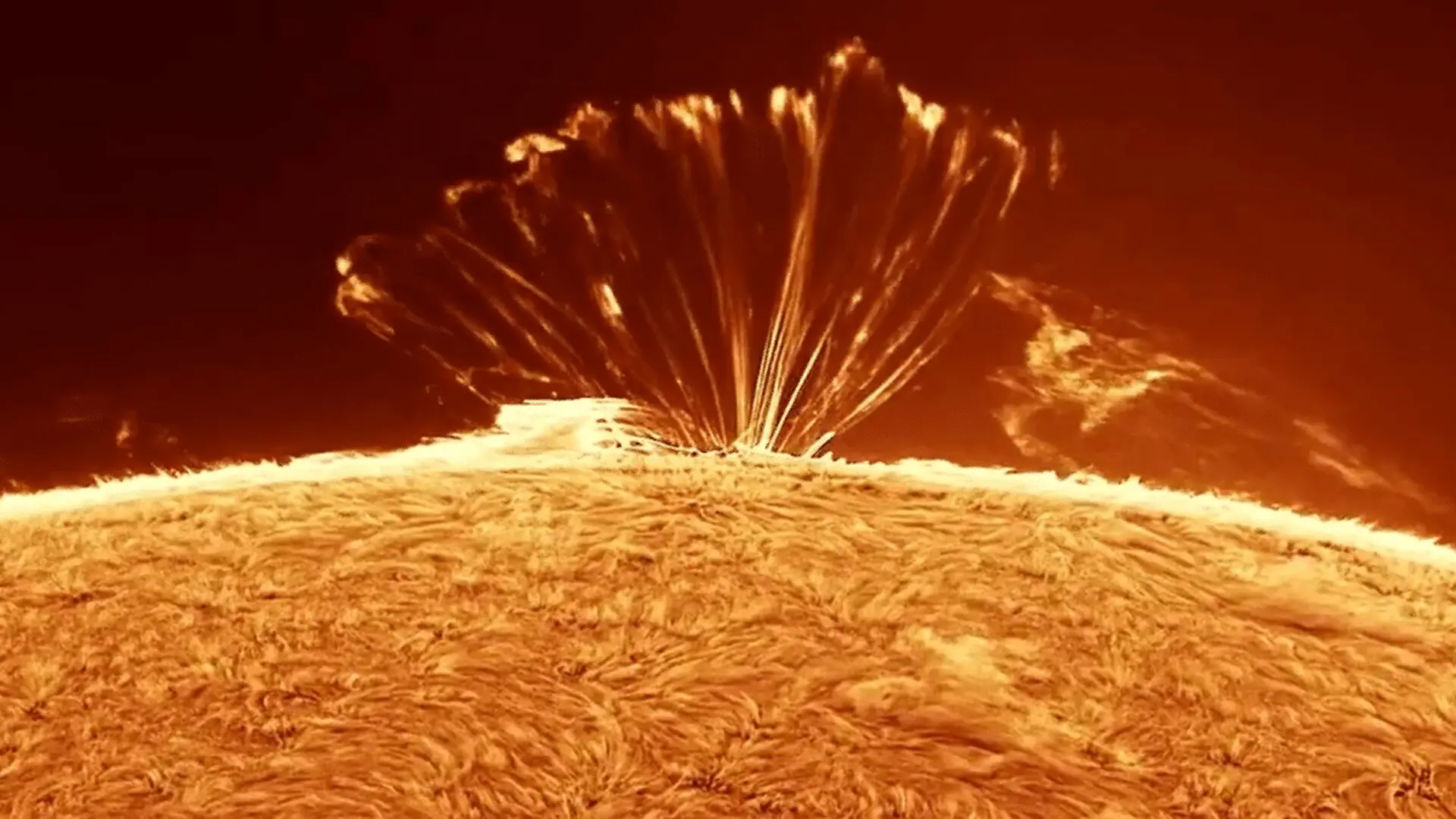
A striking new photograph has captured massive loops of plasma arching high above the Sun’s surface, providing a vivid glimpse into the magnetic architecture that defines our star’s atmosphere. These glowing, curved formations were documented along the solar limb, where the stark contrast against the backdrop of space renders them particularly visible, illustrating the intense, invisible forces constantly shifting across the Sun’s outer layers.
A Fortuitous Alignment of Conditions
The image is the result of a rare convergence of variables. Astrophotographer Mark Johnston noted that capturing such delicate solar features requires a precise intersection of atmospheric clarity, optimal equipment, and perfectly timed solar activity. Because these plasma loops are highly transient and prone to rapid deformation as magnetic fields flux, securing a detailed shot is a significant challenge even for experienced observers.
Such imagery serves as a bridge between complex solar physics and public appreciation, transforming abstract space weather data into tangible, awe-inspiring structures. These contributions from the amateur astronomy community play an increasingly vital role in documenting the Sun’s dynamic, unpredictable behavior.
Understanding the Mechanics of Solar Activity
The luminous arcs are physical manifestations of plasma—superheated, ionized gas—being funneled along the Sun’s magnetic field lines. As the star’s internal dynamo churns, these fields are twisted and compressed, creating complex structures that can trap solar material. These prominences are not merely aesthetic; they are intrinsically linked to the most energetic phenomena in the solar system.
Shifts and reconnections in these magnetic fields often precede massive solar eruptions. When these events release energy and particles into the heliosphere, they can trigger geomagnetic storms, which have the potential to disrupt satellite operations, telecommunications, and terrestrial power grids. Consequently, the study of such loops is a critical component of heliophysics, as researchers seek to better predict the impact of the Sun on our own planet.
A Glimpse Into the Solar Cycle
This captured moment is a snapshot of an ever-changing celestial engine. While the specific loops photographed will inevitably vanish as the magnetic environment continues to evolve, they serve as a testament to the persistent, powerful activity defining our solar system’s center. For skywatchers, these images reinforce the idea that even from thousands of miles away, the Sun is a volatile and fascinating subject that continues to shape our technological and physical reality.
This article has been fact checked for accuracy, with information verified against reputable sources. Learn more about us and our editorial process.
Last reviewed on .
Article history
- Latest version
Cite this page:
- Posted by David Anderson