Frog Researcher Stumbles Upon Rare 10,000 Year Old Mastodon Tooth in Creek Bed
A routine frog survey in a California creek led to the discovery of a massive, prehistoric fossil hidden half-submerged in the water.
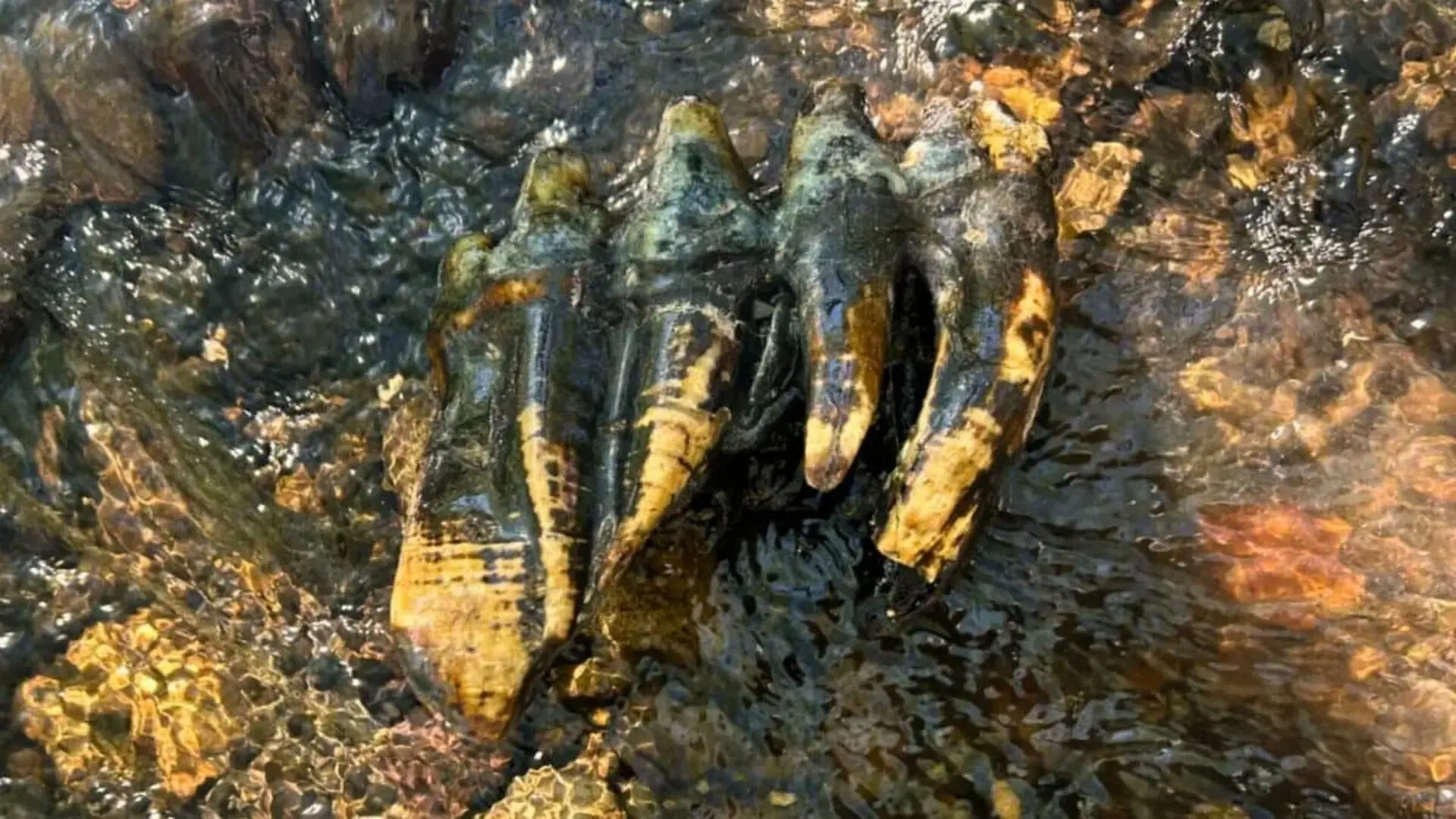
While conducting a survey of a creek bed in San Mateo County to identify potential habitat for the threatened California red-legged frog, geomorphologist Brigid Lynch stumbled upon an unexpected piece of history. Half-submerged in the water, a fossilized molar belonging to a Pacific mastodon—an elephant-like herbivore that vanished from North America more than 10,000 years ago—was resting in plain sight.
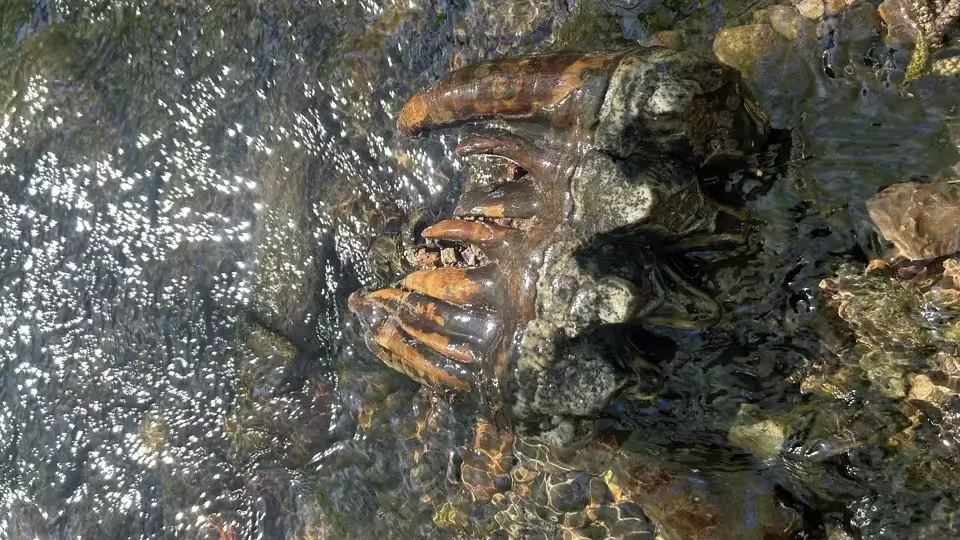
“I keep joking it wasn’t hard to find,” said Lynch, who works with the firm Balance Hydrologics. “It was just sitting there in the middle of the creek, halfway in, half out of the water.”
The discovery occurred during a habitat restoration project managed by the Midpeninsula Regional Open Space District. The district, which oversees over 70,000 acres in the Santa Cruz Mountains, has since transferred the fossil to the Doerr School of Sustainability at Stanford University for further analysis.
A Rare Paleontological Find
Measuring approximately 9 inches in length, the specimen is remarkably well-preserved, featuring both an intact crown and root. According to Chrissy Garcia, curator and manager of the Doerr School’s specimen collections, the level of detail on the fossil is exceptional. “It’s in great condition,” she noted. “So we’ve got both the crown and the root of the fossil. You can even see root canal.”
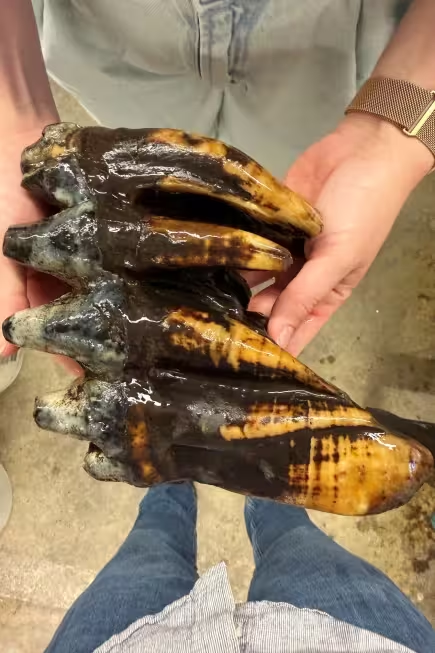
Paleontologist Wayne Thompson, owner of Pacific Paleontology, described the tooth as the most complete mastodon molar he has encountered from this specific region. “I had chills and shivers up and down my spine,” he stated in a press release issued by the district.
The Pacific mastodon was distinct from its more famous cousin, the American mastodon, characterized by thicker leg bones, unique tusks, and narrower teeth optimized for browsing on woody vegetation rather than grazing. During the Pleistocene epoch, these creatures inhabited a range extending from California and Oregon to the Rocky Mountains and Mexico.
While mastodon remains are occasionally unearthed across North America, the circumstances of this discovery highlight the role of chance. “The way this was found is actually the way a lot of specimens are found,” said Ron Tykoski, vice president of science at the Perot Museum of Nature and Science in Dallas. “Just somebody who happened to be in the right place.”
Advanced Analysis at Stanford
Stanford researchers intend to perform carbon dating on the molar to establish a precise timeline for the animal’s existence, alongside creating a high-resolution 3D scan of the fossil. While the university will maintain the original specimen for its permanent collection, the Midpeninsula Regional Open Space District plans to display a replica for educational purposes.
Recent scientific literature, including a 2025 study inScience Advances, suggests that mastodons possessed greater genetic diversity and migratory flexibility than previously understood, allowing them to adapt to fluctuating prehistoric climates.
For the conservationists at the Midpeninsula Regional Open Space District, the find carries a symbolic weight. Ryan McCauley, a spokesperson for the district, noted the irony of finding a remnant of an extinct species while working to prevent the local extinction of the California red-legged frog.
“That this tooth, that this molar, was found in the context of trying to protect the habitat and save another species from potentially going extinct,” McCauley said, “really just drives home the point of why it’s so important to care for these open spaces and these natural lands.”
This article has been fact checked for accuracy, with information verified against reputable sources. Learn more about us and our editorial process.
Last reviewed on .
Article history
- Latest version
Reference(s)
- “PRESS RELEASE: 10,000-year-old fossilized mastodon tooth discovered in Midpen preserve .” <https://msg.openspace.org/mastodon-tooth>.
- Karpinski, Emil., et al. “Repeated climate-driven dispersal and speciation in peripheral populations of Pleistocene mastodons.” Science Advances, vol. 11, no. 37, September 12, 2025 American Association for the Advancement of Science (AAAS), doi: 10.1126/sciadv.adw2240. <https://www.science.org/doi/10.1126/sciadv.adw2240>.
Cite this page:
- Posted by Elizabeth Taylor