DNA Breakthrough Finally Identifies Four Sailors From The Doomed Franklin Expedition
After 165 years, scientists have finally identified the mysterious man found frozen in 1859, solving a cold case that baffled historians for generations.
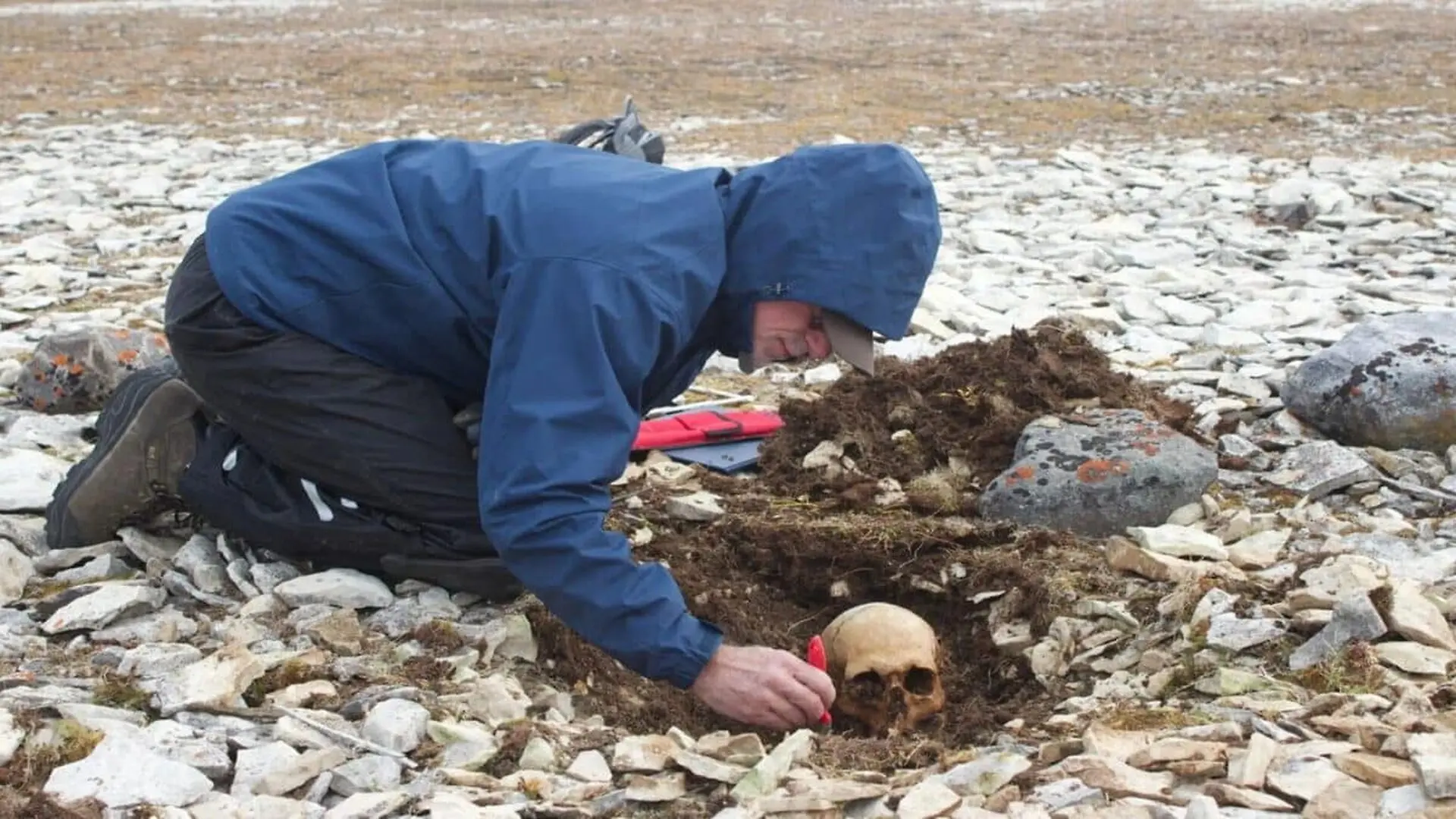
A breakthrough in forensic science has finally attached identities to the remains of four sailors lost during Sir John Franklin’s ill-fated 1845 search for the Northwest Passage. By cross-referencing genetic data from skeletal remains with samples provided by living descendants, researchers at the University of Waterloo have resolved a 166-year-old mystery surrounding the final, desperate movements of the crew.
The Franklin expedition remains a defining tragedy of Arctic exploration. After HMS Erebus and HMS Terror became hopelessly beset by ice, the crew spent two years trapped in the frozen wilderness before abandoning their ships in April 1848. All 105 men who attempted to traverse King William Island on foot ultimately perished, leaving behind a legacy of scattered remains that have slowly yielded their secrets to modern technology.
Resolving the Mystery of the Peglar Papers
Among the newly identified men is Harry Peglar, whose remains were discovered in 1859 alongside a collection of documents now known as the Peglar Papers. While the documents included poetry and field notes, the identity of the sailor had long remained contested because the clothing found on the body did not align with his official rank as Captain of the Foretop on HMS Terror. Genetic analysis has now confirmed that the body is indeed Peglar, making him the only member of the Terror crew identified through DNA to date.
“It was interesting to conclusively identify this sailor because the body was found with almost the only written documents from the expedition ever found,” said Dr. Robert Park, a professor of anthropology at the University of Waterloo who co-led the research.
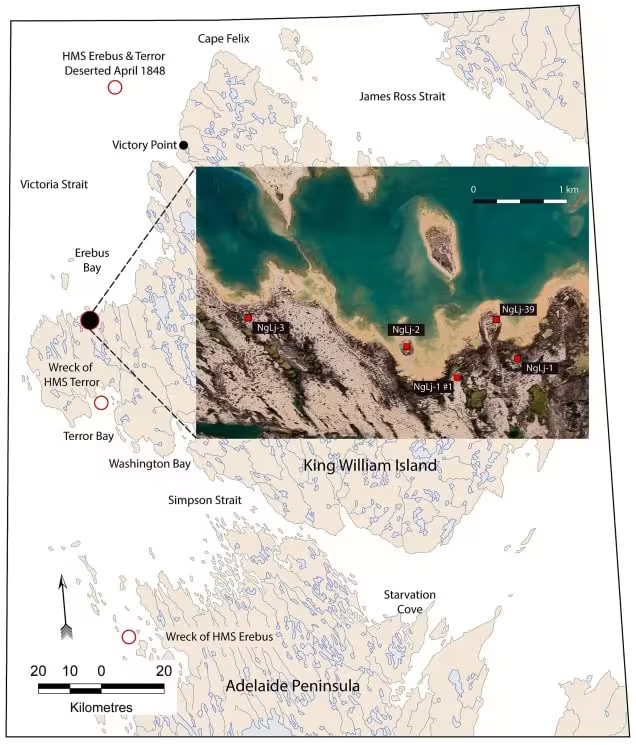
Erebus Bay Discoveries
In addition to Peglar, investigators identified three sailors from HMS Erebus: Able Seaman William Orren, Boy 1st Class David Young, and Subordinate Officers’ Steward John Bridgens. Unlike other recovered remains that displayed evidence of extreme survival measures, these men showed no signs of cannibalism. Their remains were found at Erebus Bay, suggesting that they died together while attempting to navigate the unforgiving terrain.
“Three of the sailors we have identified are from HMS Erebus, and they all died at Erebus Bay,” explained Dr. Douglas Stenton, an adjunct anthropology professor at Waterloo and lead author of the study.
Genetic Ties Across Time
The confirmation of these identities relied on Stephen Fratpietro of Lakehead University, who utilized mitochondrial and Y-chromosome DNA analysis to compare archaeological samples against those of modern-day descendants. The process revealed a zero-distance genetic match in every case, providing irrefutable links between the nineteenth-century explorers and their living relatives.
Among those identified was BBC journalist Rich Preston, who discovered his direct connection to John Bridgens through the project. “It was such a huge surprise to hear from the team that my DNA was a match with one of the sailors on the doomed Franklin expedition,” Preston stated. “I used to work on a genealogy show for the BBC that traced people’s fascinating family stories, and so to discover that there’s such an interesting tale in my own family’s past feels very exciting.”
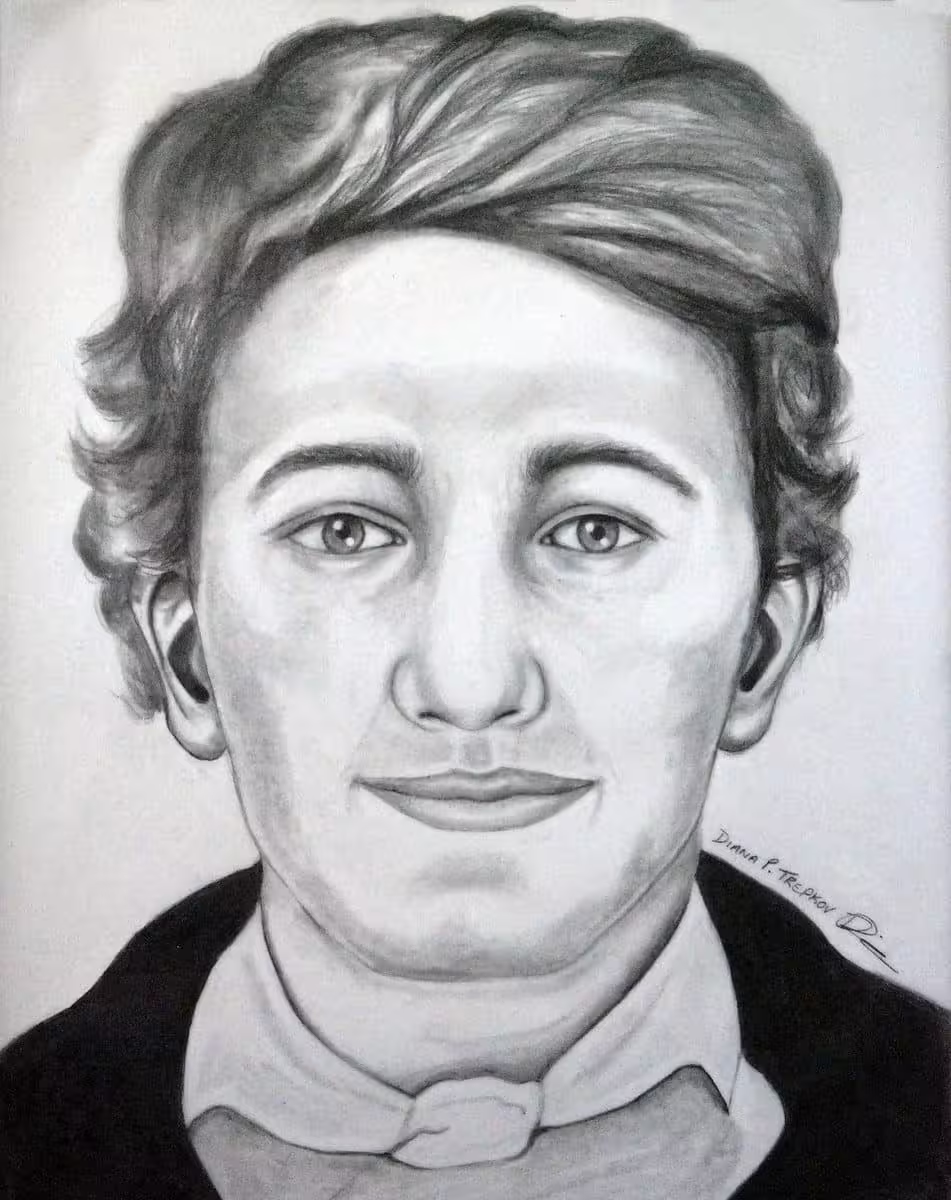
For the researchers, the project serves as a vital bridge between historical inquiry and familial closure. By determining exactly where and with whom these men took their final steps, the team is providing long-awaited answers to the families of those who never returned from the north. The search for further matches continues, with experts actively inviting potential descendants to contribute to the ongoing investigation.
This article has been fact checked for accuracy, with information verified against reputable sources. Learn more about us and our editorial process.
Last reviewed on .
Article history
- Latest version
Reference(s)
- Stenton, Douglas. ““Some very hard ground to heave”: DNA identification of Harry Peglar, Captain of the Foretop, HMS Terror | Polar Record | Cambridge Core.”, vol. 62, pp. e17 Cambridge Core, doi: 10.1017/S003224742610031X. <https://www.cambridge.org/core/journals/polar-record/article/some-very-hard-ground-to-heave-dna-identification-of-harry-peglar-captain-of-the-foretop-hms-terror/90B3D70B9AD4388461B37B570C98E62A>.
- “Robert W. Park | Anthropology | University of Waterloo.” <https://uwaterloo.ca/anthropology/profiles/robert-w-park>.
- “Douglas Stenton | Anthropology | University of Waterloo.” <https://uwaterloo.ca/anthropology/profiles/douglas-stenton>.
- Stenton, Douglas R.., et al. “DNA identifications of three 1845 Franklin expedition sailors from HMS Erebus.” Journal of Archaeological Science: Reports, vol. 72, June 1, 2026, pp. 105739 Elsevier BV, doi: 10.1016/j.jasrep.2026.105739. <https://www.sciencedirect.com/science/article/pii/S2352409X26001744?via%3Dihub>.
- “Stephen Fratpietro.” Lakehead University <https://www.lakeheadu.ca/users/F/swfratpi/node/46835>.
- <https://richpreston.co.uk/>.
Cite this page:
- Posted by Elizabeth Taylor