Why Major Farm Policy Models Are Failing to Protect Rural Ecosystems
A new evaluation of 56 digital agricultural simulations reveals a critical lack of ecological feedback and risk management.
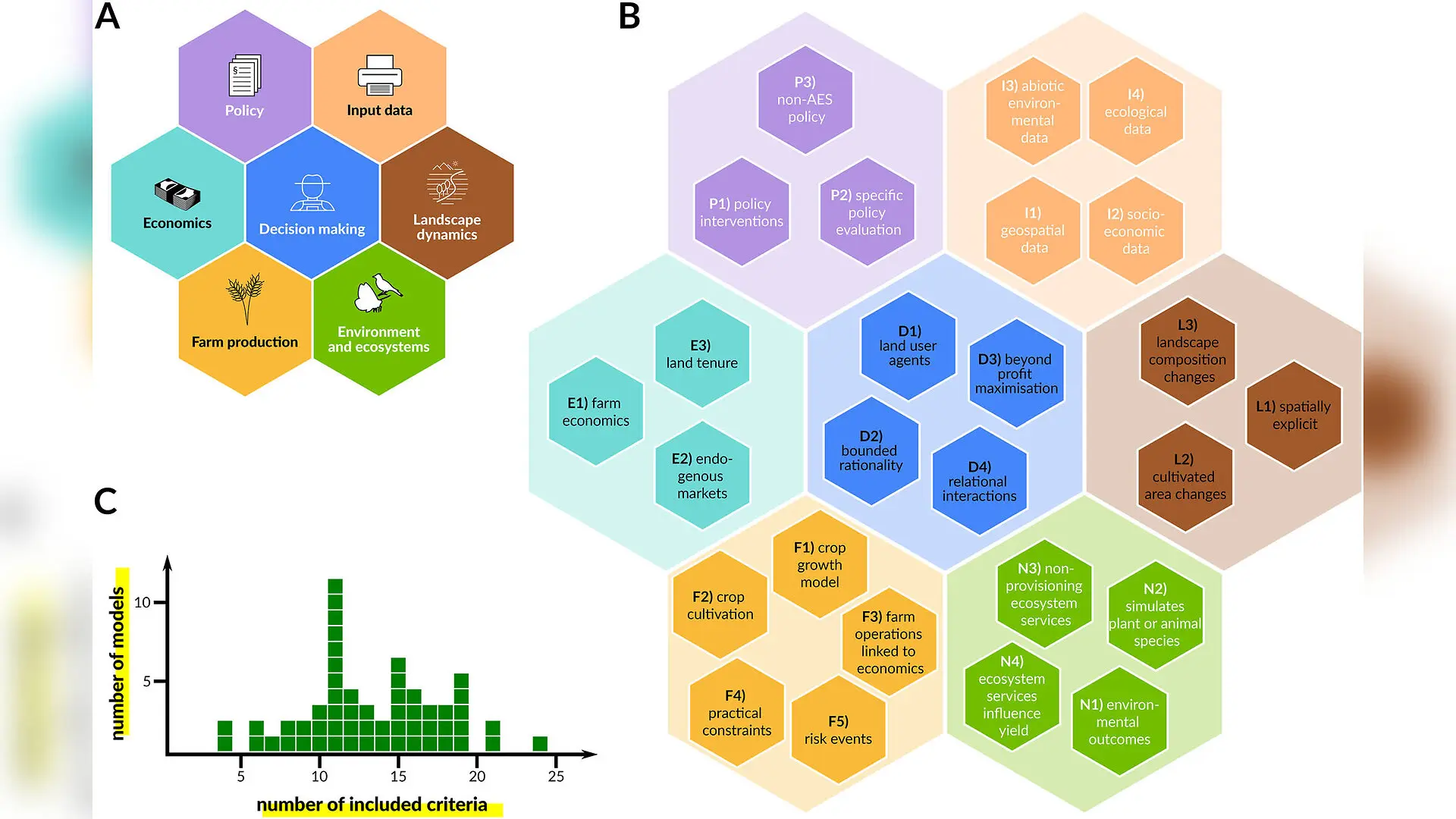
Agricultural landscapes across Europe and the globe face intense pressure from volatile markets, climate change, and widespread biodiversity loss, prompting billions of euros in public subsidies intended to steer farming toward sustainability. Yet, a comprehensive new study reveals that the advanced computer simulations used to test these agricultural policies are missing vital ecological feedback loops and real-world environmental risks, limiting their usefulness for decision-makers.
To evaluate how well scientific computer simulations capture the complex reality of farming regions, researchers conducted a systematic literature review analyzing 56 prominent agent-based models, which are digital systems that simulate the independent decisions and actions of individual actors like farmers or animals. Published in Advanced Science, the review examined these digital tools across 26 specific criteria spanning economics, policy, farm management, and ecology.
Why Do Economic Models Dominate Farm Policy Simulations?
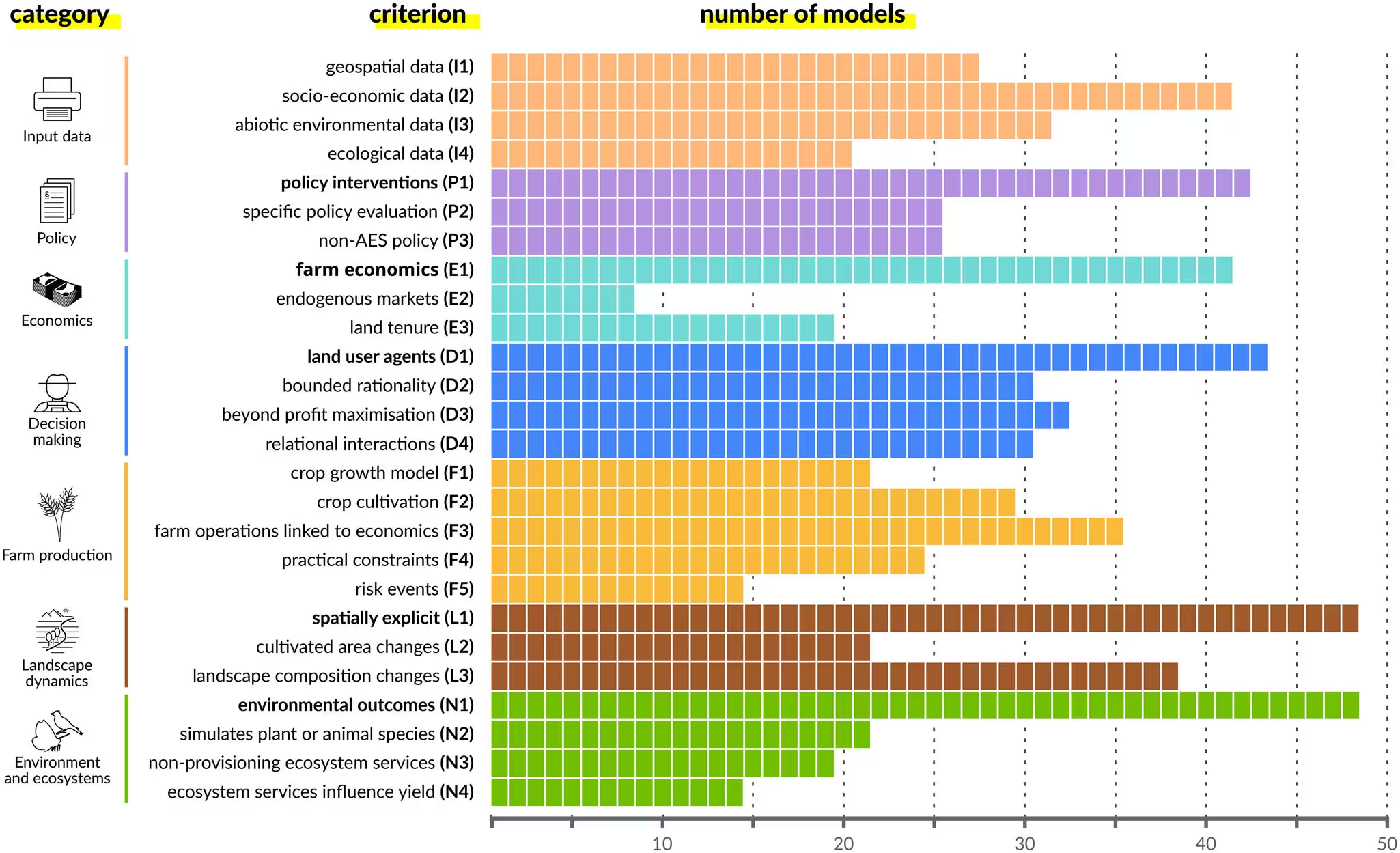
The evaluation revealed a strong, long-standing tradition of modeling the economic impacts of agricultural policies. More than 70 percent of the reviewed simulations successfully incorporated farm economics, empirical economic data, and structured decision-making by land users, reflecting decades of refinement in tools designed to predict how market shifts and subsidies influence crop production.
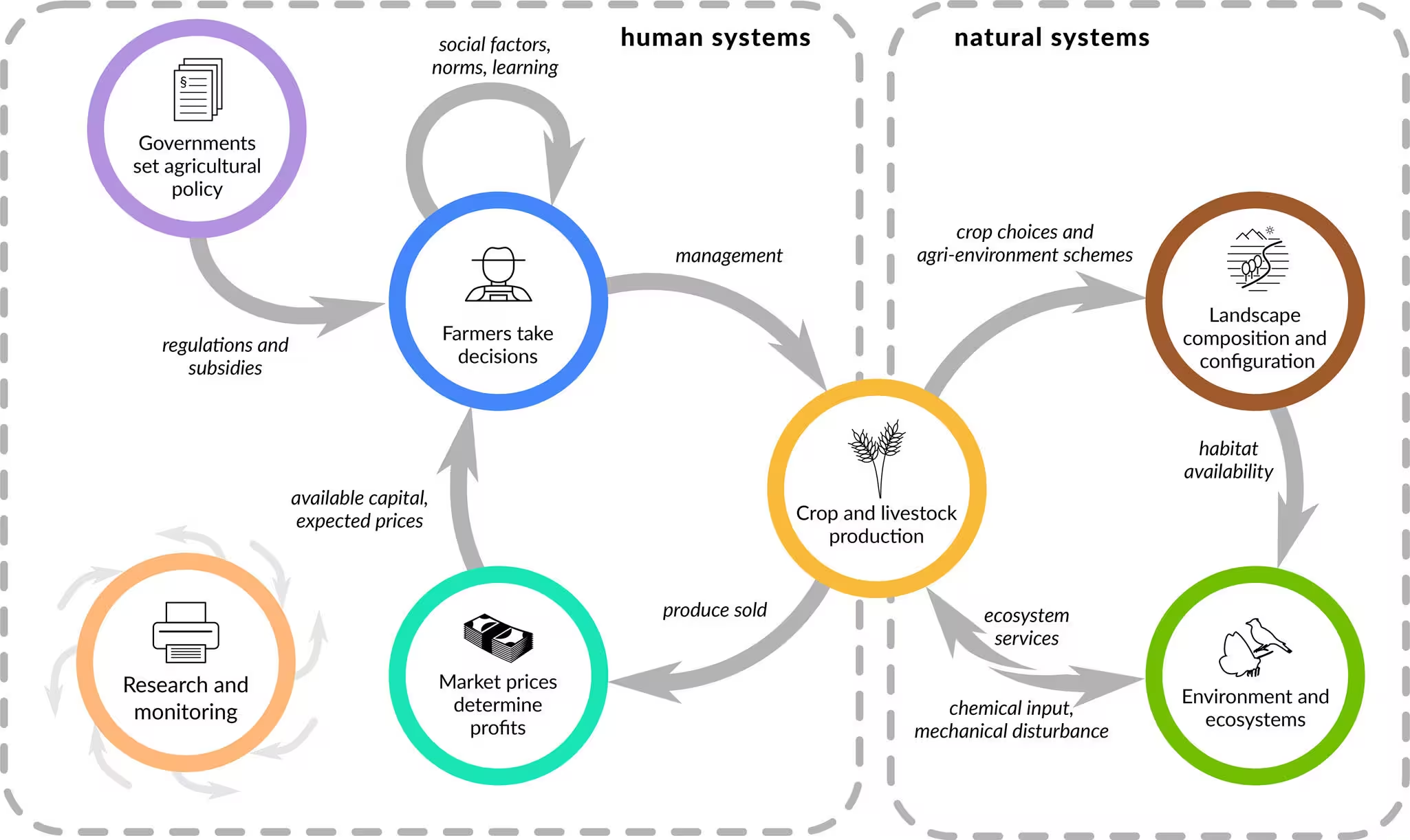
However, the researchers found a striking blind spot regarding economic and environmental risks, such as sudden market slumps or severe weather extremes driven by climate change. Only 25 percent of the analyzed models accounted for unexpected risk events and the resulting adaptation strategies used by farmers, despite such shocks becoming increasingly frequent in modern agricultural systems.
What Are the Major Shortcomings in Ecological Modeling?
While roughly 60 percent of the reviewed models incorporated some form of biodiversity or ecosystem metrics, the ecological components were frequently too abstract or disconnected from daily farming operations. Many simulations relied on simplified environmental indices rather than tracking actual wildlife populations or dynamic habitat changes across agricultural fields.
Furthermore, only about half of the ecological models included crop growth or standard cultivation practices like tillage and chemical applications, even though these farm management choices are major drivers of biodiversity decline. Perhaps most crucially, just a quarter of the models simulated feedback loops where healthy ecosystem services, such as natural pest control or pollination, actually improved crop yields and farm profits.
How Can Future Simulations Better Support Conservation Goals?
The authors emphasize that building more reliable social-ecological models will require bridging traditional disciplinary divides between economics and ecology. They recommend that future research projects integrate data-driven ecological models with farm management workflows and prioritize model coupling, where existing specialized programs are linked together to capture bidirectional interactions between human activity and nature.
While the study points out that larger, highly complex models are not automatically superior to targeted smaller models, the authors argue that capturing tipping points and resilience in agricultural landscapes requires a more holistic approach. By improving how digital simulations represent the mutual dependence between farming yields and environmental health, researchers can provide policymakers with much sharper tools to address the compounding crises facing rural ecosystems.
The research was published in Advanced science (Weinheim, Baden-Wurttemberg, Germany) on October 26, 2026.
This article has been fact checked for accuracy, with information verified against reputable sources. Learn more about us and our editorial process.
Last reviewed on .
Article history
- Latest version
Reference(s)
- Vedder, Daniel., et al. “Integrating Ecology and Economics in Agent‐Based Models to Support Agricultural Policy.” Advanced Science, October 26, 2026 Wiley, doi: 10.1002/advs.202520081. <https://doi.org/10.1002/advs.202520081>.
Cite this page:
- Posted by Omar Mirza