Silty Clay Pile Interface Degradation Under Cyclic Loading
Large-scale direct shear tests and numerical simulations reveal how moisture and roughness drive cyclic damage in pile-silty clay foundations.
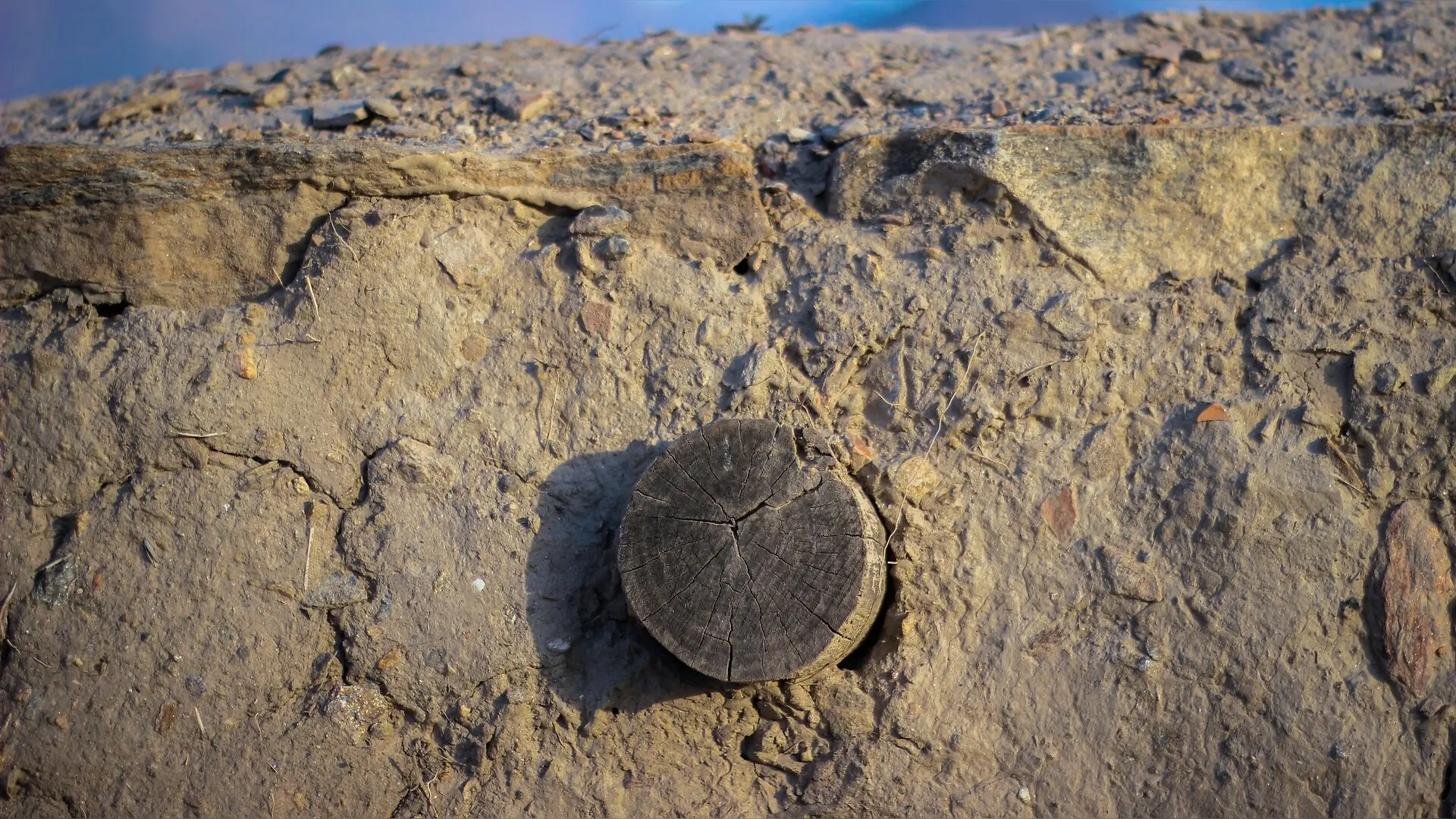
Silty clay layers subjected to repeated seismic and traffic loads experience interface degradation that can weaken the stability of pile foundations over a period of decades. A comprehensive suite of large-scale cyclic direct shear tests combined with finite element simulations has revealed how moisture content, interface texture width, normal stress, and boundary constraints alter the mechanical behavior and damage accumulation of pile-silty clay contact zones.
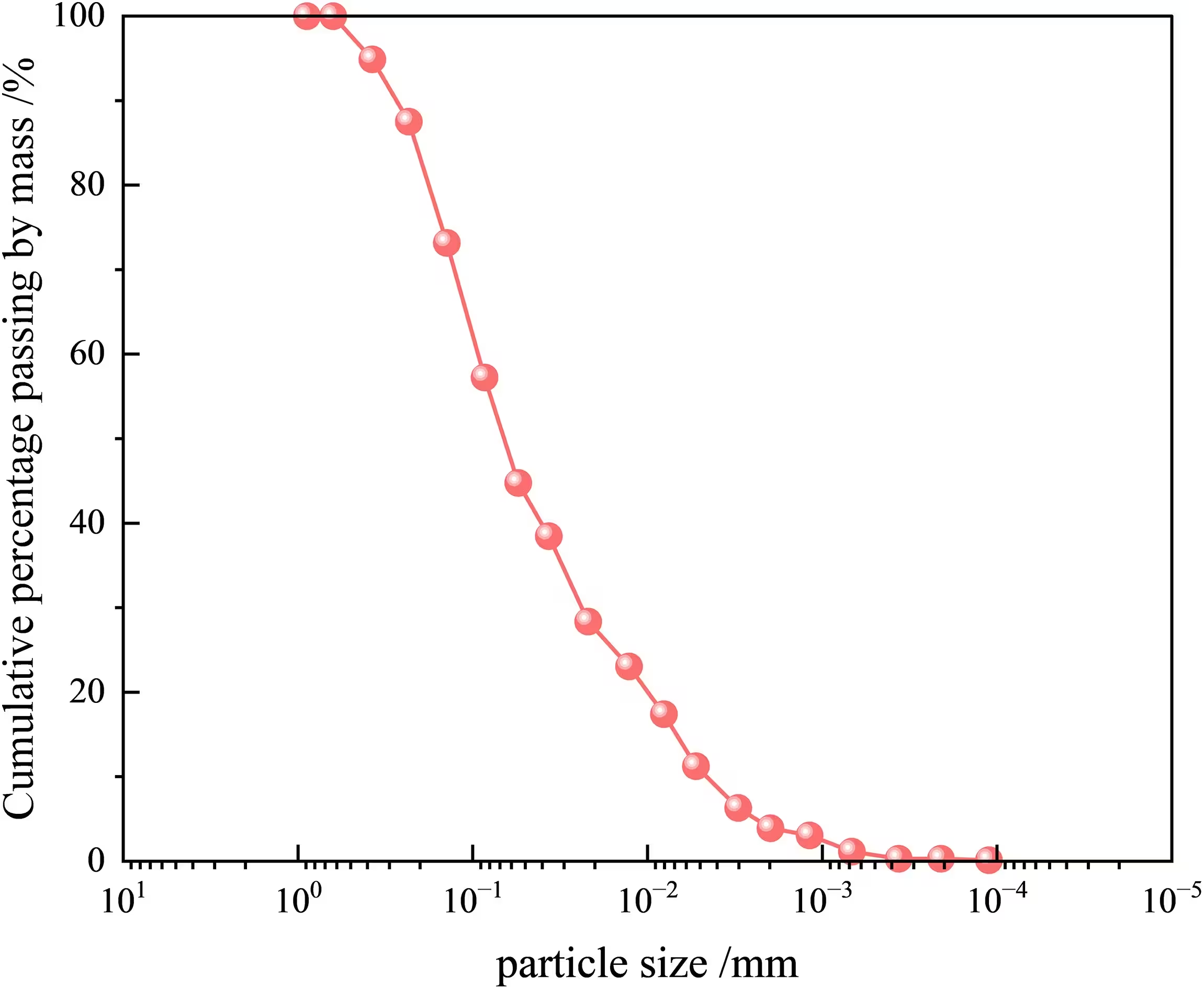
The experimental work utilized a microcomputer-controlled electro-hydraulic servo apparatus to apply sinusoidal displacement-controlled loading up to 50 cycles at a frequency of 0.5 Hz. The testing program evaluated both constant normal load and constant normal stiffness boundary conditions, with normal stiffness set to 112 kPa/mm. Soil samples were sourced from northern China as a typical low liquid limit silt from the Yellow River alluvial floodplain, possessing a coefficient of uniformity of 20.09 and a coefficient of curvature of 1.31. Rigid steel plate specimens featuring CNC-machined grooves with texture widths of 0 mm, 1 mm, and 3 mm were used to simulate pile surfaces. The full findings were published in PLOS One.
How Moisture and Roughness Alter Interfacial Strength
The research demonstrated that introducing surface texture markedly increases the initial peak shear stress compared to smooth interfaces. However, this strengthening effect is accompanied by accelerated cyclic degradation, with strength attenuation ratios reaching up to 31.0% after 50 cycles for a 3 mm texture width, compared to 8.0% for a smooth interface. Soil moisture content plays a regulatory role in interface softening. Higher moisture levels reduce initial shear strength while suppressing the volumetric contraction normally driven by particle climbing along surface protrusions.
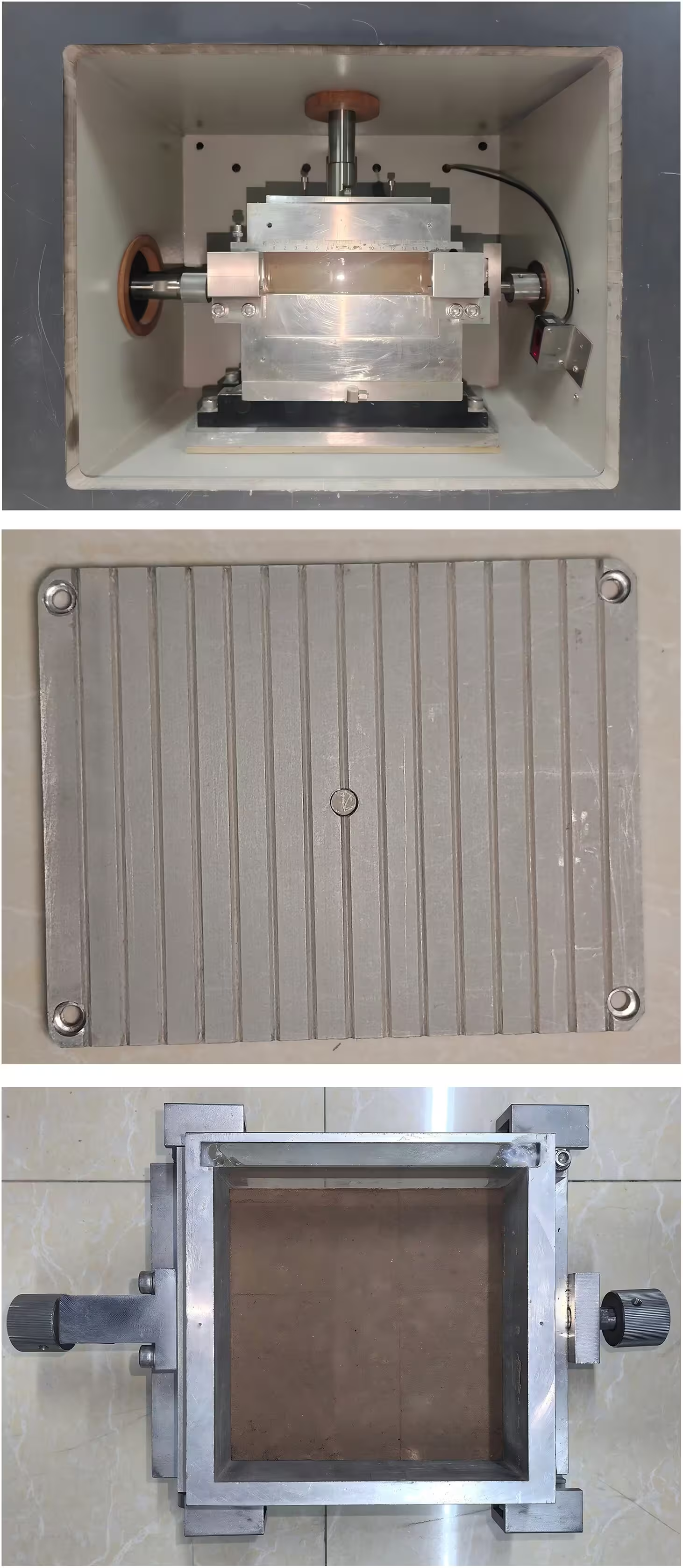
Normal stress conditions dictate the magnitude of both shear resistance and volumetric deformation. Increasing the normal stress from 100 kPa to 300 kPa expands the peak shear stress from approximately 75 kPa to 200 kPa. Under constant normal stiffness boundaries, the restricted normal deformation alters stress paths and reduces cumulative energy dissipation by approximately 19.7% compared to constant normal load conditions over 50 cycles.
Stiffness Degradation and Energy Dissipation Trajectories
Interface shear stiffness and equivalent damping ratio exhibit a three-stage evolution pattern characterized by rapid early decay, a gradual transition phase, and final stable convergence. During the first 10 cycles, breakdown of interlocking structures and particle rearrangement cause sharp reductions in stiffness and damping. Once a stable shear slip surface forms, energy dissipation becomes primarily governed by frictional sliding within the shear band.
Cumulative energy dissipation increases significantly with rising normal stress and interface texture width, but decreases with higher soil moisture content. The initial shear stiffness varied from 15.17 kPa/mm at 9% moisture content to 38.59 kPa/mm at 15% moisture content, illustrating that initial mechanical responses are highly sensitive to pre-existing moisture gradients.
Numerical Modeling and Damage Threshold Predictions
The investigators implemented an improved Mohr-Coulomb elastoplastic constitutive model incorporating a cyclic damage variable to simulate interface behavior. Grey relational analysis established that initial normal stress and interface texture width exert dominant control over the damage accumulation rate, outranking moisture content and shear displacement amplitude. Quantitative validation against experimental normal displacement data yielded coefficients of determination between 0.836 and 0.852 for the moisture-content series.
The authors noted important limitations, including the absence of replicate tests to quantify experimental variability and the restriction of numerical validation primarily to constant normal load conditions. Future investigations will need to expand physical testing across replicated groups and broader boundary conditions to further refine long-term service performance evaluations for deep foundations in silty clay strata.
The research was published in PLOS One on November 17, 2026.
This article has been fact checked for accuracy, with information verified against reputable sources. Learn more about us and our editorial process.
Last reviewed on .
Article history
- Latest version
Reference(s)
- Wang, Shaoning., et al. “Cyclic shear and damage evolution of pile–silty clay interface under CNL/CNS conditions.” PLOS One, vol. 21, no. 11, November 17, 2026, pp. e0362941 Public Library of Science (PLoS), doi: 10.1371/journal.pone.0362941. <https://doi.org/10.1371/journal.pone.0362941>.
Cite this page:
- Posted by Vikram Desai