Did Ancient Egyptians Use a Massive Hydraulic Lift to Build Their Oldest Pyramid
A controversial new study explores the possibility that ancient Egyptians used a sophisticated hydraulic lift system to construct their oldest pyramid.
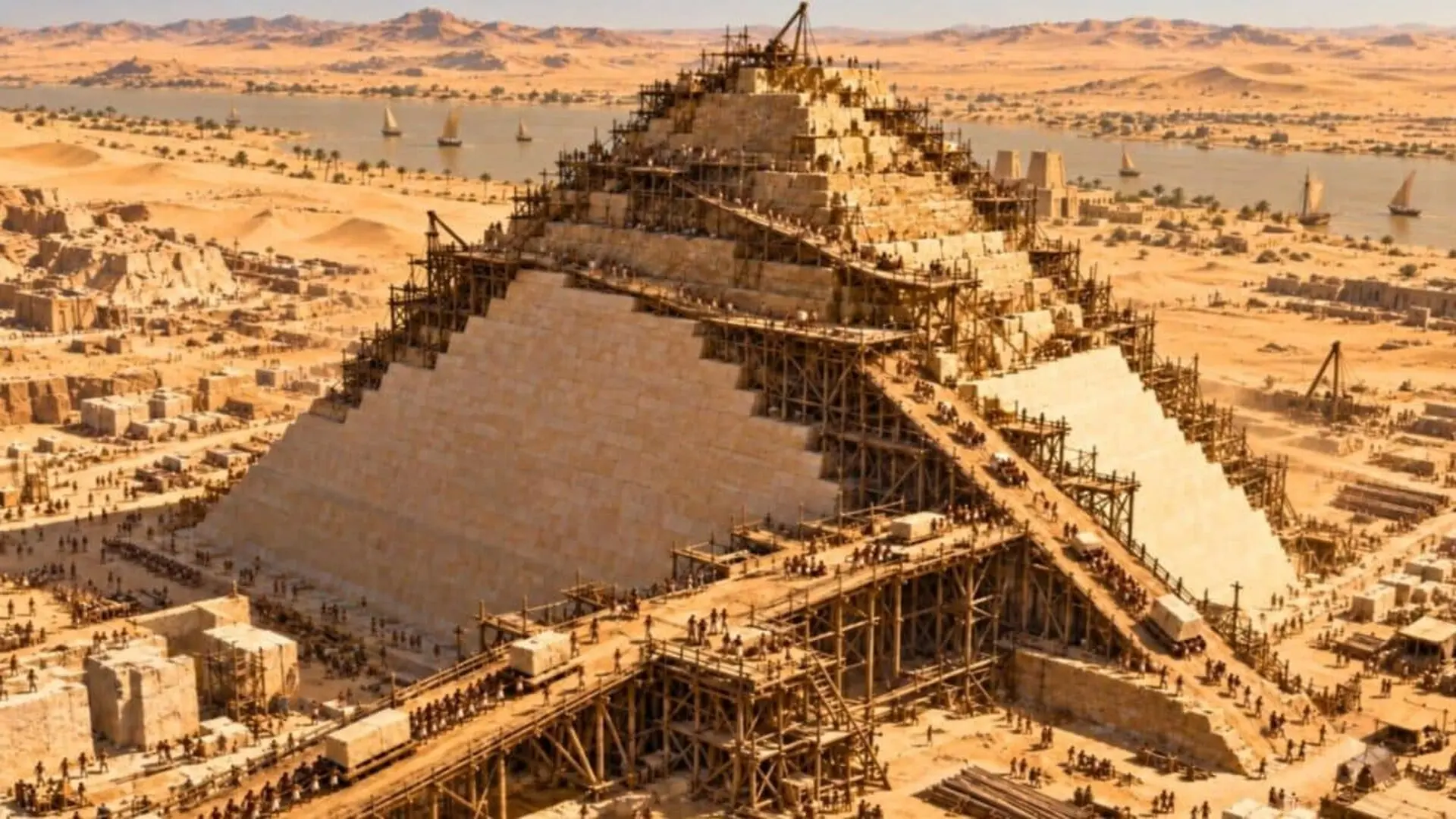
A team of French researchers has proposed a provocative new theory regarding the construction of Egypt’s Step Pyramid of Djoser, suggesting that ancient engineers may have utilized a sophisticated hydraulic lift system to hoist massive stone blocks. The study, published in the journal PLOS ONE, posits that a complex network of dams and water-treatment infrastructure could have provided the motive force required to elevate the limestone masonry required for the 4,700-year-old monument.
Engineering an Ancient Megaproject
Constructed around 2680 BC at Saqqara under the direction of the architect Imhotep, the Step Pyramid stands as a milestone in architectural history as the first major stone structure of its kind. Rising approximately 60 meters, the pyramid is comprised of more than 2.3 million limestone blocks, each weighing an average of 300 kilograms. While traditional models suggest that ramps, sledges, and human labor facilitated this massive undertaking, the sheer scale of the project continues to invite speculation about more advanced mechanical assistance.
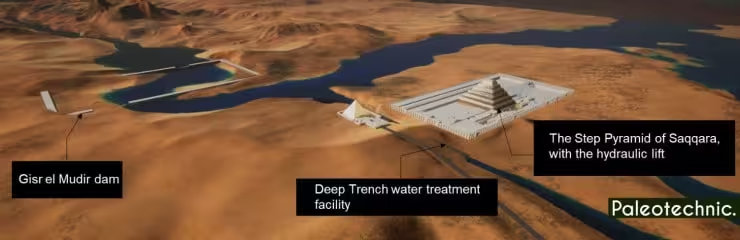
Xavier Landreau, a materials scientist who leads the Paleotechnic institute, led the team in re-examining the surrounding Saqqara landscape. By mapping the region’s topography and water flow, the researchers turned their attention to the Gisr el-Mudir, a vast rectangular stone enclosure situated west of the pyramid. With walls reaching 15 meters in thickness, the structure has long baffled archaeologists, who have variously interpreted it as a fortress or a ritual precinct. The French team argues that the enclosure likely functioned as a check dam, designed to slow seasonal flash floods and capture sediment, providing a controlled reservoir of water.
Hydraulic Infrastructure in the Desert
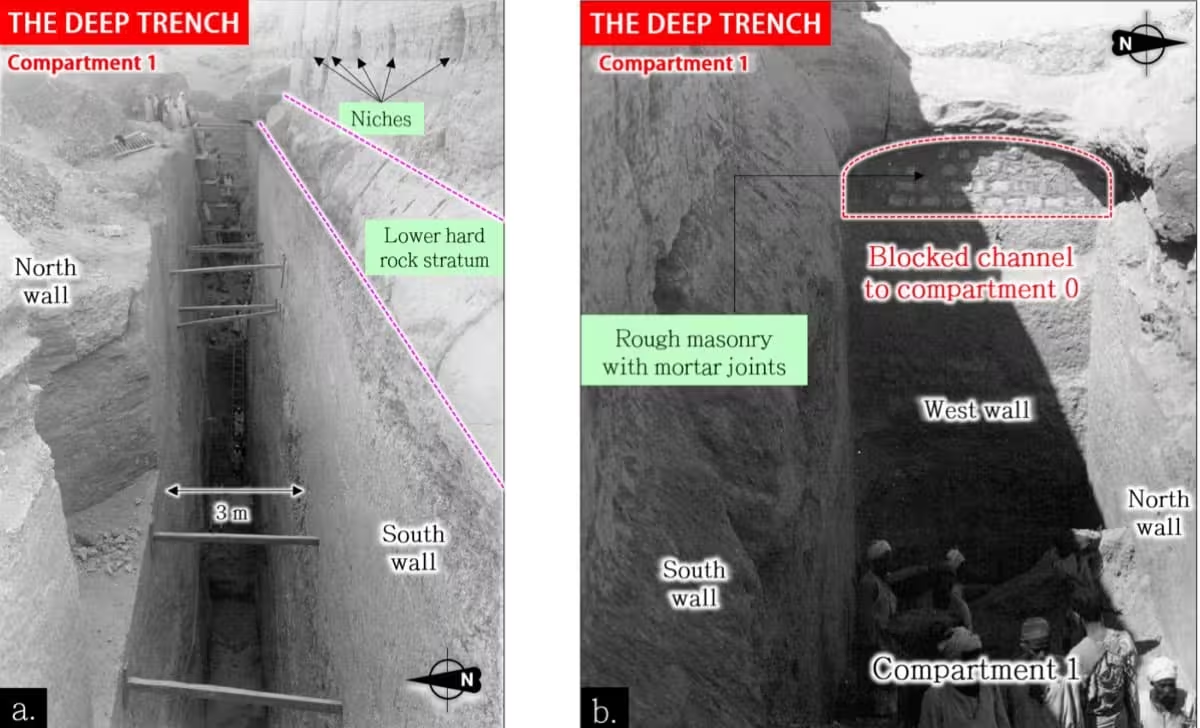
The proposed hydraulic mechanism relies on a series of structures interpreted as a water-treatment facility. Near the pyramid’s “Dry Moat,” the researchers identified a deep, narrow trench that they believe served as a multi-stage filtration system. By utilizing settling and purification basins, the ancient engineers could have ensured that water was clean enough to power a series of submerged lifts. The hypothesis suggests that a float-based mechanism, operated by water cycles within a central shaft, could have effectively hoisted stone platforms, allowing the pyramid to expand from its core outward.
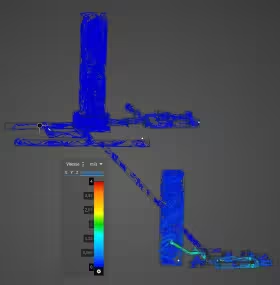
Calculations provided by the study suggest that up to 18 million cubic meters of water could have facilitated the vertical transport of the blocks over several decades. The team notes that the granite box located at the base of the pyramid’s 28-meter shaft—often viewed as a burial chamber—could have acted as a sophisticated valve to control the flow and pressure required for this lift.
Academic Skepticism Persists
Despite the mathematical modeling, the proposal has faced significant pushback from the archaeological community. Experts point out that there is a complete absence of physical evidence—such as piping, specialized valves, or machinery fragments—that would confirm the use of hydraulic lifting technology during this period. Furthermore, prominent voices in the field, such as geoarchaeologist Judith Bunbury and archaeologist Julia Budka, have questioned the feasibility of relying on sporadic rainfall and the necessity of such an elaborate system when traditional manual methods are well-documented in the Egyptian record.
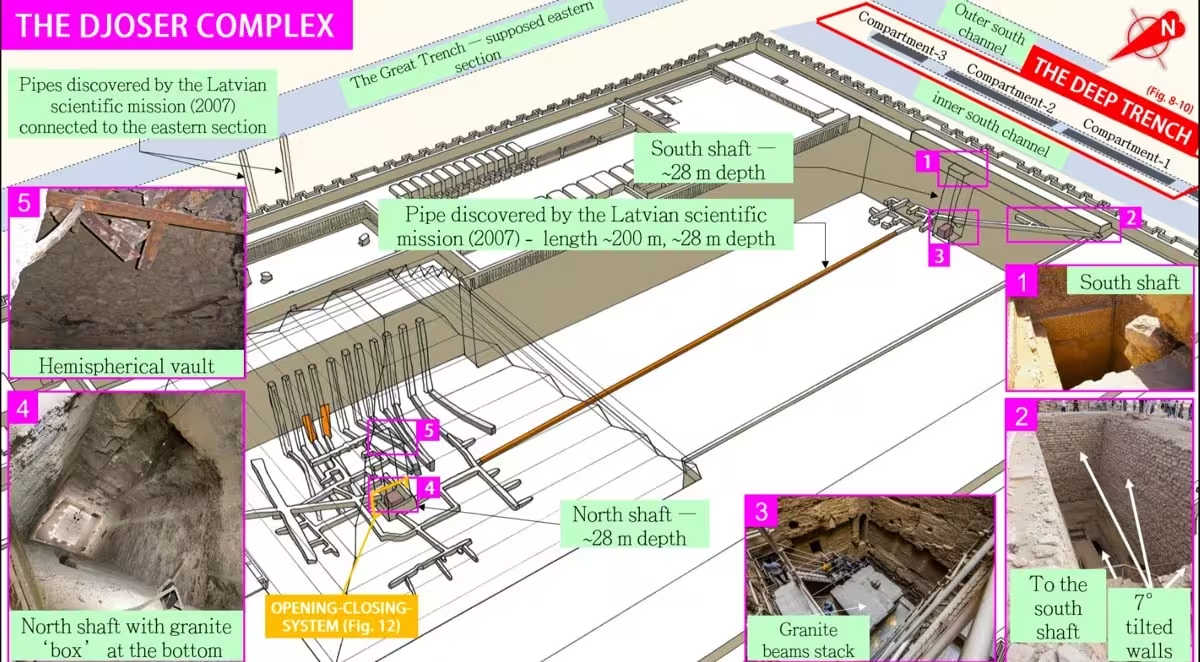
The authors acknowledge these critiques, admitting that critical links in their proposed hydraulic chain, such as direct channels connecting the trench to the shafts, have yet to be located. While the theory provides a novel perspective on how ancient civilizations might have manipulated their environment, it remains an unverified hypothesis. For now, the mystery of the Step Pyramid’s construction persists, balancing between established historical consensus and the potential for long-hidden technological ingenuity.
This article has been fact checked for accuracy, with information verified against reputable sources. Learn more about us and our editorial process.
Last reviewed on .
Article history
- Latest version
Reference(s)
- Landreau, Xavier. “On the possible use of hydraulic force to assist with building the step pyramid of saqqara.”, vol. 19, no. 8, pp. e0306690, doi: 10.1371/journal.pone.0306690. <https://journals.plos.org/plosone/article?id=10.1371/journal.pone.0306690>.
Cite this page:
- Posted by Vikram Desai