Neural Network Accurately Predicts Strength of Coated Metals
Machine learning model forecasts welding outcomes with minimal error, bypassing costly trial-and-error experiments.

Coating industrial metal parts with tough nanostructured alloys can double their working lifespan, but finding the right welding settings has traditionally required endless trial and error. A team of researchers has developed a machine-learning model that accurately predicts how welding settings will affect the final coating without requiring costly physical experiments.
Hardfacing is a surface-strengthening technique widely used to protect heavy machinery in mining, construction, and agriculture from severe wear and corrosion. By depositing a durable alloy layer onto cheaper base metals, engineers can prevent premature equipment failure. However, achieving the ideal combination of mechanical strength and bead shape during manual metal arc welding depends on variables that interact in complex, non-linear ways.
How a General Regression Neural Network Learns Welding Physics
To untangle these complex relationships, the researchers employed a machine-learning framework known as a General Regression Neural Network, or GRNN. Originally proposed in 1991, this type of artificial neural network is celebrated for its ability to learn rapidly from small datasets without the repetitive, step-by-step weight updates required by traditional iterative networks. The study, published in PLOS One, utilized experimental data from 25 distinct trials involving varying welding currents, arc voltages, and travel speeds.
The neural network architecture consists of four distinct levels, beginning with an input layer for welding parameters and moving through pattern and summation layers that compute probability density functions. Out of the 25 experimental datasets, 60 percent were allocated for training the model, 20 percent for validation, and the remaining 20 percent for testing its predictive capabilities against unseen data.
To optimize the network, the team used a grid search approach to determine the ideal smoothing parameter, also known as the kernel width. They found that setting this parameter to 3.73 effectively prevented both over-fitting, where the model memorizes the training data too strictly, and over-smoothing, where important trends are lost.
Predicting Hardness and Bead Geometry With Minimal Error
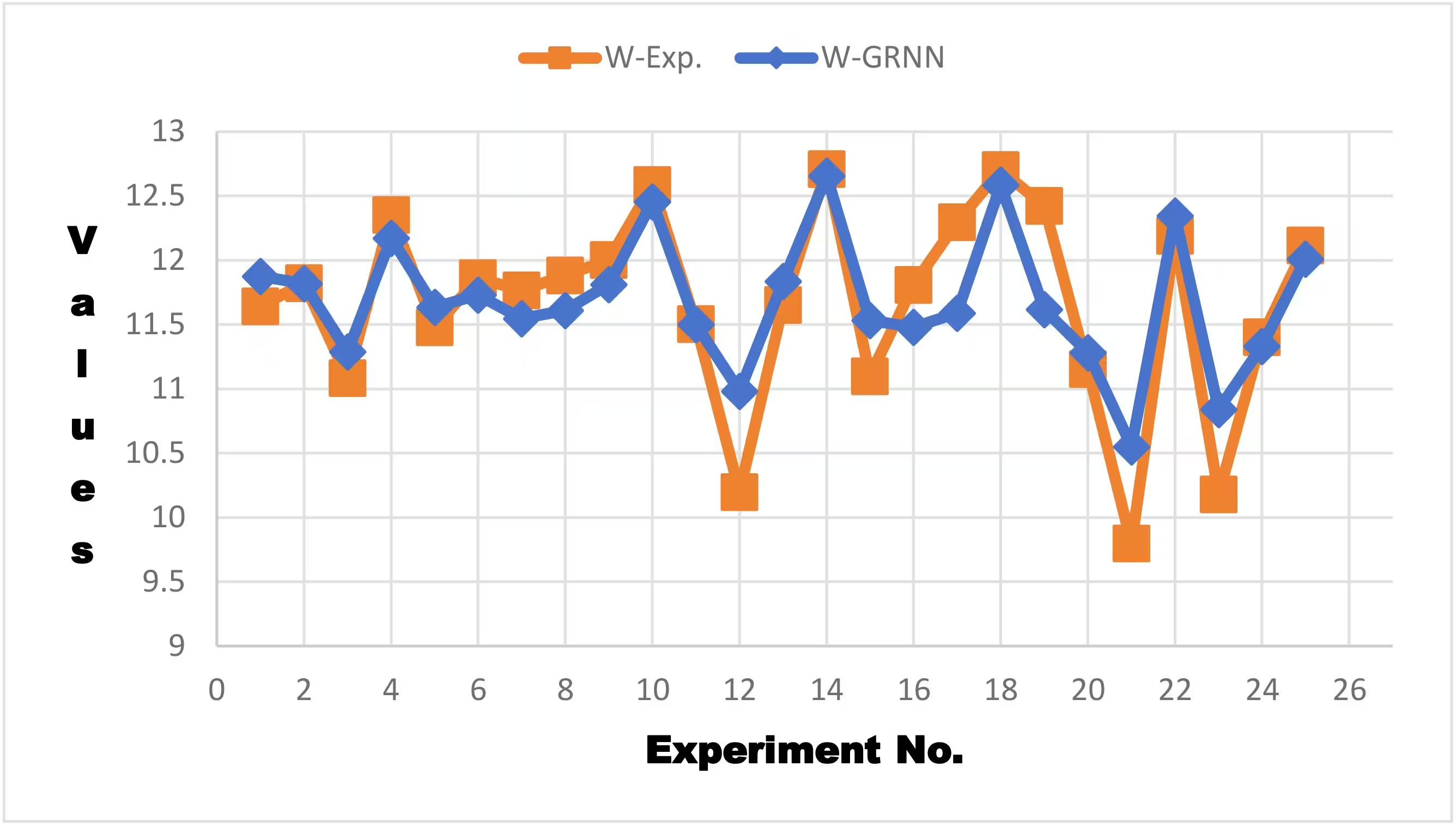
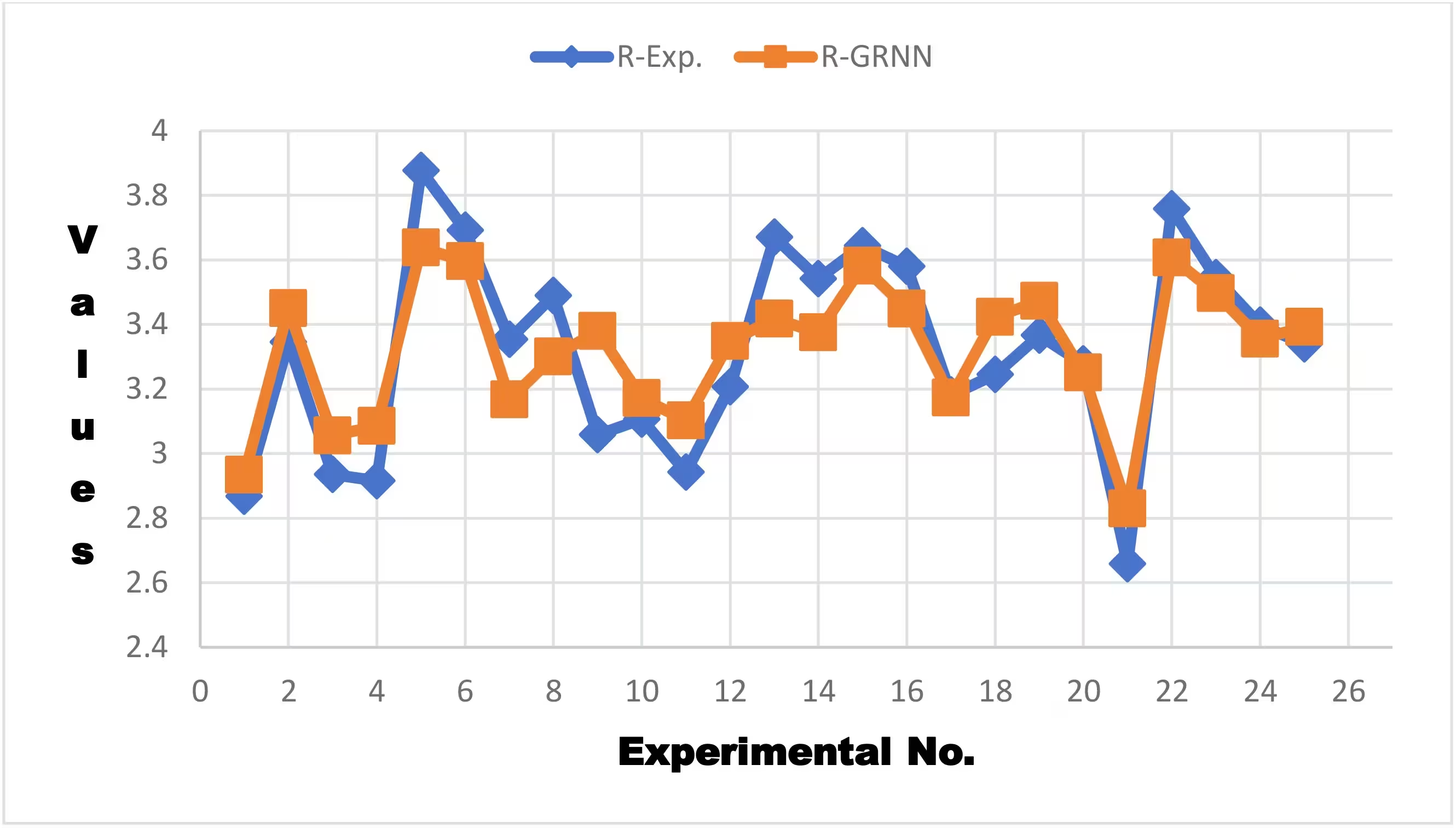
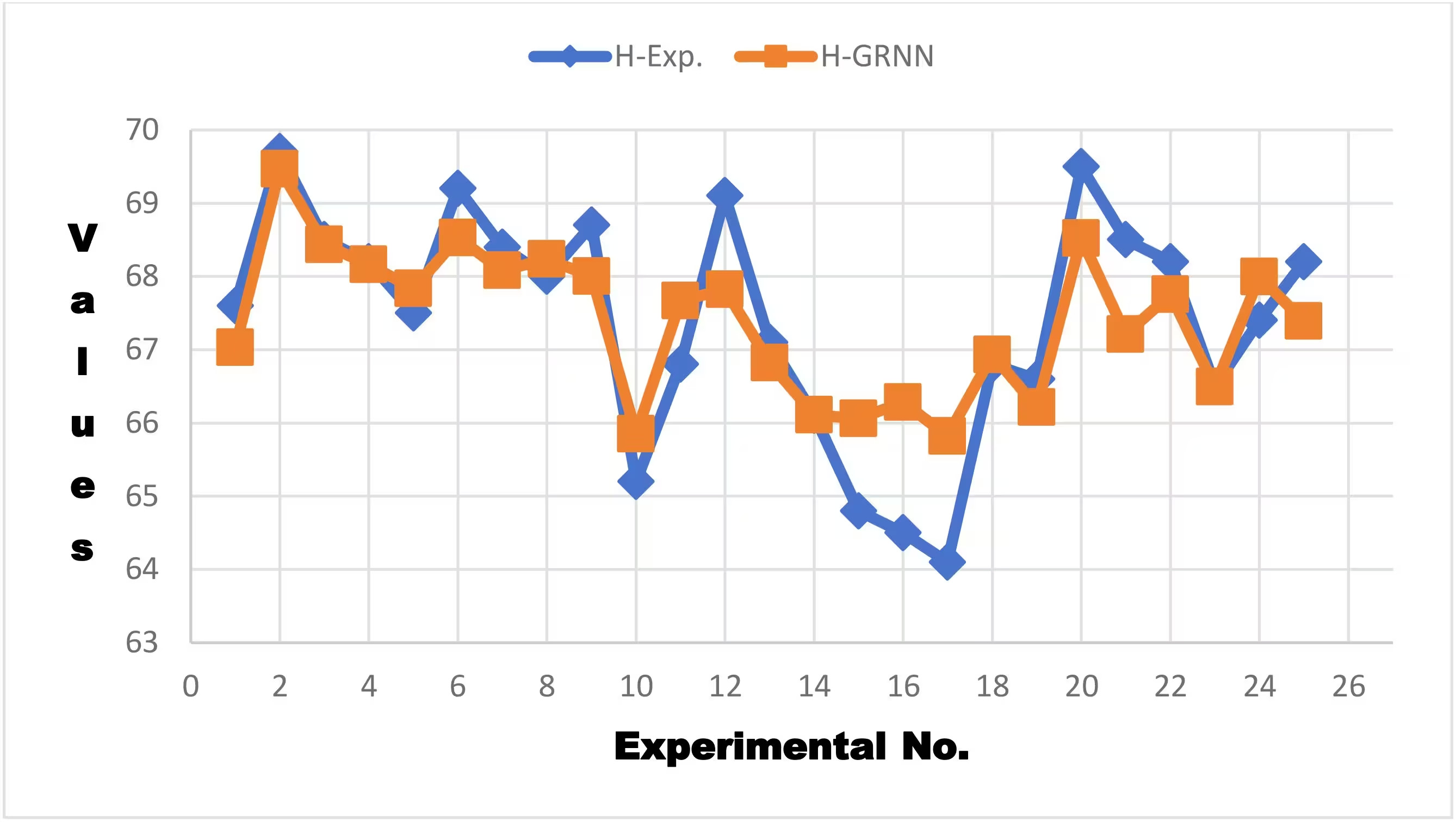
When evaluated against experimental measurements, the GRNN model successfully forecasted weld bead width, reinforcement height, and material hardness with high precision. The maximum prediction errors remained tightly controlled, reaching 6.47 percent for bead width, 6.93 percent for reinforcement height, and just 1.88 percent for hardness.
The researchers noted that hardness predictions yielded the lowest error rates because microhardness measurements are less sensitive to localized geometric variations than the physical dimensions of the weld bead. In contrast, bead geometry is heavily influenced by turbulent arc dynamics and molten metal flow, which introduce slight natural variations.
Statistical metrics further confirmed the reliability of the approach. The coefficient of determination reached 0.850 for bead width, 0.848 for reinforcement height, and 0.835 for hardness. Across all testing and validation phases, projected outcomes matched physical measurements within a ten percent error margin.
Accelerating Smart Manufacturing and Quality Control
The successful implementation of this predictive framework offers a practical decision-support tool for advanced surface engineering. By bypassing the need for extensive physical trial runs, manufacturers can significantly reduce development time and material waste.
The authors conclude that integrating data-driven machine learning models into welding operations provides a robust foundation for Industry 4.0 applications. As smart manufacturing continues to evolve, similar neural network approaches could soon streamline quality control across heavy industrial sectors worldwide.
The research was published in PLOS One on November 16, 2026.
This article has been fact checked for accuracy, with information verified against reputable sources. Learn more about us and our editorial process.
Last reviewed on .
Article history
- Latest version
Reference(s)
- Saha, Abhijit. “Prediction of MMAW performance on nanostructured hardfaced alloys using general regression neural network: A case study.” PLOS ONE, vol. 21, no. 11, pp. e0361981, doi: 10.1371/journal.pone.0361981. <https://doi.org/10.1371/journal.pone.0361981>.
Cite this page:
- Posted by Anjali Singh