Why Prehistoric People Took Toddlers Into Dangerous Caves To Communicate With The Spirit World
Tiny handprints found deep within prehistoric caves in France and Spain are revealing new insights into the lives and roles of children in ancient societies.
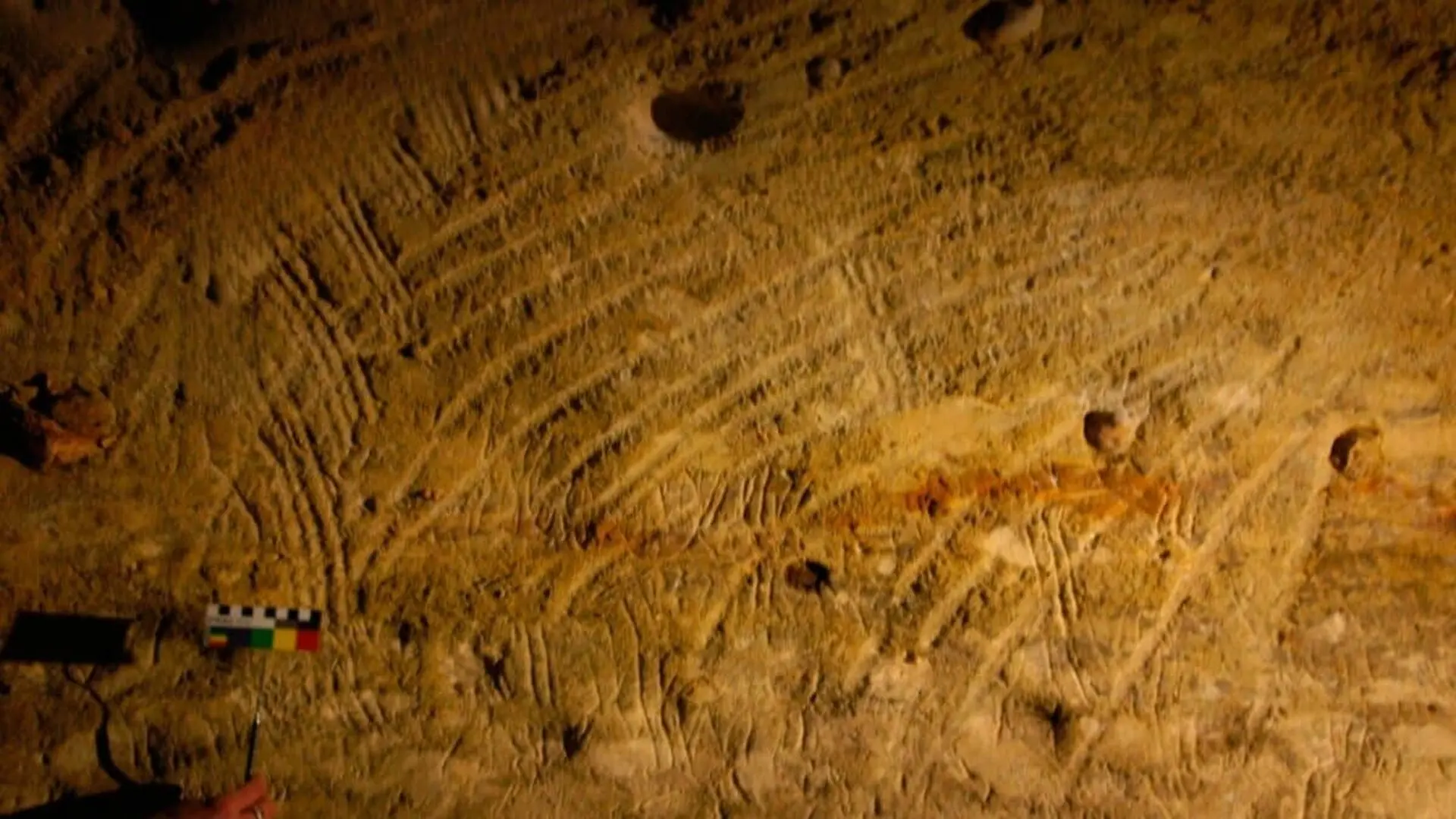
For decades, the presence of small, hand-sized markings in the deep recesses of prehistoric caves across France and Spain has sparked intense debate. While traditional archaeological theories often framed these findings as evidence of early childhood education—passing on artistic techniques and cultural knowledge to the next generation—a team of researchers from Tel Aviv University is proposing a far more spiritual motive. Their findings, published in the journal Arts, suggest that children were not merely students, but active participants in profound metaphysical rituals.
Archaeologists Dr. Ella Assaf, Dr. Yafit Kedar, and Professor Ran Barkai contend that the extreme conditions of these subterranean environments—characterized by low oxygen, perilous climbs, and total darkness—hint at an intentionality that transcends simple training. If the journey was meant solely for instruction, the hazards involved would seem counterintuitive. Instead, the researchers posit that children were perceived as unique, liminal beings capable of bridging the gap between the terrestrial world and the supernatural.
Evidence of Ancient Youth
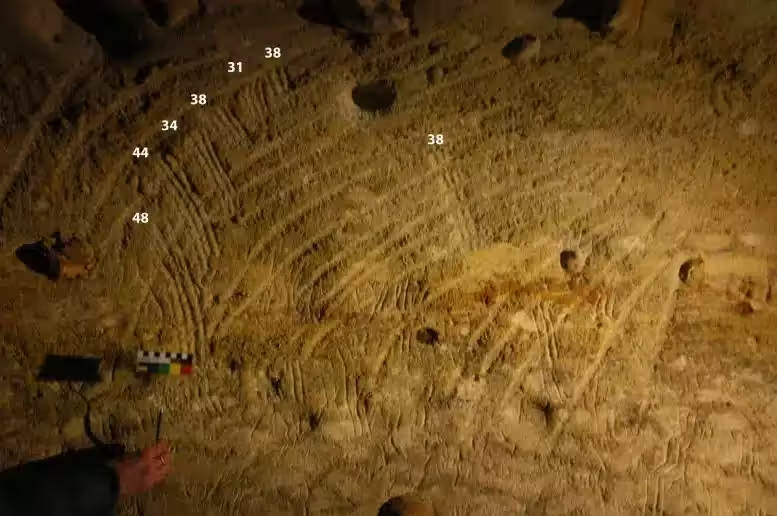
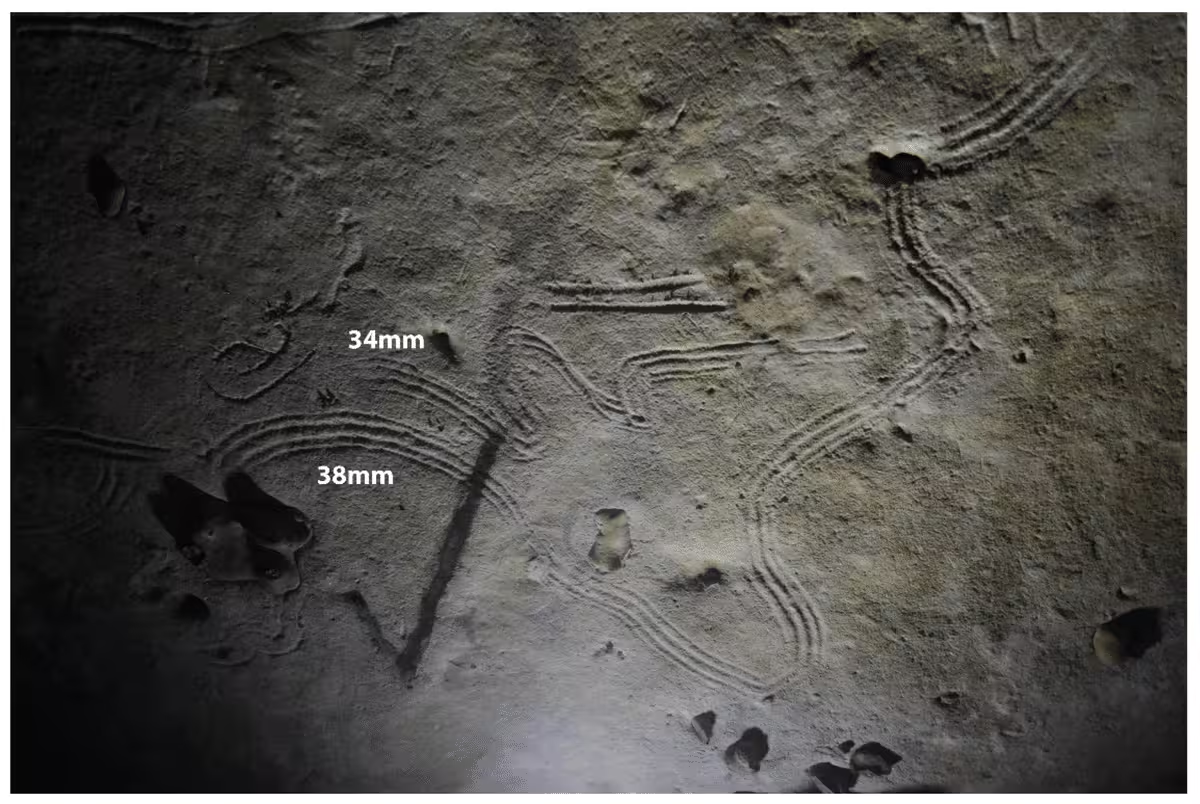
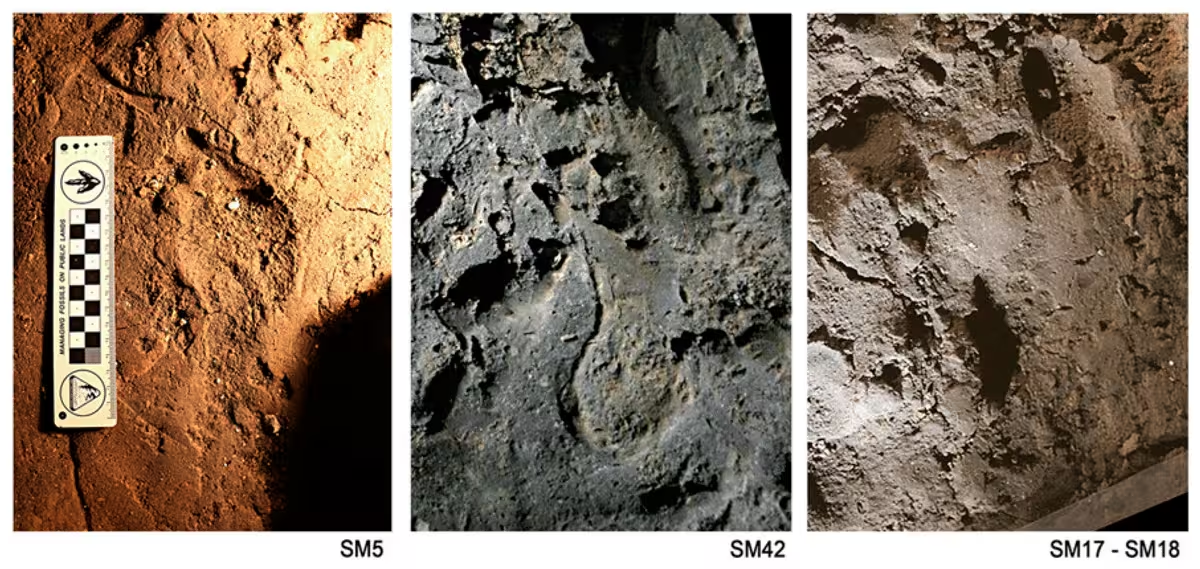
The physical record within these sites is undeniable. Analysis of handprints and finger flutings confirms the presence of children ranging from toddlers to adolescents, some as young as two years old. At the Rouffignac Cave, finger markings date back as far as 20,000 years, while the footprints discovered in the Basura Cave have remained undisturbed for approximately 14 millennia.
“There is solid evidence of children’s participation in the artwork,” explains Dr. Ella Assaf. Yet, the question remains: why bring a two-year-old into a dangerous, air-starved chasm? The team suggests that for hunter-gatherer societies, these caves served as more than shelters or galleries; they were viewed as gateways to the underworld, a cosmic threshold where community members engaged with spirits to resolve existential crises.
Spiritual Mediators
The researchers argue that children were seen as having a special affinity for this spiritual realm. Because their cognitive and emotional state was viewed as distinct from that of adults, children were considered “active agents” capable of direct communication with supernatural entities. By involving them in the ritual act of painting, adults may have been leveraging this perceived innocence or proximity to the “other side” to facilitate communication with the ancestors or spirits of the earth.
“Young children were credited with special qualities in the spiritual world, enabling them to communicate with entities from the beyond,” Dr. Kedar states. This perspective aligns with ethnographic accounts of various indigenous societies, which often attribute a sacred status to children as beings who exist on the cusp of the mortal and immortal worlds.
A New Lens on Paleolithic Life
Professor Barkai emphasizes that for these ancient communities, the natural world was inseparable from the spiritual one. Whether interacting with animals for food, gathering materials for tools, or navigating the deep earth, their survival was predicated on maintaining a balance with non-human entities. In this context, the inclusion of children in deep-cave rituals wasn’t merely an act of childcare; it was a necessary component of the community’s survival strategy.
By moving beyond the assumption that these sites were only schools, the research invites a more complex understanding of how cave art functioned. If these children were indeed considered spiritual conduits, then the images they left behind—the smudged finger markings and small handprints—represent far more than just practice. They are, in the eyes of these researchers, the remnants of an ancient, intimate dialogue between the living and the divine.
This article has been fact checked for accuracy, with information verified against reputable sources. Learn more about us and our editorial process.
Last reviewed on .
Article history
- Latest version
Reference(s)
- <https://www.mdpi.com/2076-0752/14/2/27>.
- “Dr. Ella Assaf Shpayer.” Tel Aviv University <https://english.tau.ac.il/profile/ellaassa>.
- <https://www.researchgate.net/profile/Yafit-Kedar>.
Cite this page:
- Posted by Hassan Raza