Pressurized Sleep Chambers Offer Temporary Relief for High-Altitude Workers
Simulating a lower altitude at night improved oxygen levels and reduced stress hormones, but the benefits vanished within a week.
Sleeping in a specially pressurized room that mimics a lower altitude helps high-altitude workers breathe better at night, though the relief vanishes just as quickly when normal conditions return. Working and living at an elevation of 3,500 meters exposes the human body to constant low oxygen levels, forcing the heart and nervous system to work overtime. To see if giving the body a nightly break could ease this strain, a team of researchers conducted an exploratory pilot randomized controlled trial with 24 male workers.
The findings were published in the International Archives of Occupational and Environmental Health in late 2026. The study tested whether simulating a gradual descent during sleep could relieve the physiological toll of living in oxygen-thin air.
How the Pressurization Experiment Worked
The study involved 24 healthy male workers with an average age of about 29 years, all of whom had lived and worked at 3,500 meters for at least three months. Researchers randomly split the participants into two equal groups of 12. While both groups continued working outdoors at the natural altitude of 3,500 meters during the day, their sleeping arrangements differed for five weeks.
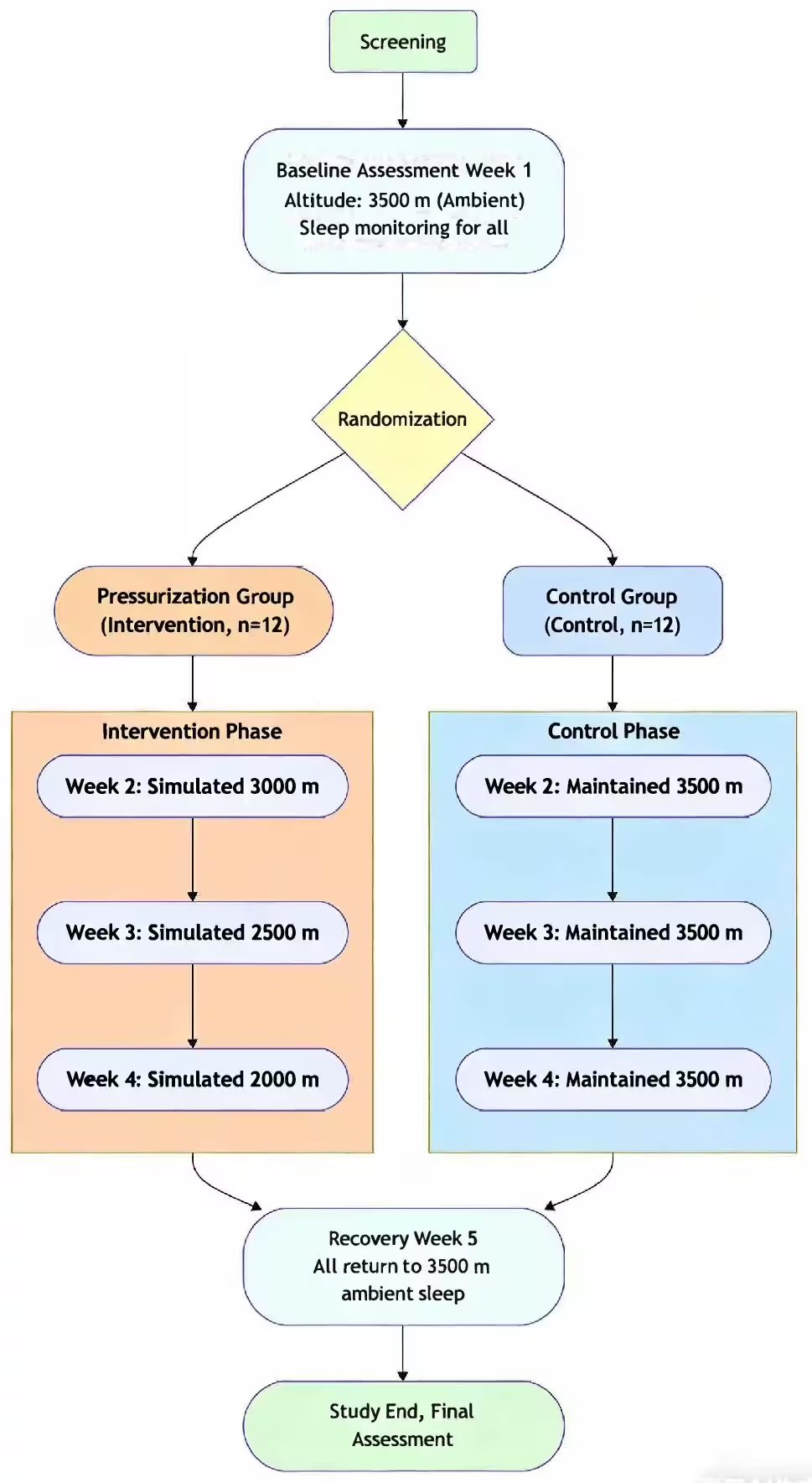
During the first week, establishing a baseline, everyone slept under natural conditions. For the next three weeks, the intervention group slept inside a specialized pressurization chamber. Instead of pumping in extra oxygen, the chamber increased the air pressure to simulate lower elevations step by step. They spent week two at a simulated altitude of 3,000 meters, week three at 2,500 meters, and week four at 2,000 meters. The control group slept in standard on-site housing at 3,500 meters. During the fifth and final week, all participants returned to normal ambient sleeping conditions to monitor recovery.
What Happened to Oxygen Levels and Blood Pressure
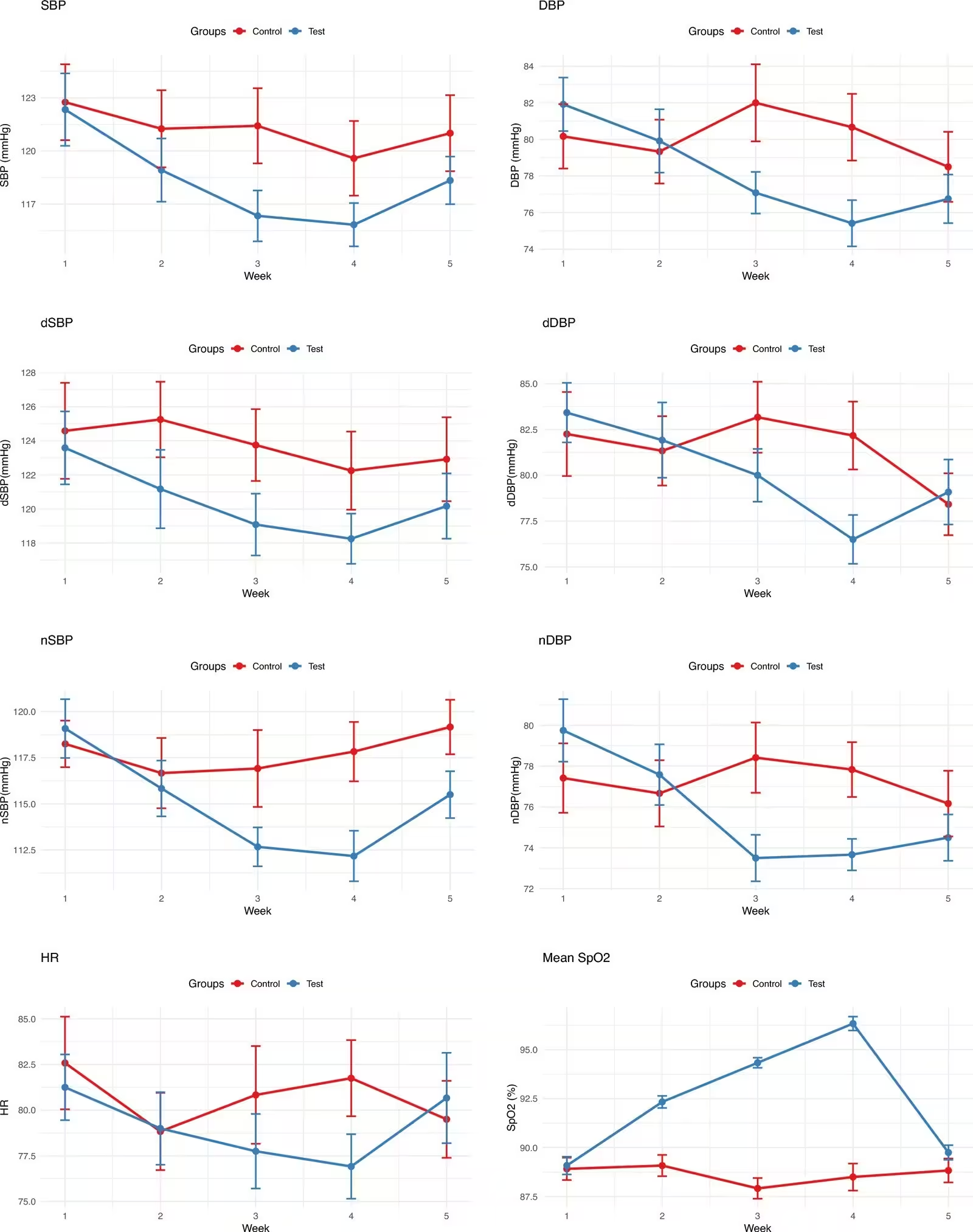
The primary measurement focused on mean nocturnal peripheral oxygen saturation, known as SpO2, which tracks the percentage of oxygen carried in the blood. While the control group stayed relatively stable, the pressurization group showed steady, step-by-step improvements in nighttime oxygenation. By the fourth week at the simulated 2,000-meter mark, their nighttime oxygen saturation reached an average of 96.33 percent, compared to just 88.50 percent in the control group.
Nighttime blood pressure also improved significantly during the simulated descents. Workers in the pressurization chamber experienced a drop in nighttime diastolic blood pressure by an additional 7.25 millimeters of mercury at the 2,500-meter simulated level. Nighttime systolic blood pressure showed similar drops during the 2,000-meter week, decreasing by 6.50 millimeters of mercury compared to controls. However, daytime blood pressure showed minimal changes, remaining largely influenced by ongoing exposure to altitude during work hours.
Changes in Stress Hormones and Antioxidant Defense
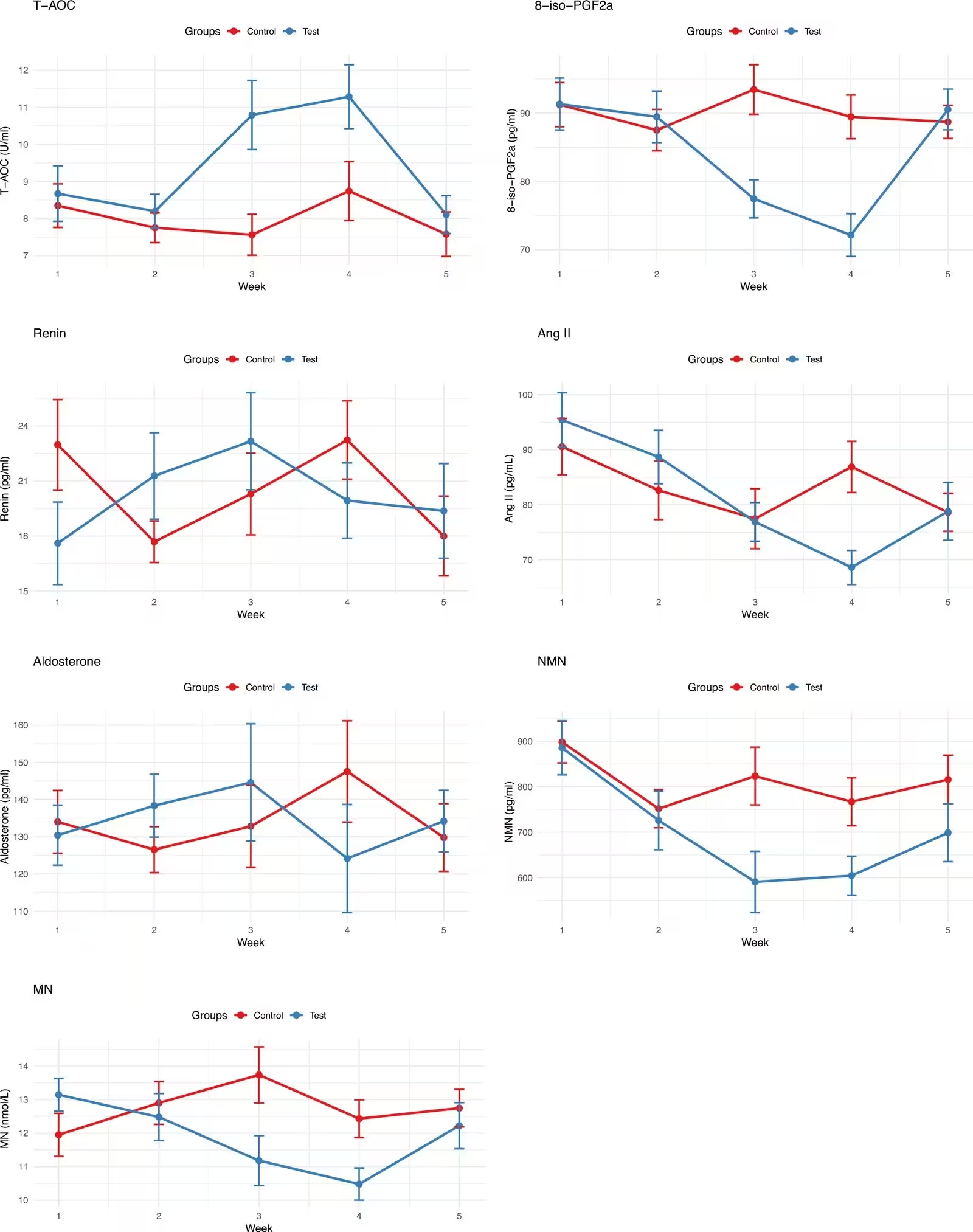
The physiological testing revealed notable shifts in stress hormones and chemical markers associated with cell damage. Circulating levels of normetanephrine and metanephrine, which are breakdown products of stress hormones linked to the sympathoadrenal system, dropped significantly in the chamber group during the lower simulated altitudes. This points to a reduction in stress-driven nervous system activity while sleeping.
The researchers also tracked components of the renin-angiotensin-aldosterone system, a hormone network that regulates blood pressure and fluid balance. Angiotensin II, a potent blood vessel constrictor, decreased significantly during the 2,000-meter simulated week. Furthermore, markers of oxidative stress such as 8-iso-PGF2alpha dropped while total antioxidant capacity rose, pointing to a temporary improvement in the body’s cellular defense against inflammation and tissue wear.
Why the Relief Disappeared Immediately Afterward
Despite these clear short-term benefits, the fifth week of the study brought a stark reality check. When the intervention stopped and both groups spent a final week sleeping under natural 3,500-meter conditions, all the physiological improvements vanished. Statistical comparisons showed no remaining differences between the two groups by the end of the recovery week.
This rapid reversal indicates that the positive effects are entirely acute and depend completely on continuous nightly exposure. The researchers emphasize that the chamber acts as a temporary symptomatic management tool rather than a permanent fix that trains the body for long-term acclimatization. Because the study involved a small male cohort, lacked a clinical trial registration prior to enrollment, and did not control for every environmental variable like ambient noise, the authors note that the findings should be viewed as preliminary and hypothesis-generating.
The research was published in International archives of occupational and environmental health on November 14, 2026.
This article has been fact checked for accuracy, with information verified against reputable sources. Learn more about us and our editorial process.
Last reviewed on .
Article history
- Latest version
Reference(s)
- Li, Shiyun., et al. “Short-term physiological responses to nocturnal pressurization in male high-altitude workers: an exploratory pilot randomized controlled trial.” International Archives of Occupational and Environmental Health, vol. 99, no. 10, November 14, 2026 Springer Science and Business Media LLC, doi: 10.1007/s00420-026-02254-y. <https://doi.org/10.1007/s00420-026-02254-y>.
Cite this page:
- Posted by Hassan Raza