Cognitive Fatigue Slows Reactions and Dents Movement Quality
A new crossover trial reveals that 15 minutes of light cycling or guided meditation work about as well as sitting quietly.

A demanding 30-minute cognitive test leaves healthy young adults with significantly slower reaction times and lower movement quality, but active cycling and guided meditation offer little measurable advantage over simple resting, according to a new study. Mental fatigue is an increasingly recognized state of tiredness and reduced motivation caused by prolonged cognitive effort, which can quietly undermine physical and mental performance.
To investigate how different recovery strategies stack up, researchers recruited 12 healthy young adults with an average age of 24.2 years to undergo a repeated-measures crossover trial. Over a two-week period, each participant completed three experimental sessions, published in PLOS One. Every session began with a well-established cognitive stressor known as the Stroop Test, where participants had to name the ink colors of printed color words rather than reading the words themselves for half an hour.
How Fatigue Impairs Movement and Reaction Time
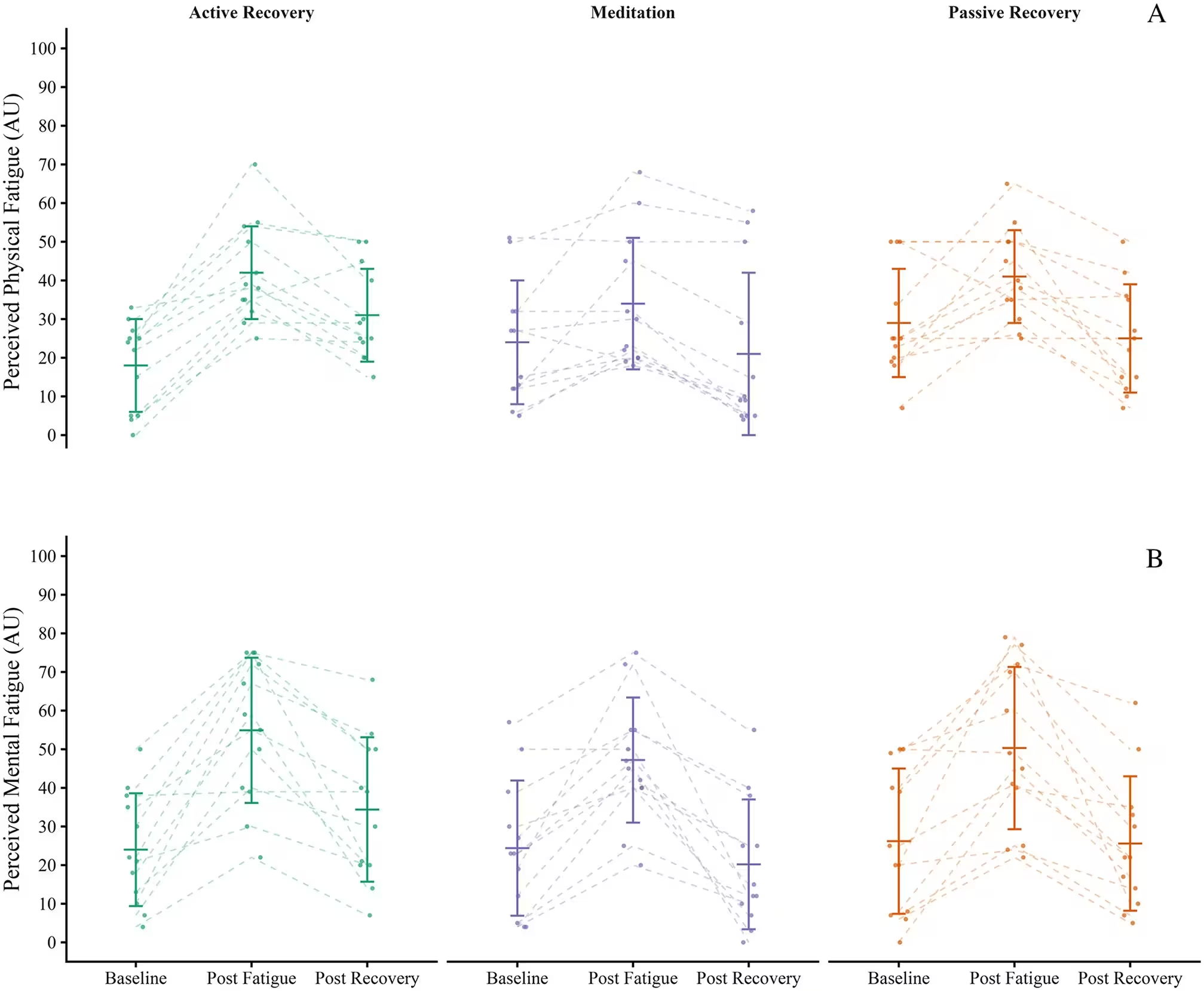
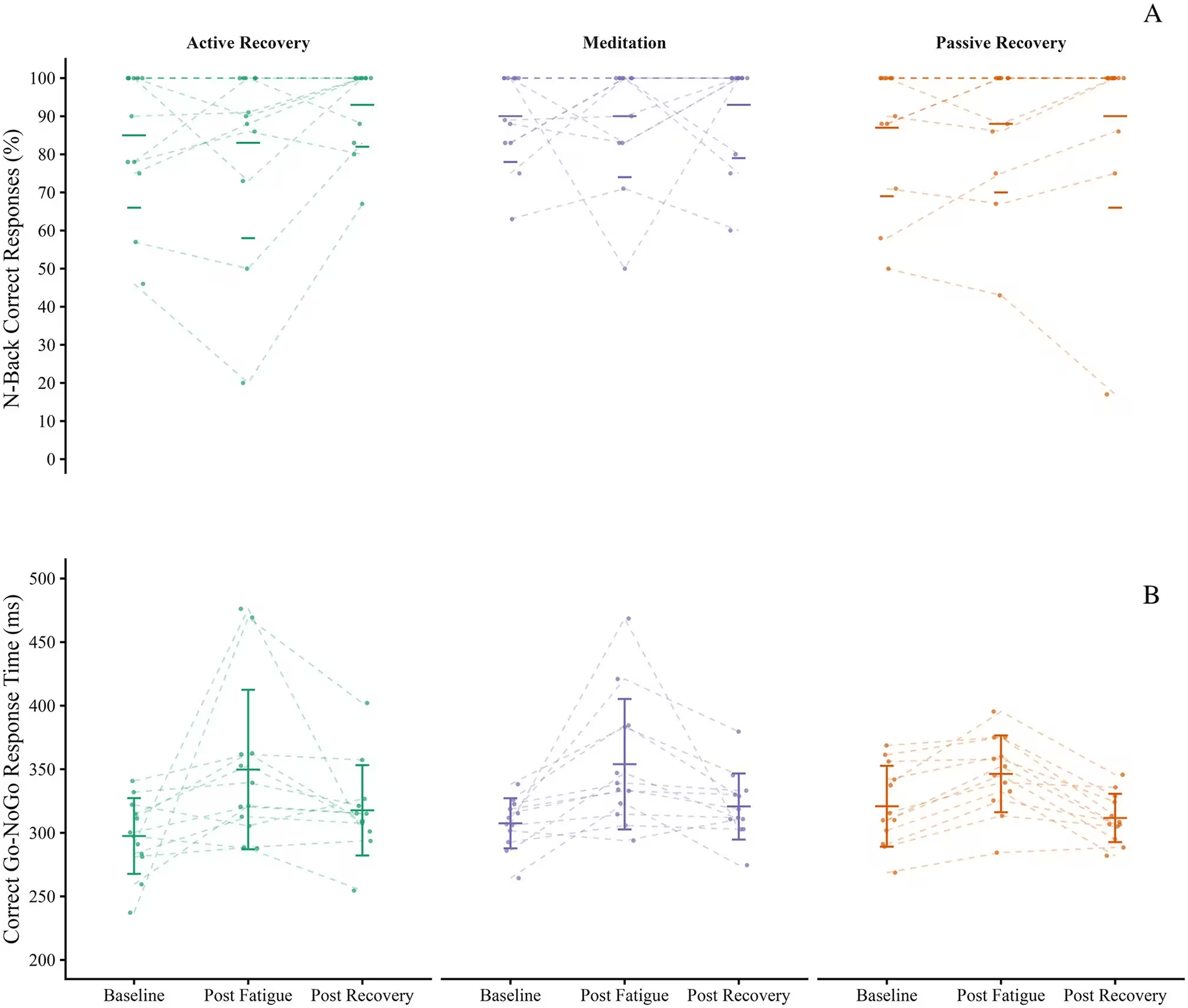
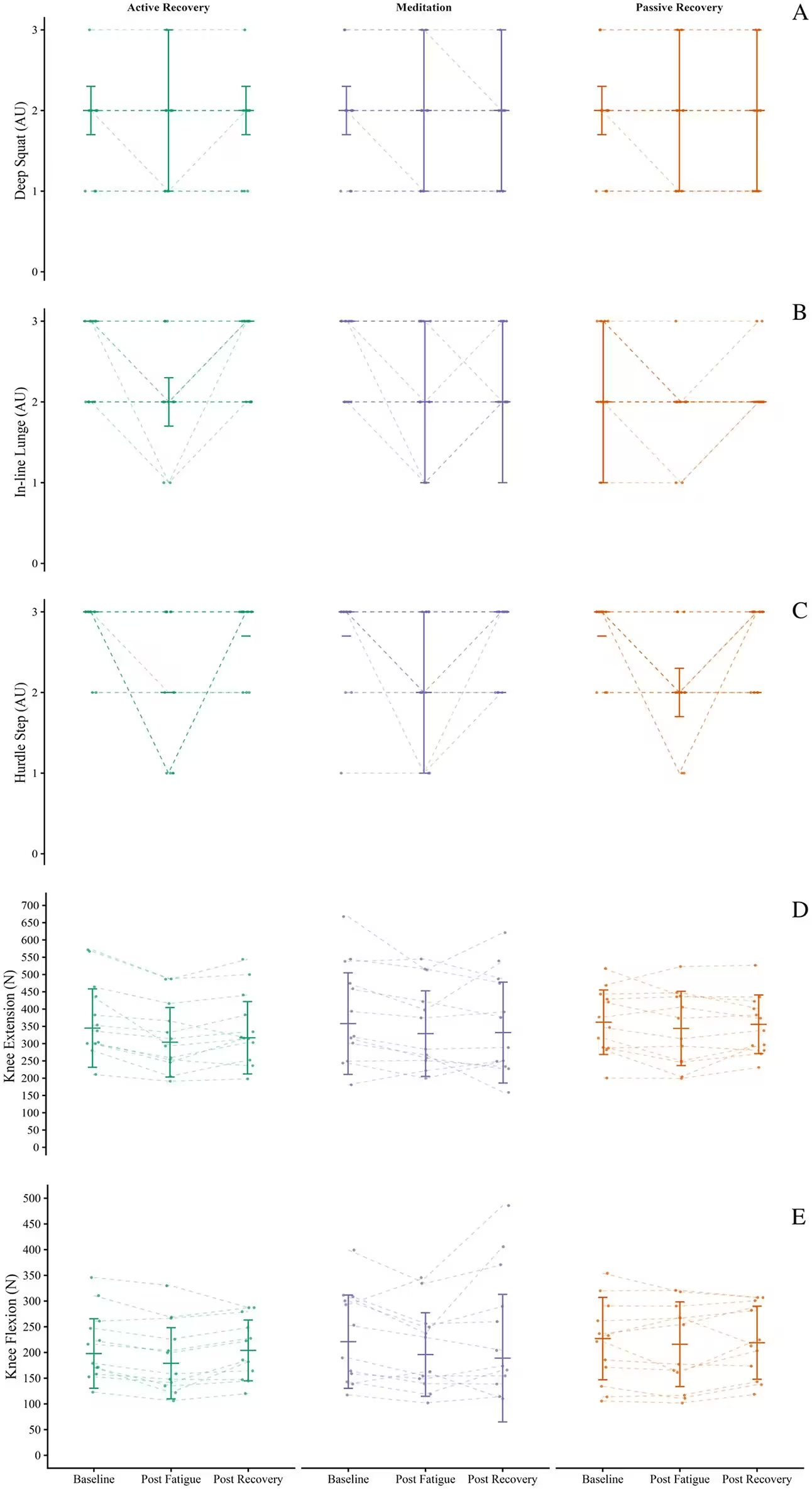
Following the 30-minute cognitive challenge, the participants experienced large increases in both perceived physical and mental fatigue. Average scores on visual analogue scales jumped notably, while response times on a digital Go/No-Go task slowed down from 309 milliseconds at baseline up to 350 milliseconds post-fatigue. Lower-limb movement quality, evaluated through components of the Functional Movement Screen such as the hurdle step and in-line lunge, also suffered distinct declines after the mental task.
The authors noted that these motor decrements highlight how mental strain reaches beyond the brain to influence physical coordination and postural control. Although isolated knee extensor and flexor strength showed downward shifts of 8 percent to 23 percent after the fatiguing task, these changes overlapped with the measurement error of handheld dynamometers, meaning they cannot be definitively separated from equipment noise.
Do Active Recovery and Meditation Speed Up Rest?
Once mental fatigue was successfully induced, participants spent 15 minutes undergoing one of three randomized recovery interventions. These included active recovery via 15 minutes of light cycling at 30 to 40 percent of heart rate reserve, 15 minutes of a guided body scan meditation sourced from a digital mindfulness platform, or 15 minutes of passive rest sitting quietly at a desk.
Across all three recovery conditions, most measured outcomes gradually bounced back toward baseline levels during the 15-minute interval. However, the statistical models revealed no clear superiority for active cycling or meditation over simple passive resting. For instance, the reduction in perceived mental fatigue differed by only 5.7 visual analogue units between active recovery and meditation, and by 4.2 units between active recovery and passive rest.
Why Light Exercise Might Not Overcome Brain Exhaustion
While previous work suggests that light physical activity can stimulate dopamine pathways and boost alertness, the authors propose that 15 minutes of cycling introduced unwanted physiological demands. The mild rise in core body temperature, cardiorespiratory effort, and sympathetic nervous system activity may have offset any neurochemical benefits by adding a layer of physical exertion.
Similarly, while meditation aims to engage top-down attentional control through the anterior cingulate cortex, it performed similarly to sitting quietly. The authors emphasize that because the study relied on a small sample of 12 participants and a feasibility-based design, the statistical power was limited, and the lack of significant differences between modalities should be viewed as exploratory.
What These Findings Mean for Daily Training and Therapy
The results underscore the reality that mental fatigue is a multidimensional state capable of degrading cognitive speed and complex movement patterns alike. While the data point toward natural recovery over short time windows regardless of the chosen relaxation method, the absence of adverse effects means individuals can safely choose recovery modalities based on personal preference.
Future research with larger cohorts and longer intervention periods will be needed to verify whether tailored recovery protocols can better protect athletes, students, and patients in neurorehabilitation from the hidden costs of mental exhaustion.
The research was published in PLOS One on November 16, 2026.
This article has been fact checked for accuracy, with information verified against reputable sources. Learn more about us and our editorial process.
Last reviewed on .
Article history
- Latest version
Reference(s)
- O’Brien, Simon., et al. “The effects of active recovery and meditation on perceived fatigue, cognitive function, and physical performance following mental fatigue: A randomised crossover study.” PLOS One, vol. 21, no. 11, November 16, 2026, pp. e0361991 Public Library of Science (PLoS), doi: 10.1371/journal.pone.0361991. <https://doi.org/10.1371/journal.pone.0361991>.
Cite this page:
- Posted by Hassan Raza