Brain Tumor Diagnosis Triggers Decade-Long Financial and Health Toll
A nationwide study reveals how grade 2 gliomas cause deep losses in paycheck income and work capacity, with burdens escalating sharply after radiation or chemotherapy begins.

Adults diagnosed with a slow-growing brain tumor face a decade-long financial and health toll that deepens significantly when active treatments begin, according to a recent nationwide study. Researchers followed 237 patients in Denmark with grade 2 isocitrate dehydrogenase-mutant glioma, a type of primary malignant brain tumor that typically strikes people of working age.
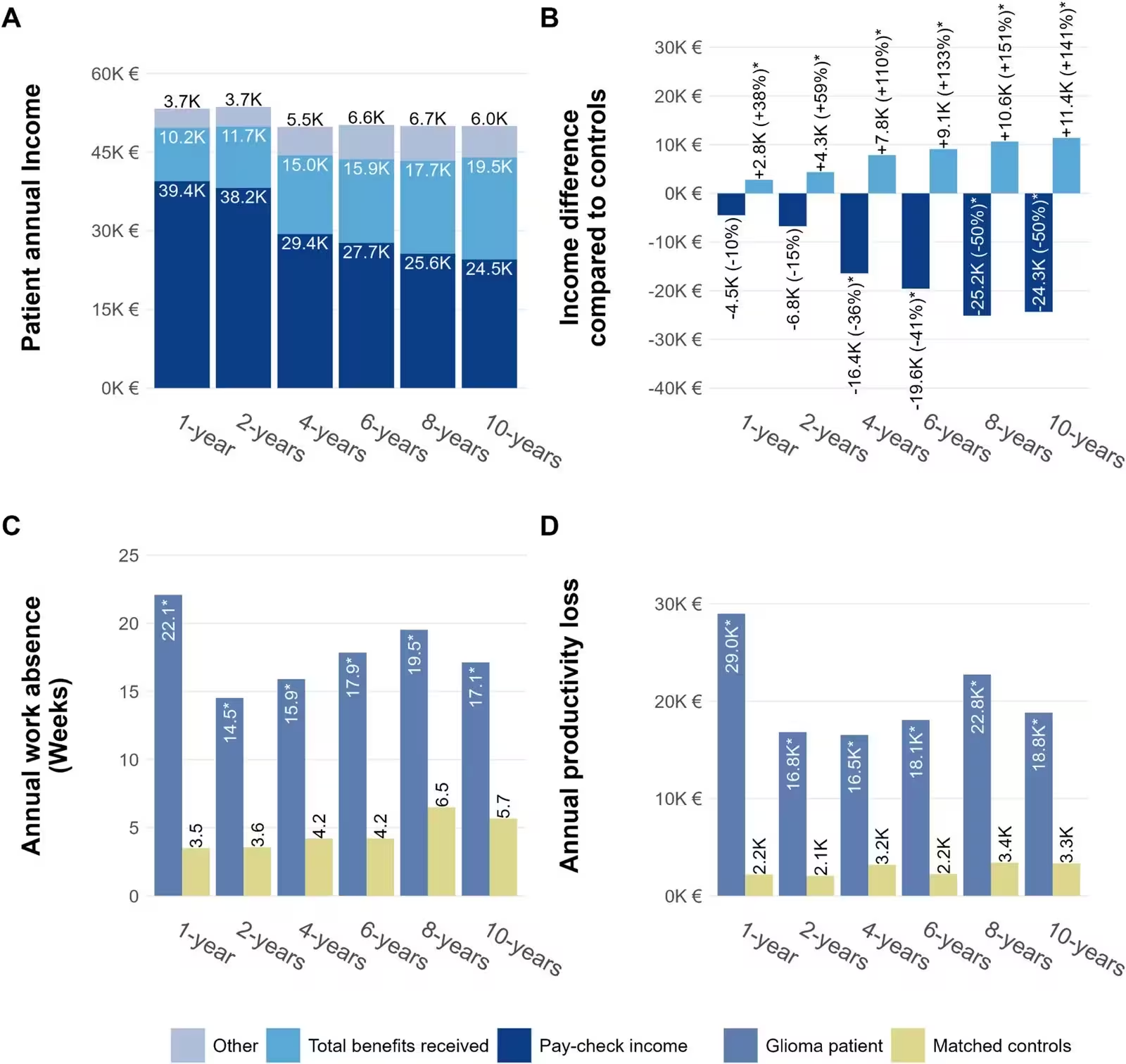
The investigation tracked patients initially managed with active observation, comparing their long-term outcomes against more than 1,100 matched population controls. Over a 10-year period, patients accumulated an average loss of 163,000 euros in paycheck income, alongside a combined excess burden of 347,000 euros stemming from public benefits, healthcare expenses, and lost productivity. The work published in the Journal of Neuro-Oncology details how these hidden costs evolve as patients navigate years of living with a generally incurable condition.
How Work and Income Change Over a Decade
While total household income appeared relatively stable on paper, this stability masked a stark shift in where the money came from. Public income support systems in Denmark buffered the direct financial shock, but paycheck earnings plummeted as employment rates dropped. Ten years after diagnosis, the employment rate among patients was 24 percentage points lower than that of matched controls, with 51 percent working compared to 75 percent for controls. An additional 23.9 percent of patients transitioned onto a disability pension.
During the first year following diagnosis, patients experienced an average of 18.6 excess weeks of work absence, representing a 531 percent increase over control participants. This disruption persisted throughout the follow-up period, with annual work absence running three to four times higher than control levels in subsequent years. Cumulative productivity losses over the full decade reached 172,900 euros per patient, representing a 645 percent excess compared to healthy peers.
Why Treatment Initiation Marks a Crucial Turning Point
The research team stratified the cohort by whether patients eventually received radiotherapy or chemotherapy, which served as a time-varying marker of disease progression. Patients who remained unexposed to these oncological treatments maintained relatively stable trajectories after year four. In contrast, those who initiated radiotherapy or chemotherapy experienced rapid declines in work capacity and substantially heavier economic burdens.
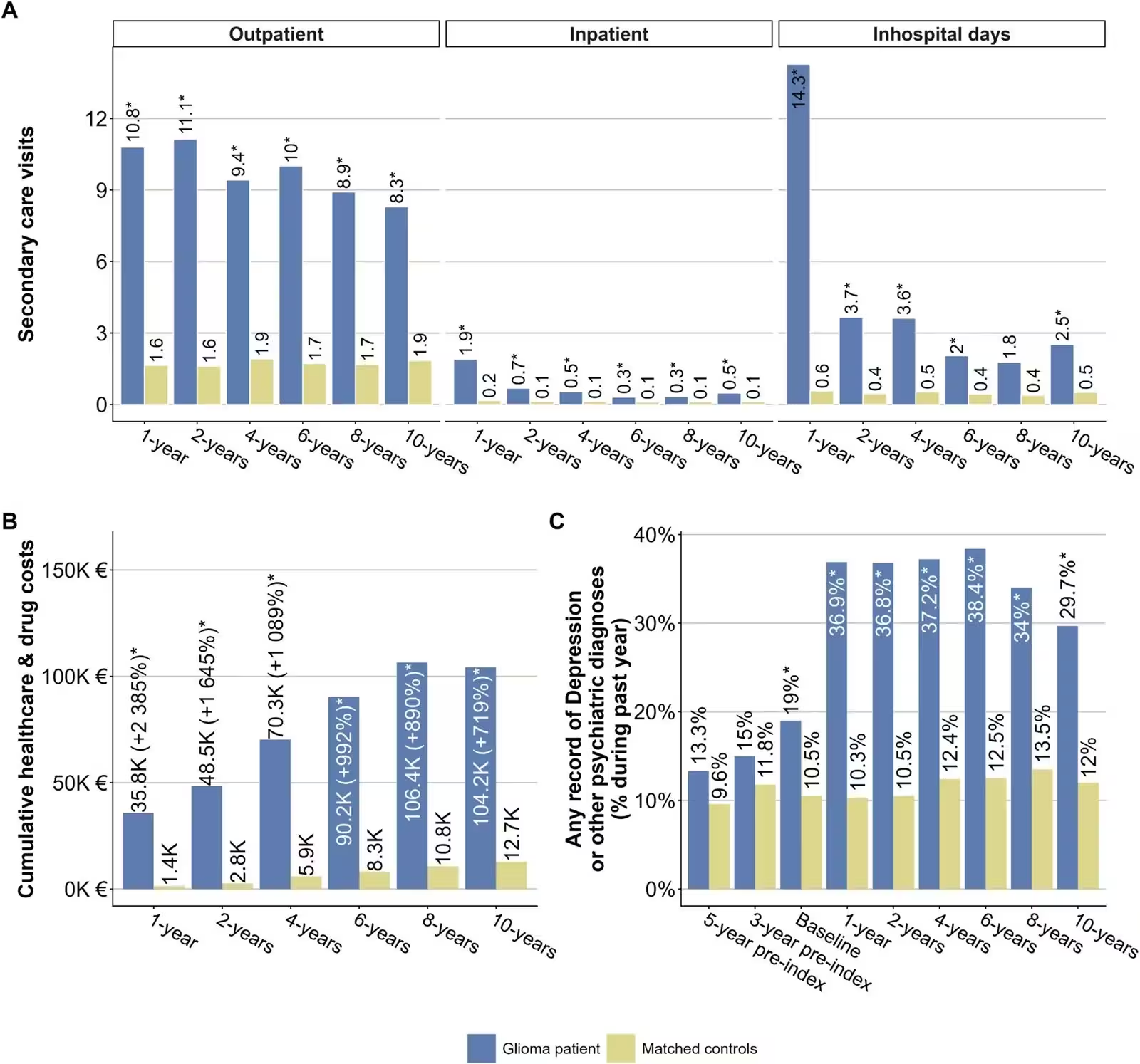
By year 10, cumulative excess public benefits were 2.6 times higher among treated patients compared to those who remained unexposed. Excess productivity losses for treated individuals reached 265,400 euros, roughly four times the loss seen in the unexposed group. Healthcare and drug costs were also between 2.4 and 2.8 times higher for patients who underwent radiation or chemotherapy.
What the Findings Reveal About Caregiver Spillover Strain
The study also examined the ripple effects on 113 partners of patients, comparing them with 550 matched partner controls. While partners generally maintained stable employment trajectories and personal incomes, those caring for patients who received radiotherapy or chemotherapy faced notable work disruptions. Partners of treated patients averaged 2.8 excess weeks of annual work absence, which was approximately twice the excess absence observed among partners of unexposed patients.
Furthermore, psychiatric diagnoses such as depression were significantly more frequent among patients both at baseline and throughout the 10-year follow-up. The authors note that the elevated pre-index psychiatric records likely reflect early cognitive symptoms and emotional distress stemming from the initial tumor manifestations rather than a distinct prior mental health condition.
What Are the Study Limits and Future Directions
Several limitations should be considered when interpreting the results. The strict inclusion criteria, which required patients to survive for at least six months without immediate treatment, mean the findings may not represent individuals who present with more aggressive disease at diagnosis. Additionally, because the data predates the introduction of newer targeted therapies for low-grade gliomas, future research will need to establish how emerging treatments alter these long-term socioeconomic trajectories.
The research was published in Journal of neuro-oncology on November 14, 2026.
This article has been fact checked for accuracy, with information verified against reputable sources. Learn more about us and our editorial process.
Last reviewed on .
Article history
- Latest version
Reference(s)
- Skjøth-Rasmussen, Jane., et al. “Long-term socioeconomic, psychiatric, and societal burden in patients with grade 2 mIDH glioma and partner spillover burden, worsening with disease progression and RT/CT initiation.” Journal of Neuro-Oncology, vol. 180, no. 2, November 14, 2026 Springer Science and Business Media LLC, doi: 10.1007/s11060-026-05858-z. <https://doi.org/10.1007/s11060-026-05858-z>.
Cite this page:
- Posted by Faisal Qureshi