Forty Studies Reveal Major Accuracy Gaps and Hidden Flaws in Popular Menstrual Tracking Apps
While sensor-augmented software improves fertile-window predictions, researchers warn that hidden algorithmic biases and a lack of clinical validation can create a misleading illusion of precision.

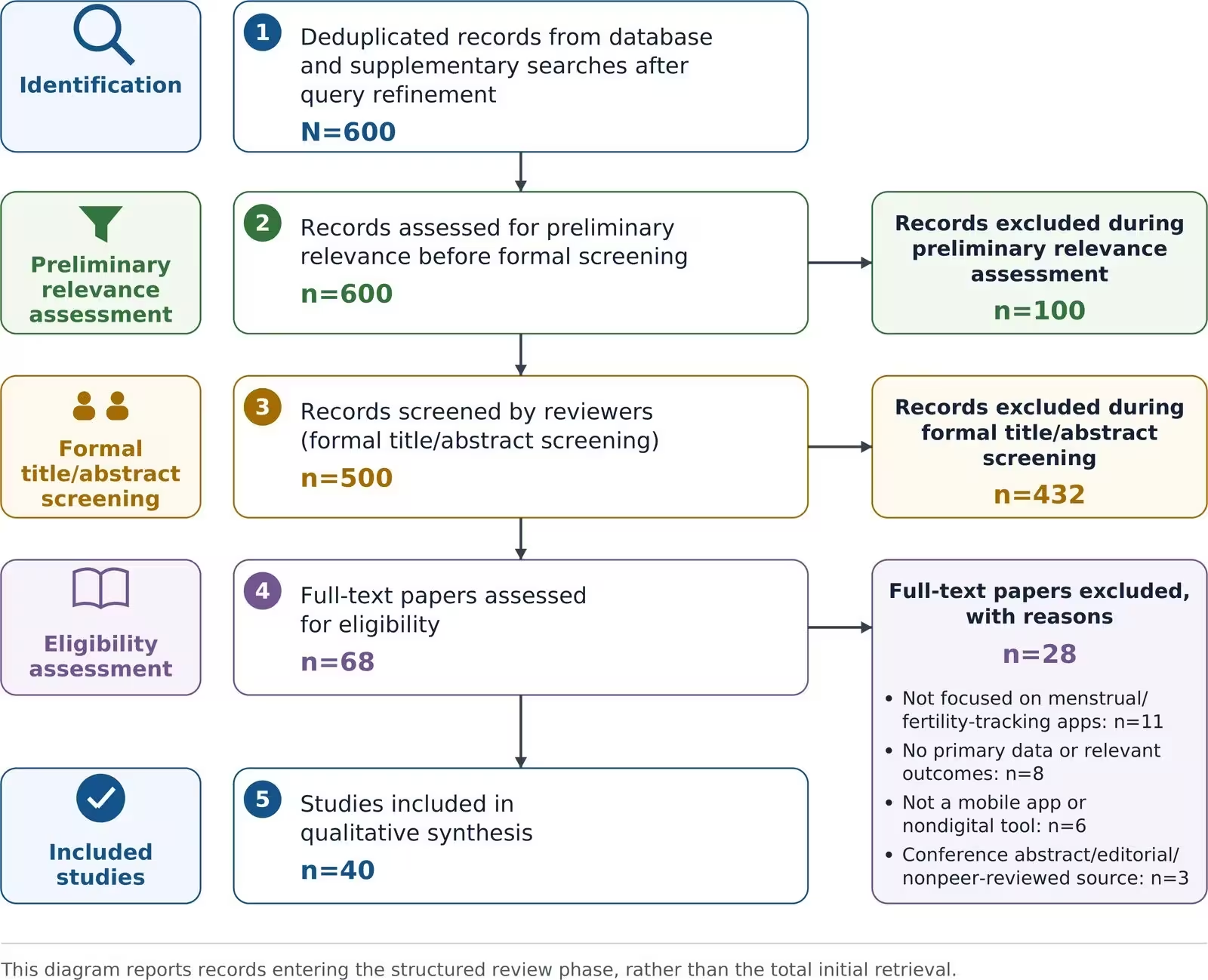
Millions of people rely on smartphone software to monitor their reproductive cycles, yet a comprehensive analysis of forty scientific studies reveals that many popular programs suffer from limited clinical oversight and struggle with irregular cycles. The investigation, which examined tools ranging from basic calendar calculators to advanced sensor-augmented programs, shows that while physiological tracking significantly improves precision, users frequently encounter an illusion of accuracy that can complicate family planning and personal health management.
Published in JMIR mHealth and uHealth, the narrative review was conducted by Tomasz Cedro and Wojciech Glinkowski from the Medical University of Warsaw and the Polish Telemedicine and eHealth Society. The researchers evaluated forty peer-reviewed papers published between January 2013 and October 2025, applying criteria inspired by health measurement and economic evaluation frameworks to understand how these digital technologies perform in real-world settings.
How Do Physiological Sensors Change Cycle Predictions?
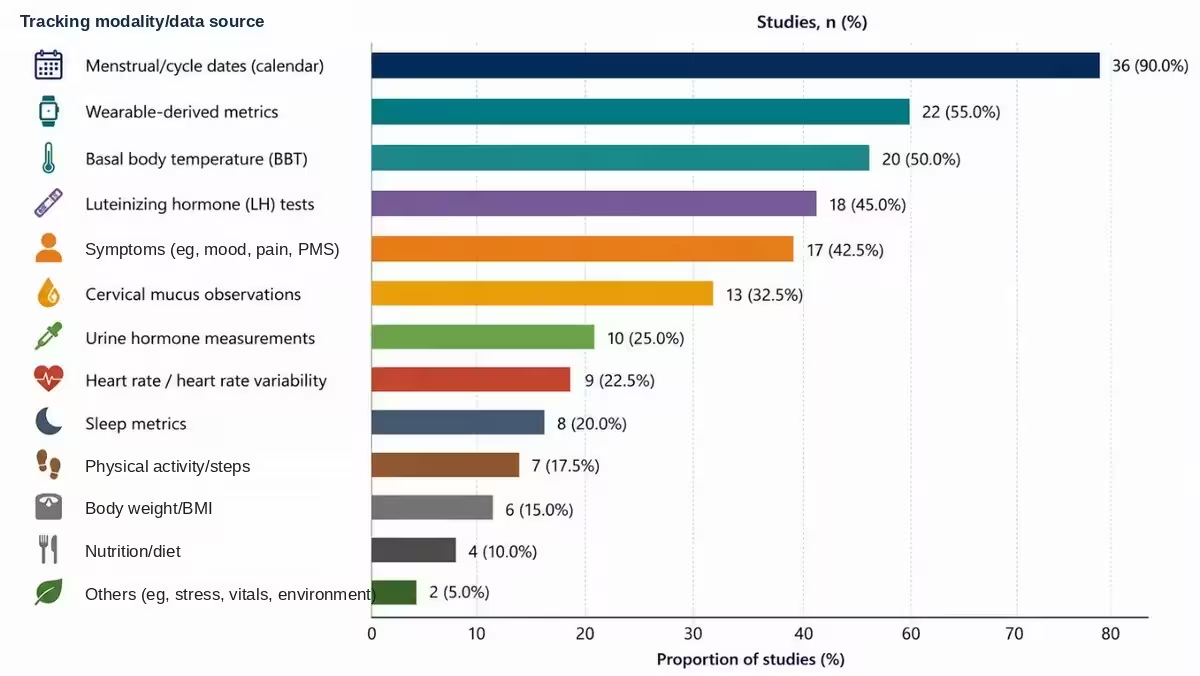
Traditional period trackers rely primarily on simple calendar averaging, which assumes every user follows a uniform schedule. However, modern smartphone tools increasingly incorporate biological metrics such as basal body temperature, hormone measurements, and wearable-derived vital signs including resting heart rate and skin temperature. The review found that these multiparameter approaches achieve much higher agreement with biological reference standards than calendar-only methods.
Under optimal conditions with consistent daily data entry, select advanced systems reported fertile-window prediction accuracies approaching eighty-five to ninety percent. Despite these technological leaps, the authors emphasize that human biology is inherently variable. Factors such as daily stress, shifting sleep schedules, viral illnesses, and natural aging mean that even sophisticated artificial intelligence algorithms can produce an illusion of exactness that exceeds real biological predictability.
Why Do Irregular Cycles Create Major Algorithmic Flaws?
A primary shortcoming identified in the published literature is the severe underrepresentation of users with nonregular menstrual patterns. Most predictive models were originally developed and tested using datasets from individuals with highly regular cycles. Consequently, individuals experiencing hormonal conditions such as polycystic ovary syndrome, perimenopausal hormonal shifts, or postpartum transitions often find app predictions inaccurate.
When predictions fail to align with a user’s actual physical experience, it frequently generates confusion, anxiety, and frustration. Qualitative findings in the reviewed data showed that inaccurate forecasts can damage user trust and drive high attrition rates as people abandon tools that fail to accommodate their unique biological rhythms.
Are Lifestyle Apps Equivalent to Regulated Medical Devices?
The investigation highlights a blurred line between casual lifestyle software and clinically validated medical tools. Only a small subset of tracking products has secured official regulatory clearance, such as Conformité Européenne marks in Europe or clearance from the US Food and Drug Administration, backed by formal clinical trials. The vast majority of commercially available software operates on proprietary, opaque models without rigorous peer-reviewed validation.
The authors argue that consumers and healthcare providers must view these programs primarily as decision-support and self-awareness technologies rather than autonomous diagnostic systems. Moving forward, digital health developers need to communicate uncertainty explicitly by offering predicted probability ranges rather than single deterministic dates, while incorporating more diverse user populations to ensure equitable reproductive health solutions for everyone.
The research was published in JMIR mHealth and uHealth on November 19, 2026.
This article has been fact checked for accuracy, with information verified against reputable sources. Learn more about us and our editorial process.
Last reviewed on .
Article history
- Latest version
Reference(s)
- Cedro, Tomasz., et al. “Mobile Apps for Women’s Physiology Tracking: Structured Narrative Review.” JMIR mHealth and uHealth, vol. 14, November 19, 2026, pp. e92968-e92968. JMIR Publications Inc., doi: 10.2196/92968. <https://doi.org/10.2196/92968>.
Cite this page:
- Posted by Hassan Raza