Socioeconomic Hardship and Household Vulnerability Drive Advanced Laryngeal Cancer Rates in US Counties
County-level data reveals hidden disparities in advanced laryngeal cancer, showing how specific neighborhood hardships outweigh broad composite vulnerability scores.
Neighborhood socioeconomic hardship and household vulnerability across one thousand eighty-five United States counties are linked to a significantly higher incidence and more advanced stages of laryngeal cancer, according to a retrospective cohort study. While public health officials often rely on broad composite vulnerability scores to allocate resources, researchers found that looking at specific community themes rather than overall rankings reveals hidden disparities that could better target life-saving interventions.
Laryngeal cancer accounts for roughly one-third of all head and neck malignancies worldwide. In the United States, an estimated thirteen thousand twenty new cases were diagnosed in two thousand twenty-five, affecting ten thousand one10 men and two thousand nine hundred ten women. Although overall age-adjusted incidence rates fell about two and a half percent between two thousand and two thousand nineteen, the disease burden remains deeply unequal across different communities and demographic groups.
Why Do Composite Vulnerability Scores Hide Hidden Cancer Risks?
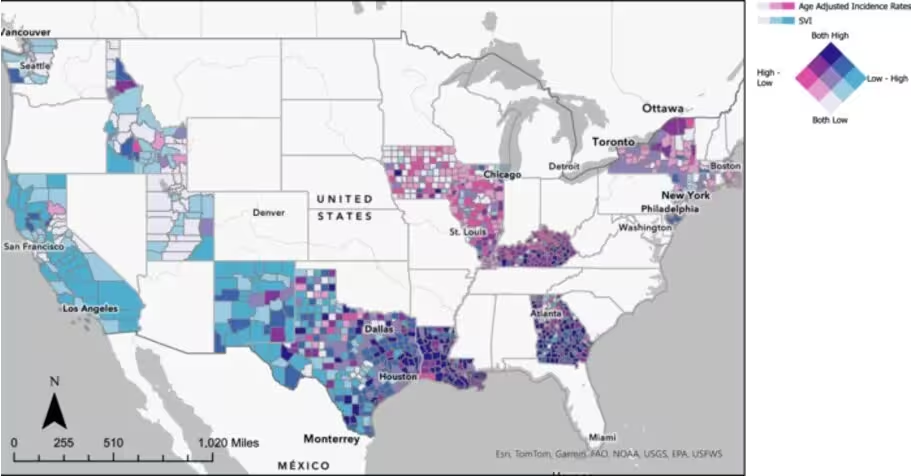
To investigate how neighborhood environments influence laryngeal cancer rates, Sandra Stinnett, MD, from the Department of Otolaryngology at the University of Pittsburgh School of Medicine, and her colleagues examined cancer data from the Surveillance, Epidemiology, and End Results program spanning from two thousand four to two thousand twenty. They matched these records with the two thousand twenty Centers for Disease Control and Prevention and Agency for Toxic Substances and Disease Registry Social Vulnerability Index, a census-based tool that ranks counties based on sixteen social factors grouped into four core themes: socioeconomic status, household characteristics, racial and ethnic minority status, and housing type and transportation. The work is published in OTO open.
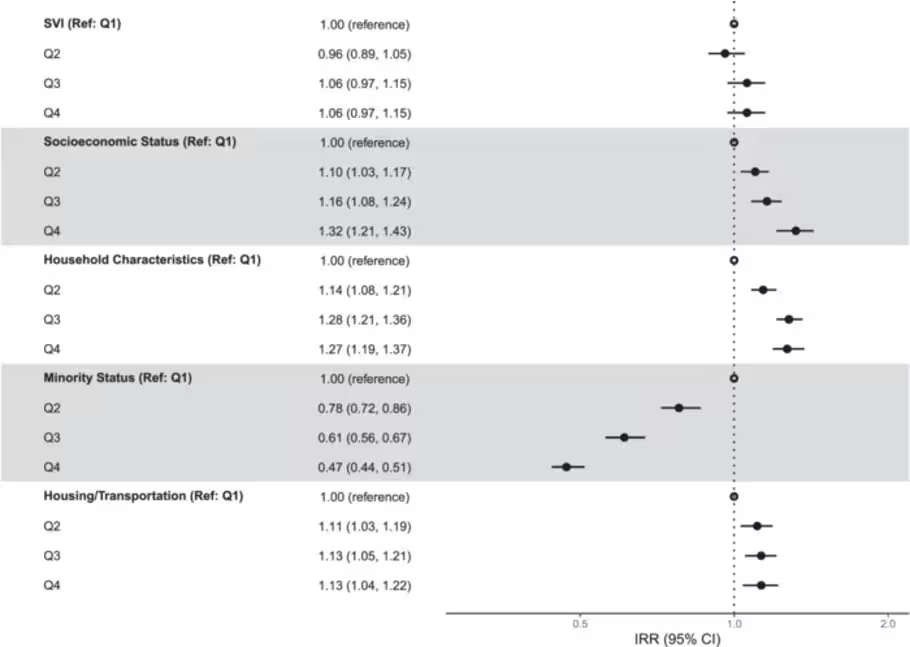
The research team calculated age-adjusted incidence rates and incidence rate ratios across vulnerability quartiles using quasi-Poisson regression while accounting for spatial autocorrelation and geographic variation. When looking solely at the composite Social Vulnerability Index score, the researchers observed no statistically significant association with overall laryngeal cancer incidence. Age-adjusted rates rose only modestly from two point fifty-three to two point seventy-one per one hundred thousand residents between the least and most vulnerable overall quartiles.
How Do Socioeconomic Hardship and Household Factors Drive Advanced Diagnoses?
However, examining individual vulnerability themes unveiled striking differences. Counties ranking in the highest quartile for socioeconomic vulnerability experienced an incidence rate ratio of one point thirty-two for overall laryngeal cancer compared to the lowest quartile. More concerningly, these high-hardship counties faced one point sixty times greater incidence of distant-stage disease, meaning the cancer had already spread to other parts of the body by the time of diagnosis.
Similarly, communities with high vulnerability in household characteristics, which includes factors like elderly residents, single-parent households, and limited English proficiency, showed a one point forty-six-fold increase in distant-stage diagnoses. The authors note that socioeconomically vulnerable populations frequently encounter severe barriers to primary and specialty care, lower rates of preventive health screenings, and prolonged delays in evaluating persistent symptoms like chronic hoarseness.
What Explains the Surprising Inverse Trend in Minority Communities?
One of the most unexpected discoveries involved the racial and ethnic minority status vulnerability theme, which showed an inverse relationship with cancer incidence. Counties in the lowest minority vulnerability quartile actually recorded the highest age-adjusted laryngeal cancer incidence at three point ninety-five per one hundred thousand residents, compared to two point forty per one hundred thousand in the most minority-dense counties.
The investigators suggest this pattern likely stems from lower smoking prevalence among Hispanic populations in the United States, alongside the healthy immigrant effect, where first-generation immigrants often exhibit lower rates of behavioral risk factors than native-born populations. Furthermore, structural barriers to healthcare access in high-minority communities may contribute to the under-ascertainment of cancer cases, artificially lowering recorded incidence rates in those areas.
Geographically weighted regression also highlighted regional clusters where high social vulnerability did not automatically translate to elevated cancer rates. States such as California, Utah, and Washington maintained high overall vulnerability scores alongside relatively low laryngeal cancer incidence, pointing to the potential protective effect of robust state-level tobacco control policies and Medicaid expansion programs that reduce financial barriers to care.
What Are the Limitations and Next Steps for Targeted Healthcare Policy?
The authors acknowledge several limitations, including the ecological design of the study, which relies on county-level measures rather than individual patient data, raising the possibility of an ecological fallacy. Additionally, applying a cross-sectional two thousand twenty vulnerability index to cancer incidence data spanning over a decade creates a temporal mismatch. Future research will need to incorporate individual behavioral risk factors and explore intersectional vulnerabilities, such as the compounding challenges faced by rural minority populations, to guide more equitable cancer prevention and early-detection programs.
The research was published in OTO open on November 19, 2026.
This article has been fact checked for accuracy, with information verified against reputable sources. Learn more about us and our editorial process.
Last reviewed on .
Article history
- Latest version
Reference(s)
- Stinnett, Sandra., et al. “A Look at Laryngeal Cancer Through the Lens of the Social Vulnerability Index.” OTO Open, vol. 10, no. 4, November 19, 2026 Wiley, doi: 10.1002/oto2.70319. <https://doi.org/10.1002/oto2.70319>.
- Posted by Tariq Hassan