Transportation and Housing Hurdles Triple Breast Cancer Medication Gaps
New data from 960 patients reveals how everyday social needs directly threaten long-term cancer treatment consistency.

When patients fighting nonmetastatic breast cancer struggle with housing stability or getting to appointments, their lifesaving medication schedules often fall apart. Researchers tracking hundreds of patients at an urban medical center found that everyday hurdles outside the clinic walls significantly disrupt the consistent use of hormone-blocking therapies, revealing a hidden barrier to long-term cancer survival.
How Unmet Daily Needs Derail Cancer Treatments
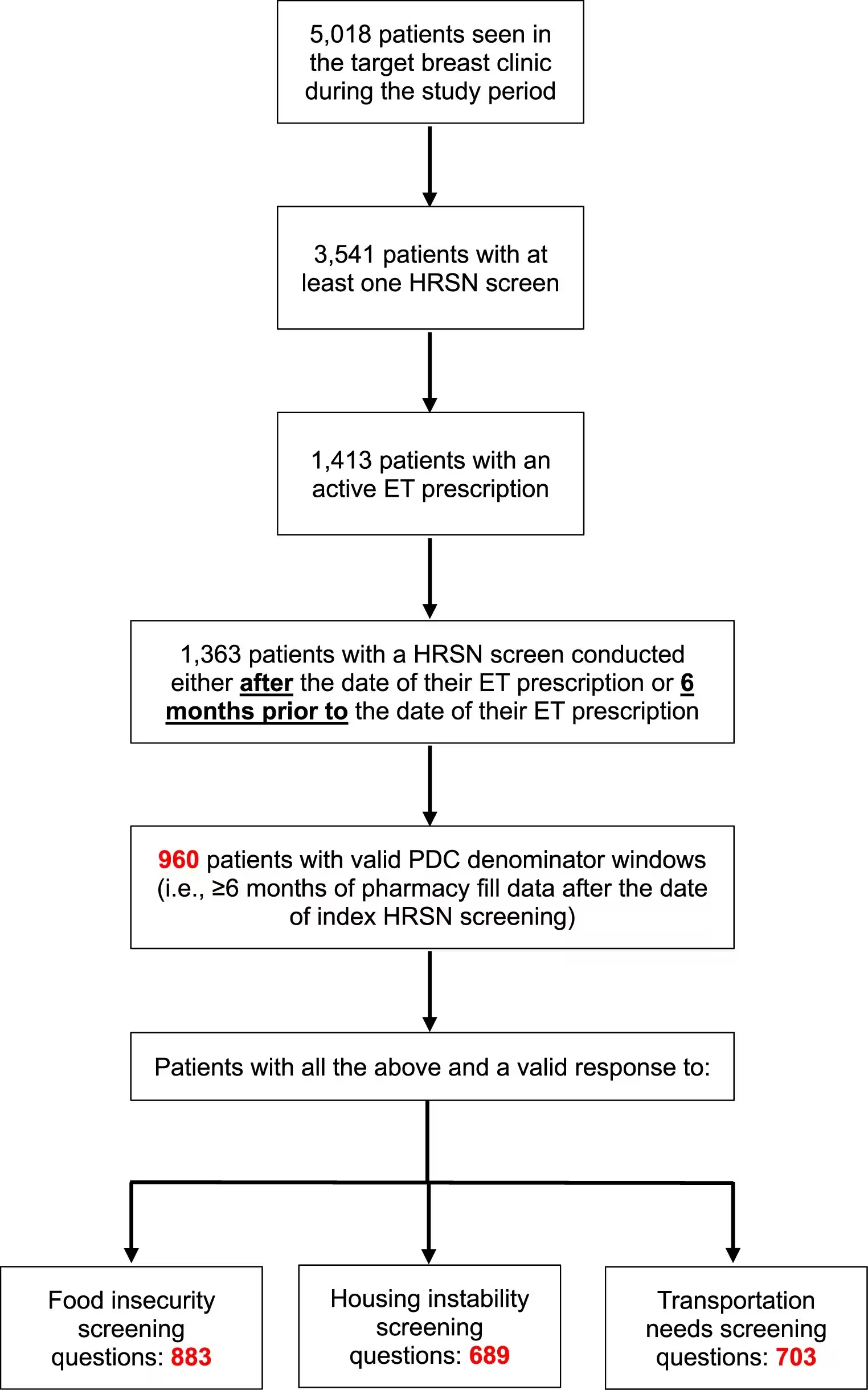
Standard care for hormone receptor-positive breast cancer typically involves five to ten years of adjuvant endocrine therapy, a category of medication designed to dramatically lower the chance of disease recurrence and improve overall survival. Yet maintaining this routine over years proves remarkably difficult for many individuals. While previous medical research focused heavily on drug side effects or patient age, a team of investigators sought to understand how non-medical social and economic hardships impact medication adherence. Led by Nadia Liyanage-Don and colleagues, the observational study published in Breast Cancer Research and Treatment analyzed electronic health record data from 960 adults treated at NewYork-Presbyterian and Columbia University Irving Medical Center between January 2022 and October 2024.
The study cohort reflected a highly diverse urban population, with a median patient age of 67 years. Nearly all participants were female, about 41 percent identified as Hispanic, 12 percent as non-Hispanic Black, and 38 percent preferred speaking a language other than English. Furthermore, roughly 67 percent of the patients relied on public insurance like Medicaid or Medicare, capturing a vulnerable demographic frequently affected by systemic healthcare disparities.
Transportation Barriers Triple the Risk of Missed Doses
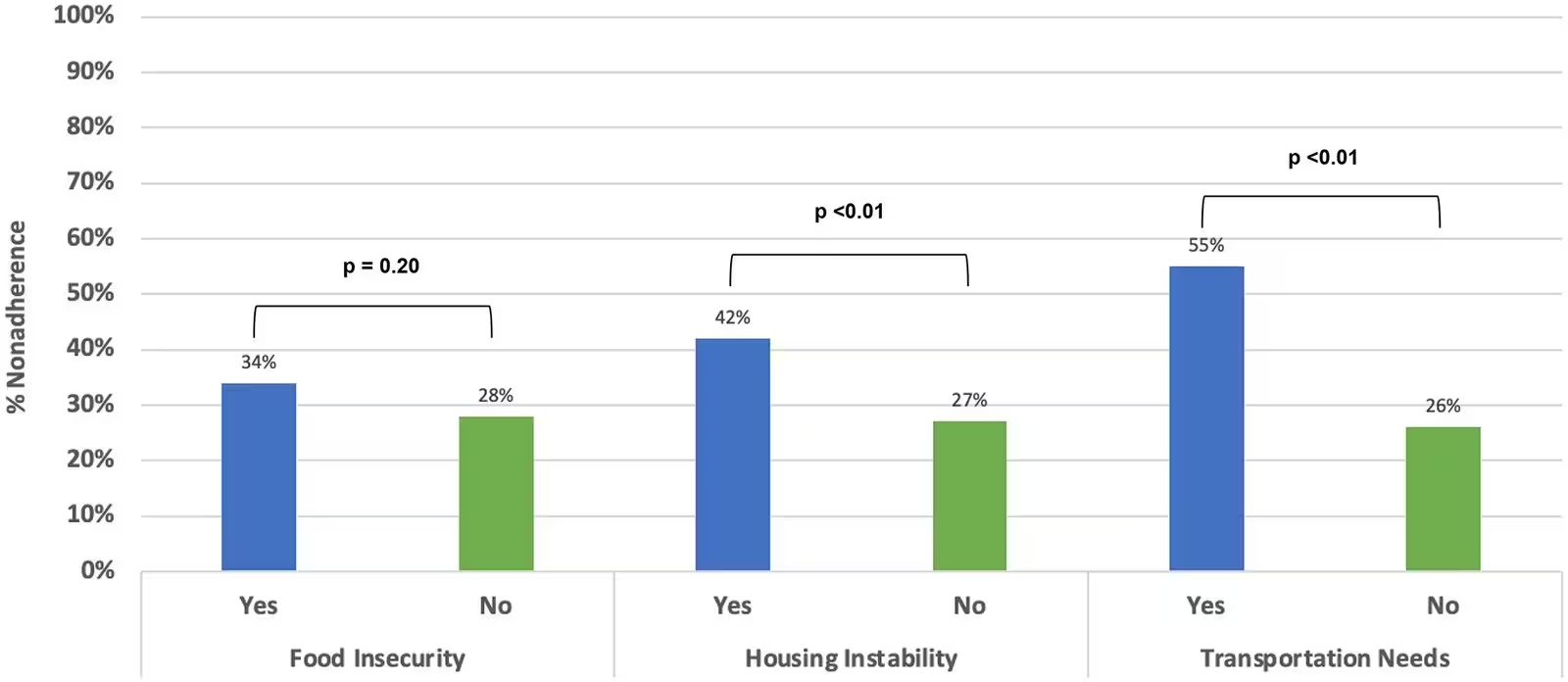
To measure treatment consistency, the researchers utilized pharmacy fill data to calculate the proportion of days covered over a six-month window following social needs screenings. Individuals with a proportion below 80 percent were classified as nonadherent. Overall, 275 patients, amounting to 29 percent of the group, fell into this nonadherent category during the observation period.
Standardized questionnaires administered through digital patient portals or clinical visits revealed that 15 percent of the participants experienced food insecurity, 10 percent faced housing instability, and 6 percent reported transportation needs. After adjusting for variables such as age, race, ethnicity, insurance type, cancer stage, and total medication count, the statistical models demonstrated a stark divergence among these hardships. Transportation needs emerged as the strongest predictor, associating with more than triple the odds of nonadherence. Housing instability nearly doubled the odds of missed medication fills. Interestingly, food insecurity showed a positive association in raw numbers but did not reach statistical significance in fully adjusted models.
Why Missing Stability Translates to Missed Medications
Unmet social needs create complex daily obstacles that force individuals to constantly reallocate limited financial and mental resources. Housing instability introduces chaotic living routines, financial strain from rent or mortgage pressures, and a lack of secure places to store prescription medicines. Similarly, lacking reliable transportation makes traveling to distant pharmacies or routine oncology appointments exceptionally challenging, frequently resulting in delayed refills or missed clinical check-ins.
The authors note several important limitations to keep in mind when interpreting these findings. Because the investigation relied on a convenience sample at a single academic center serving a predominantly Hispanic community in Upper Manhattan, the results may not generalize neatly to other geographic regions or demographic groups. Additionally, the cross-sectional design prevents researchers from establishing direct causation between social hardships and medication skipping. Finally, a portion of the cohort had missing data regarding cancer stage or incomplete pharmacy records, though sensitivity analyses excluding these individuals yielded consistent patterns.
What These Findings Mean for Future Oncology Care
Integrating social needs screening directly into routine oncology workflows provides health systems with an unprecedented opportunity to spot vulnerable patients early. By identifying housing and transit barriers before treatment lapses occur, hospitals can deploy targeted interventions such as active social work referrals, transit assistance programs, or mail-order prescription services. Bridging the gap between clinical medicine and everyday social stability could ultimately help more patients complete their prescribed therapies and protect their long-term health outcomes.
The research was published in Breast cancer research and treatment on November 14, 2026.
This article has been fact checked for accuracy, with information verified against reputable sources. Learn more about us and our editorial process.
Last reviewed on .
Article history
- Latest version
Reference(s)
- Liyanage-Don, Nadia., et al. “Association between screen-detected health-related social needs and nonadherence to endocrine therapy in patients with nonmetastatic breast cancer: an observational study.” Breast Cancer Research and Treatment, vol. 220, no. 1, November 14, 2026 Springer Science and Business Media LLC, doi: 10.1007/s10549-026-08080-7. <https://doi.org/10.1007/s10549-026-08080-7>.
- Posted by Sana Malik