England Lyme Disease Rates Surge Past Official Tallies in New Study
A comprehensive review of primary care records reveals that true infection rates are nearly triple official laboratory figures.

Official health statistics are severely underestimating how many people contract Lyme disease in England each year because most patients are diagnosed and treated by general practitioners without ever needing a laboratory blood test. While the national reference laboratory records roughly one thousand confirmed cases annually, a comprehensive health data review reveals that the true burden is nearly three times higher than previously calculated.
Why Official Tick-Borne Disease Counts Miss Thousands of Patients
Lyme disease is the most common tick-borne infection in England, spread primarily through the bite of infected Ixodes ricinus ticks carrying pathogenic bacteria belonging to the Borrelia burgdorferi sensu lato genospecies complex. The infection frequently announces itself with a distinct expanding skin rash known as erythema migrans, which clinicians can diagnose visually without laboratory confirmation. Because official surveillance figures rely strictly on positive test results reported to the UK Health Security Agency, patients treated in local clinics are routinely left out of national tallies.
To capture these unrecorded illnesses, a team of public health researchers analyzed medical records from 2013 through 2024 to determine a revised correction figure, known as a multiplication factor, which translates laboratory numbers into total community cases. The findings were published in PLOS One by Janie Olver and colleagues, who compared reference laboratory submissions with primary care consultations across millions of patient records.
How Primary Care Trends and Correction Factors Were Calculated
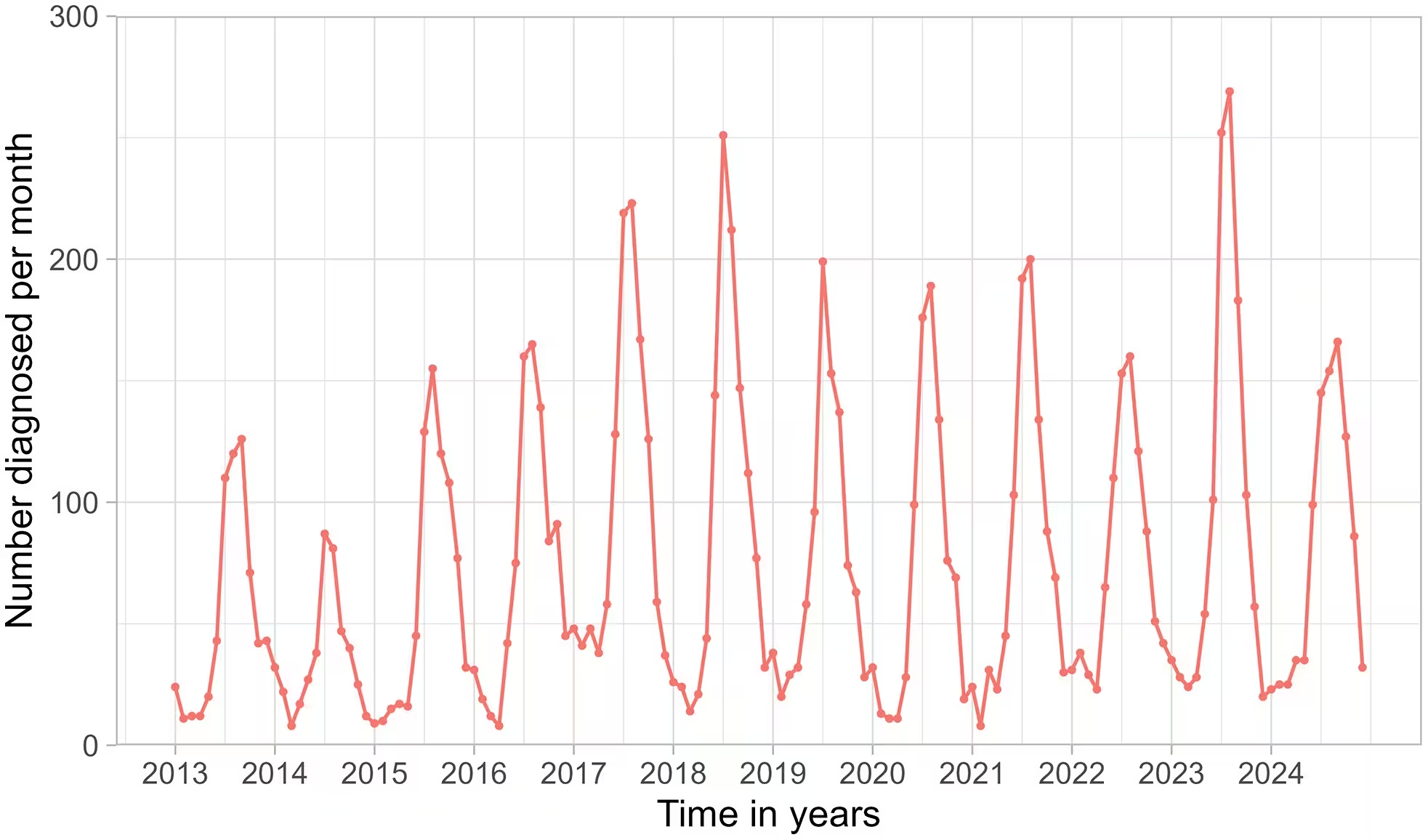
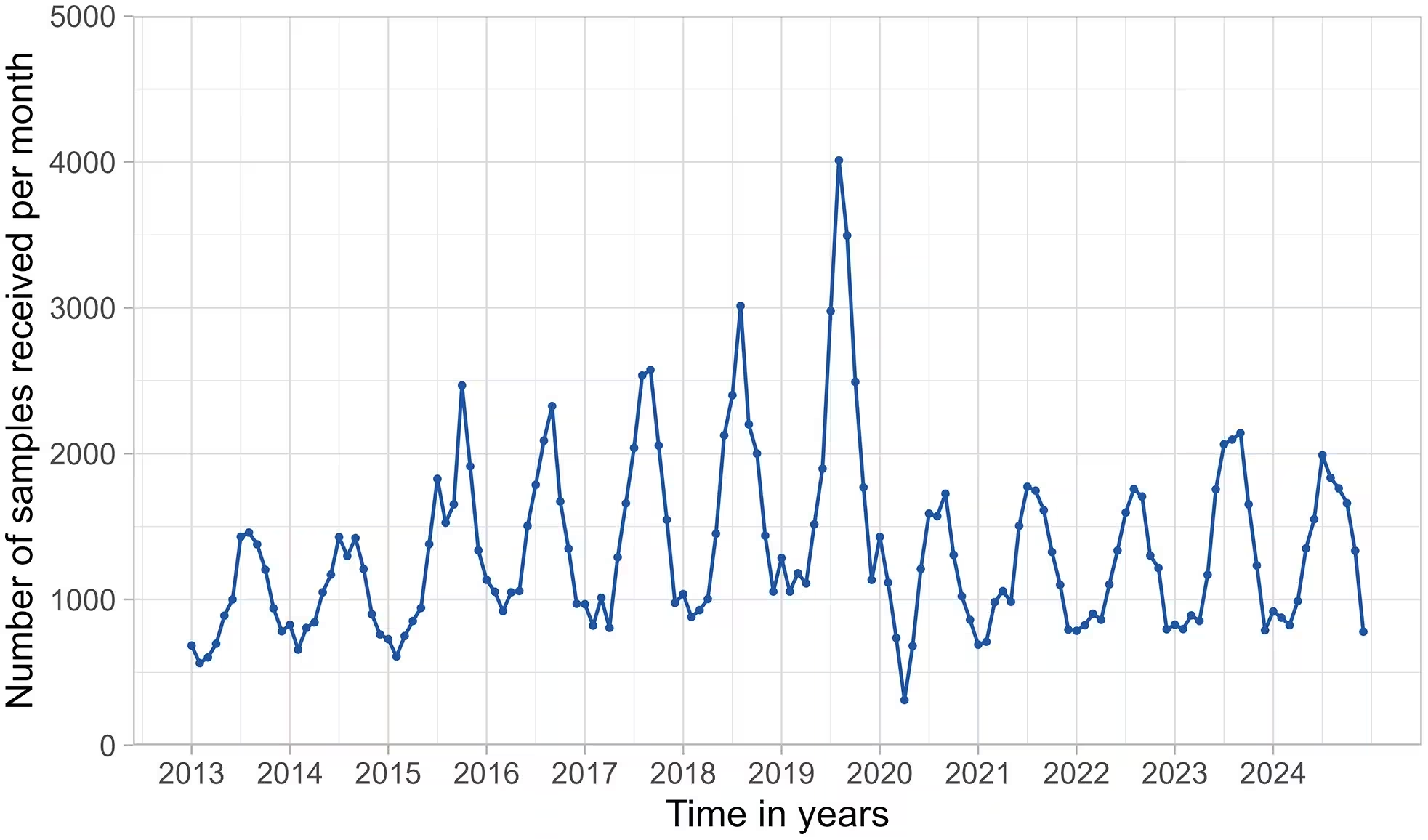
The research team examined two major data streams covering the twelve-year study period. First, they evaluated 10,718 laboratory-confirmed cases managed by the national reference laboratory. Second, they analyzed 15,771 primary care records from the Clinical Practice Research Datalink Aurum database, which represents roughly 29 percent of the English population. To maintain strict accuracy and filter out unrelated rashes or mild symptoms, the authors applied a dual-criteria rule that required both a specific clinical medical code for Lyme disease and a matching prescription for recommended antibiotics during the same consultation.
The analysis revealed a striking divergence between the two datasets. While the number of laboratory-confirmed cases remained relatively flat, hovering around 950 cases per year, diagnoses within primary care climbed steadily before stabilizing after 2020. The multiplication factor, which stood at roughly 2.35 in older historical studies from 1998 to 2016, jumped significantly over the course of the decade. By the 2020 to 2024 period, the average multiplication factor had risen to 6.20, reflecting a greater proportion of patients being diagnosed and treated directly in community clinics.
What the Revised Numbers Mean for Public Health Tracking
Applying this updated multiplication factor transforms the epidemiological picture in England. For 2024, when the reference laboratory reported 959 confirmed cases, the revised calculation yields an estimated 5,946 total acute cases. This shifts the estimated national incidence from 1.69 cases per 100,000 people up to 10.1 cases per 100,000 people. Despite this substantial upward revision, England’s infection rate remains much lower than those reported in other northern European nations, such as France and Germany, where rates frequently exceed 80 to 200 cases per 100,000 residents.
The authors note several limitations in their work, including the inability to link individual primary care and laboratory datasets directly due to anonymisation protocols, as well as the potential for mild overestimation caused by clinicians using “suspected” diagnostic codes during virtual consultations, particularly during the COVID-19 pandemic lockdowns. Even with these caveats, the updated figures provide health authorities with a more realistic foundation for resource allocation, clinical education, and public awareness campaigns aimed at preventing tick bites during peak summer months.
The research was published in PLOS One on November 16, 2026.
This article has been fact checked for accuracy, with information verified against reputable sources. Learn more about us and our editorial process.
Last reviewed on .
Article history
- Latest version
Reference(s)
- Olver, Janie., et al. “Trends in Lyme disease incidence in England, 2013 to 2024.” PLOS One, vol. 21, no. 11, November 16, 2026, pp. e0362881 Public Library of Science (PLoS), doi: 10.1371/journal.pone.0362881. <https://doi.org/10.1371/journal.pone.0362881>.
Cite this page:
- Posted by David Anderson