Teleoperation Could Let Companies Run Local Excavators From 4,000 Miles Away
Remote operators can now control excavators, forklifts and humanoid robots from thousands of miles away, letting firms staff local jobs via the internet.
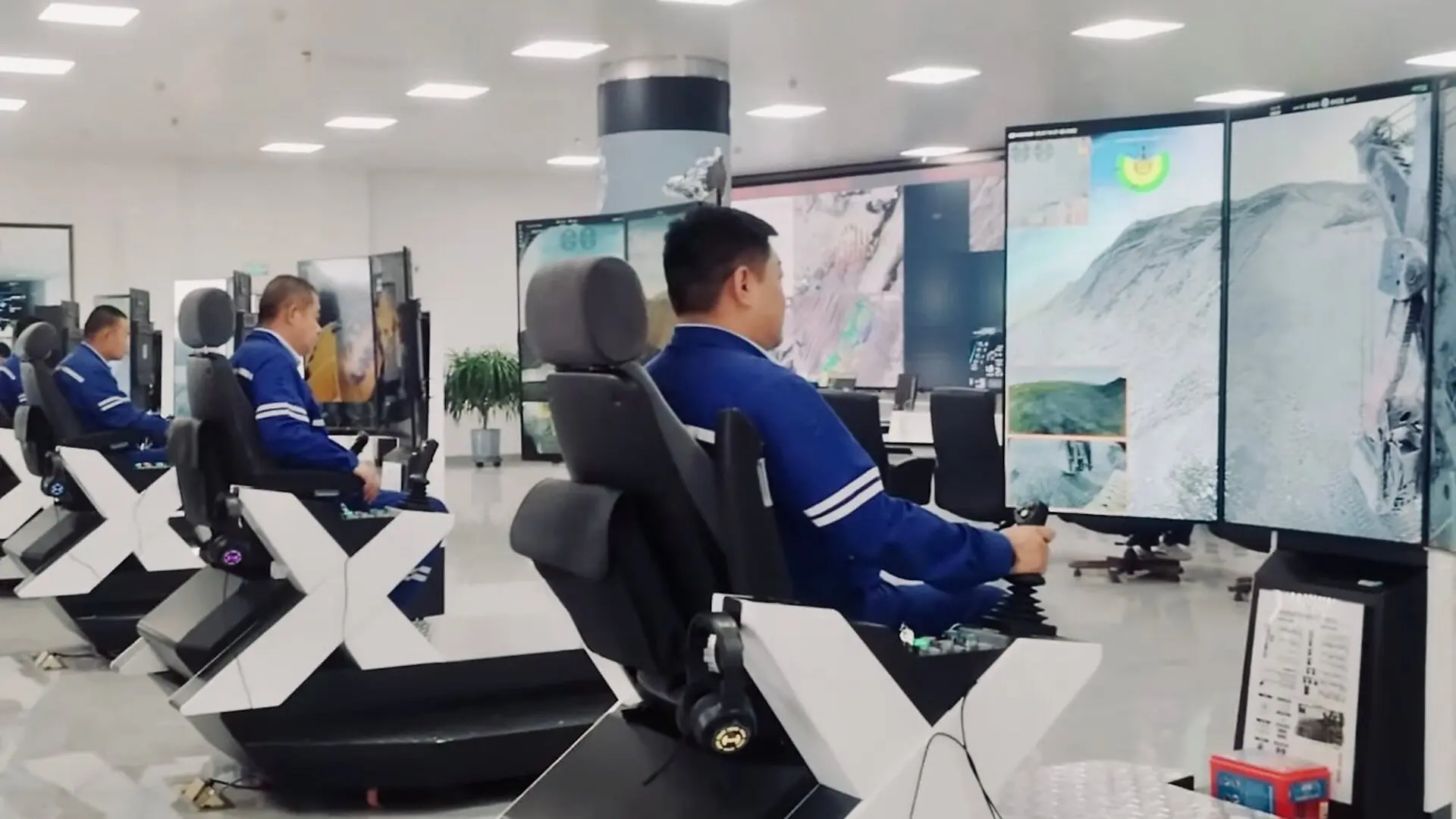
In the past, firms shifted entire production lines abroad to cut wages. Today, operators located thousands of kilometres away can steer excavators, forklifts and even humanoid robots through an internet link.
When potassium sulfate – a fertilizer essential for global agriculture – is packaged in Xinjiang, China, the sight is striking because the dust obscures almost everything. The region hosts the world’s biggest deposit of the mineral, and the sheer volume stored in warehouses creates dust plumes so dense that workers must manoeuvre heavy equipment by touch alone.
Seeing Through the Dust With Remote Operation
BuilderX Robotics, a Chinese technology firm, has introduced a solution that cuts through the haze and removes personnel from the warehouse floor. Their system equips excavators, loaders and similar machines with low‑light cameras that function like night‑vision in dusty environments. Operators sit in a remote control room, surrounded by video‑game‑style consoles, and steer the equipment over a 5G or satellite link.
This method, known as teleoperation, could reshape labour markets worldwide.
Global Examples of Teleoperated Workflows
In Japan, more than three hundred convenience stores are restocked by robots overseen – and occasionally controlled – by staff in the Philippines. Düsseldorf airport plans to trial shuttles piloted remotely, while a startup in Atlanta sells robot security guards operated from afar. Last summer, a French surgeon performed a remote‑controlled operation on a patient in India.
Although the practice of assigning remote operators to local tasks is not yet routine, Oxford’s internet‑geography professor Mark Graham warns that the technology may extend the long‑standing pattern of outsourcing to jobs traditionally deemed “inherently local”.
“The novelty lies not in remote labour itself but in the types of tasks that can now be pulled into a planetary workforce,” Graham told SingularityHub. “When that happens, the usual pressures of wage arbitrage, control and fragmentation will follow.”
BuilderX’s Teleoperation Platform
Shaolong Sui, a Stanford‑trained mechanical engineer, founded BuilderX in 2018 to address a widening shortage of skilled operators in Asia’s construction sector. “Young people in China are reluctant to take on dusty, hazardous jobs,” he explained. Rather than chasing full autonomy, Sui focused on teleoperation as a pragmatic bridge to safer work environments, leveraging inexpensive sensors and emerging 5G networks. A prototype emerged in 2019, and today the company supports remote control of fourteen types of heavy machinery, from excavators to bulldozers.
Sui emphasises that the system is intended to improve conditions for frontline workers. He frequently mentions the goal of extracting operators from dangerous sites. “These workers deserve a better life,” he said.
BuilderX’s control stations transform a gritty construction yard into an air‑conditioned office with coffee breaks and restrooms. The interface also enables senior citizens and people with disabilities to operate large machines. A video shows a Japanese woman piloting an excavator while displaying intricate nail art – a luxury she claims was impossible when she worked on the ground.
“It’s a much safer workplace, and the lifestyle benefits include staying clean and comfortable after a shift,” Sui added.
Health Benefits and New Forms of Risk
Removing operators from Xinjiang’s dusty warehouses could mitigate health hazards; research links high potassium dust exposure to chronic bronchitis. However, Graham cautions that distance does not eliminate exploitation. Remote workers may still face intense monitoring, deskilling, isolation, fragmented contracts, algorithmic management and downward wage pressure. “The risk can move rather than disappear,” he noted.
Technical and Regulatory Hurdles to Offshore Teleoperation
At present, BuilderX’s clients have not offshored control to foreign operators, but a recent demonstration showed a Polish technician guiding a Beijing excavator from over 4,000 miles away. Latency and reliability will influence how quickly firms can adopt cross‑border remote operation, yet regulatory factors such as licensing, insurance and safety standards are likely to pose larger constraints.
Graham argues that the same profit‑driven logic that pushed clerical and service jobs overseas will soon apply to teleoperated labour. “If firms can hire people in lower‑wage markets to run expensive equipment thousands of miles away, many will try,” he said.
Teleoperation Hidden Behind the Automation Narrative
Public debate on AI and robotics often centres on job loss from fully autonomous systems, overlooking the emerging practice of offshoring teleoperated roles. The hype around “physical AI” – a vision of robots that completely replace humans – masks the continued reliance on distant operators. Teleoperation supplies valuable training data for autonomous robots and handles unexpected events. For instance, consumer‑robot startup 1X markets a $20,000 humanoid that occasionally needs remote supervision, and it remains uncertain how often future kitchen robots in San Francisco will be guided by gig workers in Mumbai.
Waymo’s driver‑assist agents, some based in the Philippines, exemplify this hidden labour. Recent U.S. congressional testimony revealed the overseas location of these agents, prompting questions about regulatory oversight, such as whether a Manila‑based worker should hold a California driver’s licence.
Political backlash can surface when remote work becomes visible. Last year, Wyndham Hotels faced criticism after a video suggested Indian workers were handling check‑ins for a Miami property. Graham observes that outrage rarely overturns a cost‑saving business model. Network effects around training and infrastructure tend to concentrate outsourced labour in specific hubs, a pattern already evident in Waymo’s emerging “driving district” in Manila. Similar clusters could develop for other teleoperated services.
Graham stresses the need for independent certification bodies to scrutinise corporate labour practices. At Oxford he leads Fairwork, a project aimed at improving standards in digital supply chains.
BuilderX’s Outlook on International Outsourcing
When asked how his clients might reorganise around remote control capabilities, Sui said transformation will be gradual. “We’re working with traditional industries, so it’s not just about adopting new tech. Management will need time to digest this capability step by step,” he explained.
Although the technology could enable cross‑border outsourcing, his customers still cluster operators near their sites, especially in open‑pit mines where towns have grown around the work. Operators now drive from an office rather than the mine itself, returning home clean after a shift.
BuilderX’s solutions are deployed at more than 100 locations across China, Japan and parts of Europe, with expansion plans for South America and the Middle East. When asked whether offshore teleoperation is imminent, Sui answered without hesitation: “Oh yes, I think this is coming in the very near future.”
This article has been fact checked for accuracy, with information verified against reputable sources. Learn more about us and our editorial process.
Last reviewed on .
Article history
- Latest version
Cite this page:
- Posted by David Anderson