Enriched Housing Shifts Liver Chemistry and Lowers Oxidative Stress in Mice Without Altering Gene Expression
A six-week study in mice reveals that sensory and physical stimulation alters hepatic antioxidant defenses and cellular redox balance.
Housing healthy mice in sensory-rich cages for six weeks altered their liver’s chemical balance and reduced oxidative stress without altering the expression of key metabolic and inflammatory genes, according to a study published in PLOS One. The research explores whether changing an animal’s surroundings can influence internal organs responsible for processing nutrients and filtering toxins.
How Did Enriched Cages Alter Mouse Livers?
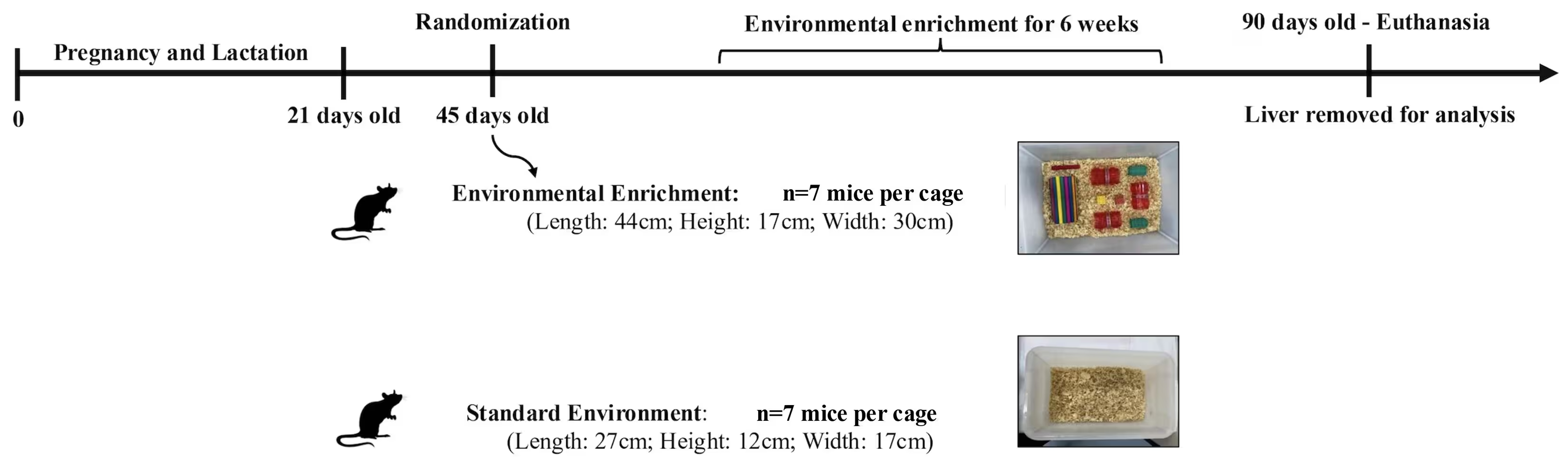
The study was led by Matheus Santos de Sousa Fernandes and colleagues at the Federal University of Pernambuco in Brazil. They assigned male C57BL/6 mice at 45 days of age to either standard laboratory cages or larger enriched cages equipped with tunnels, nesting materials, ladders, and toys that were rearranged weekly to maintain novelty. After six weeks of this environment, the researchers examined the animals’ liver tissues to measure oxidative stress markers, antioxidant enzyme activities, and gene expression levels.
The team found that mice living in enriched environments showed lower levels of thiobarbituric acid reactive substances and protein carbonyls, which are standard chemical indicators of cellular wear and tear caused by reactive oxygen species. At the same time, the activity of protective antioxidant enzymes, including superoxide dismutase, catalase, and glutathione S-transferase, increased significantly in the enriched group. These changes pointed toward a more resilient chemical environment within the liver tissue.
Did These Environmental Changes Shift Gene Activity?
Despite clear differences in oxidative stress markers and enzyme activities, the researchers observed no significant changes in the messenger RNA expression of genes linked to inflammation, such as Interleukin-6 and Tumor Necrosis Factor Alpha. Genes regulating lipid metabolism, glucose breakdown, and mitochondrial dynamics also remained stable between the two groups. The authors suggest that biochemical adaptations may happen through post-translational modifications or enzyme regulation rather than immediate transcriptional shifts.
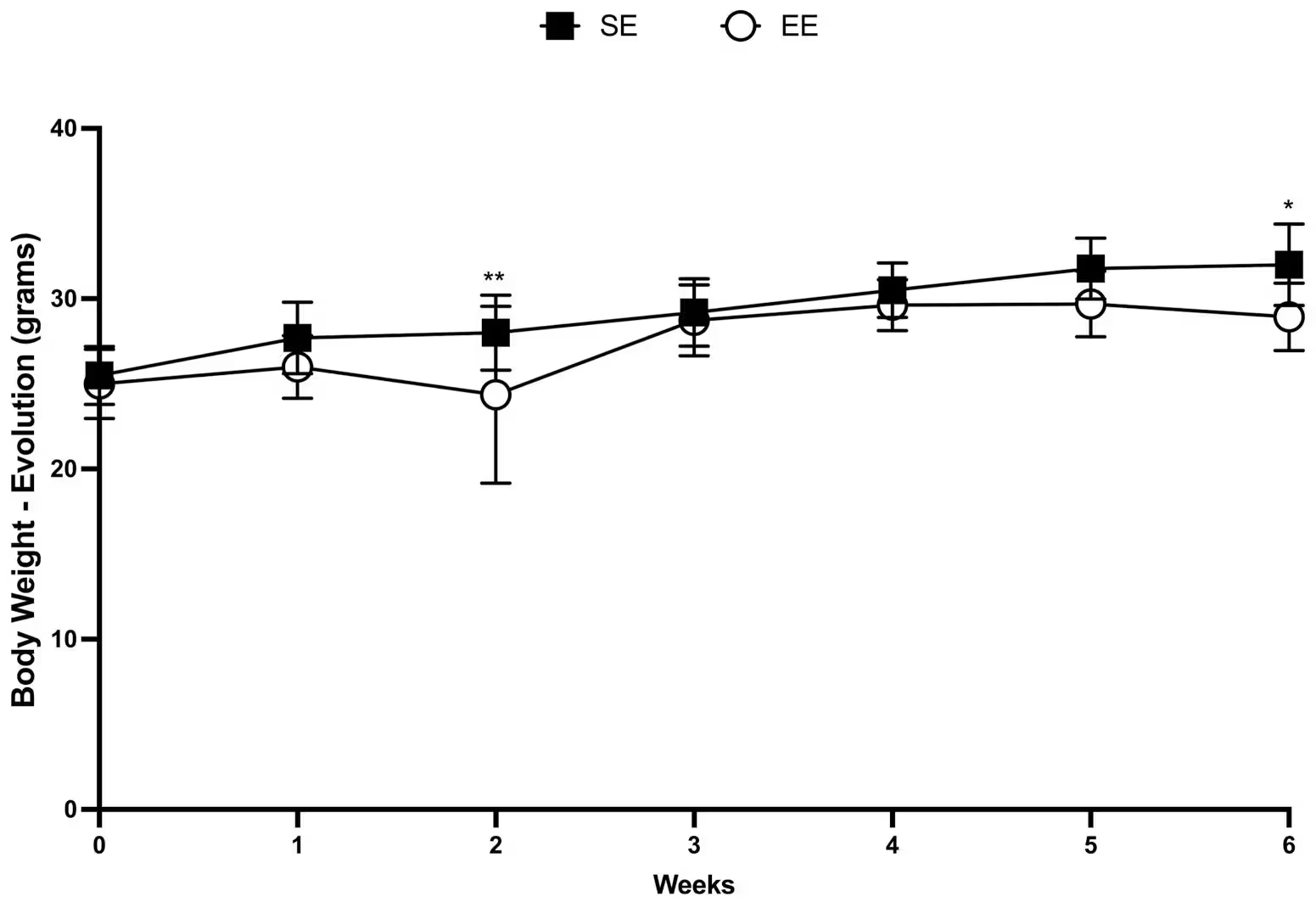
The investigation also tracked metabolic parameters throughout the intervention. Mice in the enriched housing displayed a modest reduction in body weight by the end of the six-week period compared to control animals, despite showing a higher average food intake. Additionally, measurements of the cellular redox couple revealed an increase in reduced nicotinamide adenine dinucleotide levels alongside a decrease in its oxidized form, reflecting a shift in the liver’s cellular energy balance.
What Are the Limits of These Findings?
The researchers noted several limitations in their experimental design. Direct functional assays of mitochondrial respiration, such as oxygen consumption rates, were not performed due to tissue availability constraints, meaning that cellular-mitochondrial adaptations were inferred from nucleotide ratios. Furthermore, daily voluntary physical activity and energy expenditure were not directly tracked with sensors, leaving the exact contribution of locomotion unmeasured.
The study was conducted exclusively on healthy male mice with normal baseline parameters, which may explain why inflammatory genes did not change significantly. Future investigations involving extended exposure periods or metabolic disease models could help clarify whether these hepatic adaptations provide long-term protection against tissue damage and metabolic disorders.
The research was published in PLOS One on November 23, 2026.
This article has been fact checked for accuracy, with information verified against reputable sources. Learn more about us and our editorial process.
Last reviewed on .
Article history
- Latest version
Reference(s)
- Santos de Sousa Fernandes, Matheus., et al. “Environmental enrichment enhances hepatic oxidative stress and antioxidant defenses without modulating immunometabolic gene expression in adult male mice.” PLOS One, vol. 21, no. 11, November 23, 2026, pp. e0363455 Public Library of Science (PLoS), doi: 10.1371/journal.pone.0363455. <https://doi.org/10.1371/journal.pone.0363455>.
Cite this page:
- Posted by Elizabeth Taylor